Synthetic leather conveyor belts
CN → US| HS Code | Tariff Rate | Origin | Destination | Doc |
|---|---|---|---|---|
| 5910001090 | 39.0% | CN | US | Official Doc |
| 5910009000 | 37.6% | CN | US | Official Doc |
| 3926905900 | 37.4% | CN | US | Official Doc |
| 3926906090 | 39.2% | CN | US | Official Doc |
| 5910009000 | 37.6% | CN | US | Official Doc |
Product Images
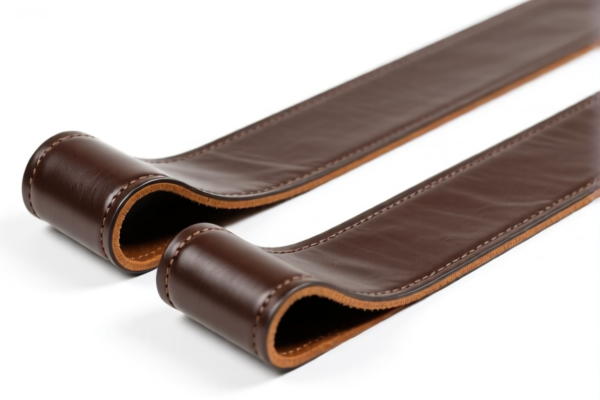
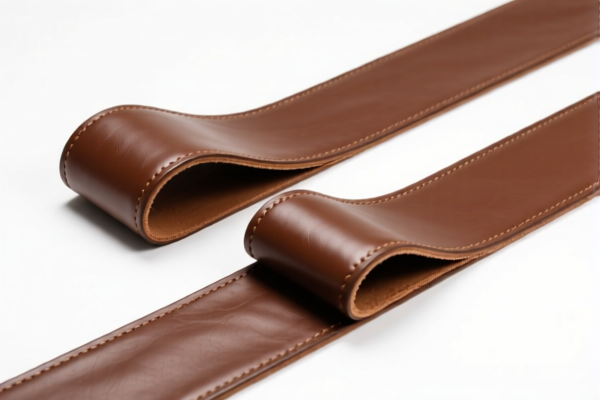
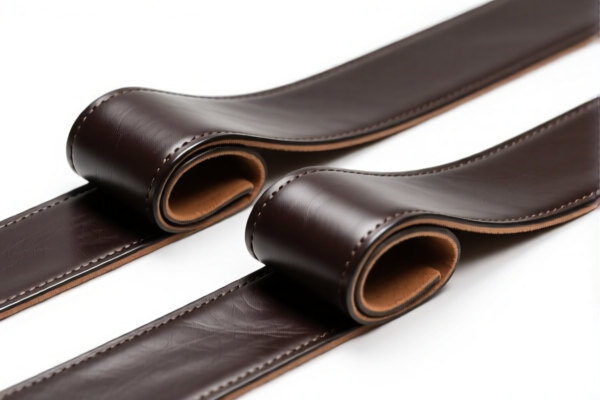
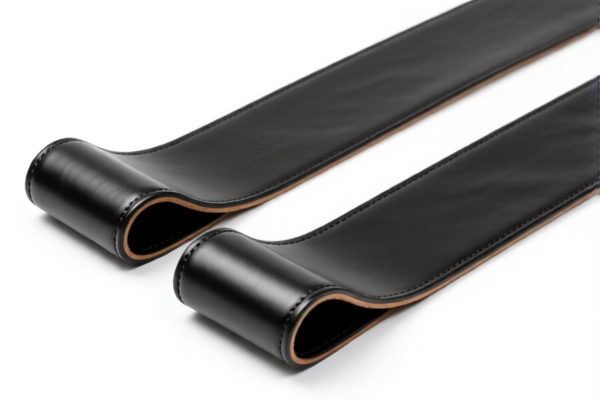
AI Analysis
🚚 Synthetic Leather Conveyor Belts (Industrial Transport Systems)
🌐 HS Code Reference & Customs Clearance Guide | 2026 Latest Tariff Analysis | Professional Entry Strategy
📌 Part I: Product Definition & Classification: Do You Really Understand "Synthetic Leather Conveyor Belts"?
Synthetic leather conveyor belts are essential components in modern industrial automation, logistics, and manufacturing. Unlike traditional rubber belts, they use synthetic leather (man-made fibers, coated textiles, or plastic-based synthetic materials) as the primary surface material, offering advantages such as wear resistance, oil resistance, and lightweight properties.
In international trade, the classification depends heavily on the material composition and structural definition of the belt: * Textile/Coated Fabric Basis: If the core reinforcement is textile-based with a synthetic leather coating, it often falls under Chapter 59 (Impregnated, Coated, Covered or Laminated Textile Fabrics). * Plastic/Synthetic Material Basis: If the belt is primarily composed of plastic or synthetic polymers (e.g., PVC, PU sheets), it may fall under Chapter 39 (Articles of Plastics and Articles of Other Materials).
⚠️ Critical Distinction Point:
- If the belt is reinforced with textile materials (even if coated with synthetic leather) → Generally classified under 5910 or related textile chapters.
- If the belt is made purely of plastic/synthetic polymers without textile reinforcement → Generally classified under 3926 or related plastic chapters.
- The specific 8-digit HS Code determines the Base Duty, Section 301 (25%), and Section 122 (10%) applicability.
📦 Part II: Detailed HS Code Classification (2026 Latest Tariff Authority Mapping)
Based on the provided data for Synthetic Leather Conveyor Belts, here are the four valid HS Codes with their specific tax implications:
| HS Code | Product Description | Material Category | Total Tax Rate |
|---|---|---|---|
5910.00.10.90 |
Synthetic Leather Conveyor Belt (Man-made Fibers / Synthetic Leather) | Textile/Coated Fabric | 39.0% |
5910.00.90.00 |
Synthetic Leather Conveyor Belt (Synthetic Leather: Textile/Non-textile scope) | Textile/Coated Fabric | 37.6% |
3926.90.59.00 |
Synthetic Leather Conveyor Belt (Plastic/Synthetic Material scope) | Plastic/Polymer | 37.4% |
3926.90.60.90 |
Synthetic Leather Conveyor Belt (Other Articles of Plastics) | Plastic/Polymer (Other) | 39.2% |
🔍 Key Insight:
- Lowest Duty Rate:3926.90.59.00at 37.4% (Plastic-based).
- Highest Duty Rate:3926.90.60.90at 39.2% (Other Plastic Articles).
- Textile-Based Codes: Range from 37.6% to 39.0%.
💰 Part III: 2026 Detailed Tariff Rate Breakdown (Including Surcharges & Policy Add-ons)
✅ Applicable Country: United States (US)
✅ Country of Origin: China (CN)
✅ Effective Time: Current Trade Policy (Section 301 + Section 122)
🎯 1. 5910.00.10.90 —— Synthetic Leather Conveyor Belt (Man-made Fibers)
| Item | Content |
|---|---|
| Base Tariff | 4.0% (ad valorem) |
| Section 301 Surcharge | +25.0% |
| Section 122 Surcharge | +10.0% |
| Total Tax Rate | 39.0% |
| Tax Calculation | CIF Value × 39.0% |
| De Minimis Exemption | ❌ Not Eligible (High value, specific trade remedy) |
| Legal Basis Path | USITC:5910.00.10.90 → FOOTNOTE:301 → FOOTNOTE:122 |
📌 Explanation:
- This code applies when the belt’s core is reinforced with man-made fibers and coated/laminated with synthetic leather.
- The 25% is the standard Section 301 tariff for Chinese goods.
- The 10% is the Section 122 tariff (often related to national security or specific industrial protections).
- Total: 39.0%.
🎯 2. 5910.00.90.00 —— Synthetic Leather Conveyor Belt (Synthetic Leather: Textile/Non-textile scope)
| Item | Content |
|---|---|
| Base Tariff | 2.6% (ad valorem) |
| Section 301 Surcharge | +25.0% |
| Section 122 Surcharge | +10.0% |
| Total Tax Rate | 37.6% |
| Tax Calculation | CIF Value × 37.6% |
| De Minimis Exemption | ❌ Not Eligible |
| Legal Basis Path | USITC:5910.00.90.00 → FOOTNOTE:301 → FOOTNOTE:122 |
📌 Note:
- This code covers synthetic leather belts where the material classification falls under textile or non-textile coated fabrics but doesn’t fit the specific "man-made fiber" subheading.
- Slightly lower base rate (2.6%) than the previous code, leading to a 37.6% total.
🎯 3. 3926.90.59.00 —— Synthetic Leather Conveyor Belt (Plastic/Synthetic Material scope)
| Item | Content |
|---|---|
| Base Tariff | 2.4% (ad valorem) |
| Section 301 Surcharge | +25.0% |
| Section 122 Surcharge | +10.0% |
| Total Tax Rate | 37.4% |
| Tax Calculation | CIF Value × 37.4% |
| De Minimis Exemption | ❌ Not Eligible |
| Legal Basis Path | USITC:3926.90.59.00 → FOOTNOTE:301 → FOOTNOTE:122 |
📌 Optimal Choice:
- If the belt is made primarily of plastic or synthetic polymers (e.g., PVC, PU) without textile reinforcement, this code offers the lowest total duty at 37.4%.
- Base rate is only 2.4%, significantly lower than textile-based codes.
🎯 4. 3926.90.60.90 —— Synthetic Leather Conveyor Belt (Other Articles of Plastics)
| Item | Content |
|---|---|
| Base Tariff | 4.2% (ad valorem) |
| Section 301 Surcharge | +25.0% |
| Section 122 Surcharge | +10.0% |
| Total Tax Rate | 39.2% |
| Tax Calculation | CIF Value × 39.2% |
| De Minimis Exemption | ❌ Not Eligible |
| Legal Basis Path | USITC:3926.90.60.90 → FOOTNOTE:301 → FOOTNOTE:122 |
📌 Warning:
- This code is for other plastic articles that don’t fit more specific plastic subheadings.
- It has the highest total duty at 39.2% due to a higher base rate (4.2%).
- Avoid this code if a more specific plastic subheading (like3926.90.59.00) applies.
🛠️ Part IV: Customs Clearance Practical Advice (Battle-Tested Pitfall Avoidance)
✅ 1. Document Checklist (Mandatory)
| Document | Required | Description |
|---|---|---|
| ✅ Product Specification Sheet | ✔️ | Must detail material composition (e.g., "PVC surface, polyester core") to justify HS Code. |
| ✅ Material Safety Data Sheet (MSDS) | ✔️ | For chemical composition of synthetic leather coatings. |
| ✅ Product Photos (Clear Label) | ✔️ | Show the belt cross-section to prove textile vs. plastic structure. |
| ✅ Commercial Invoice | ✔️ | Clearly state: "Conveyor Belt, Synthetic Leather, [Material Type]" |
| ✅ Packing List | ✔️ | List dimensions, weight, and roll length. |
| ✅ Certificate of Origin (CO) | ✔️ | Essential for proving Chinese origin and applying correct surcharges. |
✅ 2. Declaration Strategy (Key Rules)
🔥 “Material Determines Code, Textile vs. Plastic Defines Duty!”
| Scenario | Correct HS Code | Incorrect Declaration | Consequence |
|---|---|---|---|
| Belt with Textile Core + Synthetic Leather Coating | 5910.00.10.90 or 5910.00.90.00 |
Claimed as "Plastic Belt" | Over/Under Declaration Risk |
| Belt made of Pure Plastic/PVC (No Textile) | 3926.90.59.00 (Best Rate) |
Claimed as "Textile Belt" | Higher Duty (39.0%) |
| Belt with Mixed Materials (Ambiguous) | Consult Specialist | Guessing | Potential Audit & Penalties |
| "Other" Plastic Article (Generic) | 3926.90.60.90 (Worst Rate) |
Use specific code when available | Pay 39.2% instead of 37.4% |
✅ 3. Special Case Handling
| Situation | Handling Advice |
|---|---|
| OEM Custom Belts | Provide design drawings showing material layers to prove textile vs. plastic structure. |
| Belt with Metal Fasteners | Still classified as conveyor belt; metal parts are incidental. Do not split declaration. |
| Small Sample Shipments | Even for samples, if value is high, duties apply. No de minimis exemption for these codes. |
| Re-export from Third Country | If re-exported from Vietnam/Mexico, check for Rules of Origin to potentially avoid Section 301/122 tariffs. |
🌍 Part V: Global Market Comparison (2026 Latest)
| Country/Region | Recommended HS Code | Tariff (China Origin) | Certification Requirements | Notes |
|---|---|---|---|---|
| 🇺🇸 USA | 3926.90.59.00 (Optimal) |
37.4% | ASTM, ISO (if requested) | Highest duty environment due to 301+122 |
| 🇨🇳 China | 5910.00.10.90 |
5-10% | CCC (if applicable) | Lower duties for domestic trade |
| 🇪🇺 EU | 5910.00.10.90 |
~5-7% | CE (if machinery component) | No Section 301/122 equivalent |
| 🇦🇺 Australia | 3926.90.59.00 |
~5% | RCM (if electrical) | Competitive rates |
| 🇯🇵 Japan | 5910.00.90.00 |
~3-5% | PSE (if electrical) | Favorable JETPAT rates if applicable |
📌 Conclusion:
- The USA imposes significant additional tariffs (35% total surcharge) on these goods.
- Cost Optimization: If structurally possible, design belts using plastic/polymer materials (3926.90.59.00) to achieve the lowest duty rate of 37.4% compared to textile-based options.
📌 Part VI: Common Errors & Pitfall Guide (Blood & Tears Lessons)
❌ Error 1: Declaring a textile-core belt as a plastic article
👉 Consequence: Customs may reject the declaration, require proof of material, or impose penalties for misclassification.
❌ Error 2: Using 3926.90.60.90 when a more specific code (3926.90.59.00) applies
👉 Consequence: Paying 39.2% instead of 37.4% unnecessarily. Every percentage point counts!
❌ Error 3: Failing to provide cross-section photos
👉 Consequence: Customs cannot determine if the belt is textile-based or plastic-based → Delayed release, additional fees, or re-inspection.
❌ Error 4: Ignoring Section 122 (10%) in cost calculations
👉 Consequence: Underestimating landed cost by 10%, leading to margin erosion.
✅ Correct Approach:
“Conveyor Belt, Synthetic Leather Surface, [PVC/Polyester Core], Width: 500mm, Length: 100m, Model: XYZ, Certified for Industrial Use”
🎯 Part VII: Conclusion: Professional Classification Saves Money!
🎯 Remember the Motto:
🔹 “Textile vs. Plastic, Choose Wisely!”
🔹 “37.4% is the Golden Rate for Plastic Belts!”
🔹 “Don’t Pay 39.2% if 37.4% is Available!”
📌 Pro Tip:
If your synthetic leather belts are originating from Vietnam, Mexico, or Thailand, apply for Rules of Origin Certification to potentially avoid Section 301 (25%) and Section 122 (10%) tariffs, reducing the total duty to Base Rate Only (~2.4%-4.2%).
Recommendation: Apply for an Advance Ruling from US Customs (CBP) to confirm the HS Code before shipment.
📣 Immediate Action Required:
📞 Contact a professional customs broker + Provide Material Cross-Section Photos + Apply for HS Code Advance Ruling
🚀 Let your conveyor belts clear customs smoothly, reduce costs, and maximize profits!
✨ Professional Classification Starts with Precise Material Identification!
💼 Every Percent of Duty Saved is Pure Profit!
Customer Reviews
About HS Code Classification
The Harmonized System (HS) is an internationally standardized nomenclature developed by the World Customs Organization (WCO) to classify traded products. Over 200 countries use the HS system as the basis for customs tariffs, trade statistics, and import/export regulations.
Each HS code follows a hierarchical structure:
- Chapter (2 digits) — Broad category of goods (e.g., Chapter 84: Machinery and Mechanical Appliances)
- Heading (4 digits) — More specific grouping within the chapter
- Subheading (6 digits) — Internationally standardized breakdown, used by all WCO member countries
- National subdivisions (8-10 digits) — Country-specific extensions for further classification, such as US HTSUS 10-digit codes
Correct HS code classification is essential for smooth customs clearance, accurate duty payment, and compliance with trade regulations. Misclassification can lead to customs delays, overpayment of duties, or penalties.
When importing from CN to US, the applicable tariff rates may include:
- Most-Favored-Nation (MFN) rate — The standard duty rate applied to WTO members
- General rate — Applied to countries without trade agreements
- Trade remedy duties — Additional tariffs such as Section 301 (anti-dumping), Section 232 (national security), or countervailing duties
The information provided on this page is for reference purposes only. For official classification, please consult with your local customs authority or a licensed customs broker.