Synthetic rubber inner tubes
CN → US| HS Code | Tariff Rate | Origin | Destination | Doc |
|---|---|---|---|---|
| 4013905010 | 38.7% | CN | US | Official Doc |
| 4002390000 | 35.0% | CN | US | Official Doc |
| 4013905050 | 38.7% | CN | US | Official Doc |
| 8714100050 | 17.5% | CN | US | Official Doc |
| 8714998000 | 27.5% | CN | US | Official Doc |
Product Images
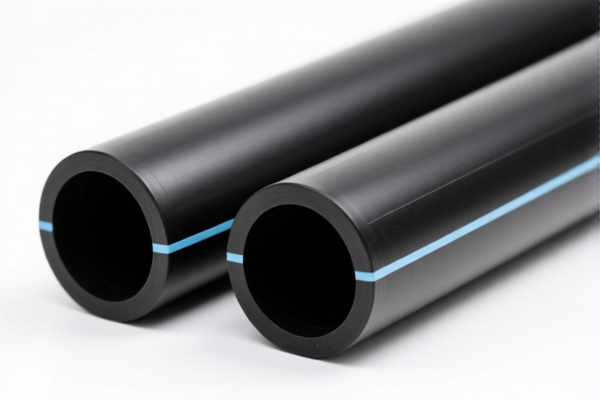
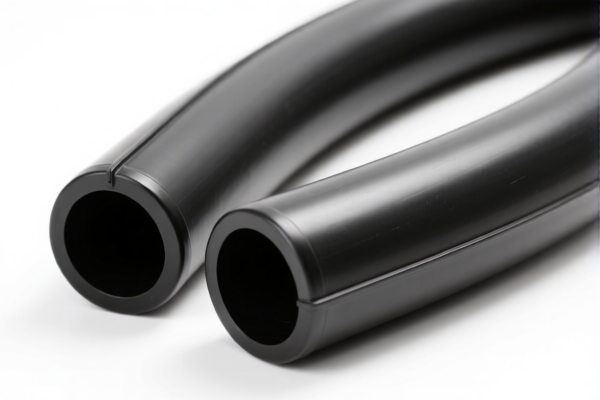
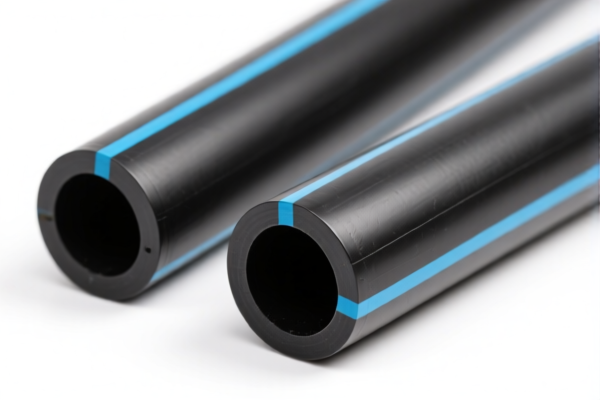
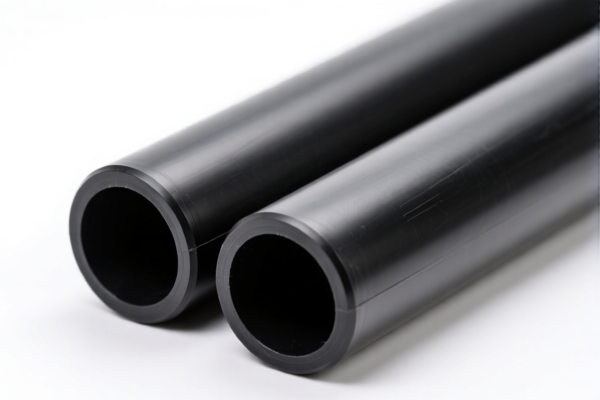
AI Analysis
🚲 Synthetic Rubber Inner Tubes (Butyl Rubber)
🌐 HS Code Reference & Customs Clearance Guide | 2026 Latest Tariff Analysis | Professional Clearance Strategy
📌 I. Product Definition & Classification: Do You Really Understand "Inner Tubes"?
Synthetic rubber inner tubes, specifically those made from Butyl Rubber, are critical components for pneumatic tires. In international trade, they are classified based on their material composition and functional integration.
Key Distinction:
- As a Rubber Product: If classified strictly by material and form as a tube, it falls under Chapter 40 (Rubber and Articles Thereof).
- As a Vehicle Part: If declared specifically as a spare part for a specific vehicle type (e.g., motorcycles), it may fall under Chapter 87 (Vehicles).
⚠️ Critical Classification Point:
- If the product is described simply as a "Butyl Rubber Inner Tube" without specifying a vehicle type, it defaults to Rubber Products (Chapter 40).
- If explicitly declared as a "Motorcycle Part", it may be classified under Vehicle Parts (Chapter 87), which often carries lower basic tariffs (but still subject to additional duties).
- Misclassification Risk: Declaring a vehicle-specific part as a general rubber good can lead to penalties; conversely, over-generalizing a specific part may miss out on potential preferential treatments for vehicle components.
📦 II. HS Code Classification Details (2026 Latest Tariff Authoritative Comparison)
Based on the provided data, here are the precise classifications for Butyl Rubber Inner Tubes:
| HS Code | Product Description | Applicability Scenario | Key Feature |
|---|---|---|---|
4013.90.50.10 |
Butyl Rubber Inner Tubes (General Classification) | General rubber inner tubes, not specific to a vehicle type in declaration | Rubber Articles, Inner Tubes |
4002.39.00.00 |
Butyl Rubber Inner Tubes (Material-Based) | Classified primarily by material (Butyl Rubber) as other synthetic rubber articles | Synthetic Rubber Product |
4013.90.50.50 |
Butyl Rubber Inner Tubes (Alternative Rubber Code) | Alternative classification under Rubber Articles, Inner Tubes | Rubber Articles, Inner Tubes |
8714.10.00.50 |
Butyl Rubber Inner Tubes (Motorcycle Parts) | Declared specifically as parts/accessories for Motorcycles | Motorcycle Spare Parts |
8714.99.80.00 |
Butyl Rubber Inner Tubes (General Vehicle Parts) | Declared as parts/accessories for General Vehicles (non-motorcycle specific) | Vehicle Spare Parts |
🔍 Key Reminder:
- Chapter 40 (Rubber) vs. Chapter 87 (Vehicles) is the primary decision point.
- Chapter 87 codes (8714...) generally have lower base tariffs (0%-10%) compared to Chapter 40 codes (4013...,3.7%or4002,0%).
- However, all listed codes are subject to Additional Duties (25% + 10%).
💰 III. 2026 Latest Tariff Rate Breakdown (Including Additional Duties & Policy Surcharges)
✅ Applicable Country: United States (US)
✅ Origin: China (CN)
✅ Effective Time: 2025 November 10 onwards (and subsequent imports)
🎯 1. 4013.90.50.10 & 4013.90.50.50 —— Rubber Inner Tubes (Chapter 40)
| Item | Content |
|---|---|
| Base Tariff | 3.7% (ad valorem) |
| USITC Additional Duty (Section 301) | +25.0% |
| IEEPA Additional Duty (122 Clause) | +10.0% |
| Total Effective Tariff | 38.7% |
| Tax Calculation | CIF Value × 38.7% |
| De Minimis Exemption | ❌ Not Eligible (deny_de_minimis) |
| Legal Basis Path | USITC:4013.90.50.10 → Footnote:301 → IEEPA:122 |
📌 Explanation:
- These codes fall under Rubber Articles.
- The 3.7% base rate is low, but the 35% additional duties (25% + 10%) push the total to 38.7%.
- High Cost Alert: This is one of the higher-cost classifications due to the additive nature of the surcharges.
🎯 2. 4002.39.00.00 —— Butyl Rubber Articles (Material-Based)
| Item | Content |
|---|---|
| Base Tariff | 0.0% |
| USITC Additional Duty (Section 301) | +25.0% |
| IEEPA Additional Duty (122 Clause) | +10.0% |
| Total Effective Tariff | 35.0% |
| Tax Calculation | CIF Value × 35.0% |
| De Minimis Exemption | ❌ Not Eligible |
| Legal Basis Path | USITC:4002.39.00.00 → Footnote:301 → IEEPA:122 |
📌 Note:
- Although the base rate is 0%, the additional duties remain 35%.
- This is a better option than4013codes (saves 3.7% on base tariff), resulting in a 35% total tax.
- Suitable if the product can be justified as a "Synthetic Rubber Article" rather than a "Tube" per se.
🎯 3. 8714.10.00.50 —— Motorcycle Parts (Butyl Rubber Inner Tube)
| Item | Content |
|---|---|
| Base Tariff | 0.0% |
| USITC Additional Duty (Section 301) | +7.5% |
| IEEPA Additional Duty (122 Clause) | +10.0% |
| Total Effective Tariff | 17.5% |
| Tax Calculation | CIF Value × 17.5% |
| De Minimis Exemption | ❌ Not Eligible |
| Legal Basis Path | USITC:8714.10.00.50 → Footnote:301 → IEEPA:122 |
📌 Explanation:
- This is the MOST COST-EFFECTIVE classification if the product is a motorcycle inner tube.
- The Section 301 duty is only 7.5% (compared to 25% for rubber goods).
- Total Tax: 17.5% – nearly half the cost of Chapter 40 classifications.
- Prerequisite: Must be clearly declared as a Motorcycle Part.
🎯 4. 8714.99.80.00 —— General Vehicle Parts (Butyl Rubber Inner Tube)
| Item | Content |
|---|---|
| Base Tariff | 10.0% |
| USITC Additional Duty (Section 301) | +7.5% |
| IEEPA Additional Duty (122 Clause) | +10.0% |
| Total Effective Tariff | 27.5% |
| Tax Calculation | CIF Value × 27.5% |
| De Minimis Exemption | ❌ Not Eligible |
| Legal Basis Path | USITC:8714.99.80.00 → Footnote:301 → IEEPA:122 |
📌 Note:
- If the inner tube is for a non-motorcycle vehicle (e.g., bicycles, carts, trailers), this code applies.
- Total Tax: 27.5% – cheaper than Chapter 40, but more expensive than Motorcycle Parts.
🛠️ IV. Customs Clearance Practical Advice (Battle-Tested Pitfall Avoidance Guide)
✅ 1. Document Preparation Checklist (Mandatory)
| Document | Required | Description |
|---|---|---|
| ✅ Product Specification Sheet | ✔️ | Must specify: Material (Butyl Rubber), Dimensions, Valve Type, Pressure Rating |
| ✅ Declaration of Use | ✔️ | Critical: Specify the intended vehicle (e.g., "For Motorcycle Use Only" vs. "General Rubber Tube") |
| ✅ Product Photos | ✔️ | Clear images showing the tube, valve stem, and packaging. Labeling should match declaration. |
| ✅ Commercial Invoice | ✔️ | Must accurately reflect the HS Code and product description. Avoid vague terms like "Rubber Part." |
| ✅ Packing List | ✔️ | Detail the quantity, weight, and dimensions. Ensure no mixed items that could trigger reclassification. |
✅ 2. Declaration Strategy (Key Mantra)
🔥 "Declare by Use, Not Just Material. Motorcycle Parts Win!"
| Scenario | Correct Declaration | Incorrect Declaration |
|---|---|---|
| Motorcycle Inner Tube | 8714.10.00.50 (Motorcycle Part) |
4013.90.50.10 (Rubber Tube) → 17.5% vs 38.7% |
| Bicycle Inner Tube | 8714.99.80.00 (General Vehicle Part) |
4013.90.50.10 → 27.5% vs 38.7% |
| Generic Rubber Tube | 4002.39.00.00 (Rubber Article) |
8714... (If not a vehicle part) → 35% |
| Mixed Bag (No Specific Use) | 4013.90.50.10 or 4002.39.00.00 |
Claiming "Motorcycle Part" without proof → Audit Risk |
✅ 3. Special Cases Handling
| Situation | Handling Advice |
|---|---|
| OEM Inner Tubes | Provide the end-user manual or vehicle manual showing compatibility with specific motorcycle models. |
| Multi-Purpose Tubes | If compatible with both bicycles and motorcycles, declare based on the primary intended use or the most specific vehicle part. However, be prepared for potential customs questioning. |
| Kit Packaging (Tube + Patch) | Declare the inner tube as the principal item. Patches are considered accessories and should not change the main HS Code. |
| Value-Added Services | If the tube is pre-installed or customized, ensure the value declaration includes only the tube and accessories, not labor costs not included in CIF. |
🌍 V. Global Market Clearance Comparison (2026 Latest)
| Country/Region | Recommended HS Code | Tariff Rate | Certification Requirements | Notes |
|---|---|---|---|---|
| 🇺🇸 United States | 8714.10.00.50 (if Motorcycle) |
17.5% (China Origin) | No specific cert required for tubes | Lowest US Tariff |
| 🇨🇳 China | 4013.90.50.10 |
~3.7% (Import) + VAT | No specific cert | Low entry barrier |
| 🇪🇺 European Union | 4013.90.90 |
0% - 4.5% (Varies) | CE (if applicable), REACH | Lower duties than US |
| 🇦🇺 Australia | 4013.90.90.00 |
5% | No specific cert | Moderate tariff |
| 🇯🇵 Japan | 4013.90.90.00 |
0% - 6% | JIS Standard (optional) | Favorable rates |
📌 Conclusion:
- The United States imposes significantly higher tariffs on Chinese-origin rubber goods due to Section 301 and IEEPA surcharges.
- Classifying as a Vehicle Part (8714...) is the most strategic approach for motorcycle inner tubes, reducing the total tax burden from 38.7% to 17.5%.
- Bicycle/Cart tubes still benefit from lower vehicle-part tariffs (27.5%) compared to general rubber goods (35%+).
📌 VI. Common Errors & Pitfall Avoidance Guide (Lessons Learned)
❌ Error 1: Declaring all inner tubes under 4013.90.50.10 regardless of vehicle type.
👉 Consequence: Paying 38.7% instead of 17.5% for motorcycle tubes. Overpayment!
❌ Error 2: Misclassifying bicycle inner tubes as "Motorcycle Parts."
👉 Consequence: Customs audit, potential fines for false declaration. Risk!
❌ Error 3: Vague description "Rubber Tube" on the invoice.
👉 Consequence: Customs may assign the highest duty code or demand additional documentation, causing delays.
❌ Error 4: Ignoring the "122 Clause" (IEEPA) surcharge.
👉 Consequence: Underestimating total landed cost by 10%. Budget Failure!
✅ Correct Practice:
"Butyl Rubber Inner Tube, For Motorcycle Use, Model XYZ, Compatible with [Specific Make/Model]"
➡️ HS Code:8714.10.00.50→ Tax: 17.5%
🎯 VII. Conclusion: Smart Classification, Cost Efficiency!
🎯 Remember the Mantra:
🔹 "Material Matters, but Use Pays Less. Motorcycle Parts Win!"
🔹 "38.7% is Rubber, 17.5% is a Part. Choose Wisely, Save Big!"
📌 Pro Tip:
If your inner tubes are originating from Vietnam, Thailand, or Malaysia, you may qualify for IEEPA exemptions or lower Section 301 rates.
Always apply for a Pre-Ruling (Advance Ruling) if the classification is ambiguous to avoid post-clearance adjustments.
📣 Immediate Action:
📞 Consult a Licensed Customs Broker + Provide Product Specs + Verify Vehicle Compatibility
🚀 Optimize Your HS Code, Slash Your Taxes, Boost Your Margins!
✨ Professional Clearance Starts with Precise Classification!
💼 Every Percentage Point Counts in International Trade!
Customer Reviews
About HS Code Classification
The Harmonized System (HS) is an internationally standardized nomenclature developed by the World Customs Organization (WCO) to classify traded products. Over 200 countries use the HS system as the basis for customs tariffs, trade statistics, and import/export regulations.
Each HS code follows a hierarchical structure:
- Chapter (2 digits) — Broad category of goods (e.g., Chapter 84: Machinery and Mechanical Appliances)
- Heading (4 digits) — More specific grouping within the chapter
- Subheading (6 digits) — Internationally standardized breakdown, used by all WCO member countries
- National subdivisions (8-10 digits) — Country-specific extensions for further classification, such as US HTSUS 10-digit codes
Correct HS code classification is essential for smooth customs clearance, accurate duty payment, and compliance with trade regulations. Misclassification can lead to customs delays, overpayment of duties, or penalties.
When importing from CN to US, the applicable tariff rates may include:
- Most-Favored-Nation (MFN) rate — The standard duty rate applied to WTO members
- General rate — Applied to countries without trade agreements
- Trade remedy duties — Additional tariffs such as Section 301 (anti-dumping), Section 232 (national security), or countervailing duties
The information provided on this page is for reference purposes only. For official classification, please consult with your local customs authority or a licensed customs broker.