Synthetic staple yarn jacquard
CN → US| HS Code | Tariff Rate | Origin | Destination | Doc |
|---|---|---|---|---|
| 6005360020 | 45.0% | CN | US | Official Doc |
| 6005360080 | 45.0% | CN | US | Official Doc |
| 6006310080 | 45.0% | CN | US | Official Doc |
| 6006320080 | 45.0% | CN | US | Official Doc |
| 6001102000 | 52.2% | CN | US | Official Doc |
Product Images
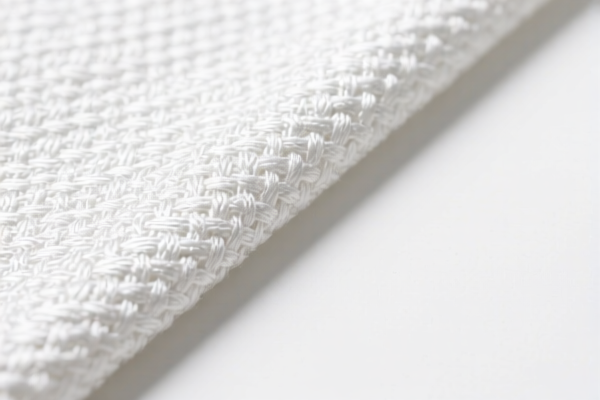
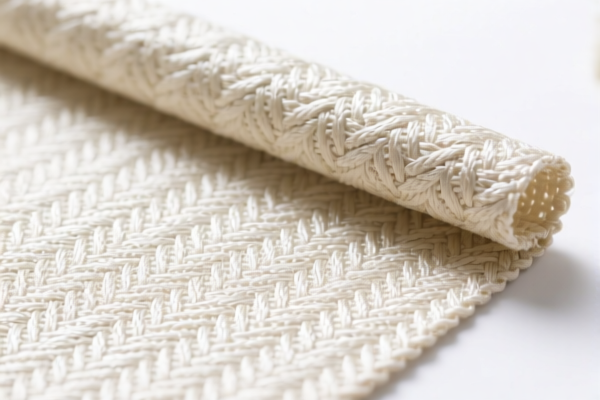
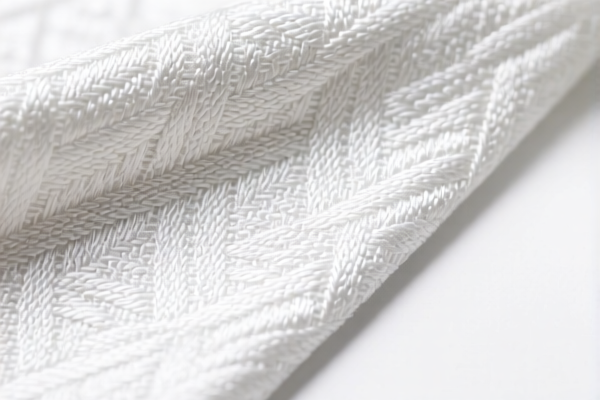
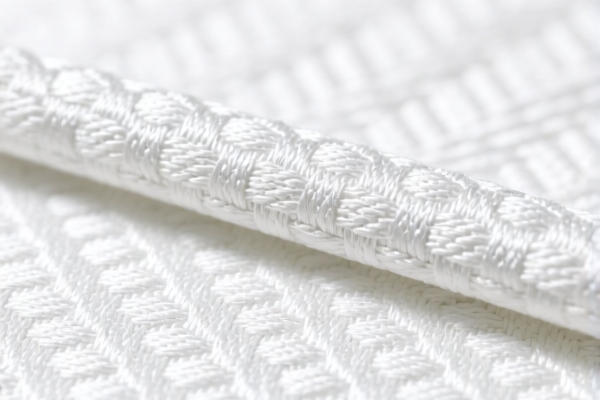
AI Analysis
🧵 Synthetic Staple Yarn Jacquard (Knitted/Woven Fabrics)
🌐 HS Code Reference & Customs Clearance Guide | 2026 Latest Tariff Analysis | Professional Strategy for Chinese Textile Exports
📌 I. Product Definition: Do You Know What "Synthetic Staple Yarn Jacquard" Really Is?
"Synthetic Staple Yarn Jacquard" refers to fabrics made from chemically produced staple fibers (such as polyester staple fiber, nylon staple fiber, or acrylic staple fiber) that are processed into jacquard structures. In international trade, the classification depends heavily on the manufacturing process: whether it is knitted (looped) or woven (interlaced).
Key Distinction: - Knitted Fabrics (针织物): Produced by interlocking loops. Includes tricot, raschel, and circular knitting. Often flexible and stretchy. - Woven Fabrics (机织物): Produced by interlacing warp and weft threads at right angles. Generally more stable and structured.
⚠️ Critical Classification Point:
- If the fabric is knitted (e.g., jacquard sweaters, knit jacquard upholstery fabric) →归入 Chapter 60 (Knitted or Crocheted Fabrics)
- If the fabric is woven (e.g., jacquard tablecloths, woven decorative fabrics) →归入 Chapter 58 or 60 (depending on structure)
However, based on the provided <DATA>, all listed HS codes fall under Chapter 60 (Knitted or Crocheted Fabrics). This implies the user is likely importing knitted synthetic staple jacquard fabrics.
📦 II. HS Code Classification Details (2026 Latest Tariff Authority Mapping)
Based on the <DATA> provided, here is the precise mapping for Synthetic Staple Yarn Jacquard (Knitted):
| HS Code | Product Description | Application Scenario | Structure |
|---|---|---|---|
6005.36.00.20 |
Knitted fabric, warp-knitted, synthetic staple fibers | Warp-knitted jacquard, lace-like structures | ✅ Warp Knitting |
6005.36.00.80 |
Knitted fabric, other, synthetic staple fibers, non-lace/non-knotted | Other knitted jacquard fabrics (not lace or knotted) | ✅ Knitting (Other) |
6006.31.00.80 |
Knitted or crocheted fabric, synthetic staple fibers | General synthetic staple knitted jacquard | ✅ Knitting/Crochet |
6006.32.00.80 |
Dyed synthetic staple fiber knitted fabric (not double-face/interlock) | Dyed jacquard fabrics, single-face | ✅ Dyed Knitting |
6001.10.20.00 |
Pile or raised synthetic fiber knitted fabric (man-made staple) | Fleece, towel-like jacquard, raised surface fabrics | ✅ Pile/Raised |
🔍 Key Reminder:
- All these codes involve Synthetic Staple Fibers (not filament/filamentary).
- "Jacquard" in knitting is often classified under general knitted fabric categories unless it falls under specific lace (6004) or pile (6001) categories.
- If the jacquard fabric is pile-type (e.g., velvet jacquard), use6001.10.20.00.
- If it is warp-knitted, use6005.36.00.20.
- If it is circular knit or other knitting, use6005.36.00.80,6006.31.00.80, or6006.32.00.80.
💰 III. 2026 Latest Tariff Rate Breakdown (Including Additional Duties)
✅ Applicable Country: United States (US)
✅ Origin: China (CN)
✅ Effective Date: 2025 onwards (subject to current trade policies)
🎯 1. 6005.36.00.20 – Warp-Knitted Synthetic Staple Jacard (Lace-like)
| Item | Detail |
|---|---|
| Basic Tariff | 10.0% |
| Section 301 Additional Tariff | +25.0% |
| Section 122 Additional Tariff | +10.0% |
| Total Tax Rate | 45.0% |
| Calculation Basis | CIF Value × 45% |
| De Minimis Exemption | ❌ Not Applicable (High tariffs exclude de minimis) |
| Legal Basis Path | USITC:6005.36.00.20 → Section 301: Footnote 9903.88.01 → Section 122: 10% surcharge |
📌 Explanation:
- Base Rate 10%: Standard MFN rate for knitted fabrics.
- Section 301 (25%): Retaliatory tariff on Chinese textile products.
- Section 122 (10%): Additional duty under the US Trade Facilitation and Trade Enforcement Act.
- Total 45%: Extremely high. Must be factored into pricing.
🎯 2. 6005.36.00.80 – Other Knitted Synthetic Staple Fabrics (Non-Lace)
| Item | Detail |
|---|---|
| Basic Tariff | 10.0% |
| Section 301 Additional Tariff | +25.0% |
| Section 122 Additional Tariff | +10.0% |
| Total Tax Rate | 45.0% |
| Calculation Basis | CIF Value × 45% |
| De Minimis Exemption | ❌ Not Applicable |
| Legal Basis Path | USITC:6005.36.00.80 → Section 301 → Section 122 |
📌 Note:
- Most standard jacquard knit fabrics (e.g., patterned sweaters, knit upholstery) fall here if not lace.
- Same high tariff burden as above.
🎯 3. 6006.31.00.80 – Knitted Synthetic Staple Fabrics (General)
| Item | Detail |
|---|---|
| Basic Tariff | 10.0% |
| Section 301 Additional Tariff | +25.0% |
| Section 122 Additional Tariff | +10.0% |
| Total Tax Rate | 45.0% |
| Calculation Basis | CIF Value × 45% |
| De Minimis Exemption | ❌ Not Applicable |
📌 Note:
- Used for other knitted fabrics made from synthetic staple fibers (e.g., polyester staple knit).
- Common for jacquard blankets, knit tapestries, or patterned knit wear.
🎯 4. 6006.32.00.80 – Dyed Synthetic Staple Knitted Fabric
| Item | Detail |
|---|---|
| Basic Tariff | 10.0% |
| Section 301 Additional Tariff | +25.0% |
| Section 122 Additional Tariff | +10.0% |
| Total Tax Rate | 45.0% |
| Calculation Basis | CIF Value × 45% |
| De Minimis Exemption | ❌ Not Applicable |
📌 Note:
- Specifically for dyed (not colored yarn) jacquard fabrics.
- If the jacquard pattern is created via dyed yarns (piece-dyed), this code applies.
🎯 5. 6001.10.20.00 – Pile/Raised Synthetic Staple Knitted Fabric
| Item | Detail |
|---|---|
| Basic Tariff | 17.2% |
| Section 301 Additional Tariff | +25.0% |
| Section 122 Additional Tariff | +10.0% |
| Total Tax Rate | 52.2% |
| Calculation Basis | CIF Value × 52.2% |
| De Minimis Exemption | ❌ Not Applicable |
| Legal Basis Path | USITC:6001.10.20.00 → Section 301 → Section 122 |
📌 Critical Alert:
- If your jacquard fabric has a pile surface (e.g., fleece jacquard, velvet jacquard, towel jacquard), it falls under Chapter 6001.
- Higher Base Rate (17.2%) leads to a total rate of 52.2%.
- Do not misclassify pile jacquard as regular jacquard (45%)! This is a common customs audit trigger.
🛠️ IV. Customs Clearance Practical Advice (Avoid Pitfalls)
✅ 1. Required Documentation Checklist
| Document | Required | Notes |
|---|---|---|
| ✅ Product Specification Sheet | ✔️ | Must specify: Fiber content (e.g., 100% Polyester Staple), Fabric Construction (Knitted, Warp-Knit, etc.), Weight (GSM), Width |
| ✅ Fabric Structure Diagram | ✔️ | Show if it’s pile, lace, or standard jacquard |
| ✅ Photos of Fabric | ✔️ | Show texture, pattern, and edges. Highlight if it’s raised/pile |
| ✅ Commercial Invoice | ✔️ | Clearly state “Synthetic Staple Fiber Knitted Fabric, Jacquard Pattern” |
| ✅ Packing List | ✔️ | Include dimensions, weight, and number of rolls |
| ✅ Certificate of Origin (CO) | ✔️ | To confirm Chinese origin (tariffs apply) |
✅ 2. Classification Tips (Critical for Cost Control)
🔥 “Pile is 52.2%, Regular is 45%, Lace is 45% – Know Your Structure!”
| Scenario | Correct HS Code | Tariff | Mistake |
|---|---|---|---|
| Standard Jacquard Knit (e.g., patterned sweater fabric) | 6005.36.00.80 or 6006.31.00.80 |
45% | Misclassifying as pile → 52.2% penalty |
| Pile Jacquard (e.g., fleece, velvet jacquard) | 6001.10.20.00 |
52.2% | Misclassifying as regular → 52.2% vs 45% difference |
| Warp-Knit Jacquard (e.g., lace, tricot jacquard) | 6005.36.00.20 |
45% | Misclassifying as circular knit → audit risk |
| Dyed Jacquard (piece-dyed, not yarn-dyed) | 6006.32.00.80 |
45% | If yarn-dyed, may fall under different subheading |
✅ 3. Special Cases
| Case | Handling Advice |
|---|---|
| Yarn-Dyed vs. Piece-Dyed | If jacquard pattern is made from yarn-dyed threads, ensure correct HS code under 6006.31.00.80 or 6006.32.00.80 based on dyeing process |
| Multi-Component Fabrics | If fabric has different fiber blends (e.g., polyester staple + cotton blend), classification may change. Pure synthetic staple is key here |
| Sample vs. Bulk | Ensure sample matches bulk in structure (especially pile height) to avoid customs rejection |
🌍 V. Global Market Comparison (2026)
| Country/Region | Recommended HS Code | Tariff (China Origin) | Notes |
|---|---|---|---|
| 🇺🇸 USA | 6005.36.00.80 / 6006.31.00.80 |
45% (Pile: 52.2%) | High tariffs due to Section 301 + 122 |
| 🇨🇳 China | 6005.36.00.80 |
5% - 10% | Domestic tariff low |
| 🇪🇺 EU | 6005.36.00.80 |
8% - 12% | No Section 301 equivalent |
| 🇬🇧 UK | 6005.36.00.80 |
8% - 12% | Post-Brexit tariffs similar to EU |
| 🇦🇺 Australia | 6005.36.00.80 |
5% | Low tariffs, no additional duties |
📌 Conclusion:
- USA is the most expensive market for synthetic staple jacquard fabrics due to 45%-52.2% total tariffs.
- EU and UK have moderate tariffs (8-12%) but no additional punitive duties.
- China domestic tariffs are low, so exports to USA face significant cost pressure.
📌 VI. Common Mistakes & Pitfalls (Lessons Learned)
❌ Mistake 1: Classifying Pile Jacquard as Regular Jacquard
👉 Result: Tariff drops from 52.2% to 45%, but customs audit finds error → Penalties + Back Taxes
❌ Mistake 2: Not specifying Knitted vs. Woven
👉 Result: If woven, it should be under Chapter 58, not 60. Misclassification → Customs Detention
❌ Mistake 3: Ignoring Section 122 Tariff
👉 Result: Assuming only 301 (25%) applies → Unexpected 10% extra charge
❌ Mistake 4: Using “Jacquard Fabric” without specifying Structure
👉 Result: Customs may classify under highest tariff (52.2%) due to ambiguity
✅ Correct Practice:
“100% Polyester Staple Fiber Knitted Fabric, Jacquard Pattern, Warp-Knit, 200 GSM, 180cm Width, Dyed”
🎯 VII. Conclusion: Precision Classification Saves Money!
🎯 Remember the Mantra:
🔹 “Pile is 52.2%, Regular is 45%, Know Your Structure!”
🔹 “Section 301 (25%) + Section 122 (10%) + Base (10-17.2%) = High Tariffs!”
📌 Pro Tip:
If you are shipping pile jacquard (e.g., fleece, velvet), expect 52.2% total tariff. Consider:
- Reclassifying if structure allows (e.g., if not truly pile)
- Using non-China origin (e.g., Vietnam, Bangladesh) for tariff avoidance
- Applying for Pre-Ruling from US Customs to confirm HS Code
📣 Take Action Now:
📞 Contact your customs broker + Provide fabric sample + Request HS Code Pre-Ruling
🚀 Avoid delays, penalties, and unexpected costs!
✨ Professional Clearance Starts with Accurate Classification!
💼 Your profit margin depends on precise tariff management!
Customer Reviews
About HS Code Classification
The Harmonized System (HS) is an internationally standardized nomenclature developed by the World Customs Organization (WCO) to classify traded products. Over 200 countries use the HS system as the basis for customs tariffs, trade statistics, and import/export regulations.
Each HS code follows a hierarchical structure:
- Chapter (2 digits) — Broad category of goods (e.g., Chapter 84: Machinery and Mechanical Appliances)
- Heading (4 digits) — More specific grouping within the chapter
- Subheading (6 digits) — Internationally standardized breakdown, used by all WCO member countries
- National subdivisions (8-10 digits) — Country-specific extensions for further classification, such as US HTSUS 10-digit codes
Correct HS code classification is essential for smooth customs clearance, accurate duty payment, and compliance with trade regulations. Misclassification can lead to customs delays, overpayment of duties, or penalties.
When importing from CN to US, the applicable tariff rates may include:
- Most-Favored-Nation (MFN) rate — The standard duty rate applied to WTO members
- General rate — Applied to countries without trade agreements
- Trade remedy duties — Additional tariffs such as Section 301 (anti-dumping), Section 232 (national security), or countervailing duties
The information provided on this page is for reference purposes only. For official classification, please consult with your local customs authority or a licensed customs broker.