Syrup Dispenser
CN → US| HS Code | Tariff Rate | Origin | Destination | Doc |
|---|---|---|---|---|
| 3924905650 | 20.9% | CN | US | Official Doc |
| 3923300010 | 38.0% | CN | US | Official Doc |
| 3924104000 | 13.4% | CN | US | Official Doc |
| 3923300090 | 38.0% | CN | US | Official Doc |
Product Images
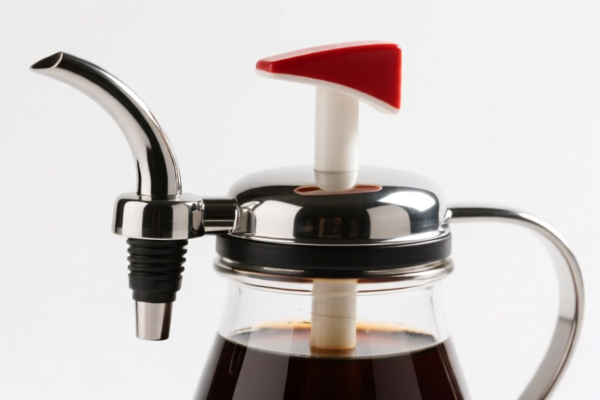
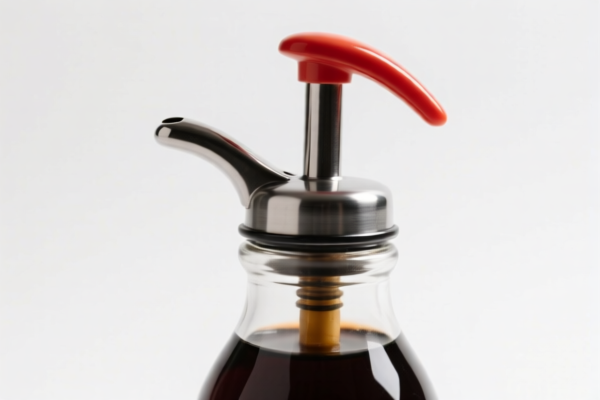
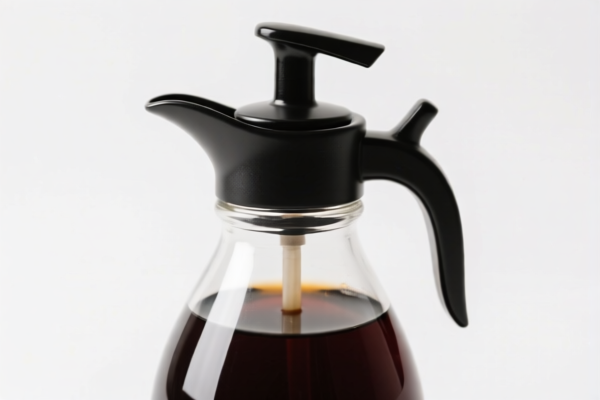
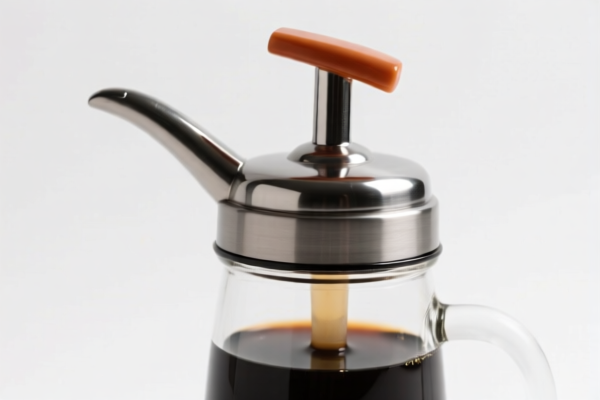
AI Analysis
🍯 Syrup Dispenser (分装瓶/糖浆瓶)
🌐 HS Code Reference & Clearance Guide | 2026 Latest Tariff Analysis | Professional Customs Strategy
📌 I. Product Definition & Classification: What is a "Syrup Dispenser"?
A Syrup Dispenser (often categorized broadly as Dispenser Bottles or Repackaging Bottles) is a household or commercial container used for storing and dispensing viscous liquids such as syrup, honey, oil, sauce, or lotion. In international trade, its classification depends heavily on its primary use (Home/Household vs. Industrial/Specific) and material (typically Plastic).
⚠️ Key Distinction:
- If intended for household, kitchen, or bathroom use (e.g., dispensing maple syrup, soy sauce, shampoo) → It is classified as a Household/Toiletry Article.
- If intended as a general-purpose container for transport or industrial storage → It is classified as a Bottle or Vessel.
- Material Assumption: Based on common market products and the provided data, these are assumed to be made of Plastic.
📦 II. HS Code Classification Details (2026 Latest Tariff Authority Comparison)
Based on the provided data, here are the four possible HS Codes for Syrup Dispensers, sorted by tax efficiency:
| HS Code | Product Description | Application Scenario | Key Classification Logic |
|---|---|---|---|
| 3924.10.40.00 | Other plastic household articles (e.g., kitchenware, toilet ware) | Best Choice: Kitchen syrup dispensers, bathroom lotion dispensers | ✅ Household Use |
| 3924.90.56.50 | Other plastic household articles (miscellaneous) | General household repackaging bottles, cosmetic sample bottles | ✅ Household Use |
| 3923.30.00.10 | Plastic bottles, flasks, and similar vessels | Industrial or general storage bottles, not specifically for household use | ❌ General Container |
| 3923.30.00.90 | Other plastic bottles, flasks, and similar vessels | Other containers not specified in 3923.30.00.10 | ❌ General Container |
🔍 Critical Reminder:
- Household items (3924.xxxx) generally attract LOWER tariffs in the US context provided in the data.
- General containers (3923.xxxx) attract HIGHER tariffs due to additional trade measures.
- Do not misdeclare a kitchen syrup dispenser as a "general plastic bottle" to save cost; customs may reclassify it, leading to penalties.
💰 III. 2026 Latest Tariff Rate Breakdown (Including Surtaxes & Policy Add-ons)
✅ Applicable Country: United States (US)
✅ Country of Origin: China (CN)
✅ Effective Date: From 2025 November 10 (and subsequent imports)
🎯 1. 3924.10.40.00 —— Plastic Household Articles (Kitchen/Bathroom)
🏆 RECOMMENDED CODE FOR LOWEST TAX
| Item | Content |
|---|---|
| Basic Tariff | 3.4% (Ad Valorem) |
| Section 301 Surcharge | 0.0% |
| Section 122 Tariff | 10.0% |
| Total Tax Rate | 13.4% |
| Tax Calculation | CIF Value × 13.4% |
| De Minimis Eligibility | ❌ Not Eligible (High tariff threshold) |
| Legal Basis Path | Section 301: 3924.10.40.00 → Section 122: 10% |
📌 Explanation:
- This code falls under Chapter 39.24 (Plastic household articles).
- No 25% Section 301 surcharge applies to this specific subheading in the provided data.
- Only the 10% Section 122 tariff applies.
- Total: 13.4%, making it the most cost-effective classification for household syrup dispensers.
🎯 2. 3924.90.56.50 —— Other Plastic Household Articles
| Item | Content |
|---|---|
| Basic Tariff | 3.4% |
| Section 301 Surcharge | 7.5% |
| Section 122 Tariff | 10.0% |
| Total Tax Rate | 20.9% |
| Tax Calculation | CIF Value × 20.9% |
| De Minimis Eligibility | ❌ Not Eligible |
| Legal Basis Path | Section 301: 3924.90.56.50 → Section 122: 10% |
📌 Note:
- This is still a household article, so the Section 301 surcharge is only 7.5%, not 25%.
- Total: 20.9%. Still significantly cheaper than the "container" codes below.
🎯 3. 3923.30.00.10 —— Plastic Bottles/Flasks (Specific)
| Item | Content |
|---|---|
| Basic Tariff | 3.0% |
| Section 301 Surcharge | 25.0% |
| Section 122 Tariff | 10.0% |
| Total Tax Rate | 38.0% |
| Tax Calculation | CIF Value × 38.0% |
| De Minimis Eligibility | ❌ Not Eligible |
| Legal Basis Path | Section 301: 25% → Section 122: 10% |
📌 Warning:
- Classified as a general container, not a household article.
- Subject to the full 25% Section 301 tariff.
- Total: 38.0%. High cost.
🎯 4. 3923.30.00.90 —— Other Plastic Bottles/Flasks
| Item | Content |
|---|---|
| Basic Tariff | 3.0% |
| Section 301 Surcharge | 25.0% |
| Section 122 Tariff | 10.0% |
| Total Tax Rate | 38.0% |
| Tax Calculation | CIF Value × 38.0% |
| De Minimis Eligibility | ❌ Not Eligible |
| Legal Basis Path | Section 301: 25% → Section 122: 10% |
📌 Note:
- Same tax rate as3923.30.00.10.
- Avoid this classification unless the product is strictly for industrial use and not for household/consumer use.
🛠️ IV. Customs Clearance Practical Advice (Pitfall Avoidance Guide)
✅ 1. Documentation Checklist (Must-Haves)
| Document | Required | Description |
|---|---|---|
| ✅ Product Specification Sheet | ✔️ | Must specify: "Syrup Dispenser," "Household Use," Material (Plastic), Capacity. |
| ✅ Product Photos | ✔️ | Clear images showing the bottle, cap, and context (e.g., on a kitchen table, near syrup). Proves household use. |
| ✅ Commercial Invoice | ✔️ | Description must clearly state "Plastic Household Syrup Dispenser" NOT "Plastic Bottle." |
| ✅ Packing List | ✔️ | Confirm no hazardous materials or restricted components. |
| ✅ Certificate of Origin (CO) | ✔️ | To prove Country of Origin (China). |
✅ 2. Declaration Tips (Key Mnemonic)
🔥 "Household First, Container Second; Name it Right, Tax Rates Hide!"
| Scenario | Correct Declaration | Wrong Practice |
|---|---|---|
| Kitchen syrup dispenser | 3924.10.40.00 (Household Article) |
Declaring as "Plastic Bottle" → 3923.30.00.10 |
| Bathroom lotion dispenser | 3924.10.40.00 or 3924.90.56.50 |
Declaring as "Industrial Container" |
| Industrial chemical bottle | 3923.30.00.10 |
Declaring as "Household" → Fraud Risk |
| Glass syrup bottle | ❌ Not Covered in Data | Plastic-specific codes do not apply |
✅ 3. Special Case Handling
| Situation | Handling Advice |
|---|---|
| Multi-material Products | If the pump is metal or silicone, the plastic body still drives the classification under Chapter 39, but declare the main material. |
| Set with Liquid | If sold with syrup inside, the classification may change to food/syrup classification. Declare empty containers only for these HS codes. |
| Customs Inquiry | If questioned, provide photos showing the product in a home kitchen. This proves "Household Use" under 3924. |
| Section 122 Impact | Remember, all listed codes include a 10% Section 122 tariff. This is unavoidable for China-origin plastic goods in this category under current data. |
🌍 V. Global Market Clearance Comparison (2026 Latest)
| Country/Region | Recommended HS Code | Total Tariff (China Origin) | Notes |
|---|---|---|---|
| 🇺🇸 USA | 3924.10.40.00 |
13.4% | Lowest tariff for household use. |
| 🇨🇳 China | 3924.10.40.00 |
5.0% - 7.0% | Import duty varies; check latest Chinese tariff schedule. |
| 🇪🇺 EU | 3924.10.40.00 |
6.5% | No Section 301/122 equivalents. CE/RoHS may apply. |
| 🇬🇧 UK | 3924.10.40.00 |
6.5% | Post-Brexit tariffs similar to EU. |
| 🇦🇺 Australia | 3924.10.40.00 |
5.0% | Low tariff, high compliance (Australian Standards). |
📌 Conclusion:
- USA is the most complex market due to Section 301 and Section 122 tariffs.
- Correct classification as "Household Article" (3924) vs. "Container" (3923) saves up to 24.6% in duties.
- For China-origin goods, always aim for 3924 if the product is for home use.
📌 VI. Common Errors & Pitfalls (Lessons Learned)
❌ Error 1: Declaring a kitchen syrup dispenser as 3923.30.00.10 ("Plastic Bottle")
👉 Result: Tax jumps from 13.4% to 38.0%. Loss: 24.6% extra cost.
❌ Error 2: Providing no photos or vague descriptions ("Plastic Container")
👉 Result: Customs may reclassify as a general container (higher tax) or delay clearance for inspection.
❌ Error 3: Ignoring Section 122 Tariff
👉 Result: Underpayment of duties. All plastic household containers from China face a 10% surcharge.
✅ Correct Approach:
"Plastic Syrup Dispenser, Household Use, Empty, PP Material, Model XYZ, For Kitchen Use"
🎯 VII. Conclusion: Professional Declaration, Cost Savings, Smooth Clearance!
🎯 Remember the Mnemonic:
🔹 "Household First (3924), Container Second (3923); 13.4% vs 38.0%, Choose Right!"
🔹 "Section 122 is 10% everywhere; Section 301 is 0% for Household, 25% for Container!"
📌 Pro Tip:
If your syrup dispenser is original from Vietnam, Mexico, or Thailand, you may qualify for IEEPA exemptions or lower Section 301 rates.
Recommendation: Apply for a Pre-Ruling (Advance Ruling) from US Customs to confirm the 3924.10.40.00 classification before shipment.
📣 Immediate Action:
📞 Contact a Professional Broker + Provide Product Photos + Declare as "Household Plastic Article"
🚀 Let your Syrup Dispenser Clear Customs Efficiently, Maximize Profit, and Avoid Penalties!
✨ Professional Clearance Starts with Accurate Classification!
💼 Every Percentage Point in Duty Saves You Money!
Customer Reviews
About HS Code Classification
The Harmonized System (HS) is an internationally standardized nomenclature developed by the World Customs Organization (WCO) to classify traded products. Over 200 countries use the HS system as the basis for customs tariffs, trade statistics, and import/export regulations.
Each HS code follows a hierarchical structure:
- Chapter (2 digits) — Broad category of goods (e.g., Chapter 84: Machinery and Mechanical Appliances)
- Heading (4 digits) — More specific grouping within the chapter
- Subheading (6 digits) — Internationally standardized breakdown, used by all WCO member countries
- National subdivisions (8-10 digits) — Country-specific extensions for further classification, such as US HTSUS 10-digit codes
Correct HS code classification is essential for smooth customs clearance, accurate duty payment, and compliance with trade regulations. Misclassification can lead to customs delays, overpayment of duties, or penalties.
When importing from CN to US, the applicable tariff rates may include:
- Most-Favored-Nation (MFN) rate — The standard duty rate applied to WTO members
- General rate — Applied to countries without trade agreements
- Trade remedy duties — Additional tariffs such as Section 301 (anti-dumping), Section 232 (national security), or countervailing duties
The information provided on this page is for reference purposes only. For official classification, please consult with your local customs authority or a licensed customs broker.