T shaped Lock
CN → US| HS Code | Tariff Rate | Origin | Destination | Doc |
|---|---|---|---|---|
| 8301406030 | 23.2% | CN | US | Official Doc |
| 8301406060 | 23.2% | CN | US | Official Doc |
Product Images
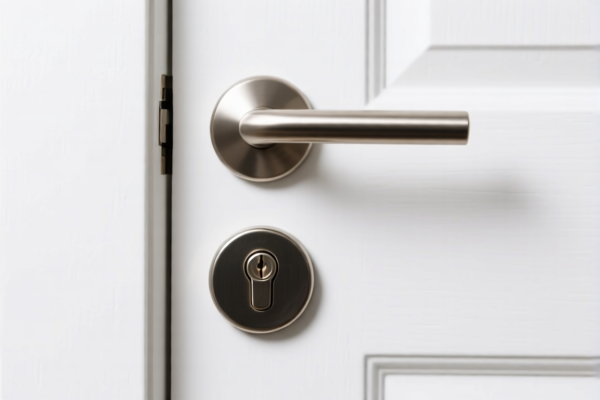
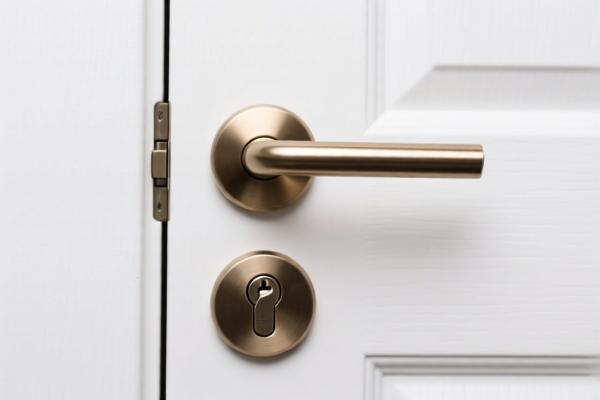
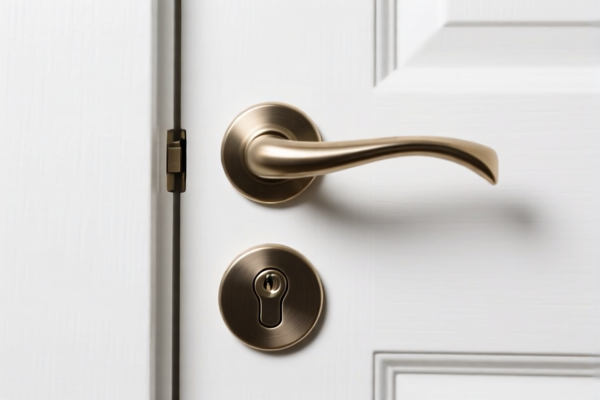
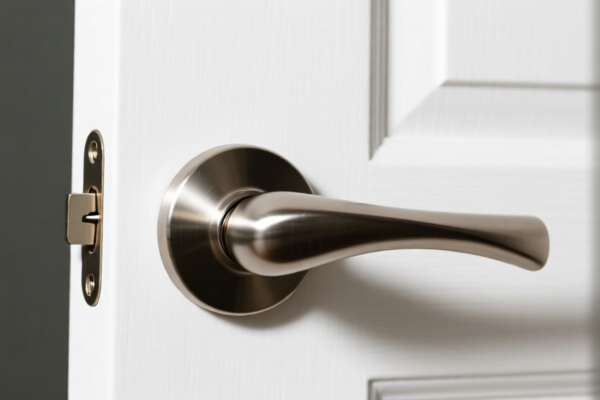
AI Analysis
🔑 T-Shaped Locks (Base Metal Door Locks)
🌐 HS Code Reference & Customs Clearance Guide | 2026 Latest Tariff Analysis | Professional Customs Strategy
📌 I. Product Definition & Classification: Do You Really Understand “T-Shaped Locks”?
A T-shaped lock typically refers to a door lock, lockset, or latch mechanism characterized by a T-shaped keyhole, faceplate, or internal mechanism structure. In international trade, these are primarily classified under Chapter 83: Miscellaneous Manufactured Articles of Base Metal.
The critical distinction lies in the application and construction:
- Interior/Exterior Door Locks: Locks suitable for use with standard residential or commercial doors (excluding garage, overhead, or sliding doors). These fall under 8301.40.60.
- Other Locks: Locks that do not fit the specific "door lock" description (e.g., cabinet locks, padlocks, or locks for non-standard doors). These fall under 8301.40.60.60.
⚠️ Key Distinction Point:
- If the lock is designed for interior/exterior doors (hinged doors, not sliding/garage) →归入 8301.40.60.30
- If it is not specifically for doors (e.g., cabinet, drawer, or general purpose) →归入 8301.40.60.60
📦 II. HS Code Classification Details (2026 Latest Tariff Authority)
| HS Code | Product Description | Applicable Scenario | Tax Rate |
|---|---|---|---|
8301.40.60.30 |
Door locks, locksets, and other locks suitable for interior/exterior doors (excluding garage, overhead, sliding doors) | Standard residential/commercial door locks, T-shaped door knobs, mortise locks | 0.0% |
8301.40.60.60 |
Other locks (not specified above) | Cabinet locks, drawer locks, padlocks, non-door specific hardware | 13.2% |
🔍 Important Reminder:
- The term "T-shaped" describes the form/structure, but customs classification relies on function and application.
- If your "T-shaped lock" is intended for a door, it must be declared as 8301.40.60.30.
- If it is for a cabinet, box, or non-door application, it must be declared as 8301.40.60.60.
- Do not mix these two codes. Misclassification can lead to duty underpayment (penalties) or overpayment (lost profit).
💰 III. 2026 Latest Tariff Rate Details (Including Surtaxes & Policy Add-ons)
✅ Applicable Country: United States (US)
✅ Origin: China (CN)
✅ Effective Date: Current (2025-2026)
🎯 1. 8301.40.60.30 —— Door Locks (Interior/Exterior)
| Item | Detail |
|---|---|
| Base Duty | 0.0% |
| Surtax | 0.0% |
| Total Duty | 0.0% |
| Calculation | CIF Value × 0% = $0 |
| De Minimis Eligible? | ✅ Yes (If under $800, can enter via Section 321) |
| Legal Basis | HTSUS 8301.40.60.30 |
📌 Explanation:
- No duty applies to standard door locks for residential/commercial use.
- This is a cost-effective category for importers.
- Section 321 (De Minimis): If the total value of the shipment is under $800 per person per day, it may enter duty-free with minimal documentation.
🎯 2. 8301.40.60.60 —— Other Locks
| Item | Detail |
|---|---|
| Base Duty | 5.7% |
| Surtax | 7.5% |
| Total Duty | 13.2% |
| Calculation | CIF Value × 13.2% |
| De Minimis Eligible? | ✅ Yes (If under $800, can enter via Section 321) |
| Legal Basis | HTSUS 8301.40.60.60 |
📌 Explanation:
- This category attracts additional tariffs due to its classification as "Other locks."
- The 13.2% rate includes both the base tariff and any applicable surtaxes.
- Section 321 (De Minimis): Still eligible if under $800.
- Cost Impact: For high-volume shipments, this 13.2% can significantly affect profit margins.
🛠️ IV. Customs Clearance Practical Advice (Battle-Tested Pitfall Guide)
✅ 1. Documentation Checklist (All Required)
| Document | Required | Explanation |
|---|---|---|
| ✅ Product Specification Sheet | ✔️ | Must clearly state: "T-shaped Lock for Door" or "T-shaped Lock for Cabinet" |
| ✅ Product Photos | ✔️ | Clear images of the lock, keyhole, and mounting mechanism |
| ✅ Commercial Invoice | ✔️ | Must specify: "Locks, Base Metal, T-Shape, for Doors/Cabinets" |
| ✅ Packing List | ✔️ | Include quantity, weight, and dimensions |
| ✅ Material Certificate | ✔️ | Specify base metal type (e.g., Brass, Zinc Alloy, Steel) |
✅ 2. Declaration Tips (Key Rules)
🔥 “Shape Doesn’t Matter, Function Does! Declare Based on Use!”
| Scenario | Correct HS Code | Wrong Practice |
|---|---|---|
| T-shaped lock for home door | 8301.40.60.30 |
Misdeclare as "Other Lock" → 13.2% Duty |
| T-shaped lock for cabinet | 8301.40.60.60 |
Misdeclare as "Door Lock" → 0% Duty (Undervaluation Risk) |
| T-shaped padlock | 8301.40.60.60 |
Misdeclare as "Door Lock" → 13.2% vs 0% (Risk) |
| Locks for sliding doors | 8301.40.60.60 |
Misdeclare as "Door Lock" → 13.2% vs 0% (Risk) |
✅ 3. Special Cases
| Situation | Handling Advice |
|---|---|
| T-shaped Lock with Electronic Components | If it has an electric motor or circuit board, it may move to Chapter 85 (Electrical Articles). Consult a customs broker. |
| Locks with Keys Included | Keys are considered "parts/accessories" and are included in the lock’s HS Code. Do not declare separately unless shipped separately. |
| High-Volume Shipment (> $800) | Must file Entry Summary (CBP Form 7501). Pay applicable duty (0% or 13.2%). |
| De Minimis (< $800) | No duty or entry summary required. Ideal for small businesses or samples. |
🌍 V. Global Market Clearance Comparison (2026 Latest)
| Country/Region | Recommended HS Code | Duty | Certification | Remarks |
|---|---|---|---|---|
| 🇺🇸 USA | 8301.40.60.30 (Door) / 8301.40.60.60 (Other) |
0% / 13.2% | None | Section 321 allows duty-free entry under $800 |
| 🇨🇳 China | 8301.40.60.30 / 8301.40.60.60 |
Varies | CCC (if electrical) | No special surtaxes |
| 🇪🇺 EU | 8301.40 |
0-3% | CE (if electrical) | No additional surtaxes |
| 🇬🇧 UK | 8301.40 |
0-3% | UKCA (if electrical) | Post-Brexit rules apply |
| 🇦🇺 Australia | 8301.40 |
5% | RCM (if electrical) | No surtaxes |
📌 Conclusion:
- The USA is the most complex due to Section 321 (De Minimis) and Chapter 83 distinctions.
- Door locks are duty-free in the USA, while other locks incur 13.2%.
- Always verify the intended use (door vs. non-door) to avoid misclassification.
📌 VI. Common Errors & Pitfall Guide (Lessons Learned)
❌ Error 1: Declaring a cabinet lock as a door lock
👉 Consequence: Underpayment of Duty (0% instead of 13.2%) → Penalties & Back Taxes!
❌ Error 2: Declaring a door lock as an other lock
👉 Consequence: Overpayment of Duty (13.2% instead of 0%) → Lost Profit!
❌ Error 3: Using "T-Shaped Lock" without specifying application
👉 Consequence: Customs may reclassify based on their judgment → Delays & Audits!
❌ Error 4: Ignoring Section 321 for small shipments
👉 Consequence: Unnecessary paperwork and potential duty if not filed correctly.
✅ Correct Practice:
“T-Shaped Mortise Lockset, Base Metal, for Interior/Exterior Doors, Model XYZ, Includes Keys”
🎯 VII. Conclusion: Precise Classification, Smooth Clearance, Cost Savings!
🎯 Remember the Rule:
🔹 “Door Locks = 0% | Other Locks = 13.2% | T-Shape is Just a Form!”
🔹 “Under $800? De Minimis Applies! Over $800? File Entry!”
📌 Pro Tip:
- If you are importing small batches (< $800), use Section 321 to save on duties and paperwork.
- If you are importing large batches, ensure your commercial invoice clearly states the application (Door vs. Non-Door) to avoid customs queries.
- Pre-clearance: Consider applying for an Advance Ruling if you are unsure about the classification.
📣 Immediate Action:
📞 Contact a licensed customs broker + Provide product photos + Declare exact application (Door/Cabinet)
🚀 Ensure your T-shaped locks clear customs smoothly, save costs, and reach your customers on time!
✨ Professional Clearance Starts with Accurate Classification!
💼 Every cent counts in international trade!
Customer Reviews
About HS Code Classification
The Harmonized System (HS) is an internationally standardized nomenclature developed by the World Customs Organization (WCO) to classify traded products. Over 200 countries use the HS system as the basis for customs tariffs, trade statistics, and import/export regulations.
Each HS code follows a hierarchical structure:
- Chapter (2 digits) — Broad category of goods (e.g., Chapter 84: Machinery and Mechanical Appliances)
- Heading (4 digits) — More specific grouping within the chapter
- Subheading (6 digits) — Internationally standardized breakdown, used by all WCO member countries
- National subdivisions (8-10 digits) — Country-specific extensions for further classification, such as US HTSUS 10-digit codes
Correct HS code classification is essential for smooth customs clearance, accurate duty payment, and compliance with trade regulations. Misclassification can lead to customs delays, overpayment of duties, or penalties.
When importing from CN to US, the applicable tariff rates may include:
- Most-Favored-Nation (MFN) rate — The standard duty rate applied to WTO members
- General rate — Applied to countries without trade agreements
- Trade remedy duties — Additional tariffs such as Section 301 (anti-dumping), Section 232 (national security), or countervailing duties
The information provided on this page is for reference purposes only. For official classification, please consult with your local customs authority or a licensed customs broker.