TV Protective Film
CN → US| HS Code | Tariff Rate | Origin | Destination | Doc |
|---|---|---|---|---|
| 3919905060 | 40.8% | CN | US | Official Doc |
| 3919905040 | 40.8% | CN | US | Official Doc |
| 3920991000 | 41.0% | CN | US | Official Doc |
| 3920992000 | 39.2% | CN | US | Official Doc |
Product Images
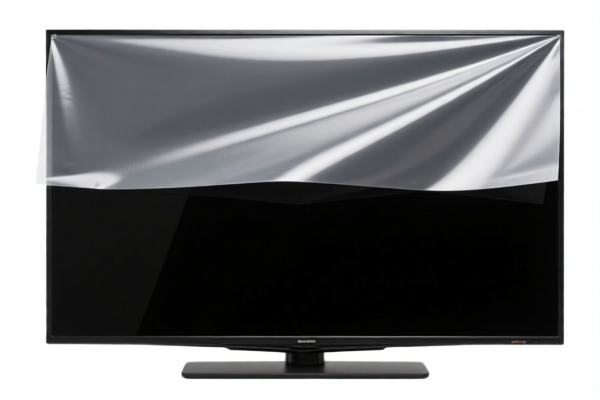
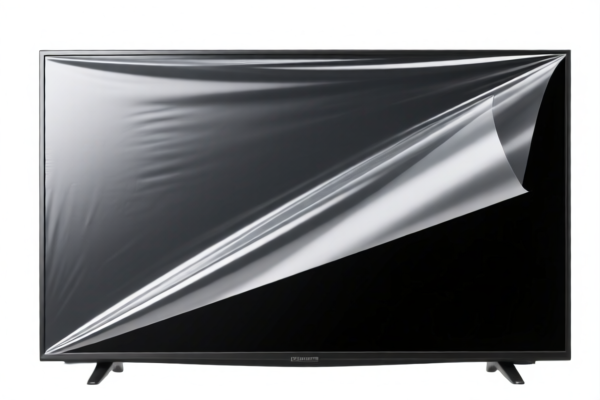
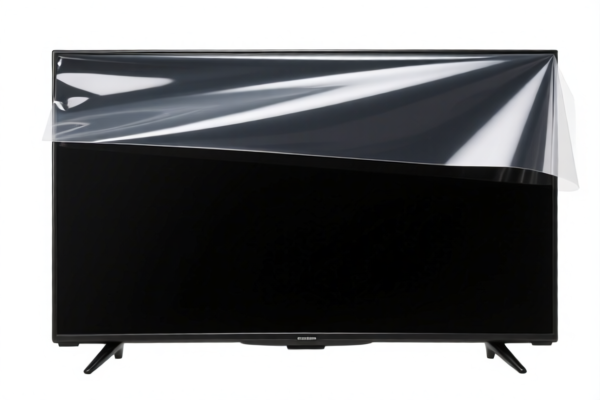
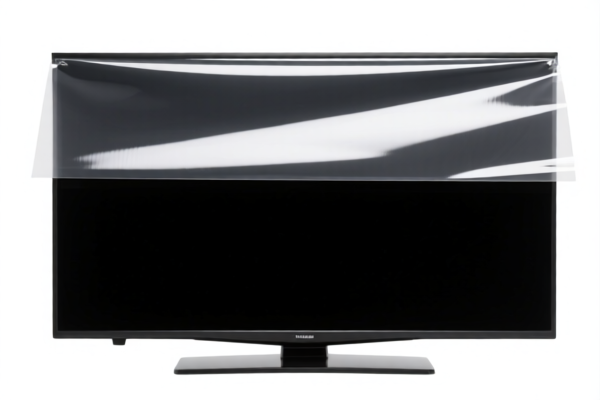
AI Analysis
📺 TV Protective Film (Screen Protector)
🌐 HS Code Reference & Customs Clearance Guide | 2026 Latest Tariff Analysis | Professional Clearance Strategy
📌 1. Product Definition and Classification: Do You Really Understand "TV Protective Film"?
TV Protective Film, also known as Screen Protector or Screen Membrane, is primarily used to protect the screen surface of televisions from scratches, fingerprints, and minor impacts. In international trade, its classification depends heavily on its material, form, and adhesive properties.
Key Classification Criteria: * Self-adhesive nature: If the product has an adhesive layer pre-applied, it is typically classified under Chapter 39 (Plastics) as self-adhesive plastics. * Material Composition: Most are made of PET (Polyethylene Terephthalate), TPU (Thermoplastic Polyurethane), or other plastic polymers. * Form: Flat sheets, rolls, or films.
⚠️ Critical Distinction:
- If the film is self-adhesive and made of plastic → Likely 3919 (Self-adhesive plastics).
- If the film is non-adhesive or just a bare plastic sheet/membrane → Likely 3920 (Other plates, sheets, film, foil and strip, of plastics).
📦 2. HS Code Classification Details (Latest 2026 Tariff Data)
Based on the provided data, here are the specific HS Codes applicable to TV Protective Films:
| HS Code | Product Description | Key Characteristics | Total Tax Rate |
|---|---|---|---|
| 3919.90.50.60 | Screen protective film, self-adhesive, plastic film, unspecified other | Form: Film; Material: Plastic; Self-adhesive; Fits "Other self-adhesive flat shapes" not elsewhere specified. | 40.8% |
| 3919.90.50.40 | Screen protective film, self-adhesive, PET/Plastic | Form: Film/Membrane; Material: PET/Plastic; Fits "Self-adhesive plastic plates, sheets, film, foil, strip". | 40.8% |
| 3920.99.10.00 | Screen protective film, non-self-adhesive (implied), PET/TPU Plastic | Form: Film; Material: PET/TPU; Fits "Other plastic plates, sheets, film, foil, strip". | 41.0% |
| 3920.99.20.00 | Screen protective film, non-self-adhesive, PET/TPU Plastic | Form: Film/Sheet; Material: PET/TPU; Fits "Other plastic material attributes". | 39.2% |
🔍 Important Note:
- 3919 codes apply to self-adhesive films.
- 3920 codes apply to non-adhesive or bare plastic films/sheets.
- The tax rates are very similar (~39–41%), but the legal basis differs. Misclassification can lead to customs delays or penalties.
💰 3. 2026 Latest Tariff Rate Breakdown (Including Additional Duties)
✅ Applicable Country: United States (US)
✅ Country of Origin: China (CN)
✅ Effective Date: From November 10, 2025 (including subsequent imports)
🎯 1. For Self-Adhesive Films: 3919.90.50.40 & 3919.90.50.60
| Item | Detail |
|---|---|
| Base Duty Rate | 5.8% (Ad Valorem) |
| Section 301 Additional Duty | +25.0% |
| Section 122 Additional Duty | +10.0% |
| Total Effective Duty Rate | 40.8% |
| Tax Calculation | CIF Value × 40.8% |
| De Minimis Exemption Eligible? | ❌ No (Not eligible for de minimis exemption) |
| Legal Basis Path | Section 301 → Section 122 → HS 3919.90.50.xx |
📌 Explanation:
- 5.8% Base Duty: Standard US MFN rate for plastic films.
- 25% Section 301: Tariffs imposed on Chinese goods under Section 301 of the Trade Act of 1974.
- 10% Section 122: Additional tariff under Section 122 of the Trade Expansion Act of 1962 for imports affecting national security.
- Total: 40.8%. This is a high tariff that must be factored into pricing strategies.
🎯 2. For Non-Self-Adhesive Films: 3920.99.10.00
| Item | Detail |
|---|---|
| Base Duty Rate | 6.0% (Ad Valorem) |
| Section 301 Additional Duty | +25.0% |
| Section 122 Additional Duty | +10.0% |
| Total Effective Duty Rate | 41.0% |
| Tax Calculation | CIF Value × 41.0% |
| De Minimis Exemption Eligible? | ❌ No |
| Legal Basis Path | Section 301 → Section 122 → HS 3920.99.10.00 |
🎯 3. For Non-Self-Adhesive Films: 3920.99.20.00
| Item | Detail |
|---|---|
| Base Duty Rate | 4.2% (Ad Valorem) |
| Section 301 Additional Duty | +25.0% |
| Section 122 Additional Duty | +10.0% |
| Total Effective Duty Rate | 39.2% |
| Tax Calculation | CIF Value × 39.2% |
| De Minimis Exemption Eligible? | ❌ No |
| Legal Basis Path | Section 301 → Section 122 → HS 3920.99.20.00 |
📌 Note:
- The 3920.99.20.00 code offers the lowest total duty (39.2%) if the film is non-self-adhesive.
- However, most TV screen protectors sold to consumers are self-adhesive, making 3919 codes more common and resulting in a 40.8% duty.
- Section 122 (10%) is a critical component added to both categories, significantly increasing the total cost.
🛠️ 4. Customs Clearance Practical Advice (Real-World Pitfall Guide)
✅ 1. Required Documentation Checklist (No Missing Items)
| Document | Must Provide | Explanation |
|---|---|---|
| ✅ Product Specification Sheet | ✔️ | Must detail material (PET, TPU), thickness, adhesive type, dimensions. |
| ✅ Product Photos | ✔️ | Clear images showing the film, adhesive layer (if any), packaging, and labels. |
| ✅ Commercial Invoice | ✔️ | Clearly state "TV Screen Protective Film", material, and HS Code. |
| ✅ Packing List | ✔️ | Detail dimensions, weight, and quantity per box. |
| ✅ Certificate of Origin (CO) | ✔️ | Critical for determining eligibility for any potential exemptions (though unlikely for China origin). |
| ✅ Adhesive Composition Statement | ✔️ | To prove it falls under 3919 (self-adhesive) vs 3920. |
✅ 2. Declaration Tips (Key Mantra)
🔥 "Specify Material, Clarify Adhesion, Name It Right, Avoid Delays!"
| Situation | Correct Declaration | Wrong Practice |
|---|---|---|
| Self-adhesive PET film | 3919.90.50.40 - "Self-adhesive plastic film, PET" |
"Screen Protector" (Too vague) |
| Non-adhesive TPU film | 3920.99.20.00 - "Plastic film, TPU, non-adhesive" |
"Protective Sheet" |
| Roll format | Specify length/width in cm/inches | "One roll" |
| With applicator kit | Declare film separately from applicator tool | Mixed classification |
✅ 3. Special Cases Handling
| Case | Handling Advice |
|---|---|
| OEM Custom Sizes | Provide cut dimensions; ensure packaging reflects "film" not "TV accessory". |
| Multi-layer Films | Describe material of each layer; total duty applies to CIF value. |
| Applicator Kits Included | If the kit is minor, declare film as primary item; if significant, may require separate code. |
| Samples | Even samples are subject to duties; do not mark as "Free" without proper declaration. |
🌍 5. Global Market Comparison (2026 Latest)
| Country/Region | Recommended HS Code | Duty Rate (China Origin) | Certification Requirements | Remarks |
|---|---|---|---|---|
| 🇺🇸 USA | 3919.90.50.40 / 3920.99.20.00 |
39.2% – 41.0% | None specific | High tariffs due to Section 301 & 122 |
| 🇨🇳 China | 3919.90.50.40 / 3920.99.20.00 |
~5-6% | RoHS | Low duties |
| 🇪🇺 EU | 3920.61.00 / 3919.10 |
~0-6.5% | CE, REACH | No additional punitive tariffs |
| 🇬🇧 UK | 3919.10 / 3920.61 |
~0-6.5% | UKCA | Post-Brexit rules apply |
| 🇦🇺 Australia | 3920.61 |
~5% | RCM | No major punitive tariffs |
📌 Conclusion:
- The US market is the most challenging due to the cumulative 40.8% tariff (5.8% + 25% + 10%).
- For other markets (EU, UK, AU), duties are significantly lower, but compliance with local standards (CE, REACH) is crucial.
📌 6. Common Mistakes & Pitfall Guide (Blood & Tears Lessons)
❌ Mistake 1: Declaring "Screen Protector" without specifying "Self-Adhesive"
👉 Consequence: Customs may classify it as a generic plastic film (3920) or misclassify, leading to 41% duty instead of potential lower rates or vice versa. If it is self-adhesive but declared as non-adhesive, it’s fraud.
❌ Mistake 2: Ignoring Section 122 (10%)
👉 Consequence: Assuming only Section 301 (25%) applies. The total is 40.8%, not 30.8%. Underestimation leads to underpayment and penalties.
❌ Mistake 3: Using "TV Accessory" as a generic description
👉 Consequence: Customs may assign a higher, unspecified duty rate. Always use HS Code-specific descriptions.
❌ Mistake 4: Not disclosing Material (PET vs. PVC vs. TPU)
👉 Consequence: Different plastic materials may have different base duty rates. Inaccuracy can lead to audits.
✅ Correct Approach:
"TV Screen Protective Film, Self-Adhesive, PET Material, 40x60cm, 0.2mm Thick, Roll Packed, HS 3919.90.50.40"
🎯 7. Conclusion: Professional Declaration, Save Time and Money!
🎯 Remember Mantra:
🔹 "Self-Adhesive = 3919, Non-Adhesive = 3920"
🔹 "US Duty = Base + 25% + 10% = ~41%"
🔹 "Declare Accurately, Avoid Delays and Penalties!"
📌 Pro Tip:
If your TV protective film is manufactured in Vietnam, Mexico, or Thailand, you may be eligible for Section 301/122 exemptions or lower tariffs.
Recommendation: Always apply for a Pre-Ruling from US Customs (CBP) to confirm the correct HS Code and duty rate before shipping.
📣 Immediate Action:
📞 Contact a professional customs broker + Provide product photos + Request HS Code Pre-Ruling
🚀 Ensure your TV Protective Films clear customs smoothly, maximize margins, and reach your customers on time!
✨ Professional customs clearance starts with precise classification!
💼 Every dollar of duty cost deserves to be calculated accurately!
Customer Reviews
About HS Code Classification
The Harmonized System (HS) is an internationally standardized nomenclature developed by the World Customs Organization (WCO) to classify traded products. Over 200 countries use the HS system as the basis for customs tariffs, trade statistics, and import/export regulations.
Each HS code follows a hierarchical structure:
- Chapter (2 digits) — Broad category of goods (e.g., Chapter 84: Machinery and Mechanical Appliances)
- Heading (4 digits) — More specific grouping within the chapter
- Subheading (6 digits) — Internationally standardized breakdown, used by all WCO member countries
- National subdivisions (8-10 digits) — Country-specific extensions for further classification, such as US HTSUS 10-digit codes
Correct HS code classification is essential for smooth customs clearance, accurate duty payment, and compliance with trade regulations. Misclassification can lead to customs delays, overpayment of duties, or penalties.
When importing from CN to US, the applicable tariff rates may include:
- Most-Favored-Nation (MFN) rate — The standard duty rate applied to WTO members
- General rate — Applied to countries without trade agreements
- Trade remedy duties — Additional tariffs such as Section 301 (anti-dumping), Section 232 (national security), or countervailing duties
The information provided on this page is for reference purposes only. For official classification, please consult with your local customs authority or a licensed customs broker.