TV Stand
CN → US| HS Code | Tariff Rate | Origin | Destination | Doc |
|---|---|---|---|---|
| 9403608093 | 35.0% | CN | US | Official Doc |
| 9403708015 | 10.0% | CN | US | Official Doc |
| 9403608093 | 35.0% | CN | US | Official Doc |
| 9403409060 | 35.0% | CN | US | Official Doc |
| 9403200078 | 85.0% | CN | US | Official Doc |
Product Images


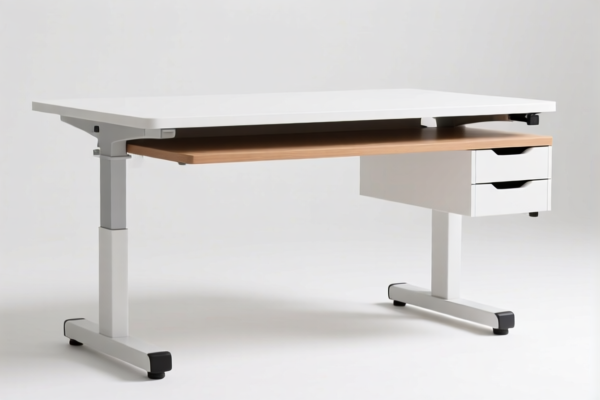
AI Analysis
🛋️ TV Stand (Television Cabinets & Storage Units)
🌐 HS Code Reference & Customs Clearance Guide | 2026 Latest Tariff Breakdown | Professional Clearance Strategy
📌 Part 1: Product Definition & Classification: Do You Really Know "TV Stands"?
A TV Stand is a piece of furniture designed to support a television and organize media components. In international trade, its classification depends strictly on the material of construction, which drastically changes the duty rate.
There are two primary categories:
- Wooden TV Stands: Constructed primarily of wood (solid, veneer, or particle board).
- Classification Logic: Falls under "Other Wooden Furniture."
- Plastic/Non-Metal TV Stands: Constructed primarily of plastic or other non-metal materials.
- Classification Logic: Falls under "Other Household Furniture of Plastics."
⚠️ Critical Distinction:
- Material Matters: A "TV Stand" made of Wood faces 35% total duties.
- A "TV Stand" made of Plastic faces only 10% total duties.
- Misclassification Risk: Declaring a plastic stand as wood (or vice versa) to evade tariffs can lead to seizure, fines, and audits.
📦 Part 2: HS Code Classification Details (2026 Official Tariff Matching)
Based on the provided data, here is the authoritative breakdown for TV Stands and related furniture items.
| HS Code | Product Description | Material Basis | Total Tax Rate |
|---|---|---|---|
| 9403.60.80.93 | TV Stand (Wooden) | Classified as Other Wooden Furniture. | 35.0% |
| 9403.70.80.15 | TV Stand (Plastic/Non-Metal) | Classified as Plastic or Other Non-Metal Household Furniture. | 10.0% |
| 9403.70.80.15 | Bedside Table (Plastic) | Classified as Plastic or Other Non-Metal Household Furniture (Similar logic to TV Stand). | 10.0% |
| 9403.40.90.60 | Reference: Wooden Cabinet | Wooden Cabinet (Permanent installation, inferred). | 35.0% |
| 9403.20.00.78 | Reference: Metal Cabinet | Other Metal Furniture (Inferred Metal Material). | 85.0% |
🔍 Key Clarification:
- The HS Code 9403.60.80.93 is the primary classification for Wooden TV Stands.
- The HS Code 9403.70.80.15 is the primary classification for Plastic/Non-Metal TV Stands (and similar items like plastic bedside tables).
- Do not confuse TV Stands with Metal Cabinets (9403.20.00.78), which attract 85% duties due to steel/aluminum penalties.
💰 Part 3: 2026 Latest Tariff Rate Breakdown (Detailed Policy Analysis)
✅ Applicable Market: US (United States)
✅ Origin: China (CN)
✅ Effective Date: 2026 (Current Policy Cycle)
🎯 1. 9403.60.80.93 —— Wooden TV Stand
The most common classification for traditional or high-end wooden units.
| Tax Component | Rate | Details & Legal Basis |
|---|---|---|
| Base Tariff | 0.0% | Standard MFN duty rate is often 0% for this subheading. |
| Additional Duty (Section 301) | +25.0% | "Additional Tariff" under USITC 301 Action (Trade Remedy). |
| Section 122 Tariff | +10.0% | Specific penalty tariff under Section 122 (Trade Adjustment). |
| TOTAL TAX RATE | 35.0% | 0% + 25% + 10% |
| Calculation | CIF Value × 35% |
📌 Explanation:
- 25% Additional Duty: This is the standard "Section 301" tariff applied to Chinese wood furniture to protect domestic manufacturers.
- 10% Section 122 Tariff: A specific policy layer added on top of the base rate.
- Impact: A $1,000 wooden TV stand will incur $350 in duties before any port fees.
🎯 2. 9403.70.80.15 —— Plastic / Non-Metal TV Stand
A cheaper, modern alternative often used for entertainment centers.
| Tax Component | Rate | Details & Legal Basis |
|---|---|---|
| Base Tariff | 0.0% | Standard MFN duty rate. |
| Additional Duty (Section 301) | 0.0% | NO Section 301 "Additional Tariff" applied to plastics in this specific subheading. |
| Section 122 Tariff | +10.0% | Specific penalty tariff under Section 122 still applies. |
| TOTAL TAX RATE | 10.0% | 0% + 0% + 10% |
| Calculation | CIF Value × 10% |
📌 Explanation:
- 0% Additional Duty: Unlike wood, plastic furniture in this category escapes the heavy 25% Section 301 penalty.
- 10% Section 122 Tariff: This is the only surcharge.
- Impact: A $1,000 plastic TV stand incurs only $100 in duties. Significant cost saving!⚠️ Special Note on Metal Furniture (
9403.20.00.78):
If a "TV Stand" is mistakenly declared as Metal (e.g., metal legs treated as the whole), the rate jumps to 85%:
- Base: 0%
- Additional: 25%
- Section 122: 10%
- Steel/Aluminum/Copper Penalty: +50% (This is the killer clause).
🛠️ Part 4: Customs Clearance Practical Advice (Pitfall Avoidance)
✅ 1. Preparation Checklist (Non-Negotiable)
| Document | Requirement | Why It Matters |
|---|---|---|
| ✅ Bill of Materials (BOM) | ✔️ Mandatory | Must explicitly state "Wood Veneer," "Particle Board," or "Plastic." Proves the material for HS Code selection. |
| ✅ Product Photographs | ✔️ Mandatory | Clear shots of joints (wood glue/nails vs. plastic weld) to prevent "Metal" misclassification. |
| ✅ Construction Diagrams | ✔️ Mandatory | Shows internal structure. Prevents customs from guessing the material. |
| ✅ Commercial Invoice | ✔️ Mandatory | Must describe item as "TV Stand, Wooden" or "TV Stand, Plastic" – Do not use generic terms like "Furniture". |
| ✅ Packing List | ✔️ Mandatory | Weight and volume to verify material density (e.g., heavy density often indicates wood vs. light plastic). |
✅ 2. Declaration Strategy (The "Golden Rules")
🔥 Rule #1: Material is King.
Your HS Code is determined only by the primary material.
- If >50% Wood → 9403.60.80.93 (35% Tax).
- If >50% Plastic → 9403.70.80.15 (10% Tax).🔥 Rule #2: Avoid the "Metal Trap".
Even if a TV stand has metal legs, if the main body is wood or plastic, it must not be declared as "Other Metal Furniture" (9403.20.00.78).
Consequence: 85% tax + potential seizure for misdeclaration.🔥 Rule #3: Specific Naming.
Do NOT declare as: "Furniture," "Cabinet," or "Storage Unit."
DO declare as: "TV Stand, Wooden" or "TV Stand, Plastic Material."
✅ 3. Special Handling Scenarios
| Scenario | Risk | Correct Action |
|---|---|---|
| Mixed Material (Wood + Metal Legs) | High Risk of 85% tax if declared as metal. | Declare based on primary material (Wood) → Use 9403.60.80.93. Provide photos showing wood is the main body. |
| Plastic TV Stand with Wood Finish | Risk of being taxed as wood (35%). | Provide BOM showing plastic is the structural core. Declare as 9403.70.80.15. |
| TV Stand with Built-in Electronics | Risk of classification error. | If electronics are secondary to the furniture function, keep furniture HS Code. If electronics dominate, may need mixed classification. |
🌍 Part 5: Market Comparison & Strategic Conclusion
| Country | HS Code (Wood) | HS Code (Plastic) | Total Tax (Wood) | Total Tax (Plastic) | Strategy |
|---|---|---|---|---|---|
| 🇺🇸 USA | 9403.60.80.93 |
9403.70.80.15 |
35.0% | 10.0% | Prioritize Plastic if cost allows to save 25%. |
| 🇨🇳 China | 9403.60.80.93 |
9403.70.80.15 |
~3-5% | ~3-5% | Domestic production favors Wood. |
| 🇪🇺 EU | 9403.60.80.93 |
9403.70.80.15 |
~0-2% | ~0-2% | No Section 122/301 tariffs. |
📌 Strategic Insight:
- Wooden TV Stands are heavily penalized in the US due to the 25% + 10% structure.
- Plastic TV Stands are the strategic alternative for US imports, avoiding the 25% Section 301 hit entirely.
- Metal components must be minimized or carefully categorized to avoid the 85% disaster rate.
📌 Part 6: Common Mistakes & "Blood and Tears" Warnings
❌ Mistake 1: Declaring a Wooden TV Stand as "Plastic" to avoid 35%.
👉 Result: Customs inspection reveals wood fibers. Seizure, 100% penalty + back taxes.
❌ Mistake 2: Declaring a TV Stand with metal legs as "Other Metal Furniture" (9403.20).
👉 Result: 85% Tax. You paid for a 35% tax but got hit with 50% more for the legs.
❌ Mistake 3: Generic description "Home Furniture."
👉 Result: Customs officer guesses the worst-case scenario (Metal/Wood hybrid) and delays shipment.
✅ Correct Approach:
"TV Stand, Wooden, Particle Board with Veneer Finish, Metal Legs (minor), Model XYZ, HS 9403.60.80.93."
🎯 Part 7: Conclusion: Smart Declaration, Higher Profit!
🎯 Remember the Formula:
🔹 Wooden = 35% (Base 0% + 25% Add. + 10% Sec 122)
🔹 Plastic = 10% (Base 0% + 0% Add. + 10% Sec 122)
🔹 Metal = 85% (Base 0% + 25% Add. + 10% Sec 122 + 50% Steel/Aluminum Penalty)
🚀 Action Plan:
1. Audit your BOM: Is it 51% wood or 51% plastic?
2. Choose the right HS Code: Don't gamble on "Furniture."
3. Document the material: Send photos and specs with every invoice.
📣 Final Tip:
If your product is Wooden, consider diversifying supply chains (e.g., Vietnam, Mexico) to potentially bypass Section 301 tariffs. If Plastic, you are safe in the US market, but ensure the plastic is clearly documented!
✨ Professional Clearance Starts with Precision!
💼 Your margins depend on your HS Code accuracy!
Customer Reviews
About HS Code Classification
The Harmonized System (HS) is an internationally standardized nomenclature developed by the World Customs Organization (WCO) to classify traded products. Over 200 countries use the HS system as the basis for customs tariffs, trade statistics, and import/export regulations.
Each HS code follows a hierarchical structure:
- Chapter (2 digits) — Broad category of goods (e.g., Chapter 84: Machinery and Mechanical Appliances)
- Heading (4 digits) — More specific grouping within the chapter
- Subheading (6 digits) — Internationally standardized breakdown, used by all WCO member countries
- National subdivisions (8-10 digits) — Country-specific extensions for further classification, such as US HTSUS 10-digit codes
Correct HS code classification is essential for smooth customs clearance, accurate duty payment, and compliance with trade regulations. Misclassification can lead to customs delays, overpayment of duties, or penalties.
When importing from CN to US, the applicable tariff rates may include:
- Most-Favored-Nation (MFN) rate — The standard duty rate applied to WTO members
- General rate — Applied to countries without trade agreements
- Trade remedy duties — Additional tariffs such as Section 301 (anti-dumping), Section 232 (national security), or countervailing duties
The information provided on this page is for reference purposes only. For official classification, please consult with your local customs authority or a licensed customs broker.