Table Leg Pad
CN → US| HS Code | Tariff Rate | Origin | Destination | Doc |
|---|---|---|---|---|
| 8302423065 | 71.4% | CN | US | Official Doc |
| 8302426000 | 20.9% | CN | US | Official Doc |
| 4016990500 | 20.9% | CN | US | Official Doc |
| 3926902500 | 24.0% | CN | US | Official Doc |
Product Images
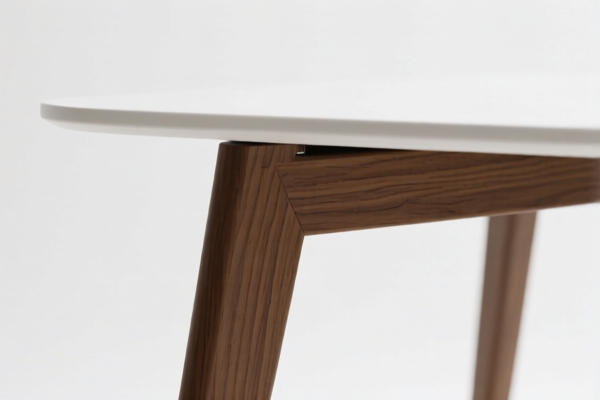
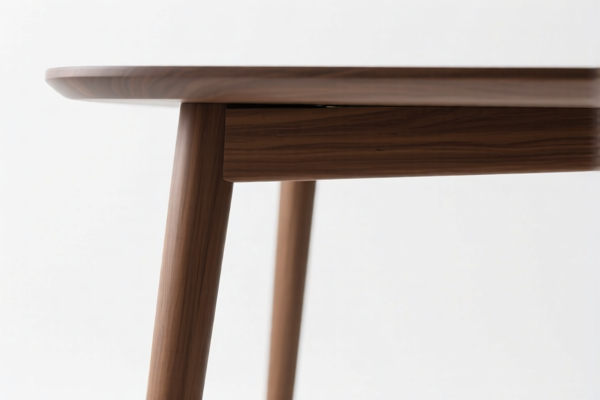
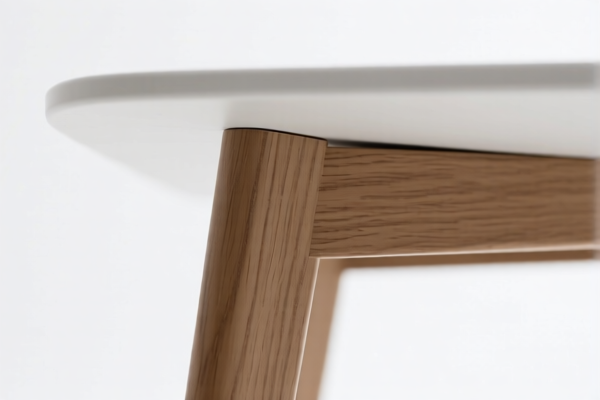
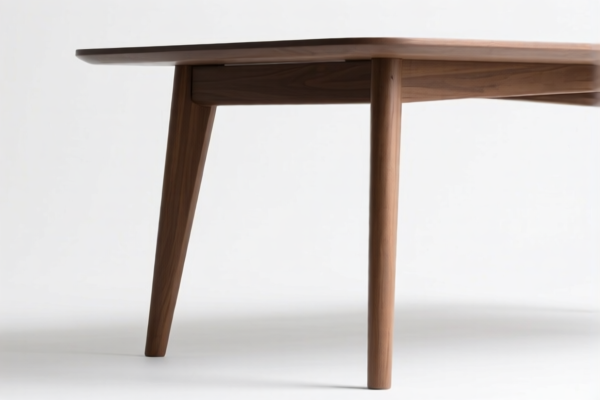
AI Analysis
🛋️ Table Leg Pad (Furniture Accessories)
🌐 HS Code Reference & Customs Clearance Guide | 2026 Latest Tariff Analysis | Professional Strategy 📌 I. Product Definition & Classification: Do You Really Understand "Table Leg Pads"?
Table Leg Pads are small components attached to the bottom of furniture legs (wood, metal, plastic, etc.). Their primary functions are: 1. Floor Protection: Preventing scratches on hard floors (wood, tile, laminate). 2. Noise Reduction: Dampening sound when furniture is moved. 3. Stabilization: Leveling furniture on uneven surfaces.
In international trade, the classification depends heavily on Material (Rubber vs. Plastic) and Function (Accessory vs. General Part).
⚠️ Key Distinction Point: - If the material is Rubber/Synthetic Rubber → Likely Chapter 40. - If the material is Plastic → Likely Chapter 39. - Customs Logic: They are rarely classified under "Furniture Parts" (Chapter 94) because specific HS codes exist for rubber/plastic articles in Chapters 40 and 39.
📦 II. HS Code Classification Details (2026 Latest Tariff Authority Comparison)
Based on the provided data, here are the four most probable classifications for "Table Leg Pads" from China to the US:
| HS Code | Product Description | Match Logic | Material Assumption |
|---|---|---|---|
4016.99.05.00 |
Other vulcanized rubber articles; household articles / accessories | Inferred as rubber-based household accessory; fits "other vulcanized rubber articles" | 🟥 Rubber |
3926.90.25.00 |
Other articles of plastics; household articles / accessories (bottom-up category) | Fits "plastic articles" logic; general-purpose pad/dowel | 🟦 Plastic |
4016.99.60.50 |
Other vulcanized rubber articles; general industrial/commercial use | Based on common sense: rubber material, no specific conflict | 🟥 Rubber |
3926.30.50.00 |
Other plastic articles; fasteners / connectors / accessories | Treated as a "furniture connector/fixture" due to function | 🟦 Plastic |
🔍 Critical Insight: - Chapter 40 (Rubber) codes (
4016.99...) generally have lower base tariffs (2.5% - 3.4%) but may face high specific surcharges. - Chapter 39 (Plastic) codes (3926.90.../3926.30...) have higher base tariffs (5.3% - 6.5%) and similar surcharges. - Material Verification is Key: If you declare "Rubber" but it contains >10% plastic, or vice versa, Customs may reclassify and penalize.
💰 III. 2026 Latest Tariff Rate Breakdown (Including Surcharges & Policy Add-ons)
✅ Applicable Country: United States (US)
✅ Origin: China (CN)
✅ Effective Date: Current rates apply (Subject to Section 301 & IEEPA updates)
🎯 1. 4016.99.05.00 —— Vulcanized Rubber Articles (Household/Accessories)
| Item | Content |
|---|---|
| Base Tariff | 3.4% (Ad Valorem) |
| Section 301 Surcharge | 7.5% |
| IEEPA / 122 Clause Tariff | 10% |
| Total Effective Rate | 20.9% |
| Tax Calculation | CIF Value × 20.9% |
| De Minimis Eligibility | ❌ No (Deny De Minimis) |
| Legal Basis Path | USITC:4016.99.05.00 → Section 301: 7.5% → IEEPA:10% |
📌 Explanation:
- This is often the most cost-effective option if the product is indeed rubber. - The base tariff is low (3.4%), but the 301 surcharge (7.5%) and IEEPA tariff (10%) make the total significant. - Advantage: Lower base rate than plastic alternatives.
🎯 2. 3926.90.25.00 —— Other Plastic Articles (Household/Accessories)
| Item | Content |
|---|---|
| Base Tariff | 6.5% (Ad Valorem) |
| Section 301 Surcharge | 7.5% |
| IEEPA / 122 Clause Tariff | 10% |
| Total Effective Rate | 24.0% |
| Tax Calculation | CIF Value × 24.0% |
| De Minimis Eligibility | ❌ No (Deny De Minimis) |
| Legal Basis Path | USITC:3926.90.25.00 → Section 301: 7.5% → IEEPA:10% |
📌 Note:
- This is a "catch-all" category for plastic household items. - Disadvantage: The base tariff (6.5%) is nearly double that of the rubber category (4016.99.05.00). - Risk: If Customs determines the product is "primarily rubber," you may face back-taxes and penalties.
🎯 3. 4016.99.60.50 —— Other Vulcanized Rubber Articles (General)
| Item | Content |
|---|---|
| Base Tariff | 2.5% (Ad Valorem) |
| Section 301 Surcharge | 25.0% |
| IEEPA / 122 Clause Tariff | 10% |
| Total Effective Rate | 37.5% |
| Tax Calculation | CIF Value × 37.5% |
| De Minimis Eligibility | ❌ No (Deny De Minimis) |
| Legal Basis Path | USITC:4016.99.60.50 → Section 301: 25.0% → IEEPA:10% |
📌 Warning:
- Although the base tariff is the lowest (2.5%), the Section 301 surcharge is extremely high (25%). - This results in the highest total tax rate (37.5%) among all options. - Avoid this code unless specifically required by Customs for a different product type.
🎯 4. 3926.30.50.00 —— Plastic Fasteners/Connectors/Accessories
| Item | Content |
|---|---|
| Base Tariff | 5.3% (Ad Valorem) |
| Section 301 Surcharge | 7.5% |
| IEEPA / 122 Clause Tariff | 10% |
| Total Effective Rate | 22.8% |
| Tax Calculation | CIF Value × 22.8% |
| De Minimis Eligibility | ❌ No (Deny De Minimis) |
| Legal Basis Path | USITC:3926.30.50.00 → Section 301: 7.5% → IEEPA:10% |
📌 Analysis:
- This code treats the pad as a "connector" or "fixture" rather than a general household article. - Rate: 22.8% is competitive, sitting between the two main rubber/plastic household codes. - Logic: Useful if the pad has a specific mechanical connection function (e.g., screw-in, snap-fit).
🛠️ IV. Customs Clearance Practical Advice (Real-World Pitfall Avoidance)
✅ 1. Preparation Checklist (Mandatory)
| Document | Required? | Purpose |
|---|---|---|
| ✅ Product Specification Sheet | ✔️ | Must state material composition (e.g., "100% Synthetic Rubber" or "Polypropylene"). |
| ✅ Material Certificate | ✔️ | Proof of material origin and type. Critical for Chapter 39 vs. 40 distinction. |
| ✅ Product Photos | ✔️ | Clear shots of the pad, texture, and packaging. |
| ✅ Commercial Invoice | ✔️ | Must explicitly state "Table Leg Pad" and material. |
| ✅ Packing List | ✔️ | Show quantity and weight. |
⚠️ Critical Reminder:
- Do not simply declare "Furniture Accessories." You must specify the material. - If the pad is composite (e.g., rubber with a plastic insert), you must declare the principal material or risk misclassification.
✅ 2. Declaration Strategy (Key Tips)
🔥 "Material First, Function Second. Don't Guess, Prove!"
| Scenario | Recommended HS Code | Risk if Misdeclared |
|---|---|---|
| Pure Rubber Pads | 4016.99.05.00 (20.9%) |
Declaring as Plastic (3926.90.25.00) → Overpay 3.1% + Audit Risk |
| Pure Plastic Pads | 3926.90.25.00 (24.0%) |
Declaring as Rubber (4016.99.05.00) → Underpay, Penalty + Back Tax |
| Composite (Rubber Body + Plastic Core) | Depends on Principal Material | High risk of reclassification by CBP |
| General "Furniture Parts" | ❌ Avoid | Customs will force Chapter 39 or 40 anyway, causing delays |
✅ 3. Special Handling for "122 Clause" / IEEPA Tariffs
📌 Note: All four HS codes listed above are subject to the 10% IEEPA/122 Clause Tariff. - This is a flat add-on for Chinese-origin goods in these categories. - No Exemption: These codes do not qualify for common de minimis exemptions (Section 321) for high-value shipments, but even for low-value, the Deny De Minimis status applies to Chapter 39 and 40 articles from China in many contexts. - Recommendation: Always calculate landed cost including the full 20-37% tax burden.
🌍 V. Global Market Comparison (2026 Latest)
| Country/Region | Recommended HS Code | Estimated Duty (China Origin) | Certification Requirements | Notes |
|---|---|---|---|---|
| 🇺🇸 USA | 4016.99.05.00 |
20.9% | None specific for pads | High scrutiny on material |
| 🇨🇳 China | 4016.99.05.00 |
3.4% | None | No 301/IEEPA surcharges |
| 🇪🇺 EU | 4016.99.90 (Similar) |
5.3% | REACH (Chemical Safety) | No Section 301 equivalent |
| 🇬🇧 UK | 4016.99.90 (Similar) |
5.3% | UKCA/CE | Post-Brexit tariffs may vary |
📌 Conclusion:
- The US market is the most complex due to the layered tariff structure (Base + 301 + IEEPA). - China domestic or EU exports are significantly cheaper in terms of duty burden. - US Importers: Must budget for ~21-37% total tax.
📌 VI. Common Mistakes & Pitfalls (Blood Lessons)
❌ Mistake 1: Declaring "Plastic" when the product is 60% Rubber.
👉 Consequence: Customs audits material composition. Back taxes + 10% penalty.
❌ Mistake 2: Using "Furniture Parts" (Chapter 94) as the primary code.
👉 Consequence: CBP rejects the classification. Forced reclassification to Chapter 39/40. Delay in clearance.
❌ Mistake 3: Ignoring the 10% IEEPA/122 Clause.
👉 Consequence: Under-declaration. Sudden bill for ~10% of CIF value + interest.
❌ Mistake 4: Confusing 4016.99.60.50 (25% 301) with 4016.99.05.00 (7.5% 301).
👉 Consequence: Paying 37.5% tax instead of 20.9%. A 16.6% savings mistake!
✅ Correct Practice:
"Table Leg Pad, Synthetic Rubber, Black, 20mm Diameter, For Wooden Furniture, Made in China"
🎯 VII. Conclusion: Professional Declaration, Cost Savings
🎯 Remember the Mantra:
🔹 "Rubber is Cheaper Base (3.4%), Plastic is Higher Base (6.5%). Avoid the 25% 301 Trap (
4016.99.60.50)!"
🔹 "Material Proof is King. No Proof, No Clearance."
🔹 "Total Tax = Base + 301 + IEEPA. Plan for 21-37% Land Cost."
📌 Pro Tip:
If your volume is high, consider Applying for an Advance Ruling from US CBP. This provides legal certainty on your HS Code and protects you from post-audit penalties.
📣 Immediate Action:
📞 Contact your customs broker with material certificates.
📊 Compare4016.99.05.00(20.9%) vs.3926.90.25.00(24.0%) based on actual product specs.
🚀 Optimize your supply chain to minimize landed costs!
✨ Precision in Classification, Profit in Trade!
💼 Every percentage point of duty matters!
Customer Reviews
About HS Code Classification
The Harmonized System (HS) is an internationally standardized nomenclature developed by the World Customs Organization (WCO) to classify traded products. Over 200 countries use the HS system as the basis for customs tariffs, trade statistics, and import/export regulations.
Each HS code follows a hierarchical structure:
- Chapter (2 digits) — Broad category of goods (e.g., Chapter 84: Machinery and Mechanical Appliances)
- Heading (4 digits) — More specific grouping within the chapter
- Subheading (6 digits) — Internationally standardized breakdown, used by all WCO member countries
- National subdivisions (8-10 digits) — Country-specific extensions for further classification, such as US HTSUS 10-digit codes
Correct HS code classification is essential for smooth customs clearance, accurate duty payment, and compliance with trade regulations. Misclassification can lead to customs delays, overpayment of duties, or penalties.
When importing from CN to US, the applicable tariff rates may include:
- Most-Favored-Nation (MFN) rate — The standard duty rate applied to WTO members
- General rate — Applied to countries without trade agreements
- Trade remedy duties — Additional tariffs such as Section 301 (anti-dumping), Section 232 (national security), or countervailing duties
The information provided on this page is for reference purposes only. For official classification, please consult with your local customs authority or a licensed customs broker.