Table Saw Calibrator
CN → US| HS Code | Tariff Rate | Origin | Destination | Doc |
|---|---|---|---|---|
| 9031100000 | 35.0% | CN | US | Official Doc |
| 9031909195 | 85.0% | CN | US | Official Doc |
| 8479909565 | 35.0% | CN | US | Official Doc |
| 8479909560 | 35.0% | CN | US | Official Doc |
| 7326908688 | 87.9% | CN | US | Official Doc |
| 7326908610 | 87.9% | CN | US | Official Doc |
Product Images
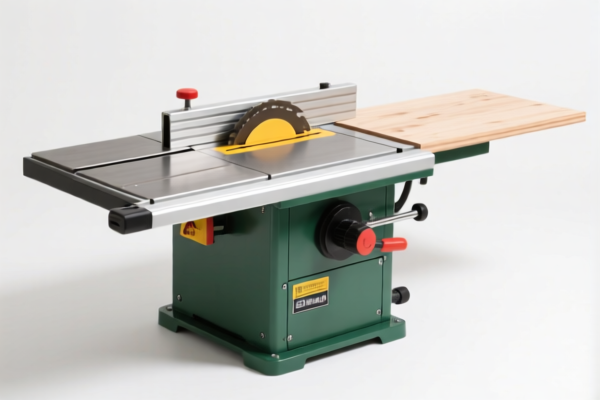
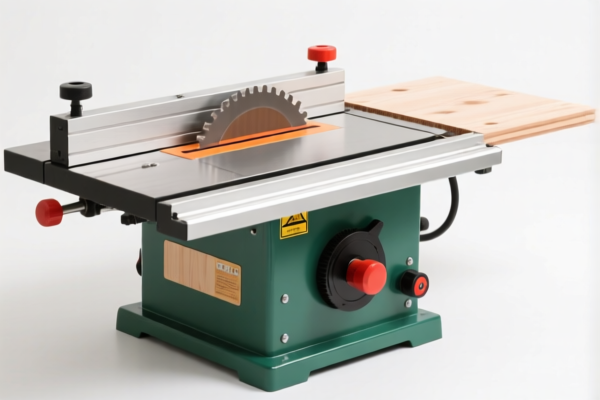
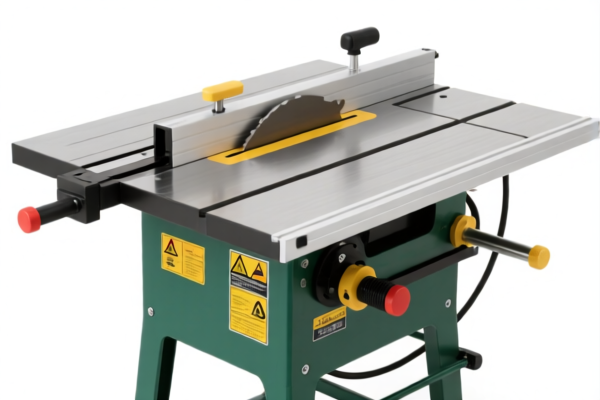
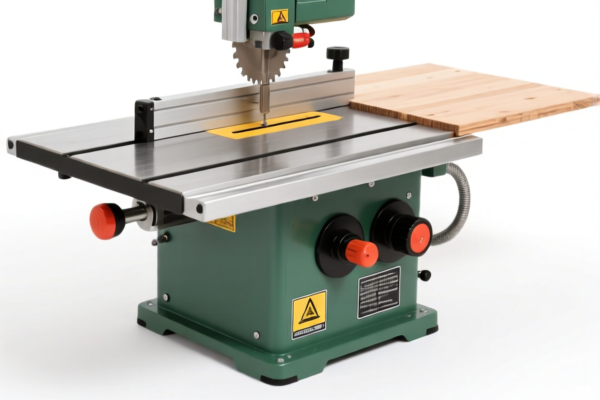
AI Analysis
🪚 Table Saw Calibrator (Precision Balancing & Alignment Instruments)
🌐 HS Code Reference & Clearance Guide | 2026 Latest Tariff Analysis | Professional Level Strategy
📌 I. Product Definition & Classification: What is a "Table Saw Calibrator"?
A Table Saw Calibrator typically refers to precision measuring instruments used to check the alignment, balance, and geometry of table saws and other woodworking machinery. In international trade, these devices fall under the broad category of "Measuring or Checking Instruments" or "Machines for balancing mechanical parts," depending on their specific function.
Key Distinctions: * Dedicated Calibrators/Checkers: Devices specifically designed to measure the squareness, parallelism, or blade alignment of a table saw. These are classified under Chapter 90 (Instruments). * Parts for Balancing Machines: If the device is a component of a larger balancing machine used for other mechanical parts (like motors or rotors) but is being identified as a "part," it may fall under Chapter 84 (Machinery Parts). * Mechanical Accessories (Non-Precision): Simple, non-electronic mechanical fixtures (e.g., steel arms, brackets) used for support or alignment that do not contain precision measuring elements may fall under Chapter 73 (Iron/Steel Articles).
⚠️ Key Differentiator:
- If the device has measuring displays, sensors, or precision calibration functions → Chapter 90.
- If it is a mechanical part of a balancing machine → Chapter 84.
- If it is a simple metal structure/fixture without measuring capability → Chapter 73.
📦 II. HS Code Classification Details (2026 Latest Tariff Authority Mapping)
Based on the provided <DATA>, here is the exact mapping for Table Saw Calibrators:
| HS Code | Product Description | Application Scenario | Precision/Function |
|---|---|---|---|
9031.10.00.00 |
Machines for balancing mechanical parts | Calibrators used for dynamic/static balancing of saw blades or rotors | ✅ High Precision (Chapter 90) |
9031.90.91.95 |
Parts and accessories: Other | Parts/accessories for measuring instruments not specified elsewhere | ✅ High Precision (Chapter 90) |
8479.90.95.65 |
Parts: Of machines for treating metal | Note: Usually for metal treatment, but if classified as a part for a "machine having individual functions" (e.g., industrial balancing system) | ❓ Context Dependent |
8479.90.95.60 |
Parts: Of presses for wood/cork | Note: Typically for wood processing machinery parts. If the calibrator is considered a "part" of a wood processing machine (e.g., saw) rather than a measuring instrument, it might be considered here, but this is less common for pure "calibrators." | ❌ Less Likely for Precision Tools |
7326.90.86.88 |
Other articles of iron or steel: Other | Simple, non-measuring metal fixtures, brackets, or arms used in alignment | ✅ Low Precision (Chapter 73) |
7326.90.86.10 |
Laminated goods of iron/steel | Multi-layer metal sheets used in construction of calibrator bodies | ✅ Low Precision (Chapter 73) |
🔍 Critical Reminder:
- Precision Measuring Tools MUST be classified under 9031 to avoid misclassification penalties.
- Mechanical Parts of other machines (8479) are only applicable if the item is strictly a "part" and not a standalone measuring instrument.
- Simple Metal Goods (7326) apply only if the item lacks any measuring/calibrating function.
💰 III. 2026 Latest Tariff Rate Detailed Explanation (Including Surtaxes)
✅ Applicable Country: United States (US)
✅ Origin: China (CN)
✅ Effective Date: Current 2026 Tariff Structure
🎯 1. 9031.10.00.00 — Machines for Balancing Mechanical Parts
| Item | Content |
|---|---|
| Base Tariff | 0.0% (Ad Valorem) |
| Section 301 Surtax | +25.0% |
| Total Tariff | 25.0% |
| Tax Calculation | CIF Value × 25% |
| Steel/Aluminum Surcharge | Not Applicable (Instrument) |
| Legal Basis | HTSUS: 9031.10.00.00 → USITC Footnote: Section 301 |
📌 Explanation:
- This is the most accurate code for dedicated balancing calibrators used on saw blades.
- Total Cost Impact: 25% surtax is significant but lower than steel/aluminum products.
- No Additional 50% Surtax because it is an instrument, not a raw steel/aluminum product.
🎯 2. 9031.90.91.95 — Parts and Accessories: Other
| Item | Content |
|---|---|
| Base Tariff | 0.0% (Ad Valorem) |
| Section 301 Surtax | +25.0% |
| Steel/Aluminum Surtax | +50.0% (If deemed as steel/aluminum product) |
| Total Tariff | 75.0% |
| Tax Calculation | CIF Value × 75% |
| Legal Basis | HTSUS: 9031.90.91.95 → USITC Footnote: Steel/Aluminum 50% |
📌 Warning:
- If the "calibrator" is classified as a part/accessory and contains significant steel/aluminum components subject to the specific 301 list for metals, it may trigger the 75% total tariff.
- Recommendation: Avoid this code if possible; use9031.10.00.00for the complete machine or argue for lower-surtax classification.
🎯 3. 7326.90.86.88 / 7326.90.86.10 — Other Articles of Iron or Steel
| Item | Content |
|---|---|
| Base Tariff | 2.9% |
| Section 301 Surtax | +25.0% |
| Steel/Aluminum Surtax | +50.0% |
| Total Tariff | 77.9% |
| Tax Calculation | CIF Value × 77.9% |
| Legal Basis | HTSUS: 7326.90.86.88 → USITC Footnote: Steel/Aluminum 50% |
📌 Warning:
- This is the highest tariff bracket.
- Only apply if the item is a simple, non-measuring metal fixture (e.g., a steel bracket used to hold a saw blade).
- Do NOT use this for electronic precision calibrators.
🎯 4. 8479.90.95.65 — Parts: Of Machines for Treating Metal
| Item | Content |
|---|---|
| Base Tariff | 0.0% (Ad Valorem) |
| Section 301 Surtax | +25.0% |
| Total Tariff | 25.0% |
| Tax Calculation | CIF Value × 25% |
| Legal Basis | HTSUS: 8479.90.95.65 → USITC Footnote: Section 301 |
📌 Explanation:
- If the calibrator is considered a part of a larger industrial machine (e.g., a metal treatment machine), it may fall here.
- Lower risk than steel articles, but misclassification risk is high if it's actually a standalone measuring instrument.
🛠️ IV. Practical Customs Clearance Advice (Battle-Tested Pitfall Avoidance)
✅ 1. Documentation Checklist (Non-Negotiable)
| Document | Required | Notes |
|---|---|---|
| ✅ Product Specification Sheet | ✔️ | Must clearly state: "Balancing Calibrator," "Measuring Instrument," or "Alignment Fixture." |
| ✅ Technical Diagrams | ✔️ | Show internal components. If it has sensors/electronics, it MUST be Chapter 90. |
| ✅ Product Photos | ✔️ | Clear shots of labels, dials, displays, or lack thereof. |
| ✅ Commercial Invoice | ✔️ | Crucial: Describe as "Precision Balancing Instrument for Table Saws" — NOT "Steel Bracket" or "Saw Part." |
| ✅ Proof of Function | ✔️ | Manual showing how it measures/calibrates. If it only "holds," it might be Chapter 73. |
✅ 2. Declaration Strategy (Key Mnemonics)
🔥 "Precision is King, Metal is Cheap, Parts are Tricky!"
| Scenario | Correct Declaration | Risk of Wrong Code |
|---|---|---|
| Electronic/Precision Calibrator | 9031.10.00.00 |
❌ High Risk to misclassify as 7326 (77.9% vs 25%) |
| Simple Steel Fixture (No Measure) | 7326.90.86.88 |
❌ High Risk to misclassify as 9031 (Undervaluation/penalty) |
| Part of a Balancing Machine | 8479.90.95.65 |
⚠️ Medium Risk if not clearly a part of a defined machine. |
| Accessory for Wood Machine | 8479.90.95.60 |
⚠️ Low Probability unless specifically designed for wood-press machinery. |
✅ 3. Special Case Handling
| Situation | Recommendation |
|---|---|
| Hybrid Device (Metal Body + Sensor) | Classify as 9031. The precision function dominates. Do not let the metal body drag you to Chapter 73. |
| Calibrator for Table Saw vs. Balancing Machine | If it checks blade alignment (geometry), it is a measuring instrument (9031). If it checks rotational balance, it is a balancing machine (9031). Both are 25%. |
| Exporting from China to US | Always declare origin as China to trigger the correct 301 surtax calculations. Misdeclaring origin leads to fraud penalties. |
| Value < $800 (De Minimis) | ❌ DENIED. Most 301 tariffs apply to de minimis shipments from China. Do not rely on Section 321 for these items if the HS code is subject to 301. |
🌍 V. Global Market Comparison (2026)
| Country/Region | Recommended HS Code | Tariff Rate | Notes |
|---|---|---|---|
| 🇺🇸 USA | 9031.10.00.00 |
25% | High surtax on Chinese origin. |
| 🇨🇳 China | 9031.10.00.00 |
0% | No import tariff for these instruments. |
| 🇪🇺 EU | 9031.10.00.00 |
0% | No additional surtax. CE Marking required. |
| 🇬🇧 UK | 9031.10.00.00 |
0% | Post-Brexit tariff is generally 0 for instruments. |
| 🇯🇵 Japan | 9031.10.00.00 |
0% | No surtax. |
📌 Conclusion:
- The USA is the only major market imposing significant tariffs (25%) on these Chinese-made instruments.
- Strategy: For US exports, ensure accurate classification to avoid the 75-77.9% rates. Consider pre-classification rulings if the product is ambiguous.
📌 VI. Common Errors & Pitfalls (Lessons Learned)
❌ Error 1: Classifying a precision laser calibrator as "Steel Bracket" (7326)
👉 Consequence: Customs detects precision features → Audit, penalty, and retroactive 77.9% tax!
❌ Error 2: Classifying a simple metal arm as "Balancing Machine Part" (8479)
👉 Consequence: Misleading description → Delays, questioning of function.
❌ Error 3: Assuming "Table Saw Accessory" means 8479.90.95.60
👉 Consequence: 8479.90.95.60 is for wood processing machinery parts. A calibrator is a measuring instrument. Using the wrong code risks 75-77.9% tariffs if deemed a steel product, or rejection for wrong chapter.
❌ Error 4: Ignoring the Section 301 Steel/Aluminum Surcharge
👉 Consequence: If the instrument has significant steel components and is misclassified as a general article, you may miss the 50% surcharge notice.
✅ Correct Approach:
"Precision Table Saw Blade Balancing Calibrator, Electronic, Model XYZ, CE/FCC Certified" → HS 9031.10.00.00 → 25% Total Tax.
🎯 VII. Conclusion: Precision Classification Saves Money!
🎯 Remember:
🔹 "If it measures, it's 9031 (25%). If it's just metal, it's 7326 (77.9%). If it's a part, it's 8479 (25%)."
🔹 "Don't let a $10 metal bracket cost you 77.9% tax. Define its function first!"
📌 Pro Tip:
If your calibrator is exporting to the US, consider:
1. Applying for a Pre-Ruling from US CBP if the product is novel.
2. Highlighting the Precision/Instrument nature in the commercial invoice.
3. Avoiding terms like "Steel Bracket" or "Saw Part" in the description. Use "Balancing Instrument" or "Alignment Checker."
📣 Immediate Action:
📞 Contact a US Customs Broker
📝 Provide technical datasheet
🚀 Secure 25% Tax Rate, not 77.9%!
✨ Accurate Classification = Cost Savings
💼 Your Calibrator’s Value is in its Precision, Not its Weight!
Customer Reviews
About HS Code Classification
The Harmonized System (HS) is an internationally standardized nomenclature developed by the World Customs Organization (WCO) to classify traded products. Over 200 countries use the HS system as the basis for customs tariffs, trade statistics, and import/export regulations.
Each HS code follows a hierarchical structure:
- Chapter (2 digits) — Broad category of goods (e.g., Chapter 84: Machinery and Mechanical Appliances)
- Heading (4 digits) — More specific grouping within the chapter
- Subheading (6 digits) — Internationally standardized breakdown, used by all WCO member countries
- National subdivisions (8-10 digits) — Country-specific extensions for further classification, such as US HTSUS 10-digit codes
Correct HS code classification is essential for smooth customs clearance, accurate duty payment, and compliance with trade regulations. Misclassification can lead to customs delays, overpayment of duties, or penalties.
When importing from CN to US, the applicable tariff rates may include:
- Most-Favored-Nation (MFN) rate — The standard duty rate applied to WTO members
- General rate — Applied to countries without trade agreements
- Trade remedy duties — Additional tariffs such as Section 301 (anti-dumping), Section 232 (national security), or countervailing duties
The information provided on this page is for reference purposes only. For official classification, please consult with your local customs authority or a licensed customs broker.