Table Setting
CN → US| HS Code | Tariff Rate | Origin | Destination | Doc |
|---|---|---|---|---|
| 8215200000 | 0.0% | CN | US | Official Doc |
| 6911103710 | 25.5% | CN | US | Official Doc |
| 4419901100 | 15.3% | CN | US | Official Doc |
| 4419909100 | 20.7% | CN | US | Official Doc |
| 8215100000 | 0.0% | CN | US | Official Doc |
| 6911103510 | 43.5% | CN | US | Official Doc |
Product Images
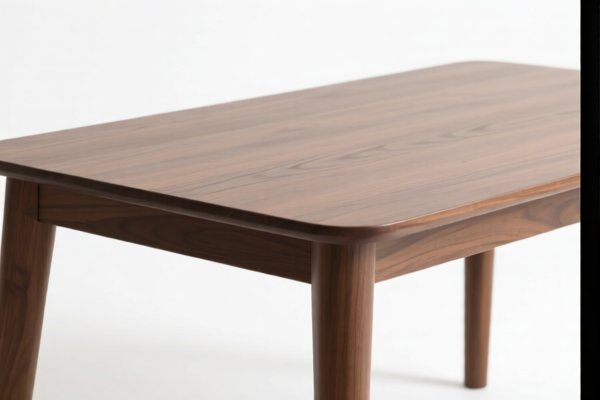
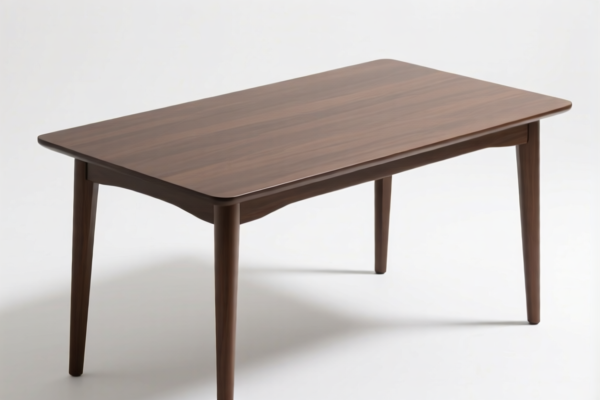
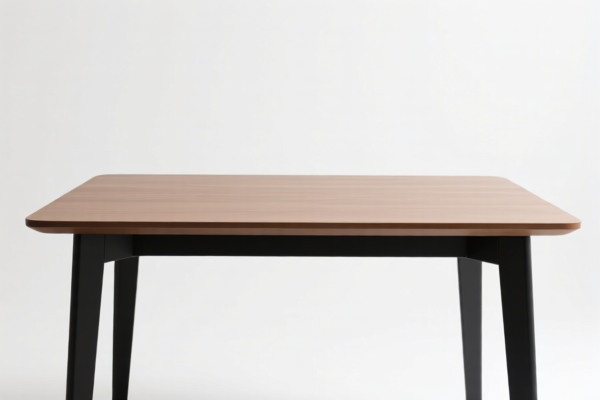
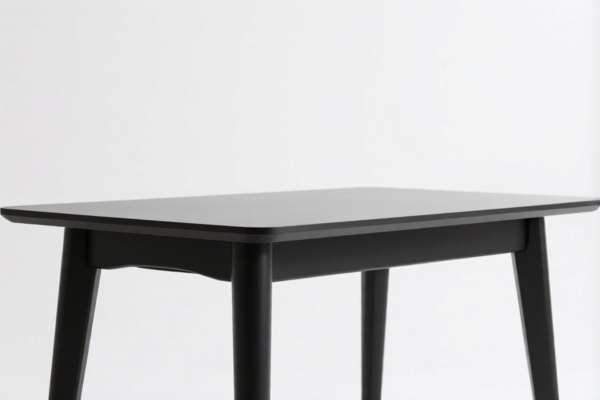
AI Analysis
🍽️ Table Setting (Cutlery Sets / Tableware Sets)
🌐 HS Code Reference & Customs Clearance Guide | 2026 Latest Tariff Analysis | Professional Clearance Strategy
📌 I. Product Definition: What is a "Table Setting"?
A "Table Setting" or "Tableware Set" is a composite article used for dining. In international trade, its classification depends critically on material and configuration. Because it is often a set of multiple items (knives, forks, spoons, plates), customs authorities apply General Rule of Interpretation 3(b): sets are classified by the component that gives them their essential character.
⚠️ Key Distinction:
- If the set is primarily metal cutlery → It falls under Chapter 82.
- If the set is primarily ceramic dishes → It falls under Chapter 69.
- If the set is primarily wooden utensils → It falls under Chapter 44.
📦 II. HS Code Classification Matrix (2026 Latest Tariff Data)
Based on the provided data, here are the four potential classifications for "Table Setting" and the reasoning behind each:
| HS Code | Summary Description | Material/Logic Basis | Total Tax Rate |
|---|---|---|---|
8215.20.00.00 |
Metal Cutlery Set | Essential Character: Metal/Vulcanized Metal. Logic: Matches usage as a combination set. | The rate of duty applicable to that article in the set subject t + 35.0% |
6911.10.37.10 |
Ceramic Tableware Set | Essential Character: Ceramic. Logic: Matches usage and form. | 25.5% |
4419.90.11.00 |
Wooden Cutlery/Set | Essential Character: Wooden. Logic: Matches usage as wooden cutlery/kitchen tools; fallback category logic. | 15.3% |
4419.90.91.00 |
Other Wooden Tableware | Essential Character: Wooden (Non-conflicting). Logic: Fallback category for tableware not elsewhere specified. | 20.7% |
🔍 Critical Note on Chapter 82 (
8215.20.00.00):
The tax rate description is "The rate of duty applicable to that article in the set subject t+35.0%". This indicates a variable base duty plus a fixed additional burden of 35.0%. You must identify the specific metal component to determine the "base t", but the total burden is significantly higher than other materials.
💰 III. Detailed Tax Breakdown & Policy Analysis
✅ Applicable Region: Implied US Market (Based on "Section 301" and "122 Clause" references in the data).
✅ Origin: China (CN) (Implied by the specific "122 Clause" and high "Added Duty" percentages common in US-China trade).
🎯 1. 8215.20.00.00 — Metal/Table Setting (Most Complex)
| Item | Detail |
|---|---|
Base Duty (t) |
Variable (Depends on specific metal alloy/type). The data states: "The rate of duty applicable to that article in the set subject t". |
| Additional Duty | +35.0% (Sum of Added Duty + Section 122/301 Tariffs). |
| Total Rate Formula | Base Rate (t) + 35.0% |
| Tax Detail Source | 基础关税: The rate of duty applicable to that article in the set subject t 加征关税: 25.0% (Section 301) 122条款关税: 10% (Section 301 Additional/Other) |
| Interpretation | Metal cutlery faces the highest effective tariff burden. The "25% + 10%" structure confirms aggressive US trade policy on Chinese metal goods. |
📌 Warning:
- Do not assume a fixed percentage. You must calculate the base duty for the specific metal (e.g., stainless steel vs. silver-plated) and then add 35%.
- This is likely the most expensive classification option.
🎯 2. 6911.10.37.10 — Ceramic Tableware Set
| Item | Detail |
|---|---|
| Base Duty | 8.0% |
| Additional Duty (Added) | 7.5% |
| 122 Clause Tariff | 10.0% |
| Total Rate | 25.5% |
| Calculation | 8.0% + 7.5% + 10.0% = 25.5% |
📌 Interpretation:
- Ceramic sets have a moderate, predictable tariff.
- The "Added Duty" of 7.5% is lower than the metal set's 25% component, making ceramics a more cost-effective material choice for the US market compared to metals.
🎯 3. 4419.90.11.00 — Wooden Cutlery (Primary Fallback)
| Item | Detail |
|---|---|
| Base Duty | 5.3% |
| Additional Duty | 0.0% |
| 122 Clause Tariff | 10.0% |
| Total Rate | 15.3% |
| Calculation | 5.3% + 0.0% + 10.0% = 15.3% |
📌 Interpretation:
- Lowest Total Tax Rate among the options.
- Key Advantage: No "Added Duty" (7.5% or 25%) applies here. Only the base duty and the 122 Clause tariff apply.
- Condition: Must be primarily wooden. If the set includes metal knives, this classification may be rejected.
🎯 4. 4419.90.91.00 — Other Wooden Tableware (Fallback)
| Item | Detail |
|---|---|
| Base Duty | 3.2% |
| Additional Duty | 7.5% |
| 122 Clause Tariff | 10.0% |
| Total Rate | 20.7% |
| Calculation | 3.2% + 7.5% + 10.0% = 20.7% |
📌 Interpretation:
- Slightly higher than4419.90.11.00due to the 7.5% Additional Duty.
- Use this only if4419.90.11.00is not applicable (e.g., if it's not strictly "cutlery/kitchen tools" but general wooden tableware).
🛠️ IV. Customs Clearance Practical Advice (Pitfall Avoidance)
✅ 1. Material Documentation is Key
To ensure the correct HS Code, you must provide:
- Material Composition Statement: Explicitly state the % of metal, ceramic, or wood.
- Product Photos: Show the set clearly. If it’s a mix (e.g., wooden handles + metal blades), Customs will classify by the Essential Character.
- Metal blades dominate? → Likely 8215.20.00.00 (Higher Tax).
- Wooden handles dominate? → Possibly 4419.90.11.00 (Lower Tax).
✅ 2. Naming Convention for Accuracy
| Incorrect Name | Correct Name | Why? |
|---|---|---|
| "Dinner Set" | "Ceramic Tableware Set (45 Piece)" | Specifies material (6911) |
| "Cutlery" | "Stainless Steel Cutlery Set" | Specifies material (8215) |
| "Wooden Forks" | "Bamboo Wooden Cutlery Set" | Specifies material (4419) |
✅ 3. Tax Optimization Strategy
- Best Cost Option: If your product allows, consider Wooden Components (
4419.90.11.00at 15.3%). It has no additional 301/122 surcharge beyond the 10% clause. - Worst Cost Option: Metal Sets (
8215.20.00.00). The "25% + 10%" structure makes it the most expensive. Avoid if possible unless the product value justifies it. - Middle Ground: Ceramic (
6911.10.37.10at 25.5%). Predictable, but still carries a 17.5% surcharge (7.5% + 10%).
🌍 V. Global Market Comparison (Contextual)
| Market | Likely HS Code | Est. Total Tax | Note |
|---|---|---|---|
| 🇺🇸 USA | See Above | 15.3% – 35%+ | High Section 301/122 tariffs on Chinese goods. |
| 🇪🇺 EU | 8215.10 / 6911 |
~0-12% | No Section 301 tariffs. Lower base duties. |
| 🇨🇳 China | Same HS | ~5-15% | Import duties to China are lower; focus is on export clearance. |
📌 Conclusion:
For US Imports, material selection is a tax strategy.
- Choose Wood for lowest tax (15.3%).
- Choose Ceramic for moderate tax (25.5%).
- Choose Metal only if required, accepting the highest tax (Base + 35%).
📌 VI. Common Errors & Blood-Teachings
❌ Error 1: Classifying a Metal-Ceramic Mix as Ceramic (6911).
👉 Result: Customs reclassifies to Metal (8215) because metal gives the set its "essential character" (durability/value).
💸 Cost Impact: Tax jumps from 25.5% to ~40-50%+ (Base + 35%).
❌ Error 2: Ignoring the "122 Clause" in tax calculations.
👉 Result: Underpayment of duties. The 10% "122 Clause" is mandatory for Chinese-origin goods in many cases.
💸 Cost Impact: Penalty + Interest.
❌ Error 3: Assuming "Base Duty" is 0 for Metal.
👉 Result: The data says "The rate of duty applicable to that article... subject t". If t is 6%, total is 41%. If t is 0%, total is 35%. Always verify t.
✅ Correct Approach:
"Submit detailed material breakdown. If mixed, declare the primary material. Request a Pre-Ruling from CBP if the set contains >3 materials."
🎯 VII. Conclusion: Professional Declaration, Cost Saving!
🎯 Remember the Golden Rules:
🔹 "Material Dictates Code, Code Dictates Cost."
🔹 "Wood is Cheapest (15.3%), Ceramic is Middle (25.5%), Metal is Expensive (Base+35%)."
🔹 "Never Mix Materials Without a Pre-Ruling – The 'Essential Character' Rule Will Crush Your Budget."
📌 Pro Tip:
If you are importing from China to the US, consider reshaping your product to emphasize Wooden components or Ceramic components to avoid the Metal tariff trap.
Contact a licensed customs broker to file a Binding Tariff Ruling before shipment to avoid surprises at the port.
✨ Professional Clearance Starts with Precise Classification!
💼 Your Cost Margin Depends on These 0.01% Details!
Customer Reviews
About HS Code Classification
The Harmonized System (HS) is an internationally standardized nomenclature developed by the World Customs Organization (WCO) to classify traded products. Over 200 countries use the HS system as the basis for customs tariffs, trade statistics, and import/export regulations.
Each HS code follows a hierarchical structure:
- Chapter (2 digits) — Broad category of goods (e.g., Chapter 84: Machinery and Mechanical Appliances)
- Heading (4 digits) — More specific grouping within the chapter
- Subheading (6 digits) — Internationally standardized breakdown, used by all WCO member countries
- National subdivisions (8-10 digits) — Country-specific extensions for further classification, such as US HTSUS 10-digit codes
Correct HS code classification is essential for smooth customs clearance, accurate duty payment, and compliance with trade regulations. Misclassification can lead to customs delays, overpayment of duties, or penalties.
When importing from CN to US, the applicable tariff rates may include:
- Most-Favored-Nation (MFN) rate — The standard duty rate applied to WTO members
- General rate — Applied to countries without trade agreements
- Trade remedy duties — Additional tariffs such as Section 301 (anti-dumping), Section 232 (national security), or countervailing duties
The information provided on this page is for reference purposes only. For official classification, please consult with your local customs authority or a licensed customs broker.