Table and Chair Cover
CN → US| HS Code | Tariff Rate | Origin | Destination | Doc |
|---|---|---|---|---|
| 6304920000 | 23.8% | CN | US | Official Doc |
| 6304910170 | 23.3% | CN | US | Official Doc |
| 6302514000 | 23.8% | CN | US | Official Doc |
| 6302530030 | 28.8% | CN | US | Official Doc |
Product Images
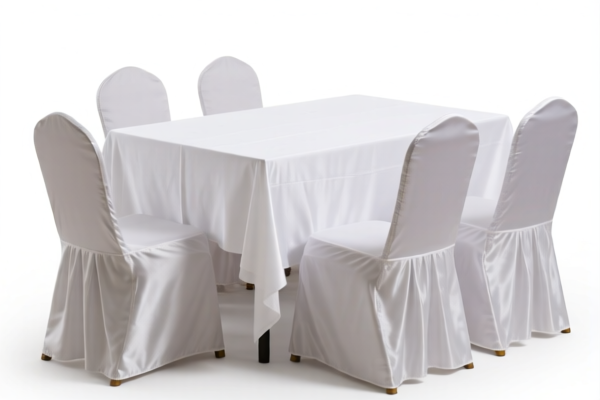
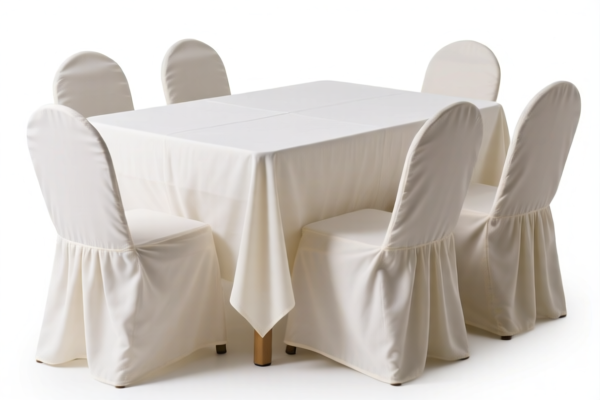
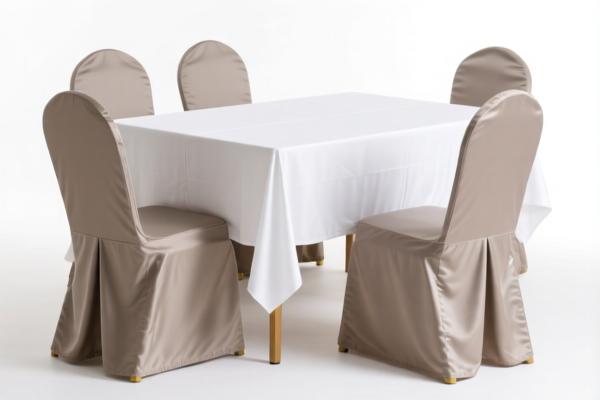
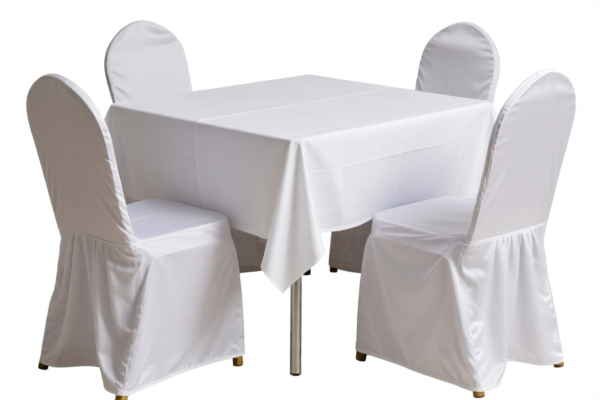
AI Analysis
🍽️ Table & Chair Covers (Fabric Home Textiles)
🌐 HS Code Reference & Customs Clearance Guide | 2026 Updated Tariff Analysis | Professional Compliance Strategy
📌 I. Product Definition & Classification: Do You Really Understand "Table & Chair Covers"?
Table and chair covers belong to the category of Household Textiles in international trade. They are primarily used for protecting furniture, decorative purposes, or maintaining hygiene in dining, hotel, and banquet settings. In customs classification, the critical distinction lies in the manufacturing method (knitted vs. non-knitted/woven) and the material composition (Cotton vs. Synthetic/Fibers).
Non-Knitted/Woven (e.g., Woven cotton, linen, polyester blends):
Usually classified under Chapter 63 as "Other furnishing articles."
⚠️ Key Distinction Point:
- If the cover is woven (standard fabric structure) → Goes to 6304.92 (Cotton) or 6304.91 (Synthetic).
- If the cover is knitted/crocheted (e.g., stretchy lace, crochet chair pads) → Goes to 6304.91.
- If it is specifically a Table Cloth (flat, rectangular) → It may fall under Chapter 6302 (Bedding/Table linen) rather than 6304.
📦 II. HS Code Classification Details (2026 Latest Tariff Concordance)
Based on your product data, here are the four specific HS Codes identified:
| HS Code | Product Description | Material Type | Manufacturing Method | Total Tax Rate (China-US) |
|---|---|---|---|---|
6304.92.00.00 |
Table & Chair Covers, Non-knitted, Cotton | 100% Cotton | Woven/Braided | 23.8% |
6304.91.01.70 |
Table & Chair Covers, Knitted/Crocheted | Synthetic/Fibers | Knitted/Crocheted | 23.3% |
6302.51.40.00 |
Table Cloths (Table Linen), Cotton | 100% Cotton | Woven (Table Cloth Category) | 23.8% |
6302.53.00.30 |
Table Cloths (Table Linen), Synthetic Fibers | Poly/Viscose/etc. | Woven (Table Cloth Category) | 28.8% |
🔍 Critical Clarification:
- 6304 vs. 6302: 6304 covers "Other furnishing articles" (including fitted chair covers, loose throws). 6302 specifically covers "Bed linen, table linen...".
- Misclassification Risk: If you ship a table cloth but declare it as a chair cover (6304), or vice versa, the base tariff differs (6.3% vs 11.3%), directly affecting the final tax burden.
💰 III. 2026 Tariff Rate Breakdown (Detailed Explanation)
✅ Applicable Market: United States (US)
✅ Origin: China (CN)
✅ Effective Date: Current 2025/2026 tariffs apply
🎯 1. 6304.92.00.00 & 6302.51.40.00 (Cotton Textiles)
Applicable to: Cotton Chair Covers, Cotton Table Cloths
| Item | Detail |
|---|---|
| Base MFN Tariff | 6.3% (Ad Valorem) |
| Section 301 Add-on | +7.5% (China-specific tariff) |
| Section 122 Add-on | +10% (Targeted textile/apparel sector tariff) |
| Total Effective Rate | 23.8% |
| Calculation Basis | CIF Value × 23.8% |
| De Minimis Eligibility | ❌ No (Section 321 exemption usually does NOT apply to Section 122 goods) |
| Legal Basis Path | USITC:6304.92.00 → 301:7.5% → 122:10% |
📌 Explanation:
- Section 122: This is a newly enforced/highly targeted tariff specifically against certain textile and apparel imports from China. It adds a flat 10% on top of existing tariffs. - Section 301: The standard 7.5% or 25% tariff on Chinese goods depending on the specific HTS subheading. For these textile categories, it is cited as 7.5%. - Base Rate: Cotton textiles enjoy a lower base rate (6.3%) compared to synthetics.
🎯 2. 6304.91.01.70 (Knitted/Synthetic Covers)
Applicable to: Knitted/Crocheted Chair Covers (Synthetic)
| Item | Detail |
|---|---|
| Base MFN Tariff | 5.8% (Ad Valorem) |
| Section 301 Add-on | +7.5% |
| Section 122 Add-on | +10% |
| Total Effective Rate | 23.3% |
| Calculation Basis | CIF Value × 23.3% |
| De Minimis Eligibility | ❌ No |
📌 Note:
- Slightly cheaper than cotton (0.5% difference) due to a lower base rate (5.8% vs 6.3%). - Strict Definition: Must be truly knitted or crocheted. If it is woven synthetic fabric, it does NOT qualify for this code.
🎯 3. 6302.53.00.30 (Synthetic Table Cloths)
Applicable to: Polyester/Nylon Table Cloths
| Item | Detail |
|---|---|
| Base MFN Tariff | 11.3% (Ad Valorem) |
| Section 301 Add-on | +7.5% |
| Section 122 Add-on | +10% |
| Total Effective Rate | 28.8% |
| Calculation Basis | CIF Value × 28.8% |
| De Minimis Eligibility | ❌ No |
📌 Warning:
- Highest Tax Rate: This is the most expensive category. - Why?: Synthetic table linens (6302.53) have a significantly higher base tariff (11.3%) compared to cotton (6.3%) or furnishing articles (6304). - Strategy: If possible, verify if the product can be classified as a "Chair Cover" (6304) rather than a "Table Cloth" (6302) to save ~5% in tax, provided the physical description fits.
🛠️ IV. Customs Clearance Practical Advice (Real-World Pitfall Avoidance)
✅ 1. Documentation Checklist (Non-Negotiable)
| Document | Requirement | Note |
|---|---|---|
| Commercial Invoice | ✔️ Must Specify | "Table Cover" or "Chair Cover" clearly. Include Material (e.g., 100% Cotton) and Method (Woven/Knitted). |
| Product Composition Label | ✔️ Mandatory | Must state "Made of 100% Cotton" or "100% Polyester". Mismatch leads to reclassification. |
| Photos | ✔️ Required | Show the texture (woven vs. knitted) and the item fully assembled. |
| Material Certificate | ✔️ Recommended | For disputes on "Cotton vs. Synthetic" or "Knitted vs. Woven". |
✅ 2. Declaration Tips (The "Golden Rules")
🔥 Key Phrase: "Be Specific. Don't Say 'Textile Cover'."
| Scenario | Correct Declaration | Incorrect Declaration | Risk |
|---|---|---|---|
| Woven Cotton Chair Cover | "Non-knitted Cotton Chair Cover" | "Cotton Textile" | Misclassification → Fine/Delay |
| Crocheted Chair Pad | "Crocheted Synthetic Chair Cover" | "Furniture Accessory" | Misses 122 Tariff? No, but wrong HS. |
| Polyester Table Cloth | "Synthetic Fiber Table Cloth" | "Table Cover" | Risk of being classified as 6304 (23.8%) instead of 6302 (28.8%) OR vice versa. Verify Fit. |
| Mixed Package | List each item separately | "Mixed Household Goods" | Chaos. Each item taxed separately. |
✅ 3. Critical Distinction: Table Cloth (6302) vs. Chair Cover (6304)
- 6302.5x (Table Linen): Flat sheets, runners, tablecloths.
- 6304.9x (Other Furnishing): Items that fit chairs, decorative throws, napkins (if not listed elsewhere).
🚨 Audit Alert:
Customs may challenge a "Table Cloth" declared as a "Chair Cover" to avoid the higher 11.3% base rate.
Defense: Provide technical drawings or product catalogs showing the item’s intended use and shape (e.g., "Fitted cover with elastic for chairs" vs. "Flat sheet for table").
🌍 V. Global Market Comparison (2026)
| Market | Recommended HS Code | Base Tariff | Additional Duties | Total Est. Rate |
|---|---|---|---|---|
| 🇺🇸 USA | 6304.92 / 6302.51 |
6.3% | 7.5% (301) + 10% (122) | 23.8% |
| 🇺🇸 USA | 6302.53 |
11.3% | 7.5% (301) + 10% (122) | 28.8% |
| 🇨🇳 China | 6304.92 |
6.5% | None | 6.5% |
| 🇪🇺 EU | 6304.92 |
6% | None | 6% |
| 🇬🇧 UK | 6304.92 |
6% | None | 6% |
📌 Conclusion:
The US market is extremely expensive for Chinese textiles due to the Section 122 and Section 301叠加 (superposition). EU/UK remain much more competitive for these goods.
📌 VI. Common Errors & Pitfalls (Blood Lessons)
❌ Error 1: Declaring a Synthetic Table Cloth as a Cotton Chair Cover to save tax.
👉 Consequence: Customs inspection reveals material mismatch. Confiscation or Heavy Penalty.
❌ Error 2: Using "Home Textile" as the product name.
👉 Consequence: Too vague. Customs will assign a default (often higher) tariff code. Result: Unexpected Tax Bill.
❌ Error 3: Ignoring the Knitted vs. Woven distinction.
👉 Consequence: 6304.91 (Knitted) has a different base rate than 6304.92 (Woven). Wrong code = Audit flag.
❌ Error 4: Assuming De Minimis ($800) applies.
👉 Consequence: Section 122 goods are explicitly excluded from de minimis. Even a $10 package is subject to full duty and complex entry filing.
✅ Correct Practice:
"100% Cotton, Woven, Non-Knitted Table and Chair Cover, Set of 6, Color: Beige, HS 6304.92.00.00"
🎯 VII. Conclusion: Professional Declaration Saves Money!
🎯 Remember the Mantra:
🔹 "Material Matters: Cotton is Cheaper (6.3%) than Synthetic Table Linen (11.3%)."
🔹 "Method Matters: Knitted (5.8%) vs Woven (6.3%)."
🔹 "122 is Real: Add 10% Flat Tax to Almost All Chinese Textiles."
🔹 "Don't Split Shipment: De Minimis is Dead for Section 122 Goods."
📌 Pro Tip:
If your product is a Table Cloth but you can prove it is primarily a decorative cover rather than "linen," argue for 6304 instead of 6302 to potentially save 5% (23.8% vs 28.8%). However, ensure the physical form matches (e.g., if it's a fitted chair cover, 6304 is safer; if it's a flat sheet, 6302 is mandatory).
📣 Immediate Action:
📞 Contact your Customs Broker with:
1. Material Composition (Cotton % vs Synthetic %)
2. Manufacturing Process (Knitted/Crocheted vs Woven)
3. Product Function (Table Linen vs Furnishing Article)
🚀 Get a Binding Ruling if importing large volumes.
💼 Your profit margin depends on the HS Code!
Customer Reviews
About HS Code Classification
The Harmonized System (HS) is an internationally standardized nomenclature developed by the World Customs Organization (WCO) to classify traded products. Over 200 countries use the HS system as the basis for customs tariffs, trade statistics, and import/export regulations.
Each HS code follows a hierarchical structure:
- Chapter (2 digits) — Broad category of goods (e.g., Chapter 84: Machinery and Mechanical Appliances)
- Heading (4 digits) — More specific grouping within the chapter
- Subheading (6 digits) — Internationally standardized breakdown, used by all WCO member countries
- National subdivisions (8-10 digits) — Country-specific extensions for further classification, such as US HTSUS 10-digit codes
Correct HS code classification is essential for smooth customs clearance, accurate duty payment, and compliance with trade regulations. Misclassification can lead to customs delays, overpayment of duties, or penalties.
When importing from CN to US, the applicable tariff rates may include:
- Most-Favored-Nation (MFN) rate — The standard duty rate applied to WTO members
- General rate — Applied to countries without trade agreements
- Trade remedy duties — Additional tariffs such as Section 301 (anti-dumping), Section 232 (national security), or countervailing duties
The information provided on this page is for reference purposes only. For official classification, please consult with your local customs authority or a licensed customs broker.