Table knives, carving knives and similar knives
CN → US| HS Code | Tariff Rate | Origin | Destination | Doc |
|---|---|---|---|---|
| 8211918060 | 0.0% | CN | US | Official Doc |
| 8211929030 | 0.0% | CN | US | Official Doc |
Product Images
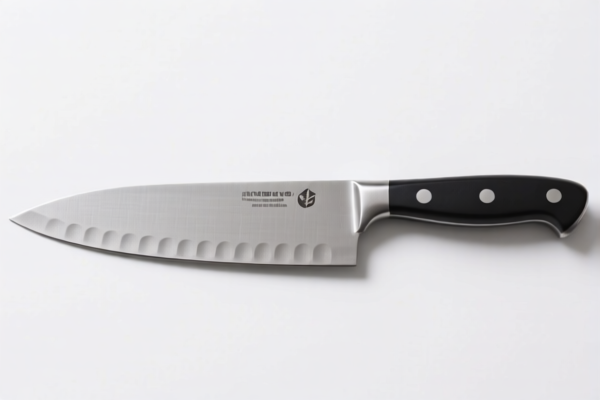
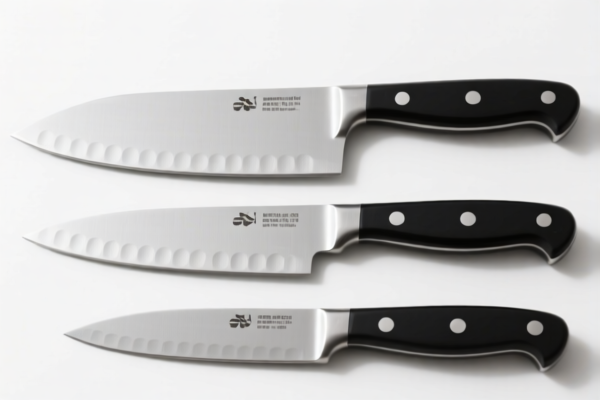
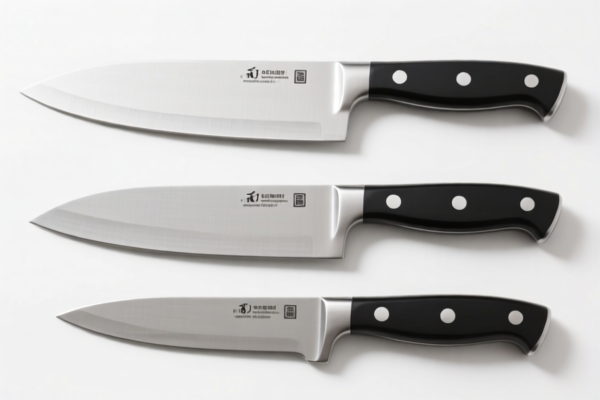
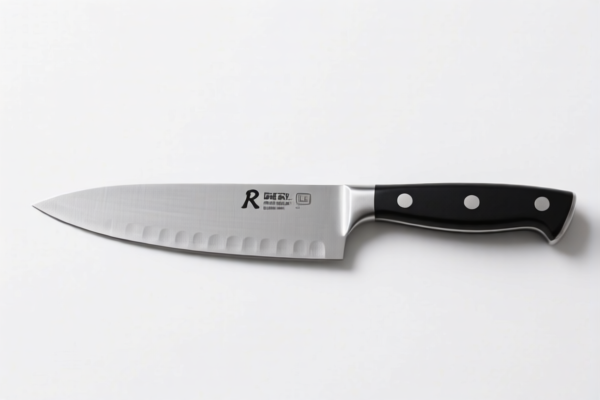
AI Analysis
🍴 Table Knives, Carving Knives & Similar Cutting Tools
🌐 HS Code Reference & Customs Clearance Guide | 2026 Latest Tariff Analysis | Professional Entry Strategies
📌 I. Product Definition & Classification: Do You Really Know “Kitchen & Table Knives”?
Knives with cutting blades, serrated or not (including pruning knives), excluding knives of heading 8208 (industrial cutting wheels or parts thereof), are categorized based on their intended use and blade structure. In international trade, these items are primarily divided into two functional groups:
Table Knives: Specifically designed for dining purposes, typically featuring fixed blades, often with decorative handles.
Other Fixed-Blade Knives: Includes carving knives, kitchen knives, butcher knives, and similar manual cutting tools not intended for table service.
⚠️ Key Distinction:
- If the knife is explicitly a "Table Knife" (fixed blade, for eating) → It falls under 8211.91.xx.x0.
- If the knife is a Kitchen, Butcher, or Carving Knife (fixed blade, for food preparation) → It falls under 8211.92.xx.x0.
- ⚠️ Exclusion: Knives made of precious metals or fitted with precious stones are excluded from Chapter 82 and may fall under Chapter 71. Industrial cutting blades (e.g., for paper or textile machines) belong to Heading 8208 and are not included here.
📦 II. HS Code Classification Details (2026 Latest Tariff Authority Match)
Based on the provided data, here are the precise classifications and tax implications for the specified product types:
| HS Code | Product Description | Applicable Scenario | Blade Type |
|---|---|---|---|
8211.91.80.60 |
Table Knives having fixed blades: Other | Dining tables, formal settings, cutlery sets | ✅ Fixed Blade |
8211.92.90.30 |
Other Knives having fixed blades: Other: Other Kitchen and Butcher Knives | Home kitchens, professional butchery, carving, food prep | ✅ Fixed Blade |
🔍 Critical Reminder:
- Table Knives (8211.91) are subject to a base tariff of 4.9% + $0.003/each, plus a 7.5% additional tariff.
- Kitchen/Butcher Knives (8211.92) are subject to a 0% base tariff and 0% additional tariff (under the current data snapshot).
- Misclassification Risk: Declaring a kitchen knife as a "table knife" can trigger severe penalties due to the 12.4% tax difference. Always match the primary use and marketing description.
💰 III. 2026 Latest Tariff Rate Details (Including Base & Additional Taxes)
✅ Applicable Country: United States (US)
✅ Origin: China (CN) (Based on the tax details provided in the source data)
✅ Effective Date: Current policy snapshot
🎯 1. 8211.91.80.60 —— Table Knives (Fixed Blade)
| Item | Content |
|---|---|
| Base Tariff | 4.9% (ad valorem) + $0.003 per unit |
| Additional Tariff (Section 301/China-specific) | +7.5% |
| Total Effective Tax Rate | 12.4% + $0.003/unit |
| Tax Calculation | (CIF Value × 12.4%) + ($0.003 × Quantity) |
| De Minimis Exemption? | ❌ No (Knives are generally subject to full duty; Section 321 de minimis often excludes dangerous items or specific HTS codes) |
| Legal Basis Path | HTS:8211.91.80.60 → Base: 4.9% → Add. Tariff: 7.5% |
📌 Explanation:
- The 4.9% is the standard Most Favored Nation (MFN) rate for table knives.
- The 7.5% is the Section 301 additional duty applicable to many Chinese-origin metal products.
- The $0.003/unit is a specific duty per item, common for cutlery.
- Total Cost Impact: High. For a $1,000 shipment of 10,000 units, you pay ~$124 + $30 = $154.
🎯 2. 8211.92.90.30 —— Other Fixed-Blade Knives (Kitchen/Butcher)
| Item | Content |
|---|---|
| Base Tariff | 0.0% |
| Additional Tariff | 0.0% |
| Total Effective Tax Rate | 0.0% |
| Tax Calculation | $0 |
| De Minimis Exemption? | ❓ Check Specifics: While duty is 0%, still subject to standard customs entry requirements. |
| Legal Basis Path | HTS:8211.92.90.30 → Base: 0% → Add. Tariff: 0% |
📌 Explanation:
- This code benefits from a zero-duty status for many non-table knives, likely due to trade agreements or specific product exclusions.
- Cost Advantage: Significantly lower than table knives.
- Caution: Ensure the product is not marketed or packaged in a way that suggests "table use" (e.g., elegant gift boxes for dining). If deemed a "table knife," the 12.4% tax will apply retroactively.
🛠️ IV. Customs Clearance Practical Advice (Real-World Pitfall Guide)
✅ 1. Required Documentation Checklist (Non-Negotiable)
| Document | Mandatory? | Notes |
|---|---|---|
| ✅ Product Specifications | ✔️ | Must clearly state: "Fixed Blade," "Kitchen Use" or "Table Use," Material (Stainless Steel, etc.). |
| ✅ Product Photos | ✔️ | Show the knife in context (e.g., on a cutting board vs. set table). |
| ✅ Commercial Invoice | ✔️ | Explicitly describe as "Kitchen Knife" or "Table Knife," not just "Knife." |
| ✅ Country of Origin | ✔️ | Critical for applying the 7.5% additional duty. |
| ✅ FCC/CE/RoHS (if applicable) | ✔️ | Usually not required for metal knives, but good for completeness. |
| ✅ Packing List | ✔️ | Separate table knives from kitchen knives if shipped together. |
✅ 2. Declaration Strategy (Key Mantra)
🔥 “Define Use, Specify Blade, Avoid Ambiguity!”
| Scenario | Correct Declaration | Error Consequence |
|---|---|---|
| Chef’s Knife | 8211.92.90.30 (Kitchen/Butcher) |
❌ Declaring as "Table Knife" → 12.4% Tax + Penalty |
| Steak Knife | 8211.91.80.60 (Table Knife) |
❌ Declaring as "Kitchen Knife" → 0% Tax (but risk of audit) |
| Serrated Bread Knife | 8211.92.90.30 |
✅ Correct if for food prep |
| Pruning Knife | 8211.91.80.60 or 8211.92.90.30? |
❓ Check description: "Pruning" often falls under 8211.92 if for gardening, but 8211.91 if ornamental/table-like. Clarify with broker. |
✅ 3. Special Cases
| Case | Handling Advice |
|---|---|
| Mixed Shipment (Table + Kitchen) | Split the Declaration! Do not combine under one HS code. Use separate line items to avoid misclassification risks. |
| OEM Custom Knives | Provide client specs. If designed for a hotel (table), use 8211.91. If designed for a restaurant kitchen (8211.92), use 8211.92. |
| Knives with Wooden Handles | Still classified by blade function, not handle material. |
| Gift Sets | If a set contains both, the principal use determines the code. If 60% are kitchen knives, consider declaring the whole set under 8211.92.90.30 (but consult a customs lawyer). |
🌍 V. Global Market Comparison (2026 Snapshot)
| Country/Region | Recommended HS Code | Duty Rate (China Origin) | Certification | Note |
|---|---|---|---|---|
| 🇺🇸 USA | 8211.91.80.60 (Table) |
12.4% + $0.003/unit | None | High duty due to Section 301. |
| 🇺🇸 USA | 8211.92.90.30 (Kitchen) |
0.0% | None | Best for clearance. |
| 🇨🇳 China | 8211.91 / 8211.92 |
~10-13% (Import) | CCC (if stainless) | Different rates for import vs. export. |
| 🇪🇺 EU | 8211.91 / 8211.92 |
~4.5% | CE (if electric/other) | No Section 301 equivalent. |
| 🇬🇧 UK | 8211.91 / 8211.92 |
~4.5% | UKCA | Post-Brexit alignment with EU. |
📌 Conclusion:
- USA is the most complex market due to the significant tax gap between "Table" and "Kitchen" knives.
- Maximize Savings: If the product can be legitimately classified as a "Kitchen/Butcher Knife," use 8211.92.90.30 to save 12.4%.
- Europe & Asia: Tariffs are more uniform (~4.5%), so classification strategy is less critical for cost, but still vital for compliance.
📌 VI. Common Mistakes & Pitfalls (Lessons Learned)
❌ Mistake 1: Calling all knives "Cutlery" in the description.
👉 Result: Customs cannot determine if it’s 8211.91 or 8211.92 → Delay/Inspection.
❌ Mistake 2: Declaring Kitchen Knives as Table Knives to avoid "Dangerous Goods" perceptions.
👉 Result: You pay 12.4% duty unnecessarily.
👉 Solution: Use "Kitchen Knife" for 0% duty if accurate.
❌ Mistake 3: Ignoring the "$0.003 per unit" fee in 8211.91.
👉 Result: For large volumes (10,000+ units), this adds up to $30+, a hidden cost.
❌ Mistake 4: Packaging that misleads.
👉 Result: A "Chef's Knife" in a "Wedding Gift Box" may be reclassified as a "Table Knife" by customs, triggering the 12.4% tax.
👉 Solution: Keep packaging functional and descriptive of the actual use.
✅ Correct Practice:
"Stainless Steel Kitchen Chef’s Knife, 8-inch, Fixed Blade, Non-Serrated, for Food Preparation, Model XYZ, Origin China."
🎯 VII. Conclusion: Precision in Classification, Savings in Duties
🎯 Remember the Mantra:
🔹 "Table = 12.4% | Kitchen = 0% | Be Accurate or Pay the Price!"
🔹 "HS Code Defines Tax Rate, Description Defines HS Code!"
📌 Pro Tip:
If you are shipping a mixed box of knives, separate them or use the principal use test (majority rule) to declare the dominant type. For large volumes, consider filing an Advance Ruling (Rulings Request) with US Customs to get a binding classification decision.
📣 Immediate Action:
📞 Consult a licensed customs broker with your product photos and intended use description.
🚀 Avoid 12.4% duty traps by classifying correctly!
✨ Professional clearance starts with precise classification!
💼 Every dollar saved in duty is profit added to your bottom line!
Customer Reviews
About HS Code Classification
The Harmonized System (HS) is an internationally standardized nomenclature developed by the World Customs Organization (WCO) to classify traded products. Over 200 countries use the HS system as the basis for customs tariffs, trade statistics, and import/export regulations.
Each HS code follows a hierarchical structure:
- Chapter (2 digits) — Broad category of goods (e.g., Chapter 84: Machinery and Mechanical Appliances)
- Heading (4 digits) — More specific grouping within the chapter
- Subheading (6 digits) — Internationally standardized breakdown, used by all WCO member countries
- National subdivisions (8-10 digits) — Country-specific extensions for further classification, such as US HTSUS 10-digit codes
Correct HS code classification is essential for smooth customs clearance, accurate duty payment, and compliance with trade regulations. Misclassification can lead to customs delays, overpayment of duties, or penalties.
When importing from CN to US, the applicable tariff rates may include:
- Most-Favored-Nation (MFN) rate — The standard duty rate applied to WTO members
- General rate — Applied to countries without trade agreements
- Trade remedy duties — Additional tariffs such as Section 301 (anti-dumping), Section 232 (national security), or countervailing duties
The information provided on this page is for reference purposes only. For official classification, please consult with your local customs authority or a licensed customs broker.