Table knives and carving knives
CN → US| HS Code | Tariff Rate | Origin | Destination | Doc |
|---|---|---|---|---|
| 8205303000 | 40.7% | CN | US | Official Doc |
| 8205306000 | 40.0% | CN | US | Official Doc |
| 8207903080 | 40.0% | CN | US | Official Doc |
| 8208906000 | 35.0% | CN | US | Official Doc |
| 8208200090 | 35.0% | CN | US | Official Doc |
Product Images
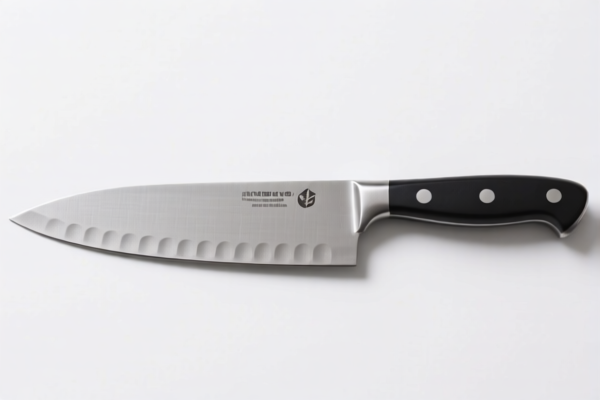
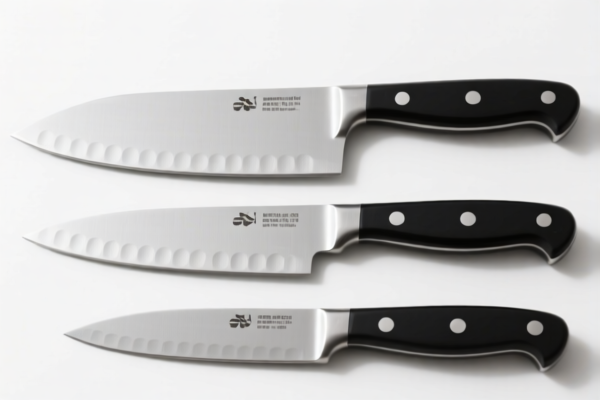
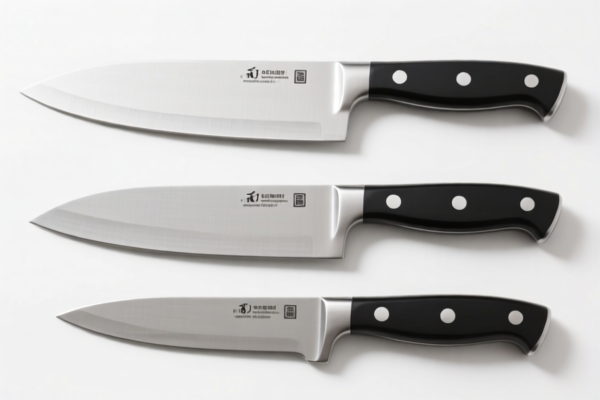
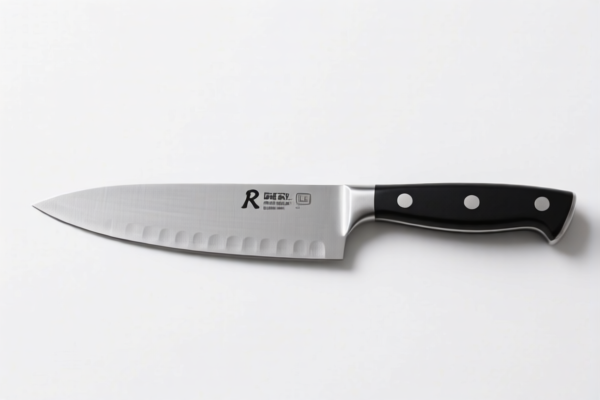
AI Analysis
🍴 Table Knives & Carving Knives (Utensils of Base Metal)
🌐 HS Code Reference & Customs Clearance Guide | 2026 Latest Tariff Analysis | Professional Level Clearance Strategy
📌 I. Product Definition & Classification: Do You Really Understand "Carving Knives"?
Table knives and carving knives are essential culinary tools, primarily classified under Chapter 82 (Tools, Implements, Spoons, Forks... of Base Metal). However, their classification depends heavily on whether they are considered simple hand tools (choppers/carving knives) or machinery blades (replaceable parts for automated slicers).
Hand Tools (Carving/Table Knives):
Items designed to be held by hand for cutting meat, poultry, or carving. These fall under heading 82.05 or 82.07.
Machinery Blades/Inserts:
If the "knife" is a replaceable blade for an automatic slicing machine or a power tool, it may fall under 82.08 (Blades for machinery).
⚠️ Key Distinction Point:
- If it is a stand-alone hand tool (e.g., a classic carving fork and knife set) → 8205.30 or 8207.90
- If it is a replaceable blade for a mechanical slicer (no handle for hand-holding) → 8208.20 or 8208.90
- Material Assumption: Unless specified otherwise, these are typically made of stainless steel or carbon steel (Base Metal).
📦 II. HS Code Classification Details (2026 Latest Tariff Authority Comparison)
| HS Code | Product Description | Applicable Scenario | Hand-Held or Machine Part? |
|---|---|---|---|
8205.30.30.00 |
Carving knives/choppers of base metal | Traditional hand-carving knives, kitchen choppers | ✅ Hand-Held |
8205.30.60.00 |
Woodworking carving tools | Specifically for wood carving, not food processing | ✅ Hand-Held (Wood) |
8207.90.30.80 |
Other interchangeable tools for hand tools | Power tool bits, specialized cutting inserts | ✅/❌ Mixed (Tool Tip) |
8208.90.60.00 |
Other blades for machinery (Fallback) | Generic blades not listed elsewhere (e.g., slicer blades) | ❌ Machine Part |
8208.20.00.90 |
Blades for woodworking machinery | Blades used in mechanical wood processing | ❌ Machine Part |
🔍 Key Reminder:
- Most kitchen carving knives and table knives are classified under 8205.30 because they are "knives and similar cutting tools" held by hand.
- If the product is marketed as a "blade for a slicing machine" and lacks a traditional handle, it may be shifted to 8208.90.60.00, which has a lower base tariff but similar additional duties.
💰 III. 2026 Latest Tariff Rate Breakdown (Including Surtaxes & Policy Add-ons)
✅ Applicable Country: United States (US)
✅ Origin: China (CN)
✅ Effective Date: 2025.11.10 onwards
🎯 1. 8205.30.30.00 —— Carving Knives (Hand Tools)
| Item | Content |
|---|---|
| Base Tariff | 5.7% |
| USITC Surtax | +25.0% (Section 301) |
| IEEPA Surtax | +10.0% (122 Clause / China-specific) |
| Total Rate | 40.7% |
| Tax Calculation | CIF Value × 40.7% |
| De Minimis Eligible? | ❌ NO (Denied) |
| Legal Basis Path | IEEPA:9903.01.25 → USITC:8205.30.30.00 → FOOTNOTE:301 |
📌 Explanation:
- The 5.7% base tariff applies to base metal knives.
- The +25% is the standard Section 301 surtax on Chinese manufactured goods.
- The +10% is the specific "122 Clause" tariff targeting certain Chinese imports.
- Total 40.7% is very high. Cost optimization is critical.
🎯 2. 8205.30.60.00 —— Woodworking Carving Tools
| Item | Content |
|---|---|
| Base Tariff | 5.0% |
| USITC Surtax | +25.0% |
| IEEPA Surtax | +10.0% |
| Total Rate | 40.0% |
| Tax Calculation | CIF Value × 40.0% |
| De Minimis Eligible? | ❌ NO |
| Legal Basis Path | IEEPA:9903.01.24 → USITC:8205.30.60.00 |
📌 Note:
- Slightly lower base rate (5.0% vs 5.7%) compared to culinary knives.
- However, misclassification risk: If customs inspectors find these are used for food, they will reclassify to 8205.30.30.30 (40.7%) and issue a penalty.
🎯 3. 8207.90.30.80 —— Other Interchangeable Tools
| Item | Content |
|---|---|
| Base Tariff | 5.0% |
| USITC Surtax | +25.0% |
| IEEPA Surtax | +10.0% |
| Total Rate | 40.0% |
| Tax Calculation | CIF Value × 40.0% |
| De Minimis Eligible? | ❌ NO |
| Legal Basis Path | IEEPA:9903.01.24 → USITC:8207.90.30.80 |
📌 Warning:
- This code is for "interchangeable tools" (e.g., drill bits, saw blades).
- A standard carving knife is NOT an interchangeable tool for a hand tool. Misuse here is a common audit trigger.
🎯 4. 8208.90.60.00 —— Other Machinery Blades (Fallback)
| Item | Content |
|---|---|
| Base Tariff | 0.0% |
| USITC Surtax | +25.0% |
| IEEPA Surtax | +10.0% |
| Total Rate | 35.0% |
| Tax Calculation | CIF Value × 35.0% |
| De Minimis Eligible? | ❌ NO |
| Legal Basis Path | IEEPA:9903.01.24 → USITC:8208.90.60.00 |
📌 Strategic Insight:
- Lowest Total Rate (35.0%) among the options.
- High Risk: Only applicable if the item is definitively a replaceable blade for a machine (e.g., automatic meat slicer blade) and not a hand-held knife.
- If you ship a hand-held carving knife under this code, customs will likely reject it, impose the correct rate (40.7%) + penalties.
🎯 5. 8208.20.00.90 —— Blades for Woodworking Machinery
| Item | Content |
|---|---|
| Base Tariff | 0.0% |
| USITC Surtax | +25.0% |
| IEEPA Surtax | +10.0% |
| Total Rate | 35.0% |
| Tax Calculation | CIF Value × 35.0% |
| De Minimis Eligible? | ❌ NO |
| Legal Basis Path | IEEPA:9903.01.24 → USITC:8208.20.00.90 |
📌 Note:
- Same 35.0% rate.
- Strictly for woodworking machinery blades. Do not use for food knives.
🛠️ IV. Customs Clearance Practical Advice (Real-World Pitfall Guide)
✅ 1. Documentation Checklist (All Required)
| Document | Required? | Description |
|---|---|---|
| ✅ Product Specification Sheet | ✔️ | Must detail: Material (Stainless/Carbon), Handle Material, Intended Use (Food/Wood). |
| ✅ Product Photos | ✔️ | Clear images showing the handle (if hand-held) vs. mounting hole (if machine blade). |
| ✅ Commercial Invoice | ✔️ | Must accurately describe the item. Avoid vague terms like "Cutting Tool." Use "Carving Knife" or "Slicer Blade." |
| ✅ Packing List | ✔️ | Show quantities and packaging type. |
| ✅ Origin Certificate (CO) | ✔️ | Required for origin verification. |
✅ 2. Declaration Tips (Key Mantra)
🔥 "Hand-held is 8205, Machine Blade is 8208. Mislabeling Costs 5.7% + Penalties!"
| Scenario | Correct HS Code | Incorrect Action |
|---|---|---|
| Hand-held Carving Knife (with handle) | 8205.30.30.00 (40.7%) |
Declaring as 8208.90.60.00 (35.0%) → Customs Seizure |
| Machine Slicer Blade (no handle) | 8208.90.60.00 (35.0%) |
Declaring as 8205.30.30.00 (40.7%) → Overpaying |
| Wood Carving Chisel | 8205.30.60.00 (40.0%) |
Declaring as kitchen knife → Wrong Use Classification |
✅ 3. Special Case Handling
| Case | Recommendation |
|---|---|
| OEM Custom Knives | Provide design drawings showing the handle. If it looks like a tool, it's 8205. |
| Knife Sets | Declare each item separately. Forks and knives may have different sub-headings, but often grouped under 8205.30. |
| Gift Sets | If boxed as a gift, still pay tax on the full value. No "gift exemption" for commercial shipments. |
| Samples | Even samples are subject to duty if over $800 (de minimis does NOT apply to China-origin 301 goods). |
🌍 V. Global Market Comparison (2026 Latest)
| Country/Region | Recommended HS Code | Tariff Rate | Certification | Notes |
|---|---|---|---|---|
| 🇺🇸 USA | 8205.30.30.00 |
40.7% | None (Food Safe) | Highest tariff due to 301 + IEEPA. |
| 🇨🇳 China | 8205.30.30.00 |
5.7% | None | Low import tariff. |
| 🇪🇺 EU | 8211.92.00 |
0-6.5% | LFGB / FDA | Lower taxes, strict food safety. |
| 🇬🇧 UK | 8211.92.00 |
0-6.5% | UKCA | Post-Brexit rules apply. |
| 🇯🇵 Japan | 8211.92.00 |
5.8% | JIS | High quality standards. |
📌 Conclusion:
- The USA is the most expensive market for base metal knives due to 40.7% effective rate.
- EU and Japan offer significantly lower tariffs (0-6.5%), making them more competitive for price-sensitive markets.
📌 VI. Common Errors & Pitfall Guide (Lessons Learned)
❌ Error 1: Declaring a hand-held knife as a "Machinery Blade" (8208) to save 5.7%.
👉 Consequence: Customs inspection reveals the handle. Classification corrected to 8205.30.30.30. Back taxes + penalties applied.
❌ Error 2: Ignoring the "122 Clause" (IEEPA 10%).
👉 Consequence: Underpaying by 10%. CBP issues a Summary Liquidation with interest.
❌ Error 3: Vague description "Metal Knife."
👉 Consequence: Customs flags for manual review. Delay in clearance.
❌ Error 4: Assuming De Minimis applies.
👉 Consequence: De Minimis is DENIED for China-origin goods under Section 301. All shipments are taxed.
✅ Correct Practice:
"Stainless Steel Carving Knife, Hand-Held, 2.5 Blade, Model XYZ, Made in China"
HS Code:8205.30.30.00
Duty: 40.7%
🎯 VII. Conclusion: Precision in Classification Saves Money!
🎯 Remember the Mantra:
🔹 "Handle present? → 8205 (40.7%). No Handle? → 8208 (35.0%). But prove it!"
🔹 "De Minimis is Dead for China. Tax is Inevitable. Plan Ahead."
🔹 "5.7% Base vs 0% Base is a 5.7% Difference. But the Risk of Misclassification is Infinite."
📌 Pro Tip:
If your carving knives are originating from Vietnam, Thailand, or Malaysia, you may avoid the 301 + IEEPA surcharges, reducing the total tariff to just the base rate (5.0-5.7%).
✅ Action:
📞 Consult a customs broker.
📝 Verify Origin Rules of Origin (ROO).
🚀 Legal Supply Chain Restructuring is the Only Way to Cut Costs!
✨ Professional Clearance, Starts with Accurate Classification!
💼 Your Every Dollar of Duty is Worth Calculating!
Customer Reviews
About HS Code Classification
The Harmonized System (HS) is an internationally standardized nomenclature developed by the World Customs Organization (WCO) to classify traded products. Over 200 countries use the HS system as the basis for customs tariffs, trade statistics, and import/export regulations.
Each HS code follows a hierarchical structure:
- Chapter (2 digits) — Broad category of goods (e.g., Chapter 84: Machinery and Mechanical Appliances)
- Heading (4 digits) — More specific grouping within the chapter
- Subheading (6 digits) — Internationally standardized breakdown, used by all WCO member countries
- National subdivisions (8-10 digits) — Country-specific extensions for further classification, such as US HTSUS 10-digit codes
Correct HS code classification is essential for smooth customs clearance, accurate duty payment, and compliance with trade regulations. Misclassification can lead to customs delays, overpayment of duties, or penalties.
When importing from CN to US, the applicable tariff rates may include:
- Most-Favored-Nation (MFN) rate — The standard duty rate applied to WTO members
- General rate — Applied to countries without trade agreements
- Trade remedy duties — Additional tariffs such as Section 301 (anti-dumping), Section 232 (national security), or countervailing duties
The information provided on this page is for reference purposes only. For official classification, please consult with your local customs authority or a licensed customs broker.