Tablet Protective Case
CN → US| HS Code | Tariff Rate | Origin | Destination | Doc |
|---|---|---|---|---|
| 4202929700 | 52.6% | CN | US | Official Doc |
| 4202929400 | 52.6% | CN | US | Official Doc |
| 8473309100 | 35.0% | CN | US | Official Doc |
| 3926909989 | 22.8% | CN | US | Official Doc |
| 8473509000 | 35.0% | CN | US | Official Doc |
Product Images
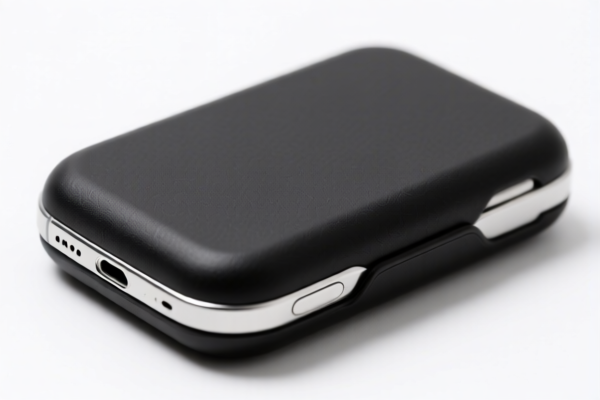
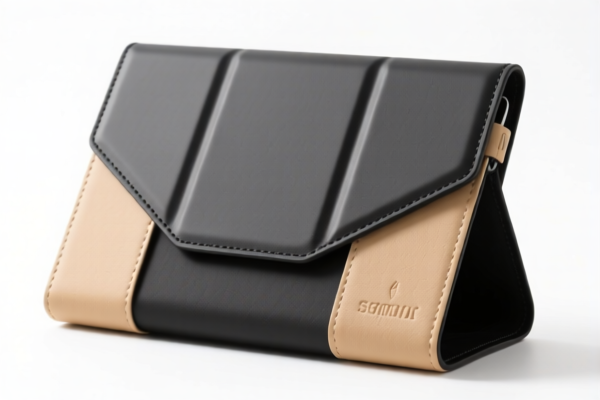
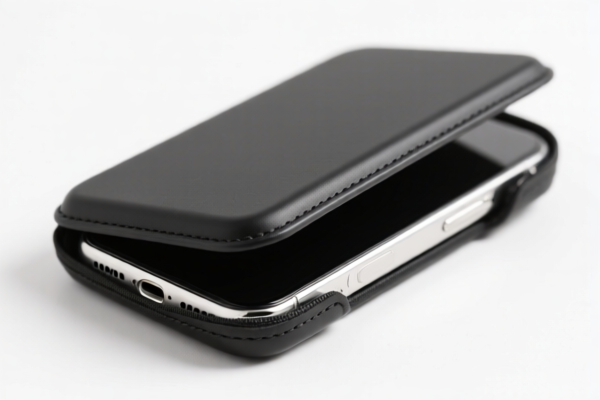
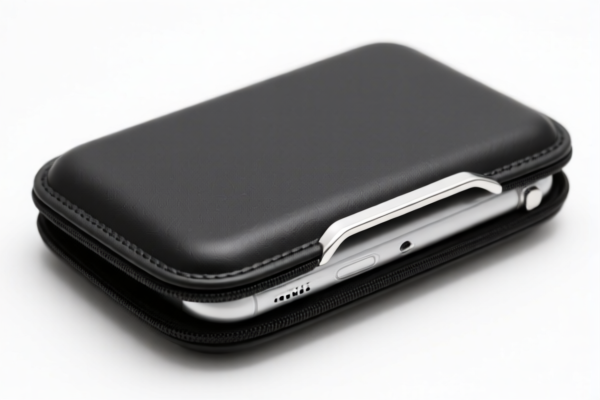
AI Analysis
📱 Tablet Protective Case (Enclosures & Shells)
🌐 HS Code Reference & Clearance Guide | 2026 Latest Tariff Analysis | Professional Customs Strategy
📌 I. Product Definition & Classification: What Exactly Is a "Tablet Protective Case"?
A tablet protective case is an accessory designed to shield tablets (such as iPads, Android tablets, etc.) from physical damage, scratches, and impacts. In international trade, its classification depends heavily on two factors: Material Composition and Functional Perception.
1. "Container" Classification (Leather/Textile/Plastic as a Case): If the product is perceived primarily as a "container" or "cover" that holds the tablet, it often falls under Chapter 42 (Articles of Leather) or similar general goods chapters, even if made of plastic or textile.
2. "Machine Part" Classification (Rigid PC/ABS Shells): If the product is a rigid shell made of hard plastic (like PC - Polycarbonate) and is viewed as a component or part of the electronic device, it may fall under Chapter 84 (Machinery) or Chapter 39 (Plastics).
⚠️ Critical Distinction Point:
- Soft/General Case: Made of leather, fabric, or soft plastic → Often classified as a Container/Cover (HS 4202).
- Rigid PC Shell: Hard plastic material, purely protective, no electronics → Often classified as a Plastic Article (HS 3926) or Machine Part (HS 8473).
- Misclassification Risk: Declaring a rigid plastic shell as a "machine part" (HS 8473) usually incurs higher tariffs than declaring it as a "plastic article" (HS 3926).
📦 II. HS Code Classification Details (2026 Latest Tariff Authority Comparison)
| HS Code | Product Description | Application Scenario | Material/Form |
|---|---|---|---|
4202.92.94.00 |
Tablet Protective Case, Container Form | Soft cases, folio covers, general protective shells | Plastic/Textile |
4202.92.97.00 |
Tablet Protective Case, Residual/General Category | Fallback category for cases not specifically listed elsewhere | Plastic/Textile |
8473.30.91.00 |
PC Protective Shell, Machine Part | Rigid PC shell viewed as a part/attachment of the computer/tablet | PC (Polycarbonate) |
3926.90.99.89 |
PC Protective Shell, Plastic Article | Rigid PC shell viewed as a general plastic product | PC (Polycarbonate) |
8473.50.90.00 |
PC Protective Shell, Machine Accessory | Other machine parts/accessories for data processing machines | PC (Polycarbonate) |
🔍 Key Reminder:
- HS 4202 items are generally treated as goods (containers/covers).
- HS 8473 items are treated as parts of machinery, which triggers different tariff structures under Section XVI.
- HS 3926 is the most common fallback for plastic articles and often offers a lower tariff base.
💰 III. 2026 Latest Tariff Rate Details (Including Surtaxes & Policy Add-ons)
✅ Applicable Country: United States (US)
✅ Origin: China (CN)
✅ Effective Time: Current rates including Section 301 and IEEPA surcharges
🎯 1. 4202.92.94.00 & 4202.92.97.00 —— Tablet Cases (Container/Cover Category)
| Item | Content |
|---|---|
| Base Tariff | 17.6% |
| Section 301 Surtax | +25.0% |
| 122 Clause (IEEPA) Tariff | +10.0% |
| Total Tariff Rate | 52.6% |
| Tax Calculation | CIF Value × 52.6% |
| De Minimis Eligibility | ❌ Not Eligible (Denied) |
| Legal Basis Path | Base: 4202.92 → Section 301: Footnote 9903.88.01 → IEEPA: 10% Surtax |
📌 Explanation:
- These codes are classified as "Articles of Leather or Similar Materials" or "Containers," regardless of whether the material is actually plastic or textile in some interpretations, leading to a high base tariff of 17.6%.
- The 25% Section 301 surcharge applies to all Chinese-made electronics accessories in this chapter.
- The 10% IEEPA surcharge (Section 122) adds further cost.
- Total Cost Impact: 52.6% is extremely high. Importers should verify if a more favorable classification exists.
🎯 2. 8473.30.91.00 & 8473.50.90.00 —— PC Protective Shells (Machine Parts Category)
| Item | Content |
|---|---|
| Base Tariff | 0.0% |
| Section 301 Surtax | +25.0% |
| 122 Clause (IEEPA) Tariff | +10.0% |
| Total Tariff Rate | 35.0% |
| Tax Calculation | CIF Value × 35.0% |
| De Minimis Eligibility | ❌ Not Eligible |
| Legal Basis Path | Base: 8473.30/50 → Section 301: Footnote 9903.88.01 → IEEPA: 10% Surtax |
📌 Explanation:
- These codes classify the shell as a "Part of a Machine" (Tablet/Computer).
- The Base Tariff is 0%, which significantly lowers the total burden compared to HS 4202.
- However, the 25% + 10% surcharges still apply, bringing the total to 35%.
- Risk: Customs may challenge this classification if the product is clearly a "case" rather than a "part." Misclassification can lead to penalties.
🎯 3. 3926.90.99.89 —— PC Protective Shell (Plastic Article Category) ✅ Recommended
| Item | Content |
|---|---|
| Base Tariff | 5.3% |
| Section 301 Surtax | +7.5% |
| 122 Clause (IEEPA) Tariff | +10.0% |
| Total Tariff Rate | 22.8% |
| Tax Calculation | CIF Value × 22.8% |
| De Minimis Eligibility | ❌ Not Eligible |
| Legal Basis Path | Base: 3926.90 → Section 301: Footnote 9903.88.02 (Note: Rate may vary by specific subcategory, but generally lower) → IEEPA: 10% Surtax |
📌 Explanation:
- This is the most cost-effective classification for rigid PC (Polycarbonate) shells.
- It classifies the product as a "Other Plastic Article" rather than a machine part or container.
- Base Tariff (5.3%) + Section 301 (7.5%) + IEEPA (10%) = 22.8%.
- Savings: Compared to HS 4202 (52.6%), this saves ~30%. Compared to HS 8473 (35%), it saves ~12%.
- Condition: The product must be clearly identified as a "Plastic Article" and not integrated with electronics.
🛠️ IV. Clearance Practical Advice (Real-World Pitfall Avoidance)
✅ 1. Preparation Checklist (Mandatory)
| Document | Required | Description |
|---|---|---|
| ✅ Product Specification Sheet | ✔️ | Must specify material (e.g., 100% Polycarbonate), dimensions, and weight. |
| ✅ Material Composition Proof | ✔️ | Certificate of Analysis (COA) confirming plastic content (e.g., PC, TPU, Leather). |
| ✅ Product Photos (Clear) | ✔️ | Show front, back, interior, and any branding. Must clearly show it's a shell/case. |
| ✅ Commercial Invoice | ✔️ | Describe as "Tablet Case" or "PC Protective Shell," NOT "Electronic Accessory" if aiming for HS 3926. |
| ✅ Packing List | ✔️ | List quantities and net/gross weights. |
| ✅ Test Reports | ✔️ | RoHS, REACH (if EU), or CPSIA (if for kids) if applicable. |
✅ 2. Declaration Strategy (Key Tactics)
🔥 "Material Dictates Code, Form Follows Function, Tariff Savings are Real!"
| Scenario | Correct Declaration | Incorrect Practice | Consequence |
|---|---|---|---|
| Rigid PC Shell | 3926.90.99.89 (Plastic Article) |
Misdeclare as 8473.30 (Machine Part) |
Overpay tax (22.8% vs 35%) OR face audit for misclassification |
| Soft/Folio Case | 4202.92.94.00 (Container) |
Declare as 3926 (Plastic) |
Customs may reject if material is leather/textile |
| Leather Case | 4202.92.94.00 (Container) |
Declare as 3926 |
High Risk: Leather has different rules. Must use HS 4202. |
| Case with Electronics | 8517.62 (Data Processing Machine Accessory) |
Declare as 3926 |
Major Error: If it has circuitry, it's an electronic accessory. |
✅ 3. Special Situation Handling
| Situation | Handling Suggestion |
|---|---|
| Hybrid Material (e.g., Leather + Plastic) | Declare based on essential character. If leather is main, HS 4202. If plastic is main, HS 3926. |
| Custom OEM Design | Provide design drawings to prove it's a generic shell, not a specialized machine part. |
| Bundled with Tablet | If sold together, the tablet dictates the classification (HS 8471). The case may be ignored or valued separately. |
| Low-Value Shipment | Even though De Minimis is denied for these codes, ensure accurate valuation to avoid scrutiny. |
🌍 V. Global Market Clearance Comparison (2026 Latest)
| Country/Region | Recommended HS Code | Tariff Rate (China Origin) | Certification Requirements | Notes |
|---|---|---|---|---|
| 🇺🇸 USA | 3926.90.99.89 |
22.8% | FCC (if electronic parts), RoHS | Avoid HS 4202 (52.6%) |
| 🇨🇳 China | 3926.90.99.99 |
5.3% | N/A | Import duty only |
| 🇪🇺 EU | 3926.90.99 |
4.5% | CE, RoHS | No Section 301 surcharge |
| 🇬🇧 UK | 3926.90.99 |
4.5% | UKCA, RoHS | Post-Brexit rules apply |
| 🇯🇵 Japan | 3926.90.90 |
3.5% | PSE (if electronic) | Low base tariff |
📌 Conclusion:
- USA: The tariff difference between HS 4202 (52.6%) and HS 3926 (22.8%) is massive. Correct classification is critical.
- Other Markets: EU and Japan have lower base tariffs, but still prefer3926for plastic accessories.
- Strategic Tip: For US imports, always aim for HS 3926 for rigid plastic cases to save ~30% in taxes.
📌 VI. Common Errors & Pitfall Guide (Blood Tears Lessons)
❌ Error 1: Declaring a rigid PC shell as 4202.92.94.00 (Container)
👉 Consequence: Pay 52.6% tax instead of 22.8%. Overpayment of 30%!
❌ Error 2: Declaring a PC shell as 8473.30.91.00 (Machine Part)
👉 Consequence: Pay 35% tax. Higher than HS 3926. Overpayment of 12.2%.
❌ Error 3: Not specifying Material in Declaration
👉 Consequence: Customs may classify as the highest possible tariff category or hold shipment for inspection.
❌ Error 4: Using "Electronic Accessory" as Description for a Plain Shell
👉 Consequence: May trigger FCC/IC certification requirements unnecessarily, delaying clearance.
✅ Correct Practice:
"Tablet Protective Case, Rigid, Made of 100% Polycarbonate, No Electronic Components, Model XYZ, Color Black"
🎯 VII. Conclusion: Precise Classification, Maximize Profit!
🎯 Remember the Mantra:
🔹 "Plastic Shell? Use HS 3926! Save 30% in the US!"
🔹 "Leather/Folio? Use HS 4202! Prepare for High Tax!"
🔹 "Machine Part? Use HS 8473! Only if truly a Part!"
📌 Pro Tip:
- If your product is 100% Plastic (PC/TPU/ABS), strongly advocate for HS 3926.90.99.89.
- Provide Material Safety Data Sheets (MSDS) or Composition Certificates to support your classification.
- Consider Advance Rulings from US Customs if the product is borderline between "Container" and "Plastic Article."
📣 Take Action Now:
📞 Contact Your Customs Broker with the following:
1. Clear photos of the product.
2. Material composition report (100% PC?).
3. Request classification under HS 3926.90.99.89.
🚀 Save Costs, Clear Quickly, Boost Margins!
✨ Professional Clearance Starts with Accurate Classification!
💼 Every Percent Saved is Pure Profit!
Customer Reviews
About HS Code Classification
The Harmonized System (HS) is an internationally standardized nomenclature developed by the World Customs Organization (WCO) to classify traded products. Over 200 countries use the HS system as the basis for customs tariffs, trade statistics, and import/export regulations.
Each HS code follows a hierarchical structure:
- Chapter (2 digits) — Broad category of goods (e.g., Chapter 84: Machinery and Mechanical Appliances)
- Heading (4 digits) — More specific grouping within the chapter
- Subheading (6 digits) — Internationally standardized breakdown, used by all WCO member countries
- National subdivisions (8-10 digits) — Country-specific extensions for further classification, such as US HTSUS 10-digit codes
Correct HS code classification is essential for smooth customs clearance, accurate duty payment, and compliance with trade regulations. Misclassification can lead to customs delays, overpayment of duties, or penalties.
When importing from CN to US, the applicable tariff rates may include:
- Most-Favored-Nation (MFN) rate — The standard duty rate applied to WTO members
- General rate — Applied to countries without trade agreements
- Trade remedy duties — Additional tariffs such as Section 301 (anti-dumping), Section 232 (national security), or countervailing duties
The information provided on this page is for reference purposes only. For official classification, please consult with your local customs authority or a licensed customs broker.