Tableware Porcelain
CN → US| HS Code | Tariff Rate | Origin | Destination | Doc |
|---|---|---|---|---|
| 6912003550 | 19.8% | CN | US | Official Doc |
| 6912003950 | 14.5% | CN | US | Official Doc |
| 6911103710 | 25.5% | CN | US | Official Doc |
| 6911103510 | 43.5% | CN | US | Official Doc |
Product Images
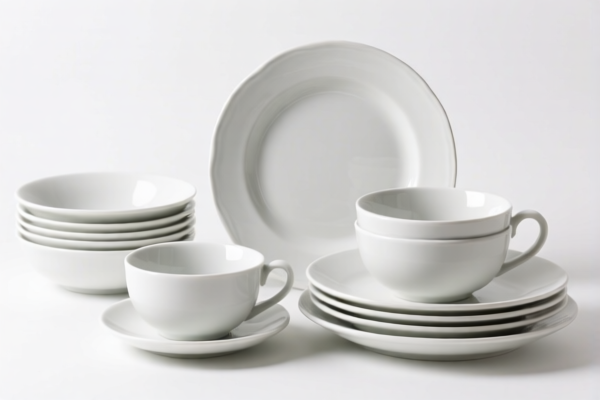
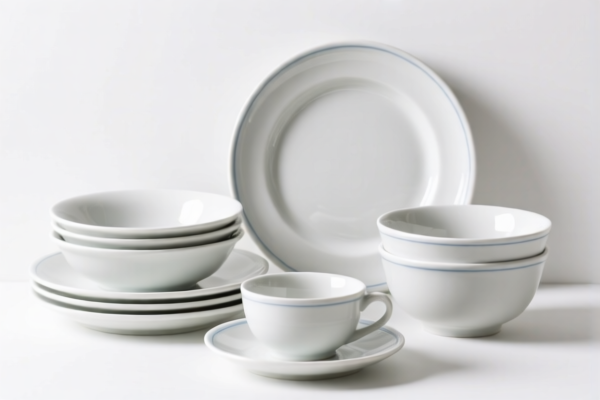
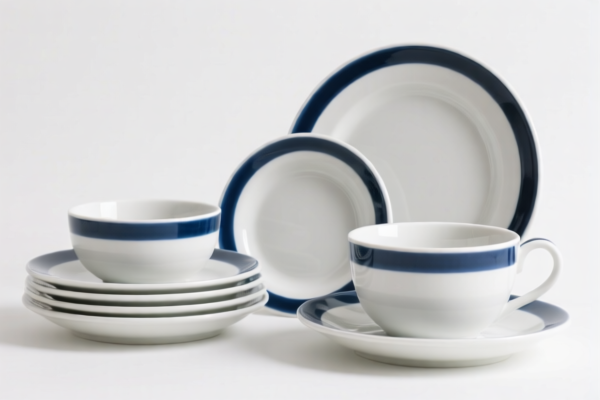
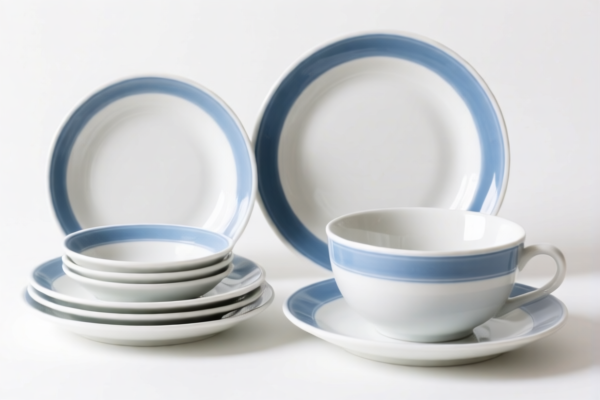
AI Analysis
🍽️ Porcelain Tableware (Ceramic Tableware & Kitchenware)
🌐 HS Code Reference & Customs Clearance Guide | 2026 Latest Tariff Analysis | Professional Entry Strategy
📌 I. Product Definition & Classification: Do You Really Know "Porcelain Tableware"?
Porcelain tableware, kitchenware, and household articles are essential consumer goods in international trade. They are primarily classified based on material composition (Porcelain/China vs. Other Ceramic) and value thresholds of specific set components (as defined by Additional U.S. Note 6(b)).
Key Distinction Points: * Porcelain or China: High-fired, translucent, dense ceramic. Governed by HS Chapter 69, Heading 6911. * Other Ceramic: Earthenware, stoneware, etc. Governed by HS Chapter 69, Heading 6912. * Set Value Thresholds: For certain "specified sets," the aggregate value of items listed in Additional U.S. Note 6(b) determines the specific subheading. * Porcelain: Threshold is $56 or > $56. * Other Ceramic: Threshold is $38 or > $38.
⚠️ Critical Note:
- If the items are not part of a "specified set" or do not meet the specific dimensional/value criteria, they may fall under generic "Other" categories (not listed in the provided DATA).
- The data below strictly covers specified sets where the aggregate value triggers specific duty rates.
📦 II. HS Code Classification Details (2026 Latest Tariff Alignment)
Based on the provided DATA, the classification depends on the material (Porcelain vs. Other Ceramic) and the aggregate value of the note-referenced articles within the set.
| HS Code | Material Type | Product Description | Set Value Condition | Key Dimensions |
|---|---|---|---|---|
6911.10.37.10 |
Porcelain / China | Tableware & Kitchenware (Specified Sets) | Over $56 | Plates ≤ 27.9 cm; Teacups/Saucers, Mugs, Soup/Fruit/Cereal bowls ≤ 22.9 cm |
6911.10.35.10 |
Porcelain / China | Tableware & Kitchenware (Specified Sets) | Not Over $56 | Plates ≤ 27.9 cm; Teacups/Saucers, Mugs, Soup/Fruit/Cereal bowls ≤ 22.9 cm |
6912.00.35.50 |
Other Ceramic (Not Porcelain/China) |
Tableware & Kitchenware (Specified Sets) | Not Over $38 | Other (General Category) |
6912.00.39.50 |
Other Ceramic (Not Porcelain/China) |
Tableware & Kitchenware (Specified Sets) | Over $38 | Other (General Category) |
🔍 Important Clarification:
- Porcelain Sets: Must be evaluated against the $56 threshold.
- Value ≤ $56 →6911.10.35.10
- Value > $56 →6911.10.37.10
- Non-Porcelain Ceramic Sets: Must be evaluated against the $38 threshold.
- Value ≤ $38 →6912.00.35.50
- Value > $38 →6912.00.39.50
- "Additional U.S. Note 6(b)" refers to specific articles (plates, cups, etc.) included in the set's value calculation. Ensure your invoice clearly breaks down these values if challenged.
💰 III. 2026 Latest Tariff Rate Breakdown (Detailed Tax Clause)
✅ Applicable Country: United States (US)
✅ Origin: Typically China (CN) – Note: The high "Additional Duty" suggests US Section 301 tariffs on Chinese goods.
✅ Status: Active 2026 Tariff Schedule
🎯 1. Porcelain Sets: 6911.10.35.10 (Value ≤ $56)
| Item | Detail |
|---|---|
| Base Tariff | 26.0% |
| Additional Duty (Section 301) | 7.5% |
| Total Tax Rate | 33.5% |
| Calculation | CIF Value × 33.5% |
| Legal Basis | Based on DATA: "Basic Tariff: 26.0%, Additional Tariff: 7.5%" |
📌 Interpretation:
- This is the highest rate for porcelain sets.
- Even for lower-value sets (≤ $56), the base duty is steep (26%).
- The 7.5% additional duty is likely a Section 301 penalty, making Chinese porcelain sets costly.
🎯 2. Porcelain Sets: 6911.10.37.10 (Value > $56)
| Item | Detail |
|---|---|
| Base Tariff | 8.0% |
| Additional Duty (Section 301) | 7.5% |
| Total Tax Rate | 15.5% |
| Calculation | CIF Value × 15.5% |
| Legal Basis | Based on DATA: "Basic Tariff: 8.0%, Additional Tariff: 7.5%" |
📌 Interpretation:
- Paradoxically, higher-value porcelain sets have a lower base rate (8% vs. 26%).
- Total duty is 15.5%, which is nearly half of the lower-value set rate.
- Strategy: If possible, ensure the aggregate value of Note 6(b) items exceeds $56 to benefit from the lower base duty.
🎯 3. Other Ceramic Sets: 6912.00.35.50 (Value ≤ $38)
| Item | Detail |
|---|---|
| Base Tariff | 9.8% |
| Additional Duty | 0.0% |
| Total Tax Rate | 9.8% |
| Calculation | CIF Value × 9.8% |
| Legal Basis | Based on DATA: "Basic Tariff: 9.8%, Additional Tariff: 0.0%" |
📌 Interpretation:
- No additional Section 301 duty applies to this category (or it is exempt).
- Total duty is only 9.8%.
- This is a highly favorable category for non-porcelain ceramics.
🎯 4. Other Ceramic Sets: 6912.00.39.50 (Value > $38)
| Item | Detail |
|---|---|
| Base Tariff | 4.5% |
| Additional Duty | 0.0% |
| Total Tax Rate | 4.5% |
| Calculation | CIF Value × 4.5% |
| Legal Basis | Based on DATA: "Basic Tariff: 4.5%, Additional Tariff: 0.0%" |
📌 Interpretation:
- The lowest duty rate in the entire dataset.
- No additional penalties.
- Strategy: If using non-porcelain ceramics, ensure the set value exceeds $38 to access this 4.5% rate.
🛠️ IV. Customs Clearance Practical Advice (Pitfall Avoidance Guide)
✅ 1. Documentation Checklist (Non-Negotiable)
| Document | Required? | Purpose |
|---|---|---|
| ✅ Commercial Invoice | ✔️ | Must clearly state: Material (Porcelain vs. Ceramic), Set Composition, and Aggregate Value of Note 6(b) items. |
| ✅ Packing List | ✔️ | Details individual item quantities and values to justify the set value threshold. |
| ✅ Product Photos | ✔️ | Clear images showing translucency (for porcelain) and labels. |
| ✅ Set Value Breakdown | ✔️ | Critical: Provide a calculation sheet showing how the $56 (porcelain) or $38 (ceramic) threshold was determined. |
| ✅ FCC/RoHS Certificates | ✔️ | (If applicable) For any electronic components (e.g., heated plates). |
✅ 2. Declaration Strategy (Key Mantras)
🔥 "Material First, Value Next, Set Value is Key!"
| Scenario | Correct Declaration | Incorrect Action |
|---|---|---|
| Porcelain Set Value ≤ $56 | 6911.10.35.10 (33.5% Duty) |
Misdeclaring as >$56 to get 15.5% → Fraud Risk |
| Porcelain Set Value > $56 | 6911.10.37.10 (15.5% Duty) |
Misdeclaring as ≤$56 → Audit Trigger |
| Non-Porcelain Set ≤ $38 | 6912.00.35.50 (9.8% Duty) |
Declaring as Porcelain → Wrong Duty |
| Non-Porcelain Set > $38 | 6912.00.39.50 (4.5% Duty) |
Declaring as ≤$38 → Missed Savings |
✅ 3. Special Considerations
| Situation | Recommendation |
|---|---|
| Mixed Sets | If a set contains both porcelain and ceramic items, ensure they are not mixed in a way that confuses the material classification. Usually, the dominant material or specific subheading rules apply. |
| "Other" vs. "Specified Set" | If your product does not fit the "specified set" criteria (e.g., random assortment without defined values), it may fall under "Other" categories (e.g., 6911.10.10), which are not in this DATA. Verify if your product qualifies as a "specified set." |
| Value Fluctuation | If your set value is close to the $56/$38 threshold, consider adjusting the number of items to cross or stay below the line to optimize duty. Example: If value is $55, adding one low-value item to push it to $56.50 changes duty from 33.5% to 15.5% for porcelain. |
| Origin Labeling | Ensure all items are clearly marked "Made in China" (if applicable) to avoid origin misdeclaration penalties. |
🌍 V. Global Market Comparison (2026 Snapshot)
| Country/Region | Recommended HS Code | Approx. Duty | Notes |
|---|---|---|---|
| 🇺🇸 USA | 6911.10.37.10 / 6911.10.35.10 etc. |
15.5% - 33.5% | High Section 301 duties apply to China. |
| 🇪🇺 EU | 6911.10 / 6912.00 |
6.5% - 9.6% | No Section 301 equivalent. Standard MFN rates apply. |
| 🇨🇳 China | 6911.10 / 6912.00 |
8.0% - 10.0% | Import duty into China is moderate. |
| 🇬🇧 UK | 6911.10 / 6912.00 |
6.5% - 9.6% | Post-Brexit rates align closely with EU. |
📌 Conclusion:
- USA is the most expensive market due to Section 301 additional duties.
- Non-porcelain ceramics are significantly cheaper to import into the US (4.5%-9.8%) compared to porcelain (15.5%-33.5%).
- Porcelain duty is highly sensitive to the $56 threshold. Strategic pricing/value calculation is crucial.
📌 VI. Common Errors & Pitfalls (Lessons Learned)
❌ Error 1: Ignoring the "Aggregate Value of Note 6(b) Articles"
👉 Consequence: Misclassification leads to overpayment or underpayment. If the value is misstated, customs may reassess and penalize.
❌ Error 2: Assuming All Porcelain is the Same
👉 Consequence: Failing to distinguish between ≤$56 and >$56 sets results in paying 33.5% when 15.5% was applicable (or vice versa).
❌ Error 3: Mixing Materials in One Set Without Clarification
👉 Consequence: Customs may classify the entire set under the highest duty rate or reject the declaration for ambiguity.
❌ Error 4: Using Generic "Tableware" Description
👉 Consequence: Delays in clearance. Must specify "Porcelain" or "Other Ceramic" and "Specified Set."
✅ Correct Practice:
"Porcelain Tableware Set, Specified Set, Aggregate Value of Note 6(b) Items: $60. HS Code: 6911.10.37.10. Duty: 15.5%."
🎯 VII. Conclusion: Professional Declaration Saves Money
🎯 Remember the Mantra:
🔹 "Porcelain: Check $56 Line. Ceramic: Check $38 Line. Value Drives Duty!"
🔹 "33.5% vs 15.5%: A $1 Decision Saves 18%!"
🔹 "Ceramic is Cheaper: 4.5% vs 8-33% for Porcelain!"
📌 Pro Tip:
If your porcelain set value is close to $56, consider adjusting the quantity or adding/removing small items to cross the threshold to $56.01 to reduce duty from 33.5% to 15.5%.
For ceramics, stay above $38 to enjoy the 4.5% rate.
📣 Immediate Action:
📞 Consult with a licensed customs broker to validate your set value calculation.
📄 Prepare detailed invoices showing the breakdown of Note 6(b) articles.
🚀 Optimize your product mix to leverage the lowest duty rates available.
✨ Professional Customs Clearance Starts with Accurate Classification!
💼 Every Percent Saved is Pure Profit!
Customer Reviews
About HS Code Classification
The Harmonized System (HS) is an internationally standardized nomenclature developed by the World Customs Organization (WCO) to classify traded products. Over 200 countries use the HS system as the basis for customs tariffs, trade statistics, and import/export regulations.
Each HS code follows a hierarchical structure:
- Chapter (2 digits) — Broad category of goods (e.g., Chapter 84: Machinery and Mechanical Appliances)
- Heading (4 digits) — More specific grouping within the chapter
- Subheading (6 digits) — Internationally standardized breakdown, used by all WCO member countries
- National subdivisions (8-10 digits) — Country-specific extensions for further classification, such as US HTSUS 10-digit codes
Correct HS code classification is essential for smooth customs clearance, accurate duty payment, and compliance with trade regulations. Misclassification can lead to customs delays, overpayment of duties, or penalties.
When importing from CN to US, the applicable tariff rates may include:
- Most-Favored-Nation (MFN) rate — The standard duty rate applied to WTO members
- General rate — Applied to countries without trade agreements
- Trade remedy duties — Additional tariffs such as Section 301 (anti-dumping), Section 232 (national security), or countervailing duties
The information provided on this page is for reference purposes only. For official classification, please consult with your local customs authority or a licensed customs broker.