Tailgate Switch
CN → US| HS Code | Tariff Rate | Origin | Destination | Doc |
|---|---|---|---|---|
| 8537109170 | 37.7% | CN | US | Official Doc |
| 8537108000 | 35.0% | CN | US | Official Doc |
| 8708295160 | 0.0% | CN | US | Official Doc |
| 8708998180 | 12.5% | CN | US | Official Doc |
| 8536509065 | 35.0% | CN | US | Official Doc |
| 8536509033 | 35.0% | CN | US | Official Doc |
Product Images
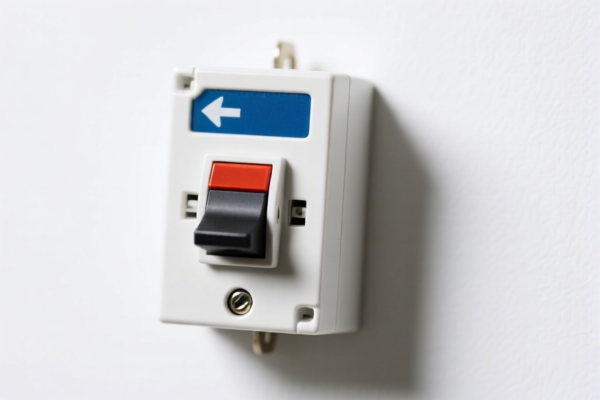
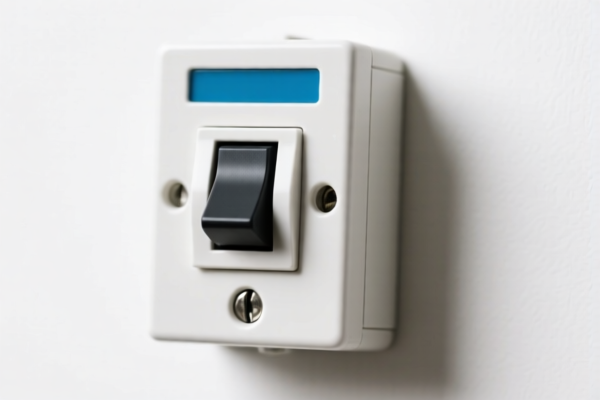
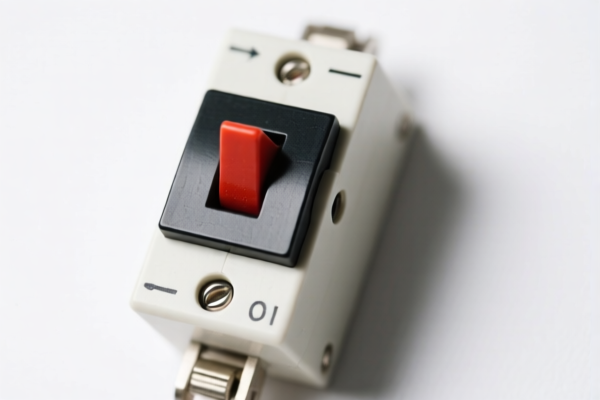
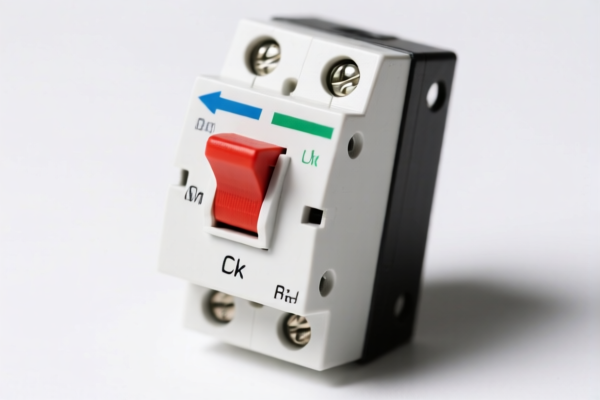
AI Analysis
🚚 Tailgate Switch (Truck Tailgate Safety Switch)
🌐 HS Code Reference & Customs Clearance Guide | 2026 Latest Tariff Analysis | Professional Clearance Strategy
📌 I. Product Definition & Classification: Do You Really Understand the "Tailgate Switch"?
A Tailgate Switch is a critical safety component in automotive electrical systems, typically installed on the rear of pickup trucks, SUVs, and commercial vehicles. Its primary function is to detect the position of the tailgate (open/closed) and interlock with other systems (such as reverse lights, brake lights, or transmission locking) to prevent accidents or mechanical damage.
In international trade, it is strictly classified based on its voltage rating and integration status:
1. Electrical Switch Component (Standalone)
If the product is a standalone switch (plastic/metal housing, electrical contacts, no complex computing logic) with a rated voltage not exceeding 1,000V, it falls under Heading 8536.
2. Integrated Control Panel (Complex Assembly)
If the "switch" is actually part of a larger board, panel, or console containing two or more apparatus (e.g., switches, fuses, relays) for electric control or distribution, and it incorporates numerical control or instruments, it may fall under Heading 8537. However, simple tailgate switches are almost always classified under 8536.
⚠️ Key Distinction Point:
- If it is a single mechanical/electrical switch (On/Off, Open/Closed detection) → HS Code 8536
- If it is a centralized control module with multiple inputs/outputs and circuitry → HS Code 8537 (Rare for simple tailgate switches)
- Note: It is NOT a part of the body (chassis/panel) under Heading 8708, as it is an electrical accessory, not a structural body part.
📦 II. HS Code Classification Details (2026 Latest Tariff Authoritative Comparison)
Based on the provided data, here are the relevant HS Codes for Tailgate Switches and related components. Please note that pure body parts (like the metal tailgate itself) are excluded from this specific electrical list, but the electrical switch is included.
| HS Code | Product Description | Applicable Scenario | Voltage Limit |
|---|---|---|---|
8536.50.90.33 |
Other Switches: Push-button (Rated at not over 5 A) | Standard tailgate latch switches, simple contact switches under 5 Amps | ≤ 1,000 V |
8536.50.90.65 |
Other Switches: Other | Tailgate switches that are not push-button type (e.g., toggle, rotary, or micro-switches) or rated > 5A but ≤ 1,000V | ≤ 1,000 V |
8537.10.80.00 |
Control Panels: Touch-sensitive data input devices without display | Unlikely for standard tailgate switches. Only if the "switch" is a complex touch interface integrated into a larger console. | ≤ 1,000 V |
8537.10.91.70 |
Control Panels: Other | Unlikely. Only if the tailgate switch is part of a complex panel with multiple electrical apparatus. | ≤ 1,000 V |
8708.29.51.60 |
Parts of Bodies: Other parts and accessories of bodies | Incorrect for electrical switch. This is for physical body parts (e.g., the metal tailgate panel itself, hinges). Do not use for the electrical switch. | N/A |
8708.99.81.80 |
Other Parts and Accessories of Motor Vehicles | Incorrect for electrical switch. This is a catch-all for non-electrical, non-body parts (e.g., bumpers, mirrors, exhaust). Do not use for the electrical switch. | N/A |
🔍 Critical Reminder:
- Most Tailgate Switches are simple electrical components. They should be classified under 8536.50.
- Do not classify the electrical switch under 8708. While it is a "part of a motor vehicle," General Rule of Interpretation (GRI) 1 and Section XVI Note 2 state that electrical apparatus (Chapter 85) takes precedence over vehicle parts (Chapter 87) when the item is specifically described in Chapter 85.
- Exception: If the switch is integrated into a touchscreen console inside the cab that controls the tailgate, it might fall under 8537, but a standalone switch on the tailgate latch is 8536.
💰 III. 2026 Latest Tariff Rate Breakdown (Including Surtaxes, Policy Additions)
✅ Applicable Country: United States (US)
✅ Origin: China (CN)
✅ Effective Time: 2025 November 10 onwards (for subsequent imports)
🎯 1. 8536.50.90.33 —— Other Switches: Push-button (≤ 5 A)
| Item | Content |
|---|---|
| Base Tariff Rate | 0.0% (ad valorem) |
| Section 301 Surtax | +25.0% (USITC Footnote for Chapter 85) |
| IEEPA Surtax | Not explicitly listed in provided data for this specific sub-code, but check for general 10% if applicable to broader categories. Based on provided data, only 25% is listed. |
| Total Tariff Rate | 25.0% |
| Tax Calculation | CIF Value × 25.0% |
| De Minimis Exemption | ❌ Not Available (Deny De Minimis for Section 301 goods) |
| Legal Basis Path | USITC:8536.50.90.33 → FOOTNOTE:301 |
📌 Explanation:
- The base duty is 0% because it is an electrical switch component.
- However, it is subject to the 25% Section 301 surtax due to its origin (China).
- Total Cost Impact: You pay 25% of the CIF value in tariffs.
🎯 2. 8536.50.90.65 —— Other Switches: Other
| Item | Content |
|---|---|
| Base Tariff Rate | 0.0% (ad valorem) |
| Section 301 Surtax | +25.0% |
| Total Tariff Rate | 25.0% |
| Tax Calculation | CIF Value × 25.0% |
| De Minimis Exemption | ❌ Not Available |
| Legal Basis Path | USITC:8536.50.90.65 → FOOTNOTE:301 |
📌 Note:
- Same tax treatment as above. The 25% surtax applies to almost all electrical switches from China.
🎯 3. 8537.10.91.70 / 8537.10.80.00 —— Control Panels (If Applicable)
| Item | Content |
|---|---|
| Base Tariff Rate | 2.7% (for 8537.10.91.70) or 0.0% (for 8537.10.80.00) |
| Section 301 Surtax | +25.0% |
| Total Tariff Rate | 27.7% (for 8537.10.91.70) or 25.0% (for 8537.10.80.00) |
| Tax Calculation | CIF Value × Total Rate |
📌 Warning:
- If incorrectly classified as a "Control Panel" (8537) instead of a simple switch (8536), you may pay 2.7% base + 25% surtax = 27.7%.
- Strategy: Aim for 8536 (25% total) rather than 8537 (27.7% total) if possible, as it simplifies the description. However, correct classification is paramount.
🎯 4. 8708.29.51.60 / 8708.99.81.80 —— DO NOT USE FOR ELECTRICAL SWITCHES
| Item | Content |
|---|---|
| Base Tariff Rate | 2.5% |
| Section 301 Surtax | +25.0% |
| Steel/Aluminum/Copper Surtax | +50.0% (if made of these materials) |
| Total Tariff Rate | 27.5% (standard) or 52.5% (if steel/aluminum/copper) |
| Legal Warning | Misclassification Risk: High. Customs may reject this classification for an electrical component, leading to audits, penalties, and back-taxes. |
🛠️ IV. Customs Clearance Practical Advice (Battle-Tested Pitfall Guide)
✅ 1. Document Checklist (Non-negotiable)
| Document | Required | Notes |
|---|---|---|
| ✅ Product Datasheet | ✔️ | Must specify: "Electrical Switch", "Voltage Rating (e.g., 12V DC, 5A)", "Material (Plastic/Metal)". |
| ✅ Circuit Diagram/Photo | ✔️ | Proof that it is a simple switch, not a complex control panel with computing capabilities. |
| ✅ Commercial Invoice | ✔️ | Description: "Tailgate Safety Switch, Electrical, 12V DC, 5A Max, Model XYZ". Do NOT write "Auto Part" alone. |
| ✅ Origin Certificate | ✔️ | Essential for proving Country of Origin (China) to apply correct surtax. |
| ✅ HS Code Pre-Ruling | ✔️ | Highly Recommended for high-value shipments. |
✅ 2. Declaration Tips (Key Mnemonics)
🔥 "Electrical First, Auto Second! Switch is 8536, Not 8708!"
| Scenario | Correct Declaration | Incorrect Practice |
|---|---|---|
| Simple Tailgate Switch | 8536.50.90.33 or 8536.50.90.65 |
Misdeclare as 8708 (Auto Parts) → Risk of Penalty + Audit |
| Switch + Wiring Harness | Declare Switch as 8536, Harness separately or as part of the assembly if sold together. |
Bundle incorrectly → Valuation Dispute |
| Control Module with Screen | 8537.10.80.00 (if touch interface) |
Call it a "Switch" → Misclassification |
| Metal Tailgate Panel (No Electronics) | 8708.29.51.60 |
Call it a "Switch" → Wrong Product |
✅ 3. Special Case Handling
| Scenario | Handling Advice |
|---|---|
| OEM Tailgate Switches | Provide OEM drawings. If it’s a simple switch, stick to 8536. |
| Integrated with Reverse Light System | If it’s a single switch unit that also triggers a light, it’s still a Switch (8536). If it’s a Control Module that processes signals, consider 8537. |
| Steel/Aluminum Housing | Even if the switch housing is steel, if it’s classified under 8536, the +50% steel surtax does not apply. Only 8708 body parts attract the +50% material surtax. This is a major cost-saving point! |
🌍 V. Global Market Clearance Comparison (2026 Latest)
| Country/Region | Recommended HS Code | Tariff Rate (China Origin) | Certification | Notes |
|---|---|---|---|---|
| 🇺🇸 USA | 8536.50.90.33 |
25% (301 Surtax) | DOT/SAE (if applicable) | Critical: Avoid 8708 to prevent 50% steel surtax risk. |
| 🇨🇳 China | 8536.50.90.33 |
~5-6% (Import Duty) | CCC | Low tariff for import into China. |
| 🇪🇺 EU | 8536.50.90.00 |
0% (Most MFN rates) | CE/E-mark | No major surtaxes for electrical switches. |
| 🇯🇵 Japan | 8536.50.90.00 |
0-3% | PSE/JIS | Low tariff barrier. |
📌 Conclusion:
- USA: Highest cost due to 25% surtax. Correct classification is vital to avoid additional 50% steel surtax if misclassified as a body part.
- EU/Japan: Favorable for electrical components with 0-3% tariffs.
📌 VI. Common Errors & Pitfall Guide (Lessons from Blood and Tears)
❌ Error 1: Classifying an electrical switch as an "Auto Part" under 8708.99.81.80
👉 Consequence: Customs may reject it because Chapter 85 takes precedence. If accepted, you risk paying 27.5% instead of 25%, or if it’s a steel body part misdeclared, you face 50% surtax.
👉 Correct: Always use 8536 for electrical switches.
❌ Error 2: Describing the product only as "Tailgate Switch" without electrical specs
👉 Consequence: Customs cannot determine if it’s a simple switch (8536) or a control panel (8537). Leads to delay, inspection, and potential reclassification.
👉 Correct: Include "12V DC, 5A, Electrical Switch" in the description.
❌ Error 3: Assuming all tailgate components are 8708
👉 Consequence: The metal tailgate door is 8708, but the electrical switch is 8536. Mixing them up causes valuation errors.
👉 Correct: Split declaration. Physical body = 8708. Electrical component = 8536.
🎯 VII. Conclusion: Precision Saves Money!
🎯 Remember the Golden Rule:
🔹 "Electrical Switches go to 8536, Not 8708!"
🔹 "25% Tariff is better than 50% Steel Surtax!"
🔹 "Describe Voltage and Amps to Prove it’s a Switch!"
📌 Pro Tip:
If your tailgate switch is simple mechanical/electrical, declare it as 8536.50.90.33 (Push-button) or 8536.50.90.65 (Other). This ensures you only pay 25% total tariff (0% base + 25% surtax) and avoids the 50% steel surtax risk associated with Chapter 87 body parts.
📣 Immediate Action:
📞 Confirm product specs with your supplier: Is it a simple switch or a control module?
🚀 Use8536for switches. Use8708only for metal/plastic body panels.
💼 Clearance Accuracy = Cost Efficiency!
✨ Professional Clearance Starts with Precise Classification!
💼 Every percentage point matters in cross-border trade!
Customer Reviews
About HS Code Classification
The Harmonized System (HS) is an internationally standardized nomenclature developed by the World Customs Organization (WCO) to classify traded products. Over 200 countries use the HS system as the basis for customs tariffs, trade statistics, and import/export regulations.
Each HS code follows a hierarchical structure:
- Chapter (2 digits) — Broad category of goods (e.g., Chapter 84: Machinery and Mechanical Appliances)
- Heading (4 digits) — More specific grouping within the chapter
- Subheading (6 digits) — Internationally standardized breakdown, used by all WCO member countries
- National subdivisions (8-10 digits) — Country-specific extensions for further classification, such as US HTSUS 10-digit codes
Correct HS code classification is essential for smooth customs clearance, accurate duty payment, and compliance with trade regulations. Misclassification can lead to customs delays, overpayment of duties, or penalties.
When importing from CN to US, the applicable tariff rates may include:
- Most-Favored-Nation (MFN) rate — The standard duty rate applied to WTO members
- General rate — Applied to countries without trade agreements
- Trade remedy duties — Additional tariffs such as Section 301 (anti-dumping), Section 232 (national security), or countervailing duties
The information provided on this page is for reference purposes only. For official classification, please consult with your local customs authority or a licensed customs broker.