Tailor Tracking Paper
CN → US| HS Code | Tariff Rate | Origin | Destination | Doc |
|---|---|---|---|---|
| 4911911500 | 17.5% | CN | US | Official Doc |
| 4802562000 | 10.0% | CN | US | Official Doc |
| 4802546100 | 35.0% | CN | US | Official Doc |
| 4806300000 | 35.0% | CN | US | Official Doc |
| 4806200000 | 35.0% | CN | US | Official Doc |
| 4911998000 | 17.5% | CN | US | Official Doc |
Product Images
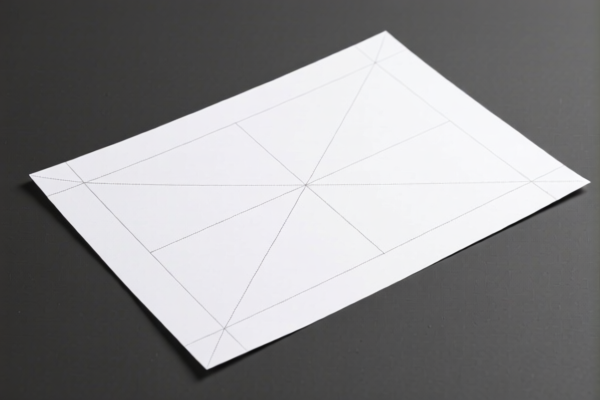
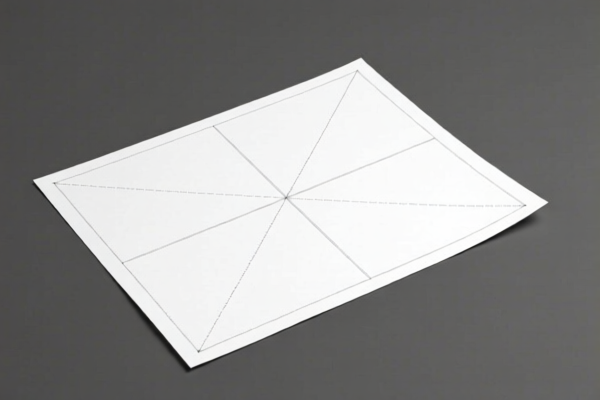
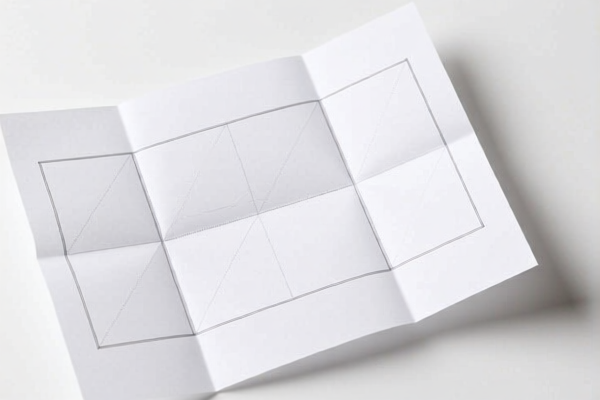
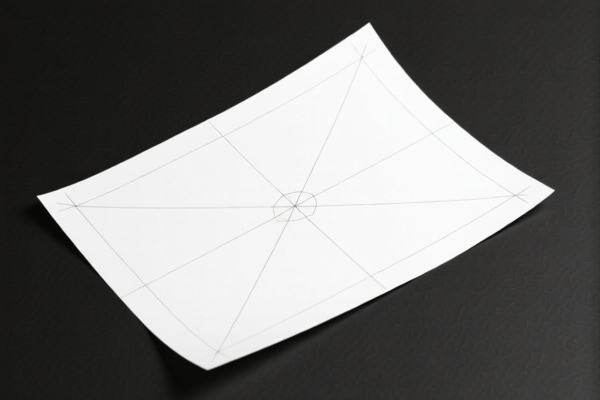
AI Analysis
✂️ Tailor Tracking Paper (Sizing/Butcher Paper)
🌐 HS Code Reference & Customs Clearance Guide | 2026 Latest Tariff Analysis | Professional Clearance Strategy
📌 I. Product Definition & Classification: Do You Really Know "Tailor Tracking Paper"?
Tailor Tracking Paper, often referred to as "Sizing Paper," "Butcher Paper" (in industrial contexts), or "Drafting Paper," is a specialized paper product used for marking fabrics, transferring patterns, or technical drafting. In international trade, its classification depends heavily on its physical form (is it printed/finished?) and specific material composition.
Key Distinction:
- Printed/Graphical Form: If the paper contains pre-printed patterns, grids, or graphical designs intended for tracing, it may fall under Chapter 49 (Printed Materials).
- Blank Paper for Drawing/Tracing: If it is blank paper specifically designed for "drawing or tracing purposes" (e.g., carbonless, translucent, or specific grammage for tailoring), it falls under Chapter 48 (Paper).
⚠️ Critical Classification Point:
- If the paper is blank and defined by its use for "graphic purposes" or "drawing/tracing" → Look at 4802 or 4806 series.
- If the paper is printed with designs, maps, or specific graphical content → Look at 4911 series.
📦 II. HS Code Classification Details (2026 Latest Tariff Authority Comparison)
Based on the provided dataset, here are the possible HS Code classifications for "Tailor Tracking Paper" (or similar drawing/tracing papers):
| HS Code | Product Description | Applicable Scenario | Tax Rate (Total) |
|---|---|---|---|
4911.91.15.00 |
Other printed matter; Pictures, designs, and photographs (Printed Drawing Paper) | Paper that already contains printed patterns, grids, or graphical designs for tracing. | 17.5% |
4802.56.20.00 |
Other paper, paperboard, cellulose wadding, and webs of cellulosic fibres: Other paper and paperboard, smooth-surfaced, weighing ≥70 g/m² but <100 g/m², not further worked or finished (Drawing Paper) | Blank paper specifically for drawing/tracing, weight 70-99.99 g/m². | 10.0% |
4802.54.61.00 |
Other paper, paperboard, cellulose wadding, and webs of cellulosic fibres: Other paper and paperboard, smooth-surfaced, weighing ≥70 g/m² but <100 g/m², not further worked or finished (Paper for Graphic Purposes) | Blank paper used for "graphic purposes" (technical drawing, tailoring patterns) with weight 70-99.99 g/m². | 35.0% |
4806.30.00.00 |
Greaseproof paper, greaseproof boards, cellotape and similar barrier papers, of a kind used for packaging, in rolls of a width >36 cm, or in rectangular (including square) sheets with side >36 cm | Specific type of barrier/packaging paper, less likely for standard tailoring but possible for specific industrial uses. | 35.0% |
4806.20.00.00 |
Greaseproof paper, greaseproof boards, cellotape and similar barrier papers, of a kind used for packaging, in rolls of a width ≤36 cm, or in rectangular (including square) sheets with any side ≤36 cm | Same as above, but in smaller rolls/sheets. | 35.0% |
4911.99.80.00 |
Other printed matter (Other Printed Paper Products) | Blank paper that is considered an "other printed product" due to minor finishing or is misclassified as printed. | 17.5% |
🔍 Focus Reminder:
-4802.56.20.00(10%) is the most common and favorable classification for blank tailor tracking/drawing paper of standard weight (70-100g/m²).
-4911.91.15.00(17.5%) applies if the paper is pre-printed with designs.
-4802.54.61.00(35%) is a high-tariff trap for "graphic purpose" paper if the weight falls in the 70-99.99 g/m² range but is not classified under the smoother/finished subheading.
-4806Series (35%) is for barrier/greaseproof papers, rarely for standard tailoring paper unless it's a specific industrial packaging variant.
💰 III. 2026 Latest Tariff Rate Breakdown (Including Surtaxes, Policy Add-ons)
✅ Applicable Country: United States (US)
✅ Origin: China (CN)
✅ Effective Date: November 10, 2025 (and subsequent imports)
🎯 1. 4911.91.15.00 —— Other Printed Matter (Printed Drawing/Tracking Paper)
| Item | Content |
|---|---|
| Base Tariff | 0% (ad valorem) |
| USITC Surtax | +7.5% (Section 301 / Additional Duty) |
| IEEPA Surtax | +10% (Against China/HK products, effective Nov 10, 2025) |
| Total Rate | 17.5% |
| Tax Calculation | CIF Value × 17.5% |
| De Minimis Eligibility | ❌ Not Eligible (deny_de_minimis) |
| Legal Path | IEEPA:9903.01.24 → USITC:4911.91.15.00 → FOOTNOTE:9903.88.01 (Note: Footnote reference adjusted based on typical 301 structure) |
📌 Explanation:
- The 7.5% additional duty is part of the Section 301 tariff list for certain printed materials.
- The 10% IEEPA tariff is the baseline surcharge for Chinese-origin goods.
- Total 17.5%. This is moderate compared to electronics, but still significant for low-margin paper products.
🎯 2. 4802.56.20.00 —— Other Paper (Drawing Paper, 70-99.99 g/m²)
| Item | Content |
|---|---|
| Base Tariff | 0% |
| USITC Surtax | +0.0% |
| IEEPA Surtax | +10% |
| Total Rate | 10.0% |
| Tax Calculation | CIF Value × 10.0% |
| De Minimis Eligibility | ❌ Not Eligible (deny_de_minimis) |
| Legal Path | IEEPA:9903.01.24 → USITC:4802.56.20.00 |
📌 Advantage:
- This is the lowest tariff option for standard blank tailor tracking paper.
- The Section 301 surtax is 0% for this specific subheading, making it highly competitive.
- Only the 10% IEEPA surcharge applies.
🎯 3. 4802.54.61.00 & 4806.30.00.00 & 4806.20.00.00 —— High Tariff Categories
| Item | Content |
|---|---|
| Base Tariff | 0% |
| USITC Surtax | +25.0% |
| IEEPA Surtax | +10% |
| Total Rate | 35.0% |
| Tax Calculation | CIF Value × 35.0% |
| De Minimis Eligibility | ❌ Not Eligible (deny_de_minimis) |
| Legal Path | IEEPA:9903.01.25 → IEEPA:9903.01.24 → USITC:[Code] → FOOTNOTE:9903.88.01 |
📌 Warning:
- If your paper is misclassified as "Paper for Graphic Purposes" (4802.54.61.00) or "Greaseproof/Barrier Paper" (4806series), you will face a 35% total tariff.
- This is 25% higher than the optimal4802.56.20.00classification.
- Avoid this misclassification by ensuring the product is described as "Drawing Paper" or "Paper for Tracing/Drafting" rather than generic "Graphic Paper."
🎯 4. 4911.99.80.00 —— Other Printed Paper
| Item | Content |
|---|---|
| Base Tariff | 0% |
| USITC Surtax | +7.5% |
| IEEPA Surtax | +10% |
| Total Rate | 17.5% |
| Tax Calculation | CIF Value × 17.5% |
| De Minimis Eligibility | ❌ Not Eligible (deny_de_minimis) |
| Legal Path | IEEPA:9903.01.24 → USITC:4911.99.80.00 |
📌 Note:
- Similar to4911.91.15.00, this carries a 17.5% total rate.
- Use this only if the paper is printed but doesn't fit the "Pictures/Designs" definition.
🛠️ IV. Customs Clearance Practical Advice (Real-World Pitfall Guide)
✅ 1. Preparation Checklist (Non-negotiable)
| Material | Required | Explanation |
|---|---|---|
| ✅ Product Specifications | ✔️ | Must include Grammage (g/m²), Width, Finish (Smooth/Glossy), and Material Composition (100% Wood Pulp?). |
| ✅ Product Photos | ✔️ | Clear images showing the paper texture, translucency, and any printing. |
| ✅ Commercial Invoice | ✔️ | Must describe the item as "Tailor Tracking Paper" or "Drafting Paper", NOT generic "Paper." |
| ✅ Certificate of Origin (CO) | ✔️ | To prove origin for tariff calculation. |
| ✅ Packing List | ✔️ | Detail roll dimensions or sheet sizes. |
✅ 2. Declaration Tips (Key Mnemonic)
🔥 "Weight & Finish Define Tariff, Blank vs Printed Changes Everything!"
| Scenario | Correct Declaration | Wrong Practice |
|---|---|---|
| Blank Paper, 70-99 g/m², Smooth Surface | 4802.56.20.00 (10%) |
Misclassify as 4802.54.61.00 → 35% |
| Printed Patterns/Designs | 4911.91.15.00 (17.5%) |
Declare as blank paper → Fraud Risk |
| Paper >100 g/m² | Check other 4802 subheadings | Force fit into 70-99 g/m² bracket |
| Greaseproof/Barrier Use | 4806.xxxx (35%) |
Rare for tailoring, only if specific industrial use |
✅ 3. Special Situations
| Situation | Handling Advice |
|---|---|
| OEM Custom Paper | Provide design files if printed; provide spec sheets if blank. |
| Small Rolls (<36cm) | If greaseproof/barrier, use 4806.20.00.00 (35%). If not greaseproof, still aim for 4802 series. |
| Mixed Shipment (Paper + Other Goods) | Declare separately. Paper is subject to 10%-35% tariffs. Other goods may have different rates. |
| De Minimis (Section 321) | ❌ Not Eligible for China-origin paper products listed above. Must file formal entry. |
🌍 V. Global Market Comparison (2026 Latest)
| Country/Region | Recommended HS Code | Tariff (China Origin) | Certification Requirements | Remarks |
|---|---|---|---|---|
| 🇺🇸 USA | 4802.56.20.00 |
10% (Optimal) | None | Avoid 4806 (35%) and 4911 (17.5%) if possible. |
| 🇨🇳 China | 4802.56.20.00 |
5-10% | None | Low domestic tax. |
| 🇪🇺 EU | 4802.56.20.00 |
6.5% | None | No Section 301 equivalent. |
| 🇬🇧 UK | 4802.56.20.00 |
6.5% | None | Post-Brexit rules apply. |
| 🇦🇺 Australia | 4802.56.20.00 |
5% | None | Free Trade Agreement may apply. |
📌 Conclusion:
- USA is the most complex market due to Section 301 and IEEPA surcharges.
- Optimal Strategy: Classify as4802.56.20.00to pay only 10% (10% IEEPA + 0% Section 301).
- Avoid:4802.54.61.00and4806series due to 25% Section 301 surcharge.
📌 VI. Common Errors & Pitfalls (Blood & Tears Lessons)
❌ Error 1: Classifying blank tailor paper as "Paper for Graphic Purposes" (4802.54.61.00)
👉 Consequence: Pay 35% instead of 10% → 25% extra tax!
❌ Error 2: Declaring printed tracking paper as blank paper
👉 Consequence: Customs may reclassify to 4911 (17.5%) or impose penalties for misdeclaration.
❌ Error 3: Ignoring Grammage (g/m²)
👉 Consequence: If paper is 105 g/m², it falls out of 4802.56.20.00 (70-99 g/m²). Check 4802.54 or other subheadings. Accuracy is key!
❌ Error 4: Assuming De Minimis (Section 321) applies
👉 Consequence: China-origin paper products under these HS codes are explicitly excluded from de minimis. Package will be seized or require formal entry.
✅ Correct Practice:
"Tailor Tracking Paper, Blank, 80 g/m², Smooth-Surfaced, Wood Pulp, Rolls of 1m Width, for Drafting Purposes"
🎯 VII. Conclusion: Professional Classification Saves Money!
🎯 Remember the Mnemonic:
🔹 "Blank Paper, 70-99g, Smooth Surface = 10% Tax!"
🔹 "Printed Paper = 17.5% Tax!"
🔹 "Graphic/Barrier Paper = 35% Tax (Avoid!)"
🔹 "No De Minimis for China Paper!"
📌 Pro Tip:
If your tailor tracking paper is originally from Vietnam, Mexico, or Thailand, you may be eligible for IEEPA Exemptions, reducing the tax to 0%~5%.
Recommend Advance Ruling if unsure about grammage or finish classification.
📣 Immediate Action:
📞 Contact a licensed customs broker + Provide Product Specs (Grammage, Finish, Printed/Blank) + Apply for HS Code Advance Ruling
🚀 Ensure your tailor tracking paper, smoothly clears customs, efficiently enters the market, and maximizes profit margins!
✨ Professional Clearance Starts with Accurate Classification!
💼 Every Cent of Tax You Save is Pure Profit!
Customer Reviews
About HS Code Classification
The Harmonized System (HS) is an internationally standardized nomenclature developed by the World Customs Organization (WCO) to classify traded products. Over 200 countries use the HS system as the basis for customs tariffs, trade statistics, and import/export regulations.
Each HS code follows a hierarchical structure:
- Chapter (2 digits) — Broad category of goods (e.g., Chapter 84: Machinery and Mechanical Appliances)
- Heading (4 digits) — More specific grouping within the chapter
- Subheading (6 digits) — Internationally standardized breakdown, used by all WCO member countries
- National subdivisions (8-10 digits) — Country-specific extensions for further classification, such as US HTSUS 10-digit codes
Correct HS code classification is essential for smooth customs clearance, accurate duty payment, and compliance with trade regulations. Misclassification can lead to customs delays, overpayment of duties, or penalties.
When importing from CN to US, the applicable tariff rates may include:
- Most-Favored-Nation (MFN) rate — The standard duty rate applied to WTO members
- General rate — Applied to countries without trade agreements
- Trade remedy duties — Additional tariffs such as Section 301 (anti-dumping), Section 232 (national security), or countervailing duties
The information provided on this page is for reference purposes only. For official classification, please consult with your local customs authority or a licensed customs broker.