Tamper Station
CN → US| HS Code | Tariff Rate | Origin | Destination | Doc |
|---|---|---|---|---|
| 7326908688 | 87.9% | CN | US | Official Doc |
| 7326908677 | 62.9% | CN | US | Official Doc |
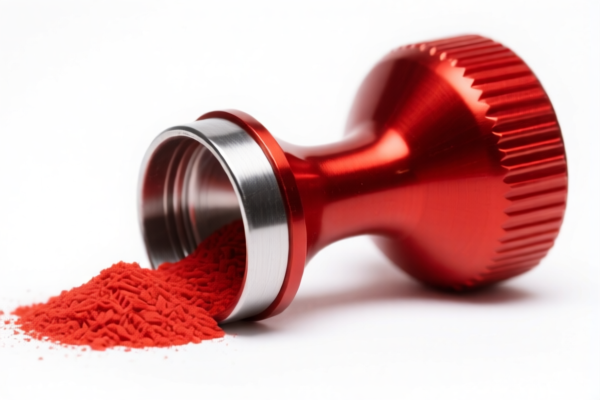
Product Images



AI Analysis
🔒 Tamper Station (Security & Locking Equipment)
🌐 HS Code Reference & Customs Clearance Guide | 2026 Latest Tariff Analysis | Professional Entry Strategy
📌 Part I: Product Definition & Classification: What is a "Tamper Station"?
A Tamper Station is a specialized security device designed to detect, record, or prevent unauthorized access to equipment, containers, or sealed areas. In international trade, these are primarily classified under Articles of Iron or Steel, specifically as "Other articles," unless they are complex electronic systems with specific software-driven functions (which are not covered in the provided data).
Based on the provided data, Tamper Stations are categorized as miscellaneous steel/iron articles.
⚠️ Key Distinction: - If the Tamper Station is a mechanical locking device, seal, or bracket made of iron/steel → It falls under HS Code 7326.90. - If it contains complex electronic circuitry acting as a standalone computer or data processor, it might fall under Chapter 85, but based strictly on the provided
<DATA>, it is classified under 7326. - Crucial Note: The data provided does not include codes for electronic security systems (e.g., 8517.62, 8543.70). Therefore, for this analysis, we assume a mechanical or simple electromechanical steel-based Tamper Station.
📦 Part II: HS Code Classification Details (2026 Latest Tariff Alignment)
| HS Code | Product Description | Application Scenario | Material |
|---|---|---|---|
7326.90.86.88 |
Other articles of iron or steel: Other: Other: Other: Other | Generic steel tamper seals, locking bars, or mechanical security brackets | ✅ Iron/Steel |
7326.90.86.77 |
Other articles of iron or steel: Other: Other: Other: Other Burial caskets | Note: This code explicitly mentions "Burial caskets." | ✅ Iron/Steel |
🔍 Critical Interpretation: -
7326.90.86.88is the correct classification for a "Tamper Station" if it is a mechanical steel device (e.g., a heavy-duty lock, seal, or mounting bracket). It is the "catch-all" for other steel articles not specifically named. -7326.90.86.77is INCORRECT for a standard Tamper Station unless the device is explicitly a steel burial casket (which is unlikely for a "Tamper Station"). Do not use this code unless you are importing coffins.
💰 Part III: 2026 Tariff Rate Breakdown (Including Additional Taxes)
✅ Applicable Country: United States (US)
✅ Country of Origin: China (CN)
✅ Effective Date: Current applicable rates based on provided data
🎯 1. 7326.90.86.88 —— Other articles of iron or steel (Correct for Tamper Stations)
| Item | Content |
|---|---|
| Base Tariff Rate | 2.9% (ad valorem) |
| Section 301 Additional Tariff | 25.0% (on steel/aluminum/copper products from China) |
| IEEPA Additional Tariff | 50% (Steel, Aluminum, Copper Products Surcharge) |
| Total Tariff Rate | 77.9% |
| Tax Calculation | CIF Value × 77.9% |
| De Minimis Exemption | ❌ Not Eligible (deny_de_minimis) |
| Legal Basis Path | USITC:7326.90.86.88 → Footnote: Steel/Aluminum/Copper → IEEPA:9903.01.25 |
📌 Explanation: - The Base Rate (2.9%) applies to general steel articles. - The Section 301 Tariff (25%) is applied to steel products from China. - The IEEPA Surcharge (50%) is a critical, high-value addition for steel, aluminum, and copper products from China. - Total: 77.9% is an extremely high effective tax rate. This significantly impacts profit margins and must be factored into pricing strategies.
🚫 2. 7326.90.86.77 —— Burial Caskets (Incorrect for Tamper Stations)
| Item | Content |
|---|---|
| Base Tariff Rate | 2.9% |
| Section 301 Additional Tariff | 25.0% |
| IEEPA Additional Tariff | 50% |
| Total Tariff Rate | 77.9% |
| Tax Calculation | CIF Value × 77.9% |
| Legal Basis Path | Same as above |
📌 Warning: - Do NOT use this code for a Tamper Station. Misclassification as a "Burial Casket" may lead to customs audits, penalties, and delays for providing false product descriptions. - The tax rate is identical, but the product description mismatch is a compliance risk.
🛠️ Part IV: Customs Clearance Operational Advice (Practical Pitfall Avoidance Guide)
✅ 1. Preparation Checklist (Non-negotiable)
| Document | Required | Notes |
|---|---|---|
| ✅ Product Specification Sheet | ✔️ | Must detail material (Iron/Steel), dimensions, weight, and function (e.g., "Mechanical Tamper-Evident Seal"). |
| ✅ Material Composition Certificate | ✔️ | Proves the item is "Iron or Steel" to justify HS Code 7326. |
| ✅ Product Photos (Clear & Detailed) | ✔️ | Show the device from multiple angles, including any serial numbers or labels. |
| ✅ Commercial Invoice | ✔️ | Must clearly state: "Iron/Steel Tamper Station, Mechanical, Model XYZ". Avoid vague terms like "Security Device" without material specification. |
| ✅ Packing List | ✔️ | List items individually. Do not group with electronic components if possible. |
✅ 2. Declaration Tips (Key Mnemonics)
🔥 "Steel is Steel, Don't Guess! Mechanical, not Electronic!"
| Scenario | Correct Declaration | Incorrect Practice |
|---|---|---|
| Mechanical Steel Tamper Lock | 7326.90.86.88 – "Iron Steel Tamper Seal" |
Misclassifying as "Electronic Security System" (Chapter 85) |
| Electronic Tamper Station | Not in provided data (Likely 8517/8543) | Forcing into 7326 → Wrong Classification |
| Plastic Tamper Seal | Not in provided data (Likely 3926) | Using 7326 (Steel code) → Penalty for Material Error |
⚠️ Important: - If your Tamper Station has electronics, sensors, or software, it may not fall under 7326. However, based on the provided data, we are restricted to steel articles. - If the device is primarily steel with minor electronic components, you may still classify under 7326, but be prepared to justify the "essential character" is steel.
✅ 3. Special Situations
| Situation | Handling Advice |
|---|---|
| OEM Custom Tamper Stations | Provide design drawings to prove material composition. |
| Mixed Shipment (Steel + Plastic) | Declare separately. Steel parts under 7326, plastic parts under 3926. |
| High-Value Electronic Security Systems | Not covered by this data. Consult a customs broker for Chapter 85 classification (e.g., 8543.70). |
| Burial Casket Misclassification | Avoid. Using 7326.90.86.77 for non-caskets is a red flag for CBP. |
🌍 Part V: Global Market Clearance Comparison (2026 Latest)
| Country/Region | Recommended HS Code | Tariff (China Origin) | Certification | Notes |
|---|---|---|---|---|
| 🇺🇸 United States | 7326.90.86.88 |
77.9% (2.9% Base + 25% Sec 301 + 50% IEEPA) | None specific | High tariff burden. |
| 🇨🇳 China | 7326.90.86.88 |
~10% (Varies) | CCC (if applicable) | Lower domestic import tax. |
| 🇪🇺 European Union | 7326.90.88 |
~4-6% | CE (if electronic) | No Section 301 or IEEPA. |
| 🇬🇧 United Kingdom | 7326.90.88 |
~4-6% | UKCA | Post-Brexit alignment with EU. |
📌 Conclusion: - The US is the most expensive market for steel-based Tamper Stations due to the 50% IEEPA surcharge. - Total cost impact: 77.9% is substantial. Consider supply chain diversification (e.g., sourcing from Vietnam or India) to mitigate tariffs.
📌 Part VI: Common Mistakes & Pitfall Guide (Lessons Learned)
❌ Mistake 1: Classifying a steel Tamper Station as an electronic device (e.g., 8543.70)
👉 Consequence: If customs determines it's primarily steel, you may face misclassification penalties and the 77.9% tax still applies, plus fines.
❌ Mistake 2: Using 7326.90.86.77 (Burial Caskets) for a Tamper Station
👉 Consequence: Customs Audit. CBP will reject the entry for false description. Delay and fines.
❌ Mistake 3: Ignoring the IEEPA 50% Surcharge
👉 Consequence: Profit margin collapse. 77.9% is not a mistake; it's a policy mandate. Factor it into your CIF pricing.
✅ Correct Approach:
"Tamper Station, Mechanical, Iron/Steel, Model XYZ, Designed for Container Sealing, No Electronic Components."
🎯 Part VII: Conclusion: Professional Declaration, Cost Control, Efficiency
🎯 Remember the Key Rules:
🔹 "Steel is 7326, Electronics are 85"
🔹 "IEEPA 50% on Steel from China – Price for It!"
🔹 "Never call a Tamper Station a Casket"
📌 Pro Tip:
If your Tamper Station is high-tech (e.g., GPS-enabled, IoT-connected), it may not fall under 7326.90.86.88. It could be classified as a wireless communication apparatus (8517.62) or other apparatus (8543.70). Please consult a customs broker for electronic-heavy devices, as the provided data is limited to steel articles.
📣 Immediate Action:
📞 Contact a Customs Broker + Provide Material Specs + Verify if Electronic
🚀 For Steel-Based Tamper Stations: Prepare for 77.9% US Tariff. Plan accordingly.
✨ Professional Customs Clearance Starts with Accurate Classification!
💼 Every Dollar of Tariff Matters!
Customer Reviews
About HS Code Classification
The Harmonized System (HS) is an internationally standardized nomenclature developed by the World Customs Organization (WCO) to classify traded products. Over 200 countries use the HS system as the basis for customs tariffs, trade statistics, and import/export regulations.
Each HS code follows a hierarchical structure:
- Chapter (2 digits) — Broad category of goods (e.g., Chapter 84: Machinery and Mechanical Appliances)
- Heading (4 digits) — More specific grouping within the chapter
- Subheading (6 digits) — Internationally standardized breakdown, used by all WCO member countries
- National subdivisions (8-10 digits) — Country-specific extensions for further classification, such as US HTSUS 10-digit codes
Correct HS code classification is essential for smooth customs clearance, accurate duty payment, and compliance with trade regulations. Misclassification can lead to customs delays, overpayment of duties, or penalties.
When importing from CN to US, the applicable tariff rates may include:
- Most-Favored-Nation (MFN) rate — The standard duty rate applied to WTO members
- General rate — Applied to countries without trade agreements
- Trade remedy duties — Additional tariffs such as Section 301 (anti-dumping), Section 232 (national security), or countervailing duties
The information provided on this page is for reference purposes only. For official classification, please consult with your local customs authority or a licensed customs broker.