Tamper evident label
CN → US| HS Code | Tariff Rate | Origin | Destination | Doc |
|---|---|---|---|---|
| 8309900085 | 37.6% | CN | US | Official Doc |
| 8301106080 | 23.6% | CN | US | Official Doc |
| 8301406060 | 23.2% | CN | US | Official Doc |
| 8309900080 | 37.6% | CN | US | Official Doc |
| 4821102000 | 35.0% | CN | US | Official Doc |
Product Images
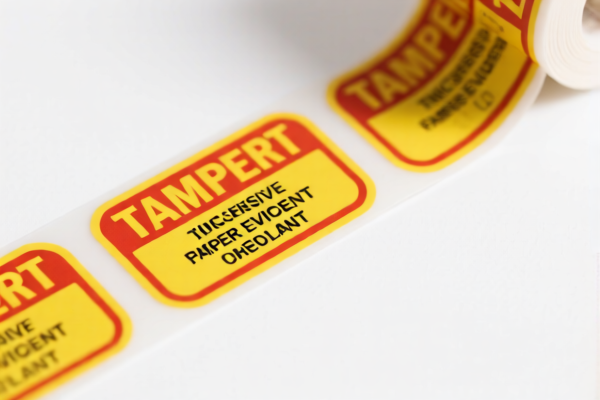
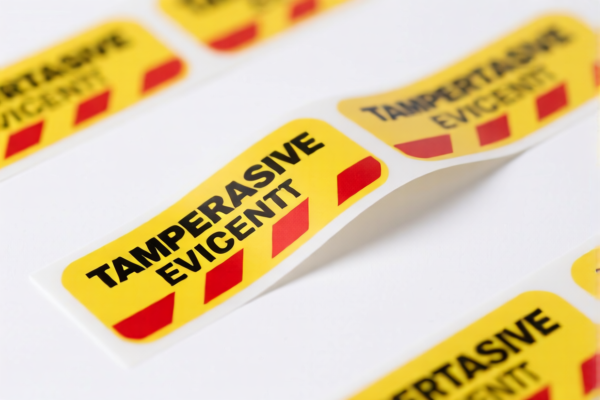
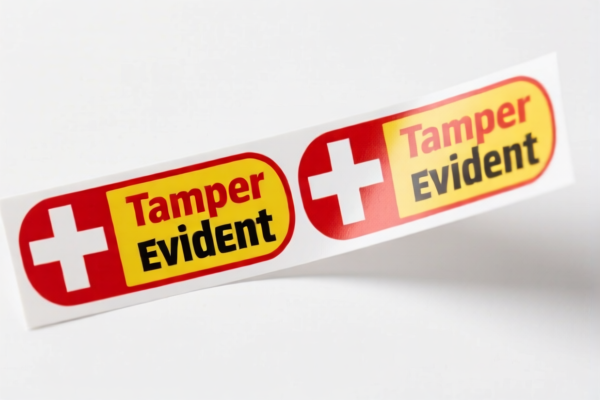
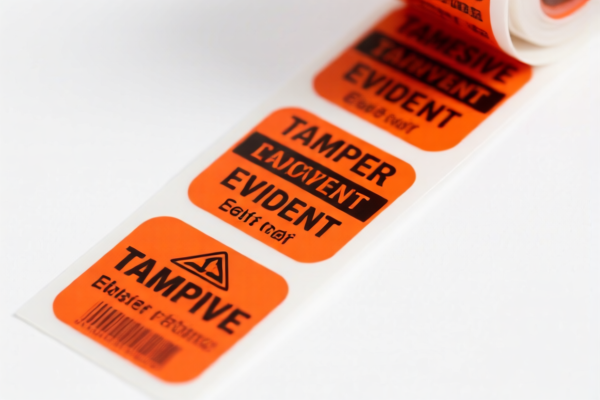
AI Analysis
🏷️ Tamper Evident Labels (防篡改标签/防伪标签)
🌐 HS Code Reference & Customs Clearance Guide | 2026 Latest Tariff Analysis | Professional Strategy
📌 I. Product Definition & Classification: What Exactly is a "Tamper Evident Label"?
Tamper evident labels are specialized security products designed to reveal evidence of unauthorized access or modification. In international trade, these are not just "stickers"; they are functional security components. They are primarily categorized based on their material composition and specific application function.
There are two main categories in the provided data context: 1. Paper/Cardboard-Based Security Labels: These are adhesive labels made from paper or cardboard, often featuring holographic prints, serial numbers, or void patterns. 2. Locking/Sealing Hardware (Indirectly related via "Anti-Tamper" function): Some items classified under locks or fasteners (like special seals or caps) are included in the data due to the "anti-tamper" functional attribute, even if they are not paper labels.
⚠️ Key Distinction: - If it is a paper/cardboard adhesive label with anti-counterfeiting or tamper-evident features → Go to 4821.10.20.00. - If it is a plastic/metal seal, cap, or lock designed to prevent tampering → It may fall under 8309 (Closures) or 8301 (Locks), depending on the structure.
📦 II. HS Code Classification Details (2026 Latest Tariff Authority对照)
| HS Code | Product Description | Application Scenario | Material/Feature |
|---|---|---|---|
4821.10.20.00 |
Paper or cardboard labels, excluding labels of heading 4911 | Adhesive security labels, anti-counterfeit tags, tamper-evident paper strips | ✅ Paper/Cardboard |
8309.90.00.85 |
Closures (caps, lids, etc.), other | Security caps, tamper-evident bottle tops, shrink bands | ✅ Plastic/Metal/Other |
8309.90.00.80 |
Closures, other | General packaging seals, non-standard anti-tamper closures | ✅ Plastic/Metal/Other |
8301.10.60.80 |
Locks, padlocks | Security locks with tamper-evident features, safe locks | ✅ Metal/Lock Mechanism |
8301.40.60.60 |
Locks, other | Specialized locking devices, protective locks, tamper-resistant fasteners | ✅ Metal/Lock Mechanism |
🔍 Critical Insight: - "Tamper Evident" is a function, not always a material. - Pure paper labels go to 4821. - Physical seals/caps that break to show tampering go to 8309. - Locks/seals that require tools to open and show damage go to 8301. - The data provided suggests a "fallback" logic where items without specific sub-headings are classified under "Other" categories, often attracting higher tariffs.
💰 III. 2026 Latest Tariff Rate Details (Including Surcharges & Policy Add-ons)
✅ Applicable Country: United States (US) ✅ Origin: China (CN) ✅ Effective Date: Post-November 2025 Importations
🎯 1. 4821.10.20.00 —— Paper/Cardboard Tamper-Evident Labels
| Item | Content |
|---|---|
| Base Duty Rate | 0.0% (ad valorem) |
| USITC Surcharge (Section 301) | +25.0% (From USITC Footnote 9903.88.01 / Section 301 List 4B) |
| IEEPA Surcharge | +10.0% (Against China/HK products, effective from Nov 10, 2025) |
| Total Tax Rate | 35.0% |
| Tax Calculation | CIF Value × 35% |
| De Minimis Exemption | ❌ Not Eligible (deny_de_minimis) |
| Legal Basis Path | USITC:4821.10.20.00 → FOOTNOTE:9903.88.01 → IEEPA:9903.01.25 |
📌 Explanation: - Although the base tariff is 0%, the Section 301 additional duty (25%) and IEEPA surcharge (10%) apply heavily. - This is a high-cost item for Chinese-origin paper labels imported into the US. - Even though it's "just a label," the anti-tamper feature does not exempt it from trade sanctions.
🎯 2. 8309.90.00.85 & 8309.90.00.80 —— Other Closures (Anti-Tamper Caps/Seals)
| Item | Content |
|---|---|
| Base Duty Rate | 2.6% (ad valorem) |
| USITC Surcharge (Section 301) | +25.0% |
| IEEPA Surcharge | +10.0% |
| Total Tax Rate | 37.6% |
| Tax Calculation | CIF Value × 37.6% |
| De Minimis Exemption | ❌ Not Eligible (deny_de_minimis) |
| Legal Basis Path | USITC:8309.90.00.80 → FOOTNOTE:9903.88.01 → IEEPA:9903.01.25 |
📌 Explanation: - These HS codes cover non-standard or miscellaneous closures. - The base rate is slightly higher (2.6%) than paper labels (0%). - Total burden is 37.6%, the highest among the listed items. - Common examples: Tamper-evident bottle caps, shrink sleeves, plastic seals.
🎯 3. 8301.10.60.80 & 8301.40.60.60 —— Locks with Anti-Tamper Features
| Item | Content |
|---|---|
| Base Duty Rate | 5.7% - 6.1% |
| USITC Surcharge (Section 301) | +7.5% |
| IEEPA Surcharge | +10.0% |
| Total Tax Rate | 23.2% - 23.6% |
| Tax Calculation | CIF Value × ~23.4% |
| De Minimis Exemption | ❌ Not Eligible (deny_de_minimis) |
| Legal Basis Path | USITC:8301.xx.xx → FOOTNOTE:9903.88.01 (or relevant footnote) → IEEPA:9903.01.25 |
📌 Explanation: - Locks often benefit from lower Section 301 surcharges (7.5%) compared to other goods (25%). - This makes locks/seals more cost-effective than caps/labels in terms of tariff burden. - If the product is a metal seal or lockable tag, classifying it under 8301 might save ~14% in taxes compared to classifying it as a closure (8309).
🛠️ IV. Customs Clearance Practical Advice (Battle-Tested Pitfall Guide)
✅ 1. Preparation Checklist (Non-Negotiable)
| Document | Required? | Description |
|---|---|---|
| ✅ Product Specifications | ✔️ | Must detail material (paper/plastic/metal), adhesive type, and "tamper-evident" mechanism (void, break, hologram). |
| ✅ Photos & Samples | ✔️ | High-res images showing the label/seal in both intact and tampered states. |
| ✅ Commercial Invoice | ✔️ | Clearly describe as "Tamper Evident Label" or "Security Seal," not just "Sticker." |
| ✅ Customs Ruling (Pre-Ruling) | ✔️ | Highly Recommended. Due to the ambiguity between 8309 and 4821, a pre-ruling ensures correct classification. |
| ✅ HS Code Justification | ✔️ | Provide a technical memo explaining why it fits the chosen HS Code. |
✅ 2. Declaration Strategy (Key Mantras)
🔥 "Material First, Function Second; Locks vs. Labels, Don't Mix!"
| Scenario | Correct HS Code | Common Mistake |
|---|---|---|
| Paper label with "VOID" text or hologram | 4821.10.20.00 |
❌ Classifying as 8309 (37.6% vs 35.0%) or 8301 (wrong material) |
| Plastic/Metal cap that breaks off | 8309.90.00.85 |
❌ Classifying as paper label → Customs rejection |
| Metal lock/seal for containers | 8301.40.60.60 |
❌ Classifying as "closure" → Higher tax (37.6% vs 23.2%) |
| Shrink sleeve film | 4821.10.20.00 or other plastic code |
❌ Misdeclaring as "lock" |
✅ 3. Special Cases & Mitigation
| Case | Handling Advice |
|---|---|
| OEM Security Labels | Provide brand authorization and design blueprints. Ensure the invoice specifies "Security Printing Services" if applicable. |
| Mixed Shipments | If shipping both paper labels and plastic seals, separate them on the invoice. Do not blend into one line item. |
| Low-Value Shipments | Warning: The "De Minimis" exemption ($800) does NOT apply to Chinese-origin goods under current IEEPA/301 rules for these categories. Plan accordingly. |
🌍 V. Global Market Comparison (2026 Latest)
| Country/Region | Recommended HS Code | Estimated Duty (China Origin) | Certification/Notes |
|---|---|---|---|
| 🇺🇸 USA | 4821.10.20.00 (Labels)8301.40.60.60 (Locks) |
35% (Labels) 23.2% (Locks) |
High scrutiny. Pre-ruling advised. No de minimis. |
| 🇨🇳 China | 4821.10.20.00 |
~5-7% | Standard import duties. No 301/IEEPA. |
| 🇪🇺 EU | 4821.10.00 |
~0-5% | Check for REACH compliance if plastic. |
| 🇬🇧 UK | 4821.10.00 |
~0-5% | Post-Brexit rules apply. |
📌 Conclusion: - The US is the most expensive market for these goods due to the combination of base duties and heavy surcharges. - Choosing the right HS Code is critical: - If it's a lock/seal, try to classify under 8301 (Lower surcharge: 7.5% vs 25%). - If it's a paper label, you are stuck with 35%. - Avoid classifying locks as "closures" (8309) unless necessary, as the tax is nearly double.
📌 VI. Common Errors & Pitfall Guide (Lessons from the Field)
❌ Error 1: Declaring a plastic security seal as a "Paper Label" 👉 Consequence: Customs rejection, inspection delay, potential penalty for misdeclaration.
❌ Error 2: Ignoring the IEEPA 10% Surcharge in cost calculation 👉 Consequence: Under-quoting by ~10%, eroding profit margins instantly.
❌ Error 3: Assuming "Small Quantity" = Tax-Free 👉 Consequence: The $800 de minimis exemption is suspended for many Chinese goods under current enforcement. Expect taxes even on small batches.
❌ Error 4: Mixing Tamper-Evident Caps with Standard Caps in one shipment 👉 Consequence: If not separated, the entire shipment may be audited, or the higher rate may be applied retroactively to simpler items.
✅ Correct Practice:
"Tamper-Evident Void Label, Paper-Based, Holographic Overlay, Model XYZ, For Packaging Security" OR "High-Security Metal Seal, Tamper-Indicating, Galvanized Steel, Model ABC, For Shipping Containers"
🎯 VII. Conclusion: Professional Declaration, Cost Control, Risk Mitigation!
🎯 Remember the Mantra:
🔹 "Paper to 4821, Locks to 8301, Caps to 8309." 🔹 "Labels 35%, Locks 23%, Caps 38%." 🔹 "No De Minimis for China! Calculate taxes BEFORE shipping!"
📌 Pro Tip:
- If your product is a lockable tag or seal, aggressively argue for HS 8301 to save ~12-14% in tariffs.
- If it is a paper label, accept the 35% and optimize your supply chain (e.g., bundle high-value items to amortize fixed shipping costs).
- Apply for a Binding Ruling with US CBP if you are importing large volumes. This provides legal certainty and protects against future audits.
📣 Immediate Action:
📞 Consult a licensed customs broker before shipping. 🚀 Provide clear product photos and technical specs. 💡 Accurate classification saves thousands.
✨ Professional Customs Clearance Starts with Precise Classification! 💼 Your Cost is Worth Every Cent – Don't Leave Money on the Table or in Jail!
Customer Reviews
About HS Code Classification
The Harmonized System (HS) is an internationally standardized nomenclature developed by the World Customs Organization (WCO) to classify traded products. Over 200 countries use the HS system as the basis for customs tariffs, trade statistics, and import/export regulations.
Each HS code follows a hierarchical structure:
- Chapter (2 digits) — Broad category of goods (e.g., Chapter 84: Machinery and Mechanical Appliances)
- Heading (4 digits) — More specific grouping within the chapter
- Subheading (6 digits) — Internationally standardized breakdown, used by all WCO member countries
- National subdivisions (8-10 digits) — Country-specific extensions for further classification, such as US HTSUS 10-digit codes
Correct HS code classification is essential for smooth customs clearance, accurate duty payment, and compliance with trade regulations. Misclassification can lead to customs delays, overpayment of duties, or penalties.
When importing from CN to US, the applicable tariff rates may include:
- Most-Favored-Nation (MFN) rate — The standard duty rate applied to WTO members
- General rate — Applied to countries without trade agreements
- Trade remedy duties — Additional tariffs such as Section 301 (anti-dumping), Section 232 (national security), or countervailing duties
The information provided on this page is for reference purposes only. For official classification, please consult with your local customs authority or a licensed customs broker.