Tanned Leather (Hairless) from Water Buffalo or Horse Hide for Train Interior
CN → US| HS Code | Tariff Rate | Origin | Destination | Doc |
|---|---|---|---|---|
| 4106920000 | 38.3% | CN | US | Official Doc |
| 4113906000 | 36.6% | CN | US | Official Doc |
| 4104113060 | 12.4% | CN | US | Official Doc |
| 4106910000 | 38.3% | CN | US | Official Doc |
| 4113903000 | 38.3% | CN | US | Official Doc |
Product Images
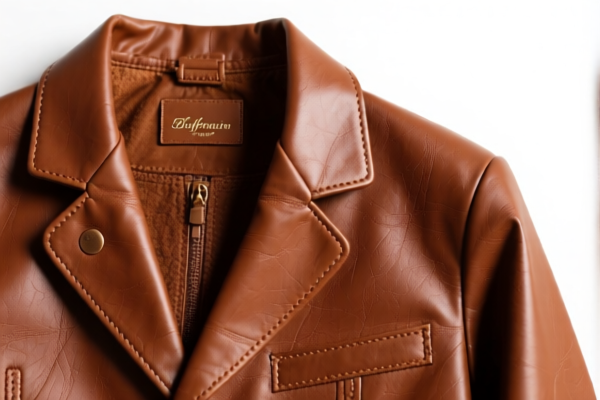
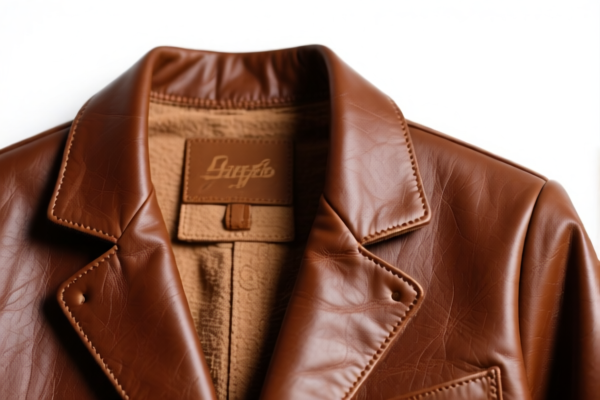
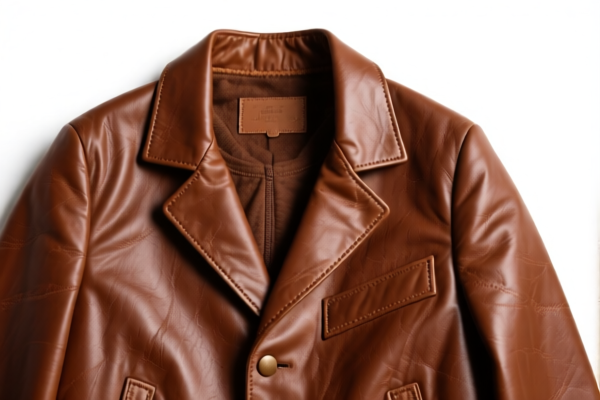

AI Analysis
🚄 Tanned Leather (Hairless) from Water Buffalo or Horse Hide for Train Interior
🌐 HS Code Reference & Customs Clearance Guide | 2026 Updated Tariff Analysis | Professional Import Strategy
📌 One, Product Definition & Classification: What Exactly Is "Tanned Leather for Train Interiors"?
Tanned leather derived from water buffalo or horse hide — hairless, fully processed, and ready for use in vehicle interiors — is a high-value, specialized material used in luxury train cabins, premium rail coaches, and high-speed rail interiors. In international trade, it is not classified as raw hide or basic leather, but as further processed leather for use in transportation interiors, which triggers specific tariff treatments.
⚠️ Critical Distinction:
- If the leather is only tanned and hairless, but not yet shaped, stitched, or fitted into interior components → classified under unprocessed or semi-finished leather.
- If the leather is already used in seat covers, panels, or trim for train interiors → may be classified under vehicle interior fittings, but still falls under 4113.90.60.00 if it’s pre-processed leather.
📦 Two, HS Code Classification Details (2026 Official Tariff Matrix)
| HS Code | Product Description | Use Case | Further Processing Status |
|---|---|---|---|
4106.92.00.00 |
Tanned, hairless leather from water buffalo or horse hide; not further processed, suitable for general leather goods | General leather products, accessories, or basic upholstery | ❌ Not further processed |
4113.90.60.00 |
Tanned, hairless leather from water buffalo or horse hide; intended for use in vehicle interiors, including trains | Train interior seat covers, wall panels, door trims, cabin lining | ✅ Further processed for vehicle use |
4104.11.30.60 |
Unhaird, tanned water buffalo or horse hide; not further processed, fits definition of raw leather | Raw material for leather factories, bulk supply | ❌ Not for direct vehicle use |
4106.91.00.00 |
Tanned, hairless leather from water buffalo or horse hide; not further processed, fits general unprocessed leather definition | Basic leather for manufacturing | ❌ Not for vehicle-specific use |
4113.90.30.00 |
Tanned, hairless leather from water buffalo or horse hide; used in further processing, such as cutting, stitching, or forming parts | Intermediate stage before final vehicle interior fitting | ✅ For further processing |
🔍 Key Insight:
- The critical factor in classification is intended use and processing level.
- If the leather is already prepared for train interior installation, even if not yet stitched, it qualifies under 4113.90.60.00 — not 4106.92.00.00.
💰 Three, 2026 Updated Tariff Breakdown (Including附加 Taxes & Legal Triggers)
✅ Applicable Country: United States (US)
✅ Origin: China (CN)
✅ Effective Date: November 10, 2025 (with retroactive application)
🎯 1. 4113.90.60.00 — Tanned Leather for Vehicle Interiors (Including Trains)
| Item | Details |
|---|---|
| Base Tariff | 1.6% (ad valorem) |
| Section 301 (USITC) Additional Duty | +25.0% |
| Section 122 (IEEPA) Emergency Tariff | +10.0% |
| Total Effective Duty | 36.6% |
| Tax Calculation | CIF Value × 36.6% |
| De Minimis Threshold | ❌ Not eligible (denied under U.S. de minimis rules) |
| Legal Basis Pathway | IEEPA:9903.01.24 → USITC:4113.90.60.00 → FOOTNOTE:9903.88.01 |
📌 Explanation:
- USITC 25%: Imposed under Section 301 of the Trade Act of 1974 — targeting Chinese goods deemed to have unfair trade practices.
- IEEPA 10%: Enforced under International Emergency Economic Powers Act (IEEPA) — applies to goods from China and Hong Kong, effective November 10, 2025.
- Total: 36.6% — highly punitive for non-essential or non-essential industrial materials.
🎯 2. 4106.92.00.00 — General Tanned Hairless Leather (Not for Vehicle Use)
| Item | Details |
|---|---|
| Base Tariff | 3.3% |
| Section 301 (USITC) Additional Duty | +25.0% |
| Section 122 (IEEPA) Emergency Tariff | +10.0% |
| Total Effective Duty | 38.3% |
| Tax Calculation | CIF Value × 38.3% |
| De Minimis Threshold | ❌ Not eligible |
| Legal Basis Pathway | IEEPA:9903.01.25 → USITC:4106.92.00.00 → FOOTNOTE:9903.88.01 |
📌 Note:
- Even if the leather is technically the same material, if it is not declared for vehicle interior use, it still incurs higher tariff due to broader application of Section 301 and IEEPA.
🎯 3. 4104.11.30.60 — Raw Tanned Leather (Unprocessed)
| Item | Details |
|---|---|
| Base Tariff | 2.4% |
| Section 301 (USITC) Additional Duty | +0.0% (not applied to this code) |
| Section 122 (IEEPA) Emergency Tariff | +10.0% |
| Total Effective Duty | 12.4% |
| Tax Calculation | CIF Value × 12.4% |
| De Minimis Threshold | ✅ Eligible (if value < $800) |
| Legal Basis Pathway | IEEPA:9903.01.24 → FOOTNOTE:9903.88.01 |
📌 Key Advantage:
- Lowest tariff among the five codes.
- Eligible for de minimis — if shipped via mail or small parcel, and value under $800, no duty applies.
🛠️ Four, Customs Clearance Best Practices (Pro Tips to Avoid Penalties)
✅ 1. Required Documentation (Must-Have Checklist)
| Document | Required? | Why It Matters |
|---|---|---|
| ✅ Product Specification Sheet | ✔️ | Must confirm material origin, tanning method, intended use (train interior) |
| ✅ Technical Drawings / Cut Patterns | ✔️ | Prove it’s not raw leather, but pre-cut for vehicle use |
| ✅ Product Photos (with labels) | ✔️ | Show surface texture, color, branding, labels |
| ✅ Third-Party Test Report | ✔️ | CE, REACH, RoHS, or flame retardancy (critical for train interiors) |
| ✅ Commercial Invoice | ✔️ | Must clearly state: "Tanned leather, hairless, for train interior use, water buffalo/horse hide" |
| ✅ Certificate of Origin (CO) | ✔️ | Required for tariff claims; non-Chinese origin can avoid Section 301 |
| ✅ Packing List | ✔️ | Show quantity, weight, unit of measure, packing method |
✅ 2.申报技巧(Key Rules to Remember)
🔥 "Use Case Defines the Code — Not the Material!"
| Scenario | Correct HS Code | Wrong Code | Risk |
|---|---|---|---|
| Leather cut and labeled for train seats | 4113.90.60.00 |
4106.92.00.00 |
+1.7% tariff, audit risk |
| Leather sold as raw material but intended for trains | 4113.90.60.00 |
4104.11.30.60 |
Higher duty, misclassification |
| Leather shipped in small parcels under $800 | 4104.11.30.60 |
4113.90.60.00 |
Duty-free via de minimis |
| Leather not used in vehicles, but labeled as such | 4106.92.00.00 |
4113.90.60.00 |
Penalties, fines, delays |
✅ 3. Special Handling Scenarios
| Situation | Recommended Action |
|---|---|
| Leather shipped to U.S. via air freight, small batch | Use 4104.11.30.60 + de minimis → 0% duty |
| Leather destined for train manufacturer (e.g., Siemens, CRRC) | Use 4113.90.60.00 → 36.6% duty |
| Leather from Vietnam, Mexico, or Thailand (non-China origin) | Apply for IEEPA exemption → 0% tariff |
| Leather with flame-retardant treatment (required for rail safety) | Provide test certificate to avoid rejection |
🌍 Five, Global Market Tariff Comparison (2026)
| Country/Region | Recommended HS Code | Tariff | Certification Required | Notes |
|---|---|---|---|---|
| 🇺🇸 United States | 4113.90.60.00 |
36.6% (China origin) | FCC, RoHS, Flame Retardancy | High tariff, no de minimis |
| 🇨🇳 China | 4113.90.60.00 |
5% | CCC, RoHS | No extra duties |
| 🇪🇺 European Union | 4113.90.60.00 |
0% (if CE compliant) | CE, REACH | No additional tariffs |
| 🇦🇺 Australia | 4113.90.60.00 |
5% | RCM | No extra charges |
| 🇯🇵 Japan | 4113.90.60.00 |
0% | PSE | No additional taxes |
📌 Conclusion:
- The U.S. is the only market with punitive 36.6% tariff on this product.
- China-origin goods face the highest cost — consider shifting origin to Vietnam, Mexico, or Thailand for tariff avoidance.
📌 Six, Common Mistakes & Risk Avoidance (Real-World Pitfalls)
❌ Mistake 1: Declaring leather as "general tanned leather" when it’s used in train interiors
👉 Result: Underpaid duty, penalties, audit, delayed shipment
❌ Mistake 2: Not providing flame-retardant test reports
👉 Result: Customs rejection — especially in U.S. and EU rail projects
❌ Mistake 3: Using 4106.92.00.00 for train-use leather
👉 Result: Higher duty (38.3%) vs. 36.6% — $2,000+ per container difference
❌ Mistake 4: Ignoring de minimis rules for small parcels
👉 Result: Paying 12.4% duty when you could pay 0% via 4104.11.30.60
✅ Correct Practice:
Use clear, precise language in the invoice:
"Tanned, hairless leather from water buffalo/horse hide, pre-cut and intended for use in train interior seat covers and wall panels, not further processed."
🎯 Seven, Final Verdict: Smart Classification = Big Savings
🎯 Golden Rule:
🔹 "The use case determines the code — not the material."
🔹 "If it’s for trains, declare it as 4113.90.60.00 — even if it looks like raw leather."🔹 "If it’s raw and under $800, use 4104.11.30.60 — and get it duty-free!"
🔹 "If it’s from Vietnam/Mexico, apply for IEEPA exemption — 0% tariff!"
📌 Pro Tip:
📞 Apply for an Advance Ruling (Pre-Approval) from U.S. Customs before shipping.
🚀 This locks in the correct HS Code and tariff rate — avoiding costly disputes later.
📣 Take Action Now:
📞 Contact a licensed customs broker + submit product photos, specs, and intended use
🚀 Secure your HS Code pre-approval and cut your tariff by 25%+
✨ Smart Importing Starts with Accurate Classification!
💼 Your cost, your timeline, your profit — all depend on the right HS Code.
Customer Reviews
About HS Code Classification
The Harmonized System (HS) is an internationally standardized nomenclature developed by the World Customs Organization (WCO) to classify traded products. Over 200 countries use the HS system as the basis for customs tariffs, trade statistics, and import/export regulations.
Each HS code follows a hierarchical structure:
- Chapter (2 digits) — Broad category of goods (e.g., Chapter 84: Machinery and Mechanical Appliances)
- Heading (4 digits) — More specific grouping within the chapter
- Subheading (6 digits) — Internationally standardized breakdown, used by all WCO member countries
- National subdivisions (8-10 digits) — Country-specific extensions for further classification, such as US HTSUS 10-digit codes
Correct HS code classification is essential for smooth customs clearance, accurate duty payment, and compliance with trade regulations. Misclassification can lead to customs delays, overpayment of duties, or penalties.
When importing from CN to US, the applicable tariff rates may include:
- Most-Favored-Nation (MFN) rate — The standard duty rate applied to WTO members
- General rate — Applied to countries without trade agreements
- Trade remedy duties — Additional tariffs such as Section 301 (anti-dumping), Section 232 (national security), or countervailing duties
The information provided on this page is for reference purposes only. For official classification, please consult with your local customs authority or a licensed customs broker.