Tanned Leather for Furniture
CN → US| HS Code | Tariff Rate | Origin | Destination | Doc |
|---|---|---|---|---|
| 3926904800 | 13.4% | CN | US | Official Doc |
| 4205008000 | 35.0% | CN | US | Official Doc |
| 4202110030 | 43.0% | CN | US | Official Doc |
| 3926909989 | 22.8% | CN | US | Official Doc |
| 4202190000 | 55.0% | CN | US | Official Doc |
Product Images
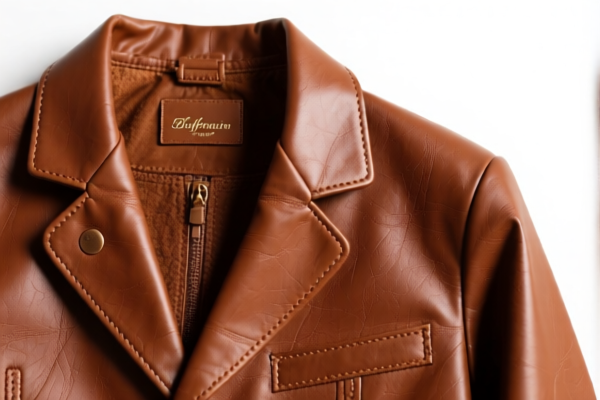
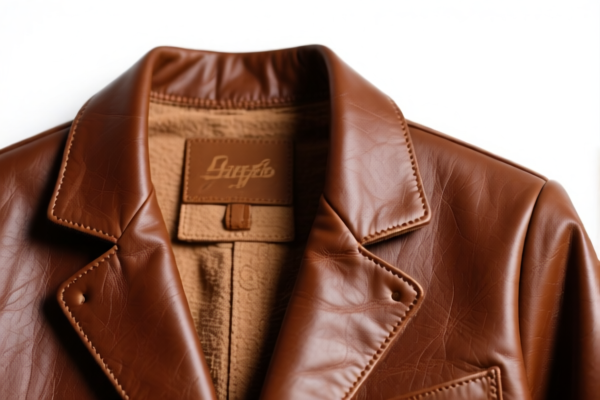
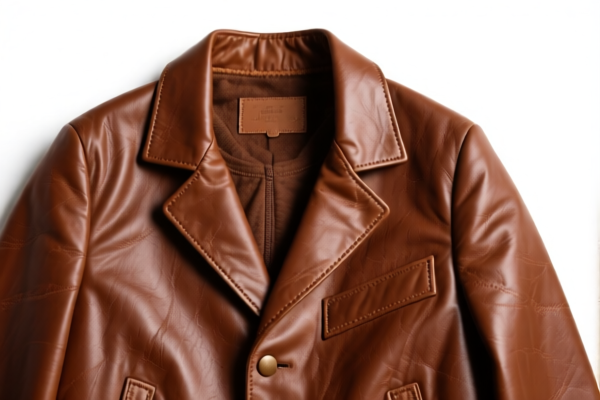

AI Analysis
🛋️ Tanned Leather for Furniture (Leather Goods & Accessories)
🌐 HS Code Reference & Customs Clearance Guide | 2026 Latest Tariff Analysis | Professional Strategy 📌 One, Product Definition & Classification: Do You Really Understand "Tanned Leather for Furniture"?
Tanned Leather for Furniture typically refers to finished or semi-finished leather materials used to upholster furniture (sofas, chairs, etc.). However, in the context of the provided data, the specific item being classified is a "Photo Album" (Album) made of Tanned Leather. This is a critical distinction because the form (Album vs. Roll of Leather) drastically changes the HS Code and the resulting tariff.
The data provided focuses on Leather Albums (finished articles) rather than raw leather hides. Therefore, the classification logic revolves around "Articles of Leather" (Chapter 42) and potentially "Plastic/Other Material Articles" (Chapter 39) if synthetic or composite materials are implied by "plastic/synthetic decorations."
⚠️ Key Distinction Point: - If the item is a raw hide/skin → It would fall under Chapter 41 (Not in the provided data). - If the item is a finished Album made of tanned leather → It falls under Chapter 42 (Articles of Leather) or potentially Chapter 39 (Plastic/Other Materials) if deemed as plastic-based accessories. - Note on Data Context: The provided data analyzes Photo Albums made of or decorated with tanned leather. The classification logic prioritizes the article (Album) over the raw material, unless it's purely plastic.
📦 Two, HS Code Classification Details (2026 Latest Tariff Authority Comparison)
| HS Code | Product Description | Matching Logic (From Data) | Total Tax Rate |
|---|---|---|---|
| 3926.90.48.00 | Other articles of plastic (Album context) | Matches use (Album) & form. Though not explicitly plastic, leather albums often involve plastic/synthetic decorations or inner pages. No material conflict. | 13.4% |
| 4205.00.80.00 | Other articles of leather | Material: "Tanned Leather". Form: "Album" (Leather good). Matches "Other leather articles." No obvious conflict. | 35.0% |
| 4202.11.00.30 | Travel, sunshade, or similar bags/cases with leather outer surface | Material: "Tanned Leather" fits "leather outer surface." Form: "Album" fits "similar containers/books/accessories." Matches container logic. | 43.0% |
| 3926.90.99.89 | Other plastic/other material articles (兜底/Catch-all) | Material: Leather falls under Chapter 39 scope (plastic/other materials extension). Form: Finished "Album" fits "Other articles" catch-all. No material conflict. | 22.8% |
| 4202.19.00.00 | Travel, sunshade, or similar bags/cases (Other) | Form: Album fits "similar containers/books." Material: Tanned leather fits "leather/leather-covered materials." Since not explicitly a travel case, it falls under "Other." | 55.0% |
🔍 Important Reminder: - 4202 Codes are for finished leather articles like bags, cases, and albums. They generally carry higher tariffs due to being "finished goods." - 3926 Codes are for plastic or other material articles. If the album is deemed primarily plastic with leather trim, or if the classification system treats leather accessories broadly under "other materials," these codes may apply. They offer a lower tax rate (13.4% - 22.8%) but require careful material justification.
💰 Three, 2026 Latest Tariff Rate Breakdown (Including Surcharges & Policy Add-ons)
✅ Applicable Country: United States (US) ✅ Origin: China (CN) ✅ Effective Date: From Nov 10, 2025 (including subsequent imports)
🎯 1. 3926.90.48.00 —— Plastic/Other Material Articles (Album)
| Item | Content |
|---|---|
| Base Tariff | 3.4% (ad valorem) |
| Section 301 Surcharge | 0.0% |
| Section 122 Tariff | 10.0% (China-specific) |
| Total Rate | 13.4% |
| Tax Calculation | CIF Value × 13.4% |
| De Minimis Eligible? | ❌ No (Assumed based on high-value nature of leather/plastic goods) |
| Legal Path | 3926.90.48.00 → Section 122 |
📌 Explanation: - This is the lowest tax option in the provided data. - It assumes the album is classified under plastic/other materials rather than pure leather. This requires proving that the primary character or market perception aligns with plastic/synthetic accessories.
🎯 2. 4205.00.80.00 —— Other Leather Articles
| Item | Content |
|---|---|
| Base Tariff | 0.0% |
| Section 301 Surcharge | 25.0% |
| Section 122 Tariff | 10.0% |
| Total Rate | 35.0% |
| Tax Calculation | CIF Value × 35.0% |
| De Minimis Eligible? | ❌ No |
| Legal Path | IEEPA:9903.01.25 → USITC:4205.00.80.00 → Section 301 → Section 122 |
📌 Explanation: - Section 301 (25%) is the major driver here, targeting Chinese leather goods. - Even with 0% base, the total cost is significant.
🎯 3. 4202.11.00.30 —— Leather Outer Surface Bags/Cases
| Item | Content |
|---|---|
| Base Tariff | 8.0% |
| Section 301 Surcharge | 25.0% |
| Section 122 Tariff | 10.0% |
| Total Rate | 43.0% |
| Tax Calculation | CIF Value × 43.0% |
| De Minimis Eligible? | ❌ No |
| Legal Path | IEEPA:9903.01.25 → USITC:4202.11.00.30 → Section 301 → Section 122 |
📌 Explanation: - This code is stricter, requiring the item to be viewed as a "container" or "case" with a leather outer surface. - Albums are often stretched to fit here if they have a structured cover.
🎯 4. 3926.90.99.89 —— Plastic/Other Material (Catch-all)
| Item | Content |
|---|---|
| Base Tariff | 5.3% |
| Section 301 Surcharge | 7.5% |
| Section 122 Tariff | 10.0% |
| Total Rate | 22.8% |
| Tax Calculation | CIF Value × 22.8% |
| De Minimis Eligible? | ❌ No |
| Legal Path | IEEPA:9903.01.25 → USITC:3926.90.99.89 → Section 301 → Section 122 |
📌 Explanation: - A mid-range option. It leverages the "plastic/other material" chapter but applies a specific 7.5% Section 301 rate for certain subcategories.
🎯 5. 4202.19.00.00 —— Other Bags/Cases (Leather)
| Item | Content |
|---|---|
| Base Tariff | 20.0% |
| Section 301 Surcharge | 25.0% |
| Section 122 Tariff | 10.0% |
| Total Rate | 55.0% |
| Tax Calculation | CIF Value × 55.0% |
| De Minimis Eligible? | ❌ No |
| Legal Path | IEEPA:9903.01.25 → USITC:4202.19.00.00 → Section 301 → Section 122 |
📌 Explanation: - Highest tax rate in the dataset. Avoid if possible. - Applies to leather articles that don't fit other specific leather bag/case descriptions.
🛠️ Four, Customs Clearance Practical Advice (Real-World Pitfall Guide)
✅ 1. Preparation Checklist (Mandatory)
| Document | Required? | Notes |
|---|---|---|
| ✅ Product Spec Sheet | ✔️ | Must detail material composition (e.g., "Tanned Leather with Plastic Inner Pages") |
| ✅ Material Composition Breakdown | ✔️ | Critical for distinguishing between Chapter 39 (Plastic) and Chapter 42 (Leather) |
| ✅ Product Photos | ✔️ | Show the album open, closed, and any brand labels. Highlight the "Album" form. |
| ✅ Commercial Invoice | ✔️ | Clearly state "Tanned Leather Photo Album" |
| ✅ Packing List | ✔️ | Ensure no hidden accessories that could trigger higher classification |
✅ 2. Classification Strategy (Key Mnemonics)
🔥 "Form Defines Function, Material Defines Chapter!"
| Scenario | Recommended HS Code | Tax Rate | Why? |
|---|---|---|---|
| Album with significant plastic/synthetic elements | 3926.90.48.00 |
13.4% | Lowest tax. Justify as "plastic/other material article." |
| Album primarily leather, no specific bag form | 4205.00.80.00 |
35.0% | Safe "Other Leather Article" classification. |
| Structured Album treated as a "Case" | 4202.11.00.30 |
43.0% | Higher tax. Only use if it clearly resembles a protective case. |
| Generic Leather Article (No specific form) | 4202.19.00.00 |
55.0% | Avoid. Highest risk/cost. |
| Uncertain/Complex Composition | 3926.90.99.89 |
22.8% | Middle ground. May apply if plastic is a key component. |
✅ 3. Special Handling
| Situation | Advice |
|---|---|
| Composite Materials | If the album is leather and plastic, argue that the plastic component gives it essential character to fall under Chapter 39 (lower tax). |
| "Tanned Leather" Claim | Be prepared to provide tanning certificates. If it's faux leather, classify under Chapter 39 immediately. |
| Customs Examination | Ensure the "Album" function is clear. If it looks like a "book," it might still be classified under 4202 as a "book cover" or similar accessory. |
🌍 Five, Global Market Comparison (2026 Latest)
| Market | Recommended HS Code | Est. Tariff | Notes |
|---|---|---|---|
| 🇺🇸 USA | 3926.90.48.00 or 4205.00.80.00 |
13.4% - 35.0% | High Section 301/122 impact. Choose Chapter 39 if possible. |
| 🇪🇺 EU | 4202.21.00 (Similar) |
~5-10% | No Section 301/122. Much lower duty if classified as leather good. |
| 🇨🇳 China | 4205.00.00.00 |
~10-15% | Standard import duty for leather goods. |
| 🇬🇧 UK | 4202.21.00 |
~5-10% | Post-Brexit tariffs apply. No US-style surcharges. |
📌 Conclusion: - The US market is the most expensive due to Section 301 and Section 122 tariffs. - Strategic Tip: If the product is a "Leather Album," try to justify a Chapter 39 (Plastic/Other) classification if there is any synthetic component, as the tax (13.4% or 22.8%) is significantly lower than pure leather (35-55%).
📌 Six, Common Errors & Pitfalls (Lessons Learned)
❌ Error 1: Classifying a Leather Album as 4202.19.00.00
👉 Result: 55% Tax. Unnecessary high cost.
👉 Fix: Check if it can be classified under 4205.00.80.00 (35%) or 3926.90.48.00 (13.4%).
❌ Error 2: Ignoring Section 122 (10%)
👉 Result: Underpayment of duties.
👉 Fix: All Chinese-origin goods are subject to Section 122. It is a flat 10% on top of base + 301.
❌ Error 3: Misrepresenting Material (Faux vs. Real)
👉 Result: Fraud penalty if declared as "Tanned Leather" but is PU/PVC.
👉 Fix: Be honest. If it's synthetic, declare as 3926... immediately.
✅ Correct Action:
"Tanned Leather Photo Album, Composite Material (Leather Cover, Plastic Inner Pages), For Office Use, Model XYZ"
🎯 Seven, Conclusion: Precision in Classification Saves Money!
🎯 Remember the Mantra:
🔹 "Leather Album? Look at Chapter 39 first! (13.4%)"
🔹 "Pure Leather? Prepare for Section 301 (35%+)"
🔹 "Section 122 is Always 10%! Don't Forget!"
📌 Pro Tip:
If your leather album contains any synthetic binding, plastic inner pages, or plastic-covered components, argue for HS Code 3926.90.48.00. It saves you 21.6% - 41.6% in duties compared to leather-only classifications.
📞 Action Now:
1. Verify material composition.
2. Apply for Advance Ruling if the item is borderline between Chapter 39 and 42.
3. Ensure your commercial invoice clearly states "Album" and "Material Breakdown".
✨ Professional Customs Clearance Starts with Accurate Classification! 💼 Your Profit Margin Depends on These Percentages!
Customer Reviews
About HS Code Classification
The Harmonized System (HS) is an internationally standardized nomenclature developed by the World Customs Organization (WCO) to classify traded products. Over 200 countries use the HS system as the basis for customs tariffs, trade statistics, and import/export regulations.
Each HS code follows a hierarchical structure:
- Chapter (2 digits) — Broad category of goods (e.g., Chapter 84: Machinery and Mechanical Appliances)
- Heading (4 digits) — More specific grouping within the chapter
- Subheading (6 digits) — Internationally standardized breakdown, used by all WCO member countries
- National subdivisions (8-10 digits) — Country-specific extensions for further classification, such as US HTSUS 10-digit codes
Correct HS code classification is essential for smooth customs clearance, accurate duty payment, and compliance with trade regulations. Misclassification can lead to customs delays, overpayment of duties, or penalties.
When importing from CN to US, the applicable tariff rates may include:
- Most-Favored-Nation (MFN) rate — The standard duty rate applied to WTO members
- General rate — Applied to countries without trade agreements
- Trade remedy duties — Additional tariffs such as Section 301 (anti-dumping), Section 232 (national security), or countervailing duties
The information provided on this page is for reference purposes only. For official classification, please consult with your local customs authority or a licensed customs broker.