Tanned Raw Hide or Hairless Horse Skin
CN → US| HS Code | Tariff Rate | Origin | Destination | Doc |
|---|---|---|---|---|
| 4107997090 | 15.0% | CN | US | Official Doc |
| 4107998000 | 12.4% | CN | US | Official Doc |
| 4107994000 | 12.5% | CN | US | Official Doc |
| 4205001000 | 35.0% | CN | US | Official Doc |
| 4303100030 | 39.0% | CN | US | Official Doc |
Product Images
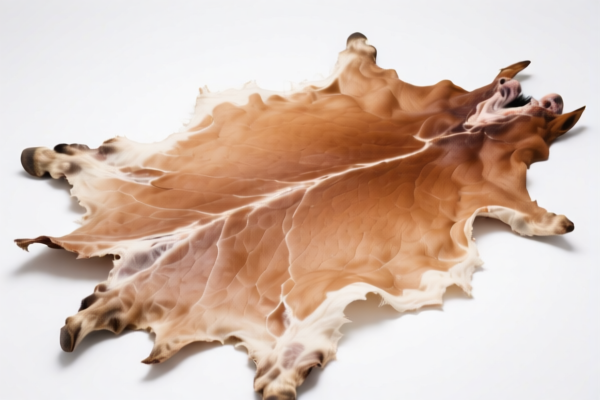
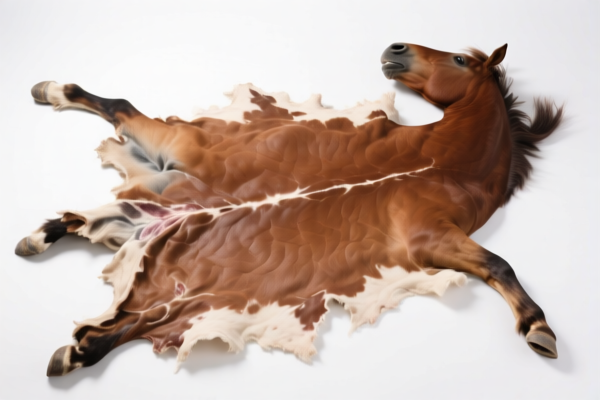
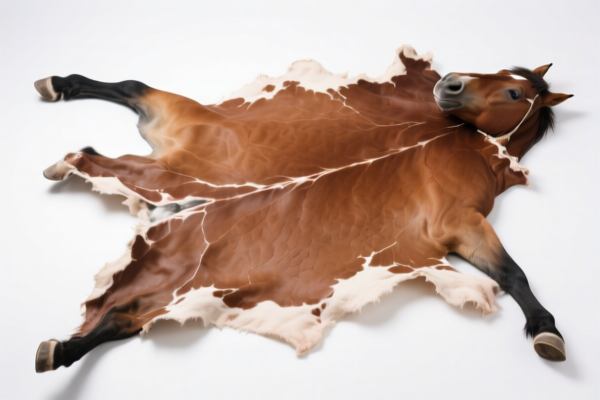
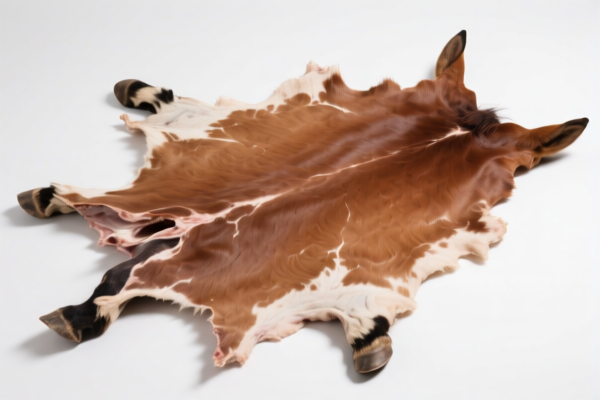
AI Analysis
🐎 Tanned Raw Hide or Hairless Horse Skin (Further Processed)
🌐 HS Code Reference & Customs Clearance Guide | 2024/2025 Tariff Full Analysis | Professional Strategy for Horsehide Imports
📌 I. Product Definition and Classification: Do You Truly Understand "Tanned Horse Skin"?
Tanned Raw Hide or Hairless Horse Skin refers to equine skins that have undergone the tanning process to preserve them and prevent decomposition, but have not been cut up into garments, upholstery, or other specific articles.
In international trade, the classification hinges on three critical factors: 1. Finish: Is it "hairless" (shaved/suede-like) or "with hair"? 2. Processing Level: Is it merely tanned (ready for further manufacturing) or is it a "finished article" (like a handbag or jacket)? 3. Species: Specifically Horse (not Buffalo/Ox).
⚠️ Key Distinction Point:
- If the skin is tanned but not cut into specific articles (like gloves, bags, or car seats), it falls under Chapter 41.
- If the skin has been cut and assembled into a finished product (e.g., a handbag, jacket, or wallet), it falls under Chapter 42 or 43.
- Crucial for Horse Skin: "Hairless" (shaved) horse hide often attracts higher tariffs or different sub-headings compared to "with hair" or specific buffalo leathers, though many HS codes group them broadly unless specified.
📦 II. HS Code Classification Details (Based on Provided Data)
| HS Code | Product Description | Applicable Scenario | Tax Detail Breakdown |
|---|---|---|---|
4107.99.70.90 |
Further prepared leather of equine skin (hairless, split, other) | General tanned horse hide, split, hairless, not further made up | Base: 5.0% + 122 Section: 10% = Total 15.0% (No Add-on 301) |
4107.99.80.00 |
Further prepared leather of equine skin (hairless, split, other) | Alternative classification for general tanned horse hide | Base: 2.4% + 122 Section: 10% = Total 12.4% (No Add-on 301) |
4107.99.40.00 |
Raw hides or skins of bovine or equine species, tanned | Tanned horse or buffalo hides (broad category) | Base: 2.5% + 122 Section: 10% = Total 12.5% (No Add-on 301) |
4205.00.10.00 |
Articles of leather or composition leather | Finished Articles: Bags, belts, straps, upholstery leather cut for manufacturing | Base: 0.0% + Add-on: 25.0% + 122 Section: 10% = Total 35.0% (Note: High Add-on Tax!) |
4303.10.00.30 |
Articles of furskins | Fur Articles: Tanned fur skins with hair retained, or fur garments/accessories | Base: 4.0% + Add-on: 25.0% + 122 Section: 10% = Total 39.0% (Note: High Add-on Tax!) |
🔍 Critical Insight:
- Raw/Tanned Skins (Ch 41) are taxed at 12.4% - 15.0%. This is the LOWEST tax bracket for horsehide inputs.
- Finished Articles (Ch 42/43) are taxed at 35.0% - 39.0%. This is due to the 25% "Add-on" tariff (likely Section 301 or similar trade remedy).
- Do NOT classify finished goods as "raw hide" to avoid customs penalties. If it's a bag, it's4205. If it's raw skin, it's4107.
💰 III. 2024/2025 Tariff Rate Breakdown (Detailed Policy Analysis)
✅ Applicable Country: United States (US)
✅ Origin: China (CN) (Assumed based on "122 Section" and high add-on context)
✅ Effective Date: Current as of latest trade policy updates
🎯 1. 4107.99.70.90 & 4107.99.80.00 & 4107.99.40.00 —— Tanned Horse Skins (Raw Material)
| Item | Content |
|---|---|
| Base Tariff | 2.4% - 5.0% (Ad Valorem) |
| Add-on Tariff (Section 301) | 0.0% (Not applicable to these specific sub-headings in this dataset) |
| "122 Section" Tariff | +10% (Specific trade measure) |
| Total Tariff Rate | 12.4% - 15.0% |
| Tax Calculation | CIF Value × 12.4% ~ 15.0% |
| De Minimis Exemption | ❌ Not Applicable (Formal entry required for goods >$2,500) |
📌 Explanation:
- These are intermediate goods (raw materials for manufacturers).
- The 10% "122 Section" tariff is a specific additional duty.
- No 25% Add-on applies here, making this the most cost-effective import category for tanned leather.
- Strategy: If you are manufacturing leather goods, import as4107to save 20-25% in taxes compared to importing finished goods.
🎯 2. 4205.00.10.00 —— Leather Articles (Finished Products)
| Item | Content |
|---|---|
| Base Tariff | 0.0% |
| Add-on Tariff (Section 301) | +25.0% (High penalty rate) |
| "122 Section" Tariff | +10% |
| Total Tariff Rate | 35.0% |
| Tax Calculation | CIF Value × 35.0% |
| De Minimis Exemption | ❌ Not Applicable |
📌 Explanation:
- This covers finished leather articles (e.g., handbags, wallets, belts).
- The 25% Add-on significantly increases the cost.
- Warning: Do not try to declare a finished bag as "tanned hide" to get the 15% rate. Customs will inspect the goods, and you will face fines, retroactive taxes, and seizure.
🎯 3. 4303.10.00.30 —— Fur Articles
| Item | Content |
|---|---|
| Base Tariff | 4.0% |
| Add-on Tariff (Section 301) | +25.0% |
| "122 Section" Tariff | +10% |
| Total Tariff Rate | 39.0% |
| Tax Calculation | CIF Value × 39.0% |
| De Minimis Exemption | ❌ Not Applicable |
📌 Explanation:
- This applies to fur skins with hair or fur garments.
- If you import hairless tanned horsehide, DO NOT use this code. It is for furskins. Misclassification here can lead to stricter inspection and higher penalties.
🛠️ IV. Customs Clearance Practical Advice (Avoiding Pitfalls)
✅ 1. Document Checklist (Mandatory)
| Document | Required | Notes |
|---|---|---|
| ✅ Commercial Invoice | ✔️ | Must specify "Tanned Horse Skin," HS Code, and Country of Origin. |
| ✅ Packing List | ✔️ | Detail the number of skins, weight, and dimensions. |
| ✅ Bill of Lading/Air Waybill | ✔️ | Standard shipping document. |
| ✅ Certificate of Origin | ✔️ | Required for origin verification. |
| ✅ Tanning Process Description | ✔️ | CRITICAL: Describe the tanning method (vegetable, chrome, etc.) to prove it is "tanned" and not "raw." |
| ✅ Photos of Goods | ✔️ | Show the texture (hairless vs. with hair) to support HS Code classification. |
| ✅ ISF (Importer Security Filing) | ✔️ | Must be filed 24 hours before loading if entering by sea. |
✅ 2. Declaration Strategy (Key Tips)
🔥 "Be Precise: 'Tanned Hide' ≠ 'Fur' ≠ 'Bag'"
| Scenario | Correct HS Code | Wrong Code | Risk |
|---|---|---|---|
| Tanned Horse Skin, Hairless | 4107.99.70.90 or 4107.99.80.00 |
4303.10.00.30 |
Misclassification penalty. Fur codes are for hair-on skins. |
| Tanned Horse Skin, with Hair | 4107.99.40.00 (if broad) or 4303 (if fur) |
4205.00.10.00 |
Do not declare fur as "articles." |
| Finished Leather Bag | 4205.00.10.00 |
4107.99.70.90 |
High Risk: Customs will seize and fine you. |
| Leather Strips (Raw) | 4107.99.40.00 |
4205.00.10.00 |
If not cut to shape, it's raw hide, not an article. |
✅ 3. Special Handling
| Situation | Advice |
|---|---|
| Split Leather | If the skin is split into layers, ensure it is declared as "split" if that matches the sub-heading. 4107.99.70.90 specifies "split." |
| Chrome vs. Vegetable Tanned | Some duties vary by tanning method. Check if specific sub-headings exist for "chrome tanned." In this data, they are grouped broadly. |
| Origin Substitution | If the hide is sourced from Argentina or USA, the "122 Section" tariff might not apply. Always verify origin rules. |
| Pre-Ruling | If you are unsure whether your product is "tanned hide" or "fur article," apply for a US Customs Pre-Ruling. It costs less than a penalty. |
🌍 V. Global Market Comparison (2024/2025)
| Country/Region | Recommended HS Code | Estimated Tariff | Notes |
|---|---|---|---|
| 🇺🇸 USA | 4107.99.70.90 |
15.0% | High accuracy required. Avoid 4205 unless it's a finished bag. |
| 🇪🇺 EU | 4107 99 |
~6.5% | No "122 Section" or "301 Add-on." Much cheaper. |
| 🇨🇳 China | 4107 |
~5-10% | Import duties for raw hides are lower; VAT applies at 13%. |
| 🇬🇧 UK | 4107 99 |
~6.5% | Post-Brexit rules apply. No US-style add-ons. |
📌 Conclusion:
- USA imports of tanned horsehide are moderately expensive (15%) due to the "122 Section" tariff.
- Finished leather goods are VERY expensive (35%+) due to the 25% Add-on.
- Strategy: Import raw/tanned hides (4107) and manufacture locally, OR ensure your finished goods qualify for any potential exemptions (very rare for China-origin leather).
📌 VI. Common Errors & Pitfalls (Lessons Learned)
❌ Error 1: Declaring finished leather bags as "Tanned Horse Skin" (4107)
👉 Consequence: Customs inspection reveals finished product. 100% tax difference (15% vs 35%) + fines + seizure.
❌ Error 2: Declaring hair-on fur skins as "Hairless Tanned Hide" (4107)
👉 Consequence: Misclassification. Fur skins (4303) have different quotas and higher taxes (39%).
❌ Error 3: Ignoring the "122 Section" 10% Tariff
👉 Consequence: Underpayment of duties. Retroactive tax collection + interest.
✅ Correct Approach:
"Tanned Horse Skin, Hairless, Split, Unmade, Origin: China, HS: 4107.99.70.90"
🎯 VII. Conclusion: Precision in Classification Saves Money!
🎯 Remember the Rule:
🔹 "Raw/Tanned = 15% | Finished = 35%+ | Fur = 39%"
🔹 "HS Code determines your cost. One digit change = 20% tax difference!"
📌 Pro Tip:
If you are importing large volumes of tanned horsehide, consider applying for a Section 301 Exclusion (if available) or verifying if the "122 Section" tariff has been suspended or modified. Always consult with a licensed customs broker for final classification.
📣 Take Action Now:
📞 Contact a Customs Broker + Provide Photos + Get Pre-Ruling
🚀 Avoid Surprises, Clear Customs Smoothly, Maximize Profit!
✨ Professional Customs Clearance Starts with Accurate Classification!
💼 Every Dollar Saved in Duties is Pure Profit!
Customer Reviews
About HS Code Classification
The Harmonized System (HS) is an internationally standardized nomenclature developed by the World Customs Organization (WCO) to classify traded products. Over 200 countries use the HS system as the basis for customs tariffs, trade statistics, and import/export regulations.
Each HS code follows a hierarchical structure:
- Chapter (2 digits) — Broad category of goods (e.g., Chapter 84: Machinery and Mechanical Appliances)
- Heading (4 digits) — More specific grouping within the chapter
- Subheading (6 digits) — Internationally standardized breakdown, used by all WCO member countries
- National subdivisions (8-10 digits) — Country-specific extensions for further classification, such as US HTSUS 10-digit codes
Correct HS code classification is essential for smooth customs clearance, accurate duty payment, and compliance with trade regulations. Misclassification can lead to customs delays, overpayment of duties, or penalties.
When importing from CN to US, the applicable tariff rates may include:
- Most-Favored-Nation (MFN) rate — The standard duty rate applied to WTO members
- General rate — Applied to countries without trade agreements
- Trade remedy duties — Additional tariffs such as Section 301 (anti-dumping), Section 232 (national security), or countervailing duties
The information provided on this page is for reference purposes only. For official classification, please consult with your local customs authority or a licensed customs broker.