Tanned Sheepskin with Wool
CN → USProduct Images
AI Analysis
🐑 Tanned Sheepskin with Wool (Sheepskin Fleece)
🌐 HS Code Reference & Customs Clearance Guide | 2026 Latest Tariff Analysis | Professional Strategy
📌 I. Product Definition & Classification: Do You Know "Sheepskin with Wool"?
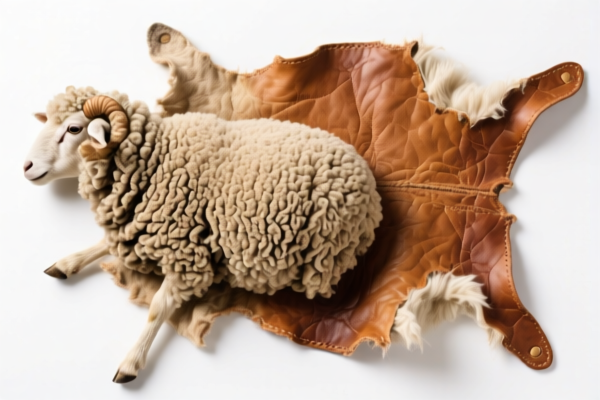
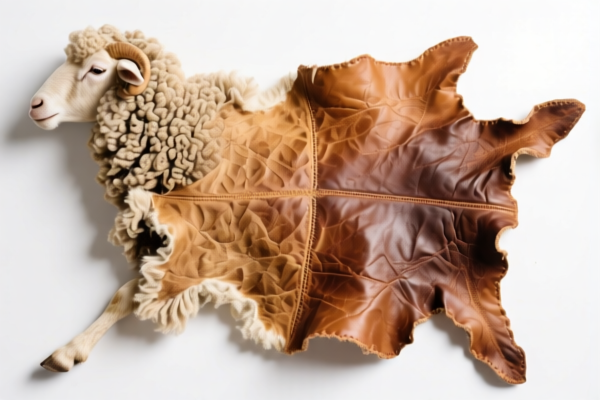
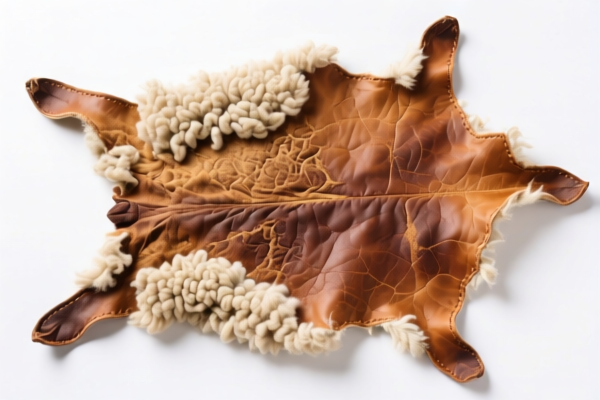
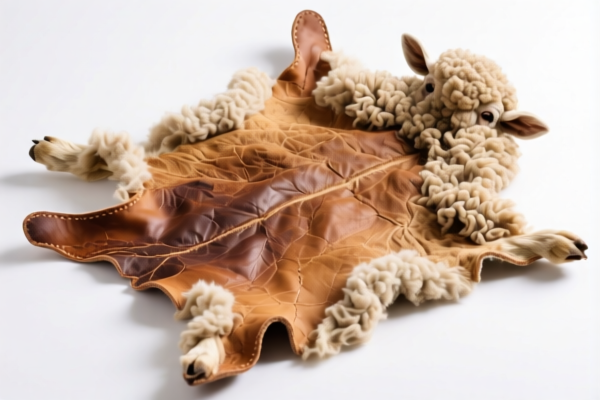
Tanned Sheepskin with Wool refers to the skin of a sheep that has been tanned (processed to prevent decay) while retaining the original wool/hair on the flesh side. It is distinct from "Sheepskin without wool" (where the hair is removed) or "Sheepskin leather" (which is often split or processed differently).
In international trade, this product is primarily classified under Chapter 41 (Leather) or Chapter 43 (Fur) depending on the specific processing and commercial usage, but standard tanned sheepskin with wool falls squarely under Chapter 41.
⚠️ Key Distinction Point:
- If the wool is shorn off before tanning → It is classified as Leather/Skins (e.g., 4106).
- If the wool is retained during tanning → It is classified as Tanned Skins with Hair On (specifically 4104 or 4106 depending on thickness/type, but typically 4104 for bovine/porcine and 4106 for ovine/caprine).
- Crucial Note: Many traders mistakenly try to classify this under Chapter 43 (Fur) or 6301 (Blankets). If it is a skin (raw material for gloves, coats, linings), it is Chapter 41. If it is cut into blankets or ready-made garments, the chapter changes. This guide focuses on the raw/semi-raw Tanned Sheepskin with Wool.
📦 II. HS Code Classification Details (2026 Latest Tariff Authority)
| HS Code | Product Description | Applicable Scenario | Wool Status |
|---|---|---|---|
| 4106.21.00.00 | Skins, tanned or parchment-dressed, with wool on, of sheep or lamb | Raw tanned sheepskin with wool (for garment manufacturing, linings) | ✅ Yes |
| 4106.22.00.00 | Skins, tanned or parchment-dressed, with wool on, of sheep or lamb | Further processed, split, or cut, but still with wool | ✅ Yes |
| 4106.31.00.00 | Skins, tanned or parchment-dressed, with hair on, of goats or kids | Incorrect for Sheep – Often confused. Do not use for sheep. | ❌ No (Goat) |
| 4301.80.00.00 | Other fur skins, raw, tanned or dressed | Only if classified as "Fur" – Rare for standard tanned sheepskin unless highly finished for fashion | ⚠️ Context Dependent |
| 6301.20.00.00 | Blankets and traveling rugs, of wool or fine animal hair | Only if already made into a blanket | ✅ Yes (Finished Good) |
🔍 Key Reminder:
- 4106.21.00.00 is the most common HS Code for importing raw tanned sheepskin with wool for further manufacturing (e.g., making shearling coats).
- If the product is finished shearling coats, it moves to Chapter 61/62.
- If the product is shearling blankets, it moves to Chapter 63.
- Do not misclassify finished goods as raw materials.
💰 III. 2026 Latest Tariff Rate Detail (Including Surtaxes & Policy Add-ons)
✅ Applicable Country: United States (US)
✅ Origin: China (CN)
✅ Effective Date: Post-November 10, 2025 (Includes subsequent imports)
🎯 1. 4106.21.00.00 – Sheepskins, Tanned or Parchment-Dressed, with Wool On
| Item | Content |
|---|---|
| Base Duty Rate | 5.6% (General/Column 2) |
| USITC Surtax (Section 301) | +7.5% (Footnote 9903.88.01 applies to many textile/leather items) |
| IEEPA Surtax | +10% (Targeting China/HK products, effective Nov 10, 2025) |
| Total Duty Rate | 23.1% |
| Tax Calculation | CIF Value × 23.1% |
| De Minimis Eligibility | ❌ Not Eligible (Deny de minimis for Section 301/IEEPA items) |
| Legal Basis Path | IEEPA:9903.01.25 → IEEPA:9903.01.24 → USITC:4106.21.00.00 → FOOTNOTE:9903.88.01 |
📌 Explanation:
- Base Duty (5.6%): Standard MFN rate for tanned sheepskin.
- Section 301 Surcharge (7.5%): Applies to certain animal skins and hides. Note: Verify specific footnote as Section 301 lists change periodically. Some sheepskins may be excluded, but wool-on skins are often targeted.
- IEEPA Surcharge (10%): New 2025/2026 policy on Chinese-origin leather/fur products.
- Total 23.1%: This is a high-cost entry compared to non-Chinese origins.📌 Note:
- If the sheepskin is sheared (wool removed) before tanning, it may fall under 4106.31.00.00 (Goats/Kids) or 4106.21.00.00 (Sheep), but duties may differ slightly.
- Shearling Coats (Finished) would fall under 6102.30.00.00 or 6202.93.00.00, with different duty structures (often higher, ~20-30%).
🛠️ IV. Customs Clearance Practical Advice (Real-World Pitfall Guide)
✅ 1. Required Documentation Checklist
| Document | Mandatory | Description |
|---|---|---|
| ✅ Product Specification Sheet | ✔️ | Must clearly state: "Tanned Sheepskin with Wool Retained" |
| ✅ Photos of Product | ✔️ | Show wool on both sides (if dyed) and tanning finish |
| ✅ Commercial Invoice | ✔️ | Value must match CIF. Declare "Sheepskins, Tanned, with Wool" |
| ✅ Packing List | ✔️ | Weight and dimensions per skin |
| ✅ Certificate of Origin | ✔️ | Crucial for verifying China origin (triggers IEEPA) |
| ✅ USDA/APHIS Permit | ✔️ | Critical! Animal products require USDA import permits to prevent disease |
✅ 2. Declaration Tips (Key Mantra)
🔥 "Wool On = 4106; Wool Off = 4104/4106; Finished = 61/62/63"
| Situation | Correct Declaration | Wrong Practice |
|---|---|---|
| Raw Tanned Sheepskin with Wool | 4106.21.00.00 |
Misdeclare as "Leather" (no wool) → Risk of penalty |
| Sheared Sheepskin (Leather) | 4106.21.00.00 (if sheep) or 4106.31.00.00 (if goat) |
Misdeclare as "Fur" → Chapter 43 (different duty) |
| Finished Shearling Coat | 6102.30.00.00 or 6202.93.00.00 |
Misdeclare as "Skin" → Undervaluation/Fraud risk |
| Shearling Blanket | 6301.20.00.00 |
Misdeclare as "Skin" → Wrong Chapter |
✅ 3. Special Situations
| Situation | Handling Advice |
|---|---|
| OEM Custom Dyes | Declare color and dye type. Some dyes may require EPA/OSHA compliance. |
| Sheepskin with Hair Removed (Leather) | Still Class 41. Duty may be similar, but description must change to "Tanned Sheepskin, Hair Removed". |
| Import for Sample | May still require USDA permit. Do not assume "sample" exempt from animal health checks. |
| Mixed Shipments (Sheep + Goat) | Declare separately. HS Codes differ slightly. Mixing may cause delays. |
🌍 V. Global Market Customs Comparison (2026 Latest)
| Country/Region | Recommended HS Code | Duty Rate | Certification | Notes |
|---|---|---|---|---|
| 🇺🇸 USA | 4106.21.00.00 |
~23.1% (China) | USDA + CBP | High due to Section 301 + IEEPA |
| 🇨🇳 China | 4106.21.00.00 |
5-10% | CCC (if finished) | Low duty for raw imports |
| 🇪🇺 EU | 4106.21.00.00 |
4% + VAT | CE (if finished) | No Section 301 equivalent |
| 🇬🇧 UK | 4106.21.00.00 |
4% + VAT | UKCA (if finished) | Post-Brexit rules apply |
| 🇯🇵 Japan | 4106.21.00.00 |
0-10% | PSE (if finished) | FTA benefits possible |
📌 Conclusion:
- USA is the most expensive market for Chinese tanned sheepskin due to layered tariffs.
- EU/UK/JP offer more competitive rates, making them better targets if supply chain flexibility exists.
- Always secure USDA permits for any animal product entering the US, regardless of duty rate.
📌 VI. Common Errors & Pitfall Guide (Lessons Learned)
❌ Error 1: Classifying Tanned Sheepskin with Wool as "Leather" (no wool)
👉 Consequence: Misdeclaration. CBP may assess higher duties or penalties if wool is found.
❌ Error 2: Ignoring USDA Permits
👉 Consequence: Import Denied/Destroyed. Animal products are high-risk for pests/diseases.
❌ Error 3: Confusing "Sheepskin" with "Fur" (Chapter 43)
👉 Consequence: Wrong HS Code. Chapter 43 (Fur) has different duty rates and regulations. Tanned sheepskin is Chapter 41.
❌ Error 4: Failing to declare Wool Retention
👉 Consequence: If wool is present but not declared, customs may reclassify as "Finished Fur" or "Blanket" if value is high, leading to surprise taxes.
✅ Correct Approach:
"Tanned Sheepskins with Wool On, Class 4106.21.00.00, USDA Permit #12345, Origin China"
🎯 VII. Conclusion: Precise Classification Saves Costs!
🎯 Remember the Mantra:
🔹 "Wool On = 4106; Finished Coat = 61/62; Blanket = 63"
🔹 "US Import = USDA Permit + High Tariff; EU/JP = Lower Duty"
🔹 "Don't Mix Sheep and Goat – Different Codes!"
📌 Pro Tip:
If your sheepskin is originating from Vietnam, India, or Turkey, you may avoid IEEPA surcharges and potentially Section 301 duties (if not targeted), reducing total duty to ~5.6% (US).
Consider Supply Chain Diversification if shipping to the US is cost-prohibitive.
📣 Immediate Action:
📞 Contact a licensed customs broker + Secure USDA Permit + Apply for Pre-Ruling if unsure
🚀 Ensure your Tanned Sheepskin with Wool clears customs smoothly and profitably!
✨ Professional Clearance Starts with Accurate Classification!
💼 Every Duty Dollar Counts!
Customer Reviews
About HS Code Classification
The Harmonized System (HS) is an internationally standardized nomenclature developed by the World Customs Organization (WCO) to classify traded products. Over 200 countries use the HS system as the basis for customs tariffs, trade statistics, and import/export regulations.
Each HS code follows a hierarchical structure:
- Chapter (2 digits) — Broad category of goods (e.g., Chapter 84: Machinery and Mechanical Appliances)
- Heading (4 digits) — More specific grouping within the chapter
- Subheading (6 digits) — Internationally standardized breakdown, used by all WCO member countries
- National subdivisions (8-10 digits) — Country-specific extensions for further classification, such as US HTSUS 10-digit codes
Correct HS code classification is essential for smooth customs clearance, accurate duty payment, and compliance with trade regulations. Misclassification can lead to customs delays, overpayment of duties, or penalties.
When importing from CN to US, the applicable tariff rates may include:
- Most-Favored-Nation (MFN) rate — The standard duty rate applied to WTO members
- General rate — Applied to countries without trade agreements
- Trade remedy duties — Additional tariffs such as Section 301 (anti-dumping), Section 232 (national security), or countervailing duties
The information provided on this page is for reference purposes only. For official classification, please consult with your local customs authority or a licensed customs broker.