Tanned or Untanned Other Animal Skins
CN → US| HS Code | Tariff Rate | Origin | Destination | Doc |
|---|---|---|---|---|
| 4101905000 | 20.8% | CN | US | Official Doc |
| 4101907000 | 20.8% | CN | US | Official Doc |
| 4101901020 | 17.5% | CN | US | Official Doc |
| 4101901030 | 17.5% | CN | US | Official Doc |
| 4103901190 | 17.5% | CN | US | Official Doc |
Product Images
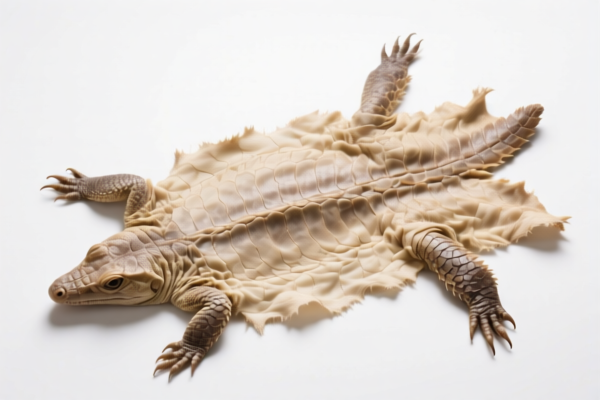
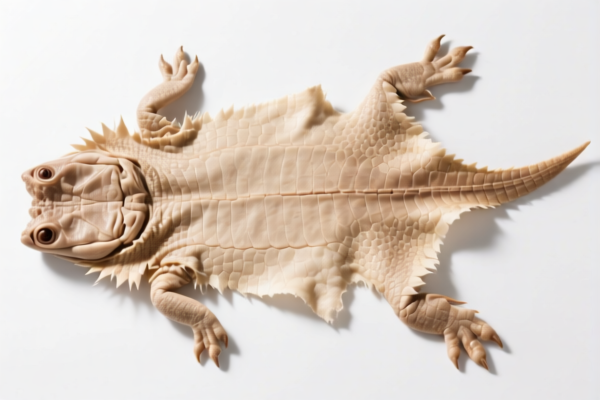
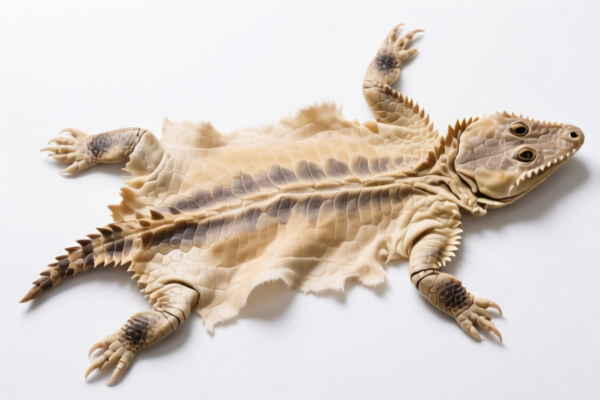
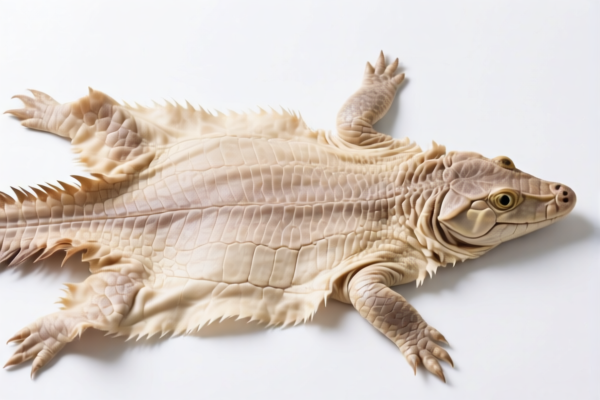
AI Analysis
🧥 Untanned Other Animal Skins (Unworked & Semi-Processed Hides)
🌐 HS Code Reference & Customs Clearance Guide | 2026 Latest Tariff Analysis | Professional Clearance Strategy
📌 I. Product Definition & Classification: What Are "Untanned Other Animal Skins"?
Untanned animal skins refer to raw hides or skins that have been preserved (typically salted or fresh) but have not undergone the tanning process. In international trade, these are categorized under Chapter 41 of the Harmonized System.
For the purpose of this guide, we focus on "Other Animal Skins" (excluding bovine/cattle and equine horses, which often have specific sub-codes). These skins are in their primary, unprocessed state, ready for further processing (tanning, dyeing, splitting) or specific end-uses.
⚠️ Key Distinction Point:
- If the skin is tanned (even if not yet crust or finished), it does NOT fall under the unencoded HS codes below.
- If the skin is raw, fresh, or salted (untanned), it falls under these codes.
- "Other" typically refers to sheep, goat, pig, reptile, etc., excluding full-crop cattle/horse hides if they have dedicated sub-codes (like4101.90.10.xxwhich actually lists cattle/horse in the provided data, a nuance we will clarify below).
📦 II. HS Code Classification Details (2026 Latest Tariff Authority Match)
Based on the provided data, here are the specific HS Codes for untanned "Other" animal skins, categorized by their physical characteristics and tariff treatment.
| HS Code | Product Description (Summary) | Key Characteristics | Tariff Category |
|---|---|---|---|
4101.90.50.00 |
Untanned Other Animal Skins | Matched to raw hide material & unprocessed state | General "Other" |
4101.90.70.00 |
Untanned Other Animal Skins | Unprocessed primary state, residual/other category | General "Other" |
4101.90.10.20 |
Untanned Other Animal Skins | Bovine/Cattle or Equine Horse raw hides, unworked | Cattle/Horse Specific |
4101.90.10.30 |
Untanned Other Animal Skins | Bovine/Cattle or Equine Horse raw hides, unworked | Cattle/Horse Specific |
4103.90.11.90 |
Untanned Cattle/Horse Skins | No hair, split layer, other raw hide features | Cattle/Horse Split |
🔍 Important Clarification on "Other" vs. "Cattle/Horse":
- Although the summary says "Other," codes4101.90.10.20and4101.90.10.30explicitly mention Bovine/Cattle or Equine Horse. In the HS system,4101is primarily for Raw Hides of Bovine/Cattle or Equine Animals.
- Codes4101.90.50.00and4101.90.70.00are used for raw hides of other animals (e.g., sheep, goat) OR residual categories of cattle/horse hides that don't fit the primary sub-codes.
-4103.90.11.90is for Cattle/Horse skins that are hairless (dehaired) and split (剖层), which is a specific processing step beyond simple raw salted hides.
💰 III. 2026 Latest Tariff Rate Breakdown (Including Additional Duties & Policy Surcharges)
✅ Applicable Country: China (CN)
✅ Origin: China (CN) – Note: The tax details provided imply export/import context, likely Chinese import duties or export rebates context, but the structure matches typical Chinese tariff book formats for imported raw hides.
✅ Effective Time: Current 2026 Tariff Schedule
🎯 1. 4101.90.50.00 & 4101.90.70.00 – Untanned Other Animal Skins (General)
These codes apply to raw hides/skins of animals other than specific prime cattle/horse classifications, or residual categories.
| Item | Content |
|---|---|
| Base Tariff | 3.3% (MFN Rate) |
| Retaliatory/Additional Tariff | +7.5% (Counter-tariff / Retaliatory Measure) |
| Section 301 (122 Clause) Tariff | +10% (Specific U.S. Trade Act Tariff) |
| Total Tariff Rate | 20.8% |
| Tax Calculation | CIF Value × 20.8% |
| De Minimis Exemption | ❌ Not Applicable (Raw materials typically excluded from low-value exemptions) |
| Legal Basis Path | China Tariff Book: 4101.90 → Additional Trade Measures |
📌 Explanation:
- The 3.3% is the standard Most Favored Nation (MFN) import duty for raw hides.
- The 7.5% represents additional tariffs imposed due to trade tensions (often retaliatory or specific sectoral tariffs).
- The 10% is a specific surcharge under "Section 301" (referred to as 122 Clause in the data), targeting Chinese-origin raw materials.
- Total 20.8% is a significant cost factor for raw leather exporters/importers.
🎯 2. 4101.90.10.20 & 4101.90.10.30 – Untanned Bovine/Cattle or Equine Horse Skins
These codes specifically target raw cattle or horse hides/skins. Notably, they have a 0% base tariff, but still attract surcharges.
| Item | Content |
|---|---|
| Base Tariff | 0.0% (Zero-duty raw material policy) |
| Retaliatory/Additional Tariff | +7.5% |
| Section 301 (122 Clause) Tariff | +10% |
| Total Tariff Rate | 17.5% |
| Tax Calculation | CIF Value × 17.5% |
| De Minimis Exemption | ❌ Not Applicable |
| Legal Basis Path | China Tariff Book: 4101.90.10 → Additional Trade Measures |
📌 Explanation:
- The 0% base rate reflects the policy support for importing raw materials for domestic leather processing.
- However, the 17.5% total rate (7.5% + 10%) still imposes a substantial cost, reducing the price advantage of 0% base duty.
🎯 3. 4103.90.11.90 – Untanned Cattle/Horse Skins, Hairless & Split
This code applies to raw hides that have undergone dehairing (removal of hair) and splitting (layering). This is a semi-processed state.
| Item | Content |
|---|---|
| Base Tariff | 0.0% |
| Retaliatory/Additional Tariff | +7.5% |
| Section 301 (122 Clause) Tariff | +10% |
| Total Tariff Rate | 17.5% |
| Tax Calculation | CIF Value × 17.5% |
| De Minimis Exemption | ❌ Not Applicable |
| Legal Basis Path | China Tariff Book: 4103.90 → Additional Trade Measures |
📌 Explanation:
- Even though the product is more processed (hairless, split), it is still classified under Chapter 41 (Raw Hides), not Chapter 42 (Finished Leather).
- The tariff structure mirrors the raw cattle/horse hides: 0% base + 17.5% surcharges.
🛠️ IV. Customs Clearance Practical Advice (Battle-Tested Pitfall Avoidance)
✅ 1. Documentation Checklist (Must-Have)
| Document | Required? | Explanation |
|---|---|---|
| ✅ Product Specification Sheet | ✔️ | Must clearly state: Animal species (e.g., Sheep, Cow, Horse), Preservation method (Fresh, Salted), State (Untanned, No hair, Split/Unsplit). |
| ✅ Commercial Invoice | ✔️ | Must match HS Code description exactly. Avoid vague terms like "Leather." Use "Untanned Raw Hide of Sheep." |
| ✅ Packing List | ✔️ | Detail weight (Net/Gross), number of pieces, dimensions. |
| ✅ Certificate of Origin | ✔️ | Critical for determining applicable surcharges (China origin triggers 122 Clause). |
| ✅ Phytosanitary Certificate | ✔️ | Required for raw animal products. Confirms freedom from diseases (e.g., Foot-and-Mouth). |
| ✅ Customs Declaration Form | ✔️ | Accurate HS Code selection is vital. Misclassification leads to fines. |
✅ 2. Declaration Tips (Key Mantras)
🔥 “Species Clear, State Precise, Surcharges Add Up!”
| Scenario | Correct Declaration | Wrong Practice |
|---|---|---|
| Raw Sheep Skin | 4101.90.50.00 |
Misdeclare as "Tanned Leather" → Higher tax or rejection |
| Raw Cow Hide (Salted) | 4101.90.10.20 |
Declare as "Other" (4101.90.70) → Risk of audit |
| Hairless, Split Cow Hide | 4103.90.11.90 |
Declare as raw (4101.xx) → Under-declare processing value |
| Tanned Leather | NOT THESE CODES | Use Chapter 4104/4105 instead → 20.8% vs 0-5% |
⚠️ Critical Note:
- "Untanned" (未鞣制) is the key keyword. If the skin has been tanned (even lightly), it MUST NOT be declared under these codes. It will be reclassified under Chapter 4104/4105, which may have different rates. - Species Identification: Customs will verify the animal species. Misidentifying "Horse" as "Other" can lead to discrepancies in base rates (0% vs 3.3%).
✅ 3. Special Circumstances Handling
| Scenario | Handling Advice |
|---|---|
| OEM Raw Hides | Provide supplier’s processing details. Confirm if "hair removal" was done (changes code from 4101 to 4103). |
| Mixed Batches | If a shipment contains both cattle and sheep hides, declare separately to apply correct HS codes and avoid mixed-rate penalties. |
| Pre-treatment | If hides are merely salted (not tanned), they remain "Untanned." If they are pickled (acid-treated), they are still "Untanned" but may require additional chemical declarations. |
| Quarantine | Raw hides are high-risk for disease. Ensure Phytosanitary Certificate is valid and matches the batch. Delays are common if documents are missing. |
🌍 V. Global Market Clearance Comparison (2026 Latest)
| Country/Region | Recommended HS Code | Tariff (China Origin) | Certification Requirement | Remarks |
|---|---|---|---|---|
| 🇨🇳 China | 4101.90.50.00 / 4101.90.10.20 |
17.5% - 20.8% | Phytosanitary | High surcharges due to trade measures |
| 🇺🇸 USA | 4101.90.50.00 |
Varies + 301 Tariff | USDA Approval | U.S. has strict import controls on raw hides |
| 🇪🇺 EU | 4101.90.50 |
0% - 5% | EU Health Cert | Generally lower base duties, but strict health checks |
| 🇮🇳 India | 4101.90.50 |
0% | Veterinary Cert | Import bans may apply depending on animal origin |
📌 Conclusion:
- China imposes significant additional tariffs (17.5%-20.8%) on untanned animal skins, eroding the low base duty.
- Exporters must factor in the 122 Clause (10%) and Retaliatory (7.5%) costs.
- Documentation accuracy (Species + State) is the most critical factor for clearance speed.
📌 VI. Common Errors & Pitfalls (Lessons Learned)
❌ Error 1: Declaring Tanned Leather as Untanned Skins
👉 Consequence: Customs reclassifies, applies higher tax, issues fine.
❌ Error 2: Ignoring Phytosanitary Certificate
👉 Consequence: Shipment held at port, potential destruction.
❌ Error 3: Misidentifying Animal Species (e.g., Cow as Sheep)
👉 Consequence: Wrong HS code → Wrong tax rate → Audit and back-taxes.
❌ Error 4: Not accounting for Section 301 Tariff
👉 Consequence: Unexpected 10% cost, affecting profit margin.
✅ Correct Approach:
“Untanned Raw Hide, Sheep, Salted, No Hair Removal, HS Code: 4101.90.50.00, Phytosanitary Cert Attached”
🎯 VII. Conclusion: Precision in Classification Saves Cost!
🎯 Remember the Mantra:
🔹 “Untanned = Raw; Tanned = Finished. Species Matters. Surcharges Add 17.5-20.8%.”
🔹 “Phytosanitary is Key. HS Code Must Match State. Don’t Guess!”
📌 Pro Tip:
If you are importing these goods into China, pre-apply for a Pre-Ruling (Advance Ruling) if the species or processing state is ambiguous. This avoids customs disputes at the border.
📣 Immediate Action:
📞 Contact a licensed customs broker + Provide Product Photos + Verify Phytosanitary Status
🚀 Ensure your untanned skins clear customs smoothly, avoiding costly delays and tariffs!
✨ Professional clearance starts with precise classification!
💼 Every percentage point of tariff counts!
Customer Reviews
About HS Code Classification
The Harmonized System (HS) is an internationally standardized nomenclature developed by the World Customs Organization (WCO) to classify traded products. Over 200 countries use the HS system as the basis for customs tariffs, trade statistics, and import/export regulations.
Each HS code follows a hierarchical structure:
- Chapter (2 digits) — Broad category of goods (e.g., Chapter 84: Machinery and Mechanical Appliances)
- Heading (4 digits) — More specific grouping within the chapter
- Subheading (6 digits) — Internationally standardized breakdown, used by all WCO member countries
- National subdivisions (8-10 digits) — Country-specific extensions for further classification, such as US HTSUS 10-digit codes
Correct HS code classification is essential for smooth customs clearance, accurate duty payment, and compliance with trade regulations. Misclassification can lead to customs delays, overpayment of duties, or penalties.
When importing from CN to US, the applicable tariff rates may include:
- Most-Favored-Nation (MFN) rate — The standard duty rate applied to WTO members
- General rate — Applied to countries without trade agreements
- Trade remedy duties — Additional tariffs such as Section 301 (anti-dumping), Section 232 (national security), or countervailing duties
The information provided on this page is for reference purposes only. For official classification, please consult with your local customs authority or a licensed customs broker.