Tapered Natural Cork Stoppers
CN → US| HS Code | Tariff Rate | Origin | Destination | Doc |
|---|---|---|---|---|
| 4503106000 | 35.0% | CN | US | Official Doc |
| 4502000000 | 35.0% | CN | US | Official Doc |
| 4504104500 | 35.0% | CN | US | Official Doc |
| 4504104700 | 35.0% | CN | US | Official Doc |
| 4503102000 | 35.0% | CN | US | Official Doc |
Product Images
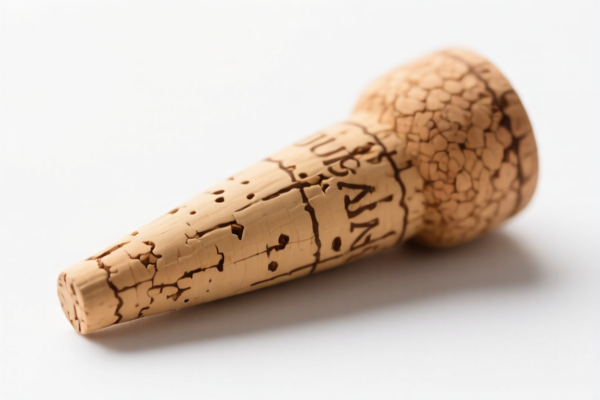
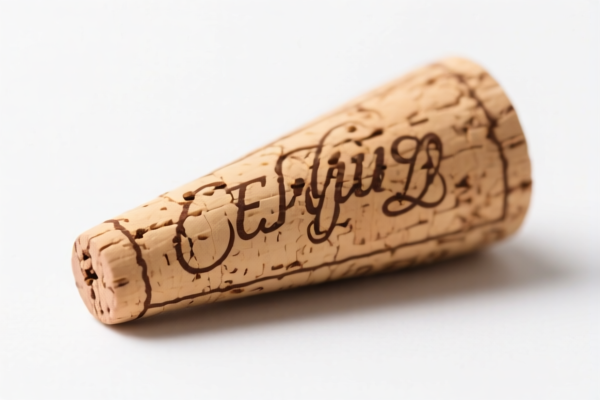
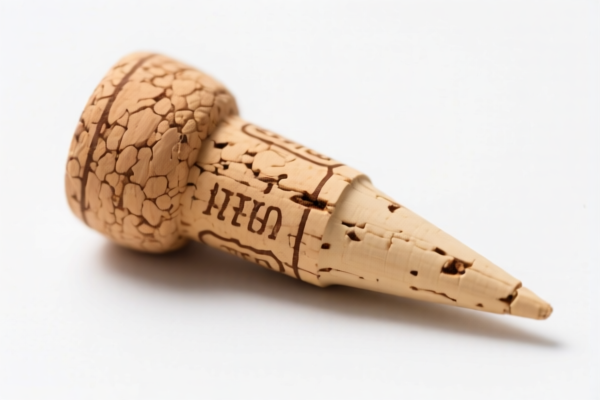

AI Analysis
🍷 Tapered Natural Cork Stoppers (Cork Plugs)
🌐 HS Code Reference & Customs Clearance Guide | 2026 Latest Tariff Analysis | Professional Clearance Strategy
📌 1. Product Definition & Classification: What Exactly Are "Tapered Natural Cork Stoppers"?
Natural cork stoppers, particularly tapered ones, are the traditional and premium choice for sealing wine, spirits, and other bottled beverages. In international trade, they are classified based on their raw material (natural cork vs. agglomerated) and process (cut vs. ground).
Key Distinction:
- Natural Cork: Sourced directly from the bark of the Quercus suber tree. It retains the natural cellular structure.
- Agglomerated Cork: Made from recycled cork granules bonded with food-grade adhesive.
- Tapered Shape: Refers to the conical geometry, which allows for a tight seal within the bottle neck.
⚠️ Critical Classification Point:
- If made from natural cork (even if cut/agglomerated into a plug shape), it generally falls under Chapter 45.
- Specific subheadings depend on whether they are "plugs/corks" (4503) or "other cork articles" (4504).
- Note: In the provided , all relevant HS codes point to a high-tax profile due to specific trade restrictions.
📦 2. HS Code Classification Details (Based on Provided )
| HS Code | Product Description | Applicable Scenario | Material/Shape Match |
|---|---|---|---|
4503.10.60.00 |
Cork plugs, corks, and stops, of natural cork (including agglomerated natural cork); other articles of natural cork | Tapered or non-tapered natural cork stoppers | ✅ Natural Cork + Stopper Shape |
4502.00.00.00 |
Natural cork, unworked, crushed, granulated or ground | Natural cork products classified as raw or semi-processed cork items | ✅ Natural Cork Material |
4504.10.45.00 |
Other articles of cork (including agglomerated cork) | General cork articles where stopper classification might be disputed but material matches | ✅ Natural Cork + Stopper Logic |
4504.10.47.00 |
Other articles of cork (including agglomerated cork) | Fits requirements for "corks/stoppers" under general cork articles | ✅ Natural Cork + Stopper Shape |
4503.10.20.00 |
Cork plugs, corks, and stops, of natural cork | Direct classification for natural cork stoppers | ✅ Natural Cork Material + Product Class |
🔍 Key Takeaway:
- All codes in reflect Natural Cork materials.
- The primary distinction is between Chapter 4503 (specifically "plugs, corks, stops") and Chapter 4504/4502 (other cork articles or raw forms).
- All listed HS Codes carry a total tax rate of 35% due to additional tariffs.
💰 3. 2026 Latest Tariff Rate Breakdown (Including Surcharges & Policy Add-ons)
✅ Applicable Country: United States (US)
✅ Origin: China (CN) (Inferred from "Section 122" and high surcharge rates typical of US-China trade)
✅ Effective Date: Current (Includes all applicable surcharges)
🎯 General Tax Profile for All Listed HS Codes
| Item | Content |
|---|---|
| Base Duty Rate | 0.0% (Ad Valorem) |
| Section 301 Surcharge | +25.0% (Additional Duty) |
| Section 122 Surcharge | +10.0% (Additional Duty) |
| Total Tax Rate | 35.0% |
| Tax Calculation | CIF Value × 35% |
| De Minimis Exemption | ❌ Not Applicable (Deny De Minimis for Section 122/301 goods) |
| Legal Basis Path | Base Rate: 0% → Section 301: +25% → Section 122: +10% → Total: 35% |
📌 Detailed Explanation:
- "Base Duty 0.0%": Natural cork stoppers typically have a low or zero base MFN duty rate.
- "Additional Duty 25.0%": This is the standard Section 301 tariff applied to many Chinese-origin goods, including cork products.
- "Section 122 Tariff 10%": This refers to Section 122 of the Consolidated Appropriations Act, 2023 (or similar recent provisions), which imposes additional duties on certain goods from China, often targeting sectors like cork, textiles, or electronics.
- Total 35%: This is a very high effective tariff rate. Importers must account for this significant cost increase.
🛠️ 4. Customs Clearance Practical Advice (Pitfall Avoidance Guide)
✅ 1. Required Documentation Checklist
| Document | Mandatory | Notes |
|---|---|---|
| ✅ Product Specification Sheet | ✔️ | Must specify: Material (Natural Cork), Shape (Tapered), Size, Quantity |
| ✅ Commercial Invoice | ✔️ | Clearly state "Tapered Natural Cork Stoppers" – avoid vague terms like "Cork Parts" |
| ✅ Packing List | ✔️ | Detail weight, volume, and packaging type |
| ✅ Certificate of Origin (CO) | ✔️ | Crucial to prove Chinese origin (which triggers the 35% tax) or other origin if applicable |
| ✅ Customs Declaration Form | ✔️ | Accurate HS Code selection is critical |
| ✅ Proof of Non-Recycled (if claimed) | ✔️ | If claiming "Natural Cork" over "Agglomerated," provide supplier declaration |
✅ 2. Declaration Tips (Key Mnemonics)
🔥 "Be Precise: 'Natural Cork' not just 'Cork' – Tapered Shape Matters!"
| Scenario | Correct Declaration | Incorrect Approach |
|---|---|---|
| Tapered Natural Cork Stoppers | 4503.10.60.00 (or 4503.10.20.00) |
Vague: "Cork Pieces" → Risk of misclassification |
| Agglomerated Cork Stoppers | Check if it qualifies as "Natural Cork" or falls under 4504 |
Mislabeling agglomerated as natural → Fraud risk |
| Bulk Unprocessed Cork | 4502.00.00.00 |
Declaring finished stoppers as raw cork → Penalty |
| Cork Sheets/Raw Material | 4504.10.45.00 or 4504.10.47.00 |
Declaring sheets as "Stoppers" → Wrong HS |
📌 Warning:
- Do NOT split shipments into "cork granules" and "adhesive" to avoid tariffs – CBP will view this as evasion.
- Ensure "Natural Cork" is accurate: If the product is 100% agglomerated cork (recycled granules), it may still fall under 4503/4504, but the description must match the actual composition.
✅ 3. Special Considerations
| Situation | Handling Advice |
|---|---|
| High Tax Burden (35%) | Calculate landed cost carefully. Consider if price can be adjusted or if sourcing from non-China origins (e.g., Spain, Portugal) is viable to avoid Section 301/122. |
| Origin Shifting | If cork is processed in a third country (e.g., Portugal) using Chinese raw cork, check if "Substantial Transformation" applies to change origin to Portugal (which may have lower tariffs). |
| Pre-Ruling Application | Apply for an Advance Ruling from CBP to confirm the correct HS Code (4503 vs 4504) and ensure compliance with Section 122 requirements. |
🌍 5. Global Market Comparison (2026 Snapshot)
| Country/Region | Recommended HS Code | Base Tariff | Additional Duties (China Origin) | Total Effective Rate | Notes |
|---|---|---|---|---|---|
| 🇺🇸 United States | 4503.10.60.00 |
0% | +25% (Sec 301) + 10% (Sec 122) | 35% | High Tax Risk |
| 🇨🇳 China | 4503.10.60.00 |
~10-15% | None | ~15% | Lower import cost |
| 🇪🇺 EU | 4503.10.90 |
0% | None (GSP/EBA may apply) | 0% | Favorable for wine accessories |
| 🇬🇧 UK | 4503.10.90 |
0% | None | 0% | Post-Brexit preferences |
📌 Strategic Insight:
- The US market is significantly more expensive for Chinese cork stoppers due to Section 301 and Section 122.
- Alternative Sourcing: Consider sourcing natural cork from Portugal (largest producer) to potentially avoid these surcharges, depending on the specific rules of origin.
📌 6. Common Errors & Pitfalls (Lessons Learned)
❌ Error 1: Misclassifying "Agglomerated Cork" as "Natural Cork"
👉 Consequence: If the product is fully agglomerated, it may still fall under 4503/4504, but misrepresentation leads to penalties. Ensure accuracy.
❌ Error 2: Ignoring Section 122
👉 Consequence: Underpaying by 10% leads to back taxes, interest, and potential fines. Always include the 10% Section 122 surcharge in cost calculations.
❌ Error 3: Vague Description "Cork Plugs"
👉 Consequence: CBP may reclassify to a higher-tariff or more scrutinized category, causing delays. Use precise terms: "Tapered Natural Cork Wine Stoppers."
✅ Correct Approach:
"Tapered Natural Cork Stoppers, 100% Natural Cork, Size X, for Wine Bottles, HS Code 4503.10.60.00"
🎯 7. Conclusion: Strategic Sourcing & Compliance
🎯 Key Takeaway:
🔹 "35% is the new normal for Chinese Cork Stoppers to the US."
🔹 "Natural Cork" classification is key, but Origin determines the Tariff.
📌 Pro Tip:
- If your supply chain allows, source cork from Portugal or Spain to potentially avoid the 35% surcharge.
- Always apply for a Pre-Ruling to confirm the exact HS Code and tax liability.
- Update your costing models immediately to include the 35% effective rate.
📣 Action Required:
📞 Consult with a customs broker to verify Section 122 applicability for your specific product batch.
🚀 Optimize your supply chain to mitigate high tariff risks.
✨ Accurate Classification, Strategic Sourcing, Maximized Profit!
💼 Don't let hidden tariffs eat your margins!
Customer Reviews
About HS Code Classification
The Harmonized System (HS) is an internationally standardized nomenclature developed by the World Customs Organization (WCO) to classify traded products. Over 200 countries use the HS system as the basis for customs tariffs, trade statistics, and import/export regulations.
Each HS code follows a hierarchical structure:
- Chapter (2 digits) — Broad category of goods (e.g., Chapter 84: Machinery and Mechanical Appliances)
- Heading (4 digits) — More specific grouping within the chapter
- Subheading (6 digits) — Internationally standardized breakdown, used by all WCO member countries
- National subdivisions (8-10 digits) — Country-specific extensions for further classification, such as US HTSUS 10-digit codes
Correct HS code classification is essential for smooth customs clearance, accurate duty payment, and compliance with trade regulations. Misclassification can lead to customs delays, overpayment of duties, or penalties.
When importing from CN to US, the applicable tariff rates may include:
- Most-Favored-Nation (MFN) rate — The standard duty rate applied to WTO members
- General rate — Applied to countries without trade agreements
- Trade remedy duties — Additional tariffs such as Section 301 (anti-dumping), Section 232 (national security), or countervailing duties
The information provided on this page is for reference purposes only. For official classification, please consult with your local customs authority or a licensed customs broker.