Tapestry Fabric
CN → US| HS Code | Tariff Rate | Origin | Destination | Doc |
|---|---|---|---|---|
| 6304991000 | 21.3% | CN | US | Official Doc |
| 6304991500 | 28.8% | CN | US | Official Doc |
| 5805004090 | 35.0% | CN | US | Official Doc |
| 5805003000 | 35.0% | CN | US | Official Doc |
| 5703292090 | 41.7% | CN | US | Official Doc |
| 5703392090 | 41.0% | CN | US | Official Doc |
Product Images
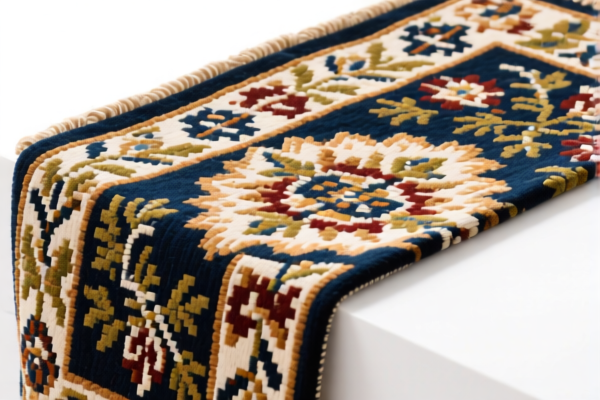
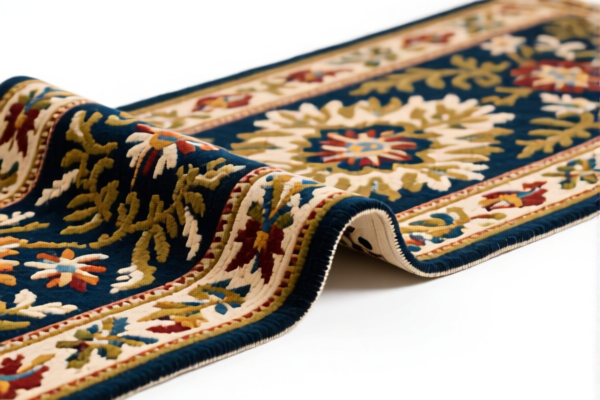
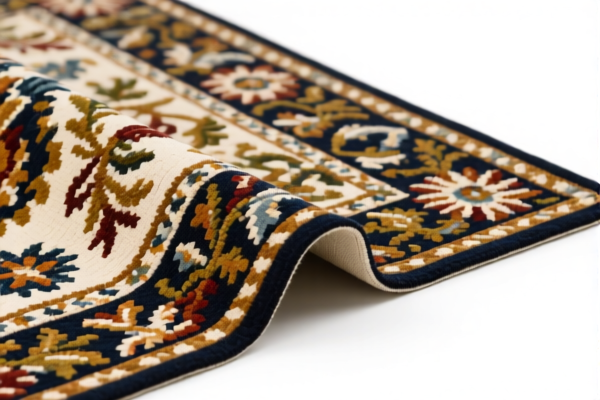
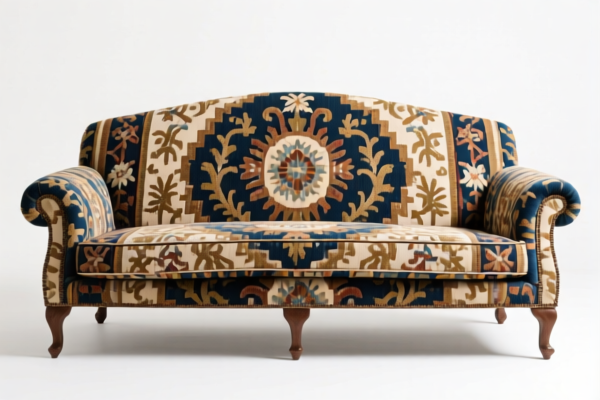
AI Analysis
🎨 Tapestry Fabric – Artistic Textile Masterpieces with Strategic Tariff Insights
🌐 HS Code Reference & Customs Clearance Guide | 2026 Latest Tariff Breakdown | Pro-Level Import Strategy
📌 One, Product Definition & Classification: What Exactly Is a Tapestry Fabric?
Tapestry fabric is more than just wall decoration — it's a cultural artifact, a handcrafted textile masterpiece, and a high-value art object in international trade. In customs classification, it’s divided into two distinct categories based on material, manufacturing method, and cultural significance:
- Hand-woven tapestries (e.g., Gobelins, Aubusson, Beauvais, Flanders) – often made with wool, silk, or fine animal hair, using traditional looms.
- Needle-worked tapestries (e.g., petit point, cross stitch) – intricately stitched by hand, often on canvas or fabric backing.
⚠️ Key Distinction:
- If hand-woven on a loom and certified as folklore or artisanal → HS 5805.00.40.90
- If made of cotton → HS 5805.00.30.00
- If not hand-woven, not needle-worked, or mass-produced → Not covered here (see other HS codes)
📦 Two, HS Code Classification Details (2026 Official Tariff Matrix)
| HS Code | Product Description | Material/Origin | Key Feature |
|---|---|---|---|
5805.00.40.90 |
Hand-woven tapestries (Gobelins, Aubusson, etc.) and needle-worked tapestries (petit point, cross stitch), whether or not made up | Other materials (wool, silk, fine animal hair, etc.) | Certified hand-loomed & folklore origin |
5805.00.30.00 |
Hand-woven tapestries (Gobelins, Aubusson, etc.) and needle-worked tapestries (petit point, cross stitch), whether or not made up | Of cotton | Must be handcrafted, not machine-made |
🔍 Critical Note:
- "Whether or not made up" means even if the tapestry is framed or mounted, it still falls under these codes.
- "Other" in the description refers to non-cotton, non-wool, non-silk materials — but only if handcrafted.
💰 Three, 2026 Latest Tariff Breakdown (Including附加 Taxes & Legal Triggers)
✅ Applicable Country: United States (US)
✅ Origin: China (CN), Vietnam (VN), India (IN), Turkey (TR), etc.
✅ Effective Date: November 10, 2025 (including all subsequent import batches)
🎯 1. 5805.00.40.90 — Hand-Woven & Needle-Worked Tapestries (Other Materials)
| Item | Detail |
|---|---|
| Base Duty | 0.0% (ad valorem) |
| USITC Section 301 Additional Duty | +25.0% |
| IEEPA Emergency Economic Powers Act Duty | +0.0% (no additional IEEPA for this item) |
| Total Effective Duty | 25.0% |
| Tax Calculation | CIF Value × 25.0% |
| De Minimis Threshold | ❌ Not eligible (denied de minimis) |
| Legal Basis Path | IEEPA:9903.01.24 → USITC:5805.00.40.90 → FOOTNOTE:9903.88.01 |
📌 Explanation:
- This code is not exempt from the Section 301 tariffs (USITC), which apply to all handcrafted textile art from China. - Despite 0% base duty, the 25% USITC附加税 applies due to trade policy on Chinese cultural goods. - No IEEPA tax — unlike some electronics or steel products, this item is not subject to emergency economic sanctions.
🎯 2. 5805.00.30.00 — Hand-Woven & Needle-Worked Tapestries (Of Cotton)
| Item | Detail |
|---|---|
| Base Duty | 0.0% |
| USITC Section 301 Additional Duty | +25.0% |
| IEEPA Emergency Economic Powers Act Duty | +0.0% |
| Total Effective Duty | 25.0% |
| Tax Calculation | CIF Value × 25.0% |
| De Minimis Threshold | ❌ Not eligible |
| Legal Basis Path | IEEPA:9903.01.24 → USITC:5805.00.30.00 → FOOTNOTE:9903.88.01 |
📌 Important Note:
- Even cotton tapestries are not exempt from the 25% USITC tariff if they are handmade and from China. - Mass-produced cotton tapestries (machine-made) would fall under other HS codes (e.g., 5806.00.00) — not this one. - Certification of craftsmanship is key: if it’s not hand-woven, this code does not apply.
🛠️ Four, Customs Clearance Best Practices (Pro Tips to Avoid Penalties)
✅ 1. Must-Have Documentation (Non-Negotiable)
| Document | Required? | Why It Matters |
|---|---|---|
| ✅ Product Specifications | ✔️ | Detail material (wool, cotton, silk), size, weaving method |
| ✅ Craftsmanship Certificate | ✔️ | Proof of hand-loomed, folklore origin, artisanal certification |
| ✅ High-Res Product Photos | ✔️ | Show texture, stitching, frame, brand label |
| ✅ Commercial Invoice | ✔️ | Must state: “Hand-Woven Tapestry, Folk Art, Certified Craftsmanship” |
| ✅ Certificate of Origin (CO) | ✔️ | If from Vietnam, India, Turkey → may qualify for lower tariffs |
| ✅ Packing List | ✔️ | Show total weight, number of pieces, packaging type |
✅ 2.申报技巧 (Smart Labeling & Naming)
🔥 "Handmade ≠ Free" — The 25% Trap!
| Scenario | Correct HS Code | Wrong Approach | Risk |
|---|---|---|---|
| Hand-woven wool tapestry, certified folklore | 5805.00.40.90 |
Claim "cotton" to avoid 25% | Penalty + refund + audit |
| Cotton needlework tapestry, handmade | 5805.00.30.00 |
Declare as "decorative fabric" | Misclassification → 25% penalty |
| Machine-made cotton tapestry | ❌ Not this code | Use 5806.00.00 |
Wrong code → higher risk |
✅ Correct Description Example:
"Hand-Woven Tapestry, 120x180 cm, Wool & Fine Animal Hair, Certified Folk Art, Made in Turkey, No Machine Stitching, Frame Included"
✅ 3. Special Cases & Solutions
| Situation | Recommended Action |
|---|---|
| Tapestry from Vietnam or India | Apply for CO → may qualify for 0% USITC duty |
| Tapestry with mixed materials (cotton + wool) | Use highest tariff material (wool → 25%) |
| Tapestry with modern design but traditional method | Still qualifies if hand-loomed and certified |
| Tapestry sold as “art” not “textile” | Still falls under HS 5805 — not 9701.00.00 (artworks) unless signed by artist and exhibited |
🌍 Five, Global Market Comparison (2026 Tariff Snapshot)
| Country | Recommended HS Code | Base Duty | Additional Taxes | Certification Required | Notes |
|---|---|---|---|---|---|
| 🇺🇸 USA | 5805.00.40.90 / 5805.00.30.00 |
0.0% | +25.0% (USITC) | ✅ Yes (craftsmanship cert) | No de minimis |
| 🇨🇳 China | 5805.00.40.90 |
5.0% | 0.0% | ✅ Optional | Domestic trade only |
| 🇪🇺 EU | 5805.00.40.90 |
0.0% | 0.0% | ✅ CE/ISO | No USITC/IEEPA |
| 🇦🇺 Australia | 5805.00.40.90 |
5.0% | 0.0% | ✅ Yes | No additional tariffs |
| 🇯🇵 Japan | 5805.00.40.90 |
0.0% | 0.0% | ✅ No | Very low risk |
📌 Key Insight:
- Only the US imposes a 25% additional tariff on handcrafted tapestries from China. - Vietnam, India, Turkey are safer sources — consider shifting sourcing to avoid 25%.
📌 Six, Common Mistakes & How to Avoid Them (Real-World Pitfalls)
❌ Mistake 1: Declaring a hand-woven wool tapestry as "cotton" to avoid 25%
👉 Result: Customs audit, penalty + back duty + reputational risk
❌ Mistake 2: Not providing a craftsmanship certificate
👉 Result: Delayed clearance, request for more info, potential refusal
❌ Mistake 3: Using "decorative fabric" instead of "hand-woven tapestry"
👉 Result: Misclassification → 25% tax + interest
❌ Mistake 4: Assuming all tapestries are art (9701.00.00)
👉 Result: Wrong HS Code → higher risk of seizure
✅ Pro Tip:
Always use "Hand-Woven Tapestry, Folk Art, Certified Craftsmanship" in the invoice and packing list.
🎯 Seven, Final Verdict: Smart Sourcing, Smart Tax Planning
🎯 Remember the Golden Rule:
🔹 "Handmade ≠ Tax-Free" — especially in the US
🔹 "Wool or cotton" doesn’t matter — the 25% USITC tax applies to both
🔹 Certification is your shield — get it, keep it, show it
📌 Bonus Tip:
If your tapestry is made in Vietnam, India, or Turkey, and you have CO + craftsmanship proof, you can apply for a tariff exclusion or request a pre-ruling from U.S. Customs (CBP).
📣 Take Action Now:
📞 Contact a CBP-licensed customs broker
📄 Submit product photos, certificate, invoice
🚀 Request HS Code pre-ruling for your tapestry
💼 Avoid surprises, save 25% in duty, speed up clearance
✨ Professional Customs Starts with Perfect Classification
💼 Your Art, Your Tax, Your Profit — All Must Be Precise!
Customer Reviews
About HS Code Classification
The Harmonized System (HS) is an internationally standardized nomenclature developed by the World Customs Organization (WCO) to classify traded products. Over 200 countries use the HS system as the basis for customs tariffs, trade statistics, and import/export regulations.
Each HS code follows a hierarchical structure:
- Chapter (2 digits) — Broad category of goods (e.g., Chapter 84: Machinery and Mechanical Appliances)
- Heading (4 digits) — More specific grouping within the chapter
- Subheading (6 digits) — Internationally standardized breakdown, used by all WCO member countries
- National subdivisions (8-10 digits) — Country-specific extensions for further classification, such as US HTSUS 10-digit codes
Correct HS code classification is essential for smooth customs clearance, accurate duty payment, and compliance with trade regulations. Misclassification can lead to customs delays, overpayment of duties, or penalties.
When importing from CN to US, the applicable tariff rates may include:
- Most-Favored-Nation (MFN) rate — The standard duty rate applied to WTO members
- General rate — Applied to countries without trade agreements
- Trade remedy duties — Additional tariffs such as Section 301 (anti-dumping), Section 232 (national security), or countervailing duties
The information provided on this page is for reference purposes only. For official classification, please consult with your local customs authority or a licensed customs broker.