Tapioca pearls for bubble tea
CN → USProduct Images


AI Analysis
🧋 Bubble Tea Tapioca Pearls (Black Boba)
🌐 HS Code Reference & Customs Clearance Guide | 2026 Latest Tariff Analysis | Professional Entry Strategy
📌 I. Product Definition & Classification: What Exactly Are "Tapioca Pearls"?
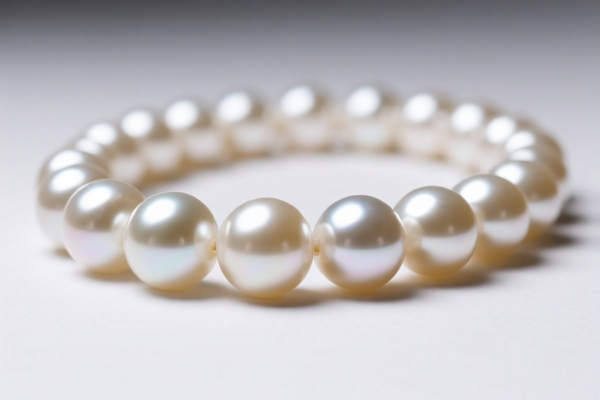
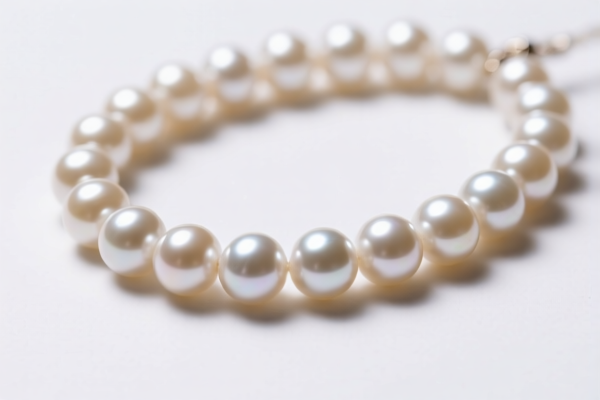
Tapioca pearls, commonly known as "boba" in the bubble tea industry, are small, chewy spheres made primarily from tapioca starch (extracted from the cassava root). In international trade, they are classified not as simple starch, but as a prepared food product.
The critical distinction lies in the processing level and packaging: * Raw Tapioca Starch: If sold as a pure white powder without coloring or cooking, it falls under Chapter 11 (Preparations of Cereals, Flour, Starch or Milk). * Prepared Tapioca Pearls (Bobas): These are cooked, colored (typically with caramel/molasses for black boba), dried, and often packaged for immediate consumption or rehydration. They are considered prepared foods under Chapter 19.
⚠️ Key Distinction Point:
- If the product is plain white starch powder →归类 to 1108.14
- If the product is formed into pearls, colored, and cooked/dried →归类 to 1902.39 (or 1904/1104 depending on specific ingredient mix, but 1902 is most common for "noodle-like" starch products)
📦 II. HS Code Classification Details (2026 Latest Tariff Authority Match)
| HS Code | Product Description | Applicable Scenario | Is it Prepared? |
|---|---|---|---|
1108.14.00.00 |
Tapioca Starch in any form | Raw, white, unformed starch powder | ❌ No (Raw Material) |
1902.39.50.00 |
Other pasta, whether or not cooked or stuffed... | Tapioca pearls (Boba), black or white, prepared | ✅ Yes (Prepared Food) |
1104.19.90.90 |
Other cereals (e.g., quinoa, millet) flakes or grains | If mixed with non-tapioca grains (rare for pure boba) | ❌ Mixed |
2106.90.98.90 |
Food preparations n.e.c. | If heavily sweetened with significant added sugars/flavorings beyond standard starch prep | ✅ Yes (Complex Prep) |
🔍 Priority Note:
- Most commercial black and white tapioca pearls are classified under1902.39.50.00("Other pasta, whether or not cooked or stuffed..."). This is because the formation of pearls from starch is analogous to the making of pasta/noodles. - Do NOT classify pure tapioca pearls as1108.14(Starch) unless they are sold as raw, unformed powder to factories. Once formed into spheres, they are a "prepared food."
💰 III. 2026 Latest Tariff Rate Breakdown (Including Surtaxes & Policy Add-ons)
✅ Applicable Country: United States (US)
✅ Country of Origin: China (CN)
✅ Effective Time: November 10, 2025 onwards (and subsequent imports)
🎯 1. 1902.39.50.00 —— Prepared Tapioca Pearls (Boba)
| Item | Content |
|---|---|
| Base Rate | 0% (General MFN) |
| USITC Surcharge | 0% (Not included in the 301 List for this specific subheading usually, but check Footnotes) |
| IEEPA Surcharge | +10% (Section 301/IEEPA on Chinese goods) |
| Total Rate | 10% |
| Calculation | CIF Value × 10% |
| De Minimis Eligibility | ❌ No (Deny de_minimis for this category if value > $800, but specifically subject to Section 301 if over threshold) |
| Legal Path | IEEPA:9903.01.24 → USITC:1902.39.50.00 |
📌 Explanation:
- Unlike high-tech electronics or certain raw materials, prepared foods like boba often have lower base rates. - However, the 10% IEEPA surcharge still applies to Chinese-origin goods unless a specific exemption exists (rare for consumer food items). - Total landed cost impact: 10% duty on top of shipping/insurance.
🎯 2. 1108.14.00.00 —— Raw Tapioca Starch (Alternative Classification)
| Item | Content |
|---|---|
| Base Rate | 0% |
| USITC Surcharge | +7.5% - 25% (Depending on specific 301 listing updates for starches) |
| IEEPA Surcharge | +10% |
| Total Rate | 17.5% - 35% |
| Calculation | CIF Value × (Base + Surtax) |
| De Minimis Eligibility | ❌ No |
📌 Warning:
- Misclassifying prepared pearls as raw starch is a high-risk error. Customs will inspect the physical product; if it's already in spherical form, it will be reclassified, leading to penalties. - Raw starch often attracts higher scrutiny due to agricultural import quotas.
🛠️ IV. Customs Clearance Practical Advice (Avoid Pitfalls)
✅ 1. Required Documentation Checklist (Non-negotiable)
| Document | Mandatory? | Notes |
|---|---|---|
| ✅ FDA Prior Notice | ✔️ YES | Food items imported into the US require Prior Notice via AFN (Automated Food Notices). |
| ✅ Ingredient Statement | ✔️ YES | Must list: Tapioca Starch, Water, Brown Sugar/Caramel Color, Preservatives (if any). |
| ✅ Certificate of Analysis (COA) | ✔️ YES | To prove moisture content and absence of pathogens (Salmonella, E. coli). |
| ✅ Nutrition Facts Label | ✔️ YES | Must comply with US FDA labeling standards (bilingual recommended). |
| ✅ Commercial Invoice | ✔️ YES | Clearly state: "Tapioca Pearls, Prepared, HS 1902.39.50.00" |
| ✅ Free Sale Certificate | ✔️ Recommended | From the country of origin to prove safety standards. |
✅ 2. Declaration Tips (Golden Rules)
🔥 "Don't call it 'Starch', Call it 'Pearls'; Don't hide the sugar, Declare the Color."
| Scenario | Correct Declaration | Wrong Practice |
|---|---|---|
| Black Boba | 1902.39.50.00 - "Tapioca Pearls, Prepared, Contains Caramel Color" |
"Starch" → Audit risk |
| White Boba | 1902.39.50.00 - "Tapioca Pearls, Prepared, Unflavored" |
"Foodstuff" → Too vague |
| Instant Boba (Ready-to-eat) | 1902.39.50.00 |
Same code, but emphasize "Pre-cooked" |
| Mixed with Tapioca Noodles | Separate line items if packed separately | Mixed declaration → Confusion |
✅ 3. Special Handling for Food Imports
| Situation | Handling Advice |
|---|---|
| FDA Registration | The foreign facility must be FDA-registered before shipment. |
| Shelf Life | Declare accurate expiration date. Products with less than 60% shelf life remaining upon arrival may be refused. |
| Pesticide Residues | Cassava is generally low-risk, but ensure no contamination from other crops. |
| Labeling | US FDA requires English labels. Bilingual (English/Chinese) is acceptable and recommended for consumer clarity. |
🌍 V. Global Market Comparison (2026 Latest)
| Country/Region | Recommended HS Code | Tariff Rate | Certification Req. | Notes |
|---|---|---|---|---|
| 🇺🇸 USA | 1902.39.50.00 |
10% (CN Origin) | FDA Prior Notice + Labeling | High scrutiny on food safety. |
| 🇪🇺 EU | 1902.39.90 |
~0% (Most MFN) | EU Food Safety Standards + Traceability | Strict on caramel color (E150d) regulations. |
| 🇨🇳 China | 1902.39.90 |
5% | CCC (if packaged for sale) | No surtaxes. |
| 🇯🇵 Japan | 1902.39.90 |
0% | Japan FDA (Ministry of Health) | Very strict on additives. |
| 🇦🇺 Australia | 1902.39.90 |
5% | FSANZ Compliance | Check for biosecurity import permits. |
📌 Conclusion:
- The US is the most challenging market due to the 10% surtax and FDA regulatory burden. - EU/Japan have lower tariffs but stricter food additive regulations (especially regarding caramel coloring and preservatives).
📌 VI. Common Mistakes & Pitfalls (Blood & Tears Lessons)
❌ Mistake 1: Classifying Boba as 1108.14 (Tapioca Starch)
👉 Consequence: Rejection by Customs for incorrect classification. The product is a "prepared food," not a raw material. Fines apply.
❌ Mistake 2: Omitting "Caramel Color" in ingredients
👉 Consequence: FDA refusal of entry. Food products must have accurate ingredient lists. Caramel color is a regulated additive.
❌ Mistake 3: No FDA Prior Notice filed before arrival
👉 Consequence: Cargo held at port. Delay costs can exceed 10x the duty value. Penalties up to $25,000 per violation.
❌ Mistake 4: Selling "Expired" or near-expiry goods
👉 Consequence: Destruction or re-export. US FDA requires goods to have at least 60% of their remaining shelf life upon arrival.
✅ Correct Practice:
"Tapioca Pearls, Prepared, 500g Pack, Black, Containing Tapioca Starch, Water, Caramel Color, Preservative E211. HS Code: 1902.39.50.00. FDA Registered Facility: CN1234567890."
🎯 VII. Conclusion: Professional Declaration Saves Money & Time
🎯 Remember the Mantra:
🔹 "Pearls are Prepared, Not Raw Starch."
🔹 "FDA Prior Notice is Mandatory for Food."
🔹 "10% Surcharge for China, 0% for EU/Japan (with caveats)."
📌 Pro Tip:
If you are importing small quantities (< $800) under de minimis (Section 321), be cautious. While duties may be waived, FDA regulations still apply. You still need to ensure the product is FDA-compliant, even if no duty is paid. However, frequent de minimis entries of food items may trigger heightened scrutiny.
📣 Immediate Action:
📞 Register your facility with FDA (if not already done).
📋 Prepare accurate ingredient labels in English.
🚀 Use HS Code1902.39.50.00for prepared tapioca pearls to ensure smooth clearance.
✨ Professional Customs Clearance, Starting with Accurate Classification!
💼 Your Bubble Tea Business Deserves a Smooth, Duty-Optimized Entry!
Customer Reviews
About HS Code Classification
The Harmonized System (HS) is an internationally standardized nomenclature developed by the World Customs Organization (WCO) to classify traded products. Over 200 countries use the HS system as the basis for customs tariffs, trade statistics, and import/export regulations.
Each HS code follows a hierarchical structure:
- Chapter (2 digits) — Broad category of goods (e.g., Chapter 84: Machinery and Mechanical Appliances)
- Heading (4 digits) — More specific grouping within the chapter
- Subheading (6 digits) — Internationally standardized breakdown, used by all WCO member countries
- National subdivisions (8-10 digits) — Country-specific extensions for further classification, such as US HTSUS 10-digit codes
Correct HS code classification is essential for smooth customs clearance, accurate duty payment, and compliance with trade regulations. Misclassification can lead to customs delays, overpayment of duties, or penalties.
When importing from CN to US, the applicable tariff rates may include:
- Most-Favored-Nation (MFN) rate — The standard duty rate applied to WTO members
- General rate — Applied to countries without trade agreements
- Trade remedy duties — Additional tariffs such as Section 301 (anti-dumping), Section 232 (national security), or countervailing duties
The information provided on this page is for reference purposes only. For official classification, please consult with your local customs authority or a licensed customs broker.