Target
CN → US| HS Code | Tariff Rate | Origin | Destination | Doc |
|---|---|---|---|---|
| 9031410040 | 35.0% | CN | US | Official Doc |
| 9031410060 | 35.0% | CN | US | Official Doc |
| 9506993500 | 17.5% | CN | US | Official Doc |
| 9506990530 | 17.5% | CN | US | Official Doc |
| 3822190010 | 10.0% | CN | US | Official Doc |
| 3822190040 | 10.0% | CN | US | Official Doc |
Product Images
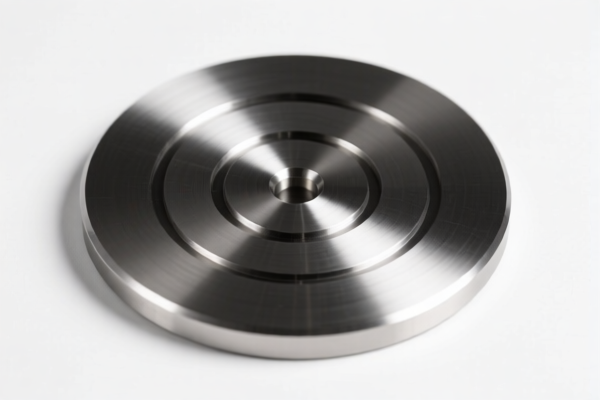
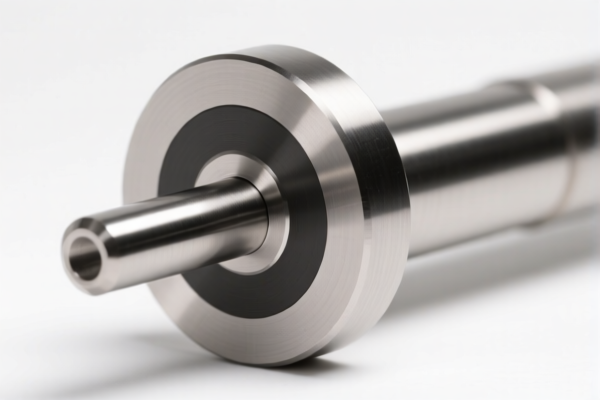
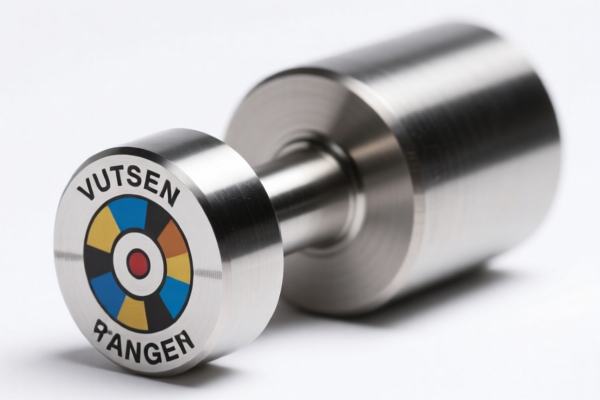
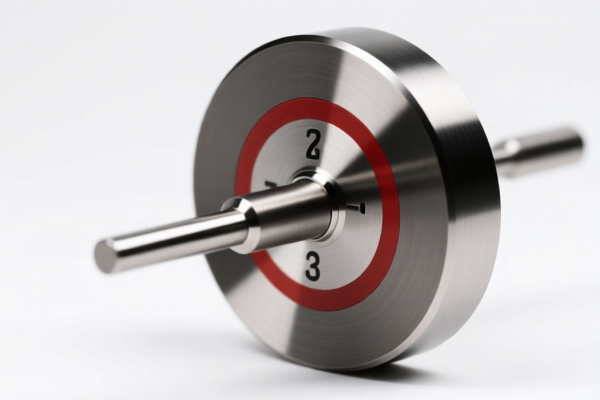
AI Analysis
Based on the data provided in <DATA>, here is the breakdown for the items that match the target description "Diagnostic or laboratory reagents on a backing...".
Please note: The other HS codes in the <DATA> set (9031.41.00.40/60, 9506.99.35.00, 9506.99.05.30) refer to Semiconductor Inspection Equipment and Sports Equipment, which do not match the "Diagnostic or laboratory reagents" description. Therefore, only the HS codes under 3822.19.00.10 and 3822.19.00.40 are relevant to your query.
🧪 Diagnostic or Laboratory Reagents (Containing Methyl Chloroform/Carbon Tetrachloride)
🌐 HS Code Reference & Clearance Guide | 2026 Latest Tariff Analysis | Professional Clearance Strategy
📌 I. Product Definition & Classification: Understanding the Reagent Kits
These products are prepared diagnostic or laboratory reagents, whether or not on a backing, and whether or not put up in the form of kits. The critical classification factor here is the chemical composition, specifically the presence of restricted solvents: Methyl Chloroform (1,1,1-trichloroethane) or Carbon Tetrachloride.
⚠️ Key Distinction Point:
- HS 3822.19.00.10: Specifically targets reagents containing antigens or antisera along with the restricted solvents.
- HS 3822.19.00.40: Targets other prepared reagents (not containing antigens/antisera) but still containing the restricted solvents.
📦 II. HS Code Classification Details (2026 Latest Tariff Authoritative Comparison)
| HS Code | Product Description | Applicability Condition | Specific Chemical Restriction |
|---|---|---|---|
3822.19.00.10 |
Other reagents on a backing; Other; Containing antigens or antisera; Containing methyl chloroform or carbon tetrachloride | Diagnostic kits for blood, urine, or serological tests using antigens/antisera, prepared on strips/pads | ✅ Contains Methyl Chloroform OR Carbon Tetrachloride |
3822.19.00.40 |
Other reagents on a backing; Other: Containing methyl chloroform or carbon tetrachloride | General lab reagents (non-immunological) such as pH strips, chemical test papers, or enzyme substrates, prepared on backing | ✅ Contains Methyl Chloroform OR Carbon Tetrachloride |
🔍 Important Reminder:
- If the reagent does not contain Methyl Chloroform or Carbon Tetrachloride, it may fall under different subheadings (e.g., 3822.00.00.90), but these are not in the provided<DATA>.
- The presence of Carbon Tetrachloride or Methyl Chloroform is the primary trigger for these specific 8-digit codes due to environmental and safety regulations.
💰 III. 2026 Latest Tariff Rate Details (Including Additional Duties)
✅ Applicable Country: United States (US)
✅ Origin: China (CN) (Inferred from tax details style)
✅ Effective Time: Current 2026 Schedule
🎯 1. 3822.19.00.10 —— Diagnostic Reagents with Antigens/Antisera & Restricted Solvents
| Item | Content |
|---|---|
| Base Tariff Rate | 0% (ad valorem) |
| USITC Additional Duty | 0% |
| IEEPA Additional Duty | 0% |
| Total Effective Tax Rate | 0.0% |
| Tax Calculation | CIF Value × 0% = $0 |
| De Minimis Eligibility | ✅ Yes (Generally, low-value shipments may qualify, but subject to CBP discretion) |
| Legal Basis Path | USITC:3822.19.00.10 → No Footnotes for Additional Duties |
📌 Explanation:
- Despite containing restricted chemicals, these specific reagents do not attract the 25% Section 301 tariff or the 10% IEEPA surcharge in this specific tariff classification.
- However, importers must ensure strict compliance with EPA/OSHA regulations regarding the handling of Methyl Chloroform and Carbon Tetrachloride, even if duties are zero.
🎯 2. 3822.19.00.40 —— Other Reagents with Restricted Solvents
| Item | Content |
|---|---|
| Base Tariff Rate | 0% (ad valorem) |
| USITC Additional Duty | 0% |
| IEEPA Additional Duty | 0% |
| Total Effective Tax Rate | 0.0% |
| Tax Calculation | CIF Value × 0% = $0 |
| De Minimis Eligibility | ✅ Yes (Generally eligible) |
| Legal Basis Path | USITC:3822.19.00.40 → No Footnotes for Additional Duties |
📌 Note:
- This code applies to non-immunological reagents (e.g., chemical test strips) containing the same restricted solvents.
- The tax burden is zero, but the regulatory burden for hazardous materials remains high.
🛠️ IV. Clearance Operational Suggestions (Practical Pitfall Avoidance Guide)
✅ 1. Preparation Checklist (Essential Documents)
| Document | Required | Explanation |
|---|---|---|
| ✅ Product Specification Sheet | ✔️ | Must explicitly list all chemicals, specifically highlighting "Methyl Chloroform (1,1,1-trichloroethane)" or "Carbon Tetrachloride" if present. |
| ✅ Safety Data Sheet (SDS) | ✔️ | Mandatory for chemicals. Must comply with GHS standards. |
| ✅ Commercial Invoice | ✔️ | Must clearly describe goods as "Prepared Diagnostic Reagents" or "Laboratory Reagents on Backing." Avoid vague terms like "Medical Supplies." |
| ✅ HS Code Confirmation | ✔️ | Confirm with customs broker that the product matches the "Antigen/Antisera" vs. "Other" distinction. |
| ✅ EPA/OSHA Compliance Statement | ✔️ | Evidence that the product meets US environmental and safety standards for restricted solvents. |
✅ 2. Declaration Strategy (Key Mantra)
🔥 "Be Specific, Name Chemicals, Verify Backing, Avoid Confusion!"
| Scenario | Correct Declaration | Wrong Practice |
|---|---|---|
| Reagent strip with blood testing antigens + Methyl Chloroform | 3822.19.00.10 "Diagnostic Reagents containing Antigens..." |
Declare as "Medical Kits" → Risk of misclassification |
| Chemical test paper + Carbon Tetrachloride | 3822.19.00.40 "Other Prepared Reagents..." |
Declare as "Office Supplies" → High audit risk |
| Reagent WITHOUT restricted solvents | NOT in 3822.19.00.10/40 |
Force fit into these codes → Penalties |
✅ 3. Special Case Handling
| Situation | Handling Advice |
|---|---|
| Kits Mixed with Other Items | If a kit contains these reagents + non-restricted items, declare the primary purpose. If reagents are principal, use 3822.19. |
| Hazardous Material Declaration | Even with 0% duty, declare as hazardous if required by DOT/FHWA for transport. |
| Origin Verification | Ensure the declaration matches the origin. If reclassified, duties might change. |
🌍 V. Global Major Market Clearance Comparison (2026 Latest)
| Country/Region | Recommended HS Code | Tariff (China Origin) | Certification Requirements | Notes |
|---|---|---|---|---|
| 🇺🇸 USA | 3822.19.00.10 / .40 |
0.0% | EPA / OSHA Compliance | No additional Section 301 duty for these codes. |
| 🇨🇳 China | 3822.19.00.10 / .40 |
~0-6% | CCC (if applicable) | Domestic trade varies. |
| 🇪🇺 EU | 3822.90 |
Varies (often 6.5%) | REACH / CLP | Methyl Chloroform is highly restricted in EU. |
| 🇬🇧 UK | 3822.00 |
Varies | UK REACH | Post-Brexit regulations apply. |
📌 Conclusion:
- The USA offers a 0% tariff for these specific reagents containing restricted solvents, which is a significant advantage over other regions or other HS codes (like semiconductors which face 25%).
- The main challenge is regulatory compliance, not duty cost.
📌 VI. Common Errors & Pitfall Guide (Lessons Learned)
❌ Error 1: Misidentifying "Reagents on Backing" as "Medical Devices" (HS 9018/9022)
👉 Consequence: Wrong HS code, potential delays, and missed opportunity for 0% duty if 3822 is correct.
❌ Error 2: Failing to disclose "Methyl Chloroform" or "Carbon Tetrachloride" in the description
👉 Consequence: Customs detention for hazardous material misdeclaration. Even if duty is 0%, safety is paramount.
❌ Error 3: Assuming all "Diagnostic Kits" have high tariffs
👉 Consequence: Overpaying or underpaying. These specific codes are 0%, unlike many other medical devices.
❌ Error 4: Confusing 3822.19.00.10 (Antigens) with .40 (Others)
👉 Consequence: Minor administrative issues, but both have 0% duty in this dataset. However, accurate classification is legally required.
✅ Correct Approach:
"Prepared Diagnostic Reagent Strips containing Anti-X Antigen, on plastic backing, with Methyl Chloroform solvent. HS: 3822.19.00.10."
🎯 VII. Conclusion: Professional Declaration, Safe Passage, Cost Savings!
🎯 Remember the Mantra:
🔹 "Reagents on Backing? Check Chemicals!"
🔹 "Antigens Present? Go 10. No Antigens? Go 40."
🔹 "Both are 0% Duty, But Safety Comes First!"
📌 Pro Tip:
Even though the duty is 0.0%, ensure your SDS (Safety Data Sheet) explicitly lists the chemical content. US Customs and Border Protection (CBP) and the EPA strictly monitor imports of Methyl Chloroform and Carbon Tetrachloride. Compliance saves time more than tariffs save money.
📣 Immediate Action:
📞 Contact your customs broker with the exact chemical formulation.
🚀 Declare using the precise description matching3822.19.00.10or.40.
✨ Enjoy the 0.0% Total Tax rate while maintaining full regulatory compliance!
✨ Professional clearance starts with accurate classification!
💼 Your cost should be the product value, not hidden tariffs.
Customer Reviews
About HS Code Classification
The Harmonized System (HS) is an internationally standardized nomenclature developed by the World Customs Organization (WCO) to classify traded products. Over 200 countries use the HS system as the basis for customs tariffs, trade statistics, and import/export regulations.
Each HS code follows a hierarchical structure:
- Chapter (2 digits) — Broad category of goods (e.g., Chapter 84: Machinery and Mechanical Appliances)
- Heading (4 digits) — More specific grouping within the chapter
- Subheading (6 digits) — Internationally standardized breakdown, used by all WCO member countries
- National subdivisions (8-10 digits) — Country-specific extensions for further classification, such as US HTSUS 10-digit codes
Correct HS code classification is essential for smooth customs clearance, accurate duty payment, and compliance with trade regulations. Misclassification can lead to customs delays, overpayment of duties, or penalties.
When importing from CN to US, the applicable tariff rates may include:
- Most-Favored-Nation (MFN) rate — The standard duty rate applied to WTO members
- General rate — Applied to countries without trade agreements
- Trade remedy duties — Additional tariffs such as Section 301 (anti-dumping), Section 232 (national security), or countervailing duties
The information provided on this page is for reference purposes only. For official classification, please consult with your local customs authority or a licensed customs broker.