Tattoo Practice Skin
CN → US| HS Code | Tariff Rate | Origin | Destination | Doc |
|---|---|---|---|---|
| 3926909989 | 22.8% | CN | US | Official Doc |
| 3926904800 | 13.4% | CN | US | Official Doc |
| 3304995000 | 35.0% | CN | US | Official Doc |
| 3304300000 | 35.0% | CN | US | Official Doc |
| 9018390050 | 10.0% | CN | US | Official Doc |
| 9018498080 | 10.0% | CN | US | Official Doc |
Product Images

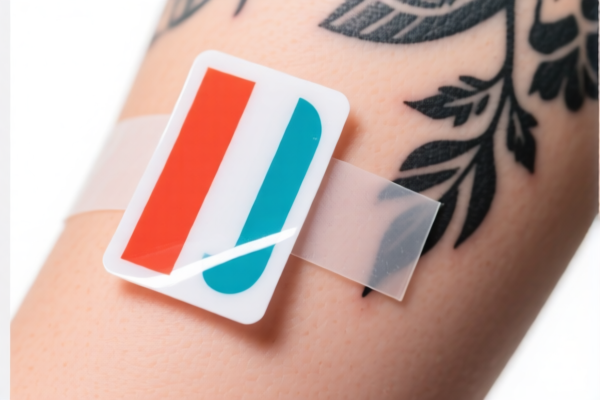


AI Analysis
🎨 Tattoo Practice Skin: Global HS Code Classification & 2026 Customs Strategy Guide
🌐 Professional Trade Compliance Manual | 2026 Latest Tariff Analysis | US-China Import Strategy
📌 I. Product Definition & Classification Logic: Is "Practice Skin" Plastic or Cosmetic?
Tattoo Practice Skin (often called "fake skin," "simulation skin," or "training skin") is a critical training tool for tattoo artists. It consists of layers designed to mimic human skin texture, elasticity, and bleeding response to allow artists to practice needle work without risk.
Classification Dilemma:
Is it a Medical/Cosmetic Supply (Chapter 33)?
Or is it simply a Plastic/Material Article (Chapter 39)?
⚠️ The Critical Distinction: - Scenario A (Cosmetic/Skin Care Context): If the product is marketed specifically as a "manicure/pedicure practice tool" or contains active cosmetic/skin care ingredients (e.g., specialized lotions applied with it), it may fall under HS 3304.99.50.00. - Scenario B (Standard Practice Skin): Most commercial tattoo practice skins are synthetic rubber, silicone, or plastic films without medicinal/cosmetic active ingredients. They are purely "articles of plastics" → HS 3926.90.99.89.
🛑 Exclusion Alert: It DOES NOT fall under medical instruments (Chapter 90) because it is not a surgical instrument or diagnostic device. It is a consumable training material.
📦 II. HS Code Classification Details (Based on Provided Data)
| HS Code | Product Description (from Data) | Category Logic | Applicable Scenario |
|---|---|---|---|
| 3304.99.50.00 | Beauty or make-up preparations... Other: Other: Other | Cosmetic/Skin Care Prep | Only if the skin includes pre-applied cosmetic agents, lotions, or is marketed as a "skin care preparation" rather than just a synthetic sheet. |
| 3304.30.00.00 | ...Manicure or pedicure preparations | Pedicure/Manicure Tools | If the product is explicitly a pedicure practice pad (e.g., plastic toe separators with a "skin" surface). |
| 3926.90.99.89 | Other articles of plastics... Other: Other Other | Plastic Articles | Most Common: Standard synthetic tattoo practice sheets (silicone/plastic films) used for training. No medicinal/cosmetic actives. |
| 3926.90.48.00 | Other articles of plastics... Other: Photo albums | Photo Albums | ❌ NOT APPLICABLE unless the "skin" is packaged inside a photo album (highly unlikely). |
| 9018.39.00.50 | Syringes, needles, catheters... | Medical Instruments | ❌ NOT APPLICABLE to the skin itself. (This code is for the needles used ON the skin, not the skin). |
| 9018.49.80.80 | Other instruments... dental sciences... | Dental Instruments | ❌ NOT APPLICABLE. |
🔍 Key Takeaway: For standard tattoo practice skin, HS 3926.90.99.89 is the most accurate classification (Plastic Article). Do not use 3304 codes unless you are selling "tattoo ink pads with cosmetic additives" or similar.
💰 III. 2026 Tariff Rate Breakdown (US Imports from China)
✅ Target Market: United States (US)
✅ Origin: China (CN)
✅ Context: Section 301 / IEEPA Tariffs (2025-2026 Framework)
🎯 1. 3926.90.99.89 (Plastic Articles - Most Likely)
The standard synthetic training skin.
| Item | Content |
|---|---|
| Base Tariff | 5.3% |
| Section 301 / "Add-on" Tax | +7.5% |
| Total Tariff | 12.8% |
| Tax Detail | Base: 5.3% + Add-on: 7.5% |
| De Minimis Status | ❌ NO (Requires full duty payment; cannot ship via low-value de minimis exemption) |
| Legal Reference | Derived from HTSUS 3926.90.99.89 + 301 Add-on List. |
📌 Explanation:
- This is a moderate tariff. The 5.3% is the standard Most-Favored-Nation (MFN) rate.
- The 7.5% is the specific "Section 301" surcharge applied to Chinese plastic goods.
- Strategy: This is the safest, lowest-cost classification for generic practice skin.
🎯 2. 3304.99.50.00 (Beauty/Skin Care - Risk of High Tax)
Only if your product claims to be a "preparation for skin care".
| Item | Content |
|---|---|
| Base Tariff | 0.0% |
| Section 301 / "Add-on" Tax | +25.0% |
| Total Tariff | 25.0% |
| Tax Detail | Base: 0.0% + Add-on: 25.0% |
| De Minimis Status | ❌ NO |
| Risk Factor | HIGH |
📌 Explanation:
- While the base tariff is 0%, the 25% add-on tax (Section 301 list for cosmetics/preparations) makes it almost double the cost of the plastic version.
- Warning: Do not classify a plastic sheet as a "beauty preparation" just to save money. If audited, the 25% tax will be applied retroactively plus penalties.
🎯 3. 3304.30.00.00 (Pedicure Preparations)
If the product is specifically a "pedicure practice pad".
| Item | Content |
|---|---|
| Base Tariff | 0.0% |
| Section 301 / "Add-on" Tax | +25.0% |
| Total Tariff | 25.0% |
| Risk Factor | HIGH |
📌 Explanation: Same risk as 3304.99.50.00. If it's not genuinely a "pedicure preparation" (chemical/lotion), this classification is incorrect.
🛠️ IV. Customs Clearance Strategy & Pitfall Avoidance
✅ 1. Material Declaration (Crucial Step)
To ensure the correct classification (3926 vs. 3304): - ✅ Correct: Declare as "Synthetic Tattoo Practice Skin", "Artificial Training Skin", or "Plastic Simulation Skin". - ❌ Incorrect: Avoid words like "Cream", "Lotion", "Medical", "Medicament", or "Preparation" unless the product actually contains them. - Documentation: Include a Technical Data Sheet stating: "Non-medical, no active pharmaceutical or cosmetic ingredients, 100% synthetic polymer (Silicone/TPU)."
✅ 2. HS Code Selection Logic
| Product Feature | Recommended HS Code | Total Tax (2026) | Reason |
|---|---|---|---|
| Standard Plastic Sheet | 3926.90.99.89 |
12.8% | Correct for "Other plastic articles". |
| Pad with Pre-applied Lotion | 3304.99.50.00 |
25.0% | Contains "preparations"; higher tax. |
| Medical Tattoo Tool (Needle only) | 9018.39.00.50 |
0.0% | Needles are tax-free, but skin is not. |
✅ 3. Packaging & Labeling
- Labeling: Do not label the box as "Medicament" or "Therapeutic Skin Care". Use "Professional Training Equipment".
- Commercial Invoice: Clearly state:
"Tattoo Practice Skin - Synthetic Polymer Material - Not a Medical Device or Cosmetic Preparation - For Educational Use Only."
✅ 4. Special Situation: "Medical" Context?
If a user argues the skin is for wound healing training:
- Even then, the skin itself is a plastic consumable (3926.90.99.89), NOT a medical instrument (9018).
- Medical instruments (syringes, needles) are 0%, but the consumable material they use is 12.8%.
- Strategy: Keep the classification as Plastic to avoid the 25% cosmetic tax.
🌍 V. Global Market Comparison (2026)
| Region | Recommended HS Code | Estimated Duty (China Origin) | Notes |
|---|---|---|---|
| 🇺🇸 USA | 3926.90.99.89 |
12.8% | Standard plastic tariff + 301 add-on. |
| 🇪🇺 EU | 3926.90.97 |
~4.5% | Lower plastic tariffs; no Section 301 equivalent. |
| 🇯🇵 Japan | 3926.90.99 |
~0-5% | Varies by specific polymer type. |
| 🇨🇦 Canada | 3926.90.99 |
~5% | Most Favored Nation rate applies. |
📌 VI. Common Errors & "Red Flags"
❌ Error 1: Misclassifying as "Medical"
- Mistake: Using 9018 codes for the skin.
- Result: 0% tax initially, but if audited, the item is rejected as "not a medical instrument." You will face penalties and re-classification to 3926 (12.8%) + fines.
❌ Error 2: Misclassifying as "Cosmetic"
- Mistake: Using 3304 codes to avoid the 12.8% tax, hoping for 0% base.
- Result: 25% tax applies due to the "Add-on" list. You overpaid tax by 12.2% unnecessarily.
❌ Error 3: Vague Description - Mistake: Describing as "Skin" or "Training Tool" without material details. - Result: Customs Hold. They will request the Composition Report to determine if it is plastic or chemical.
🎯 VII. Conclusion: The Smart Importer's Choice
For Tattoo Practice Skin:
1. Use HS Code: 3926.90.99.89 (Plastic Articles).
2. Total Tax: 12.8% (5.3% Base + 7.5% Add-on).
3. Avoid: 3304 (25% tax) and 9018 (Incorrect classification).
4. Key Phrase: "Synthetic Plastic Simulation Skin" on invoices.
🚀 Pro Tip: If you are importing a large volume, consider applying for a Binding Ruling (Advance Ruling) from US Customs (CBP) to lock in the
3926.90.99.89classification and avoid future disputes.
✨ Clearance Strategy: Stick to Plastic (3926) for the safest, most cost-effective route. Don't try to "beautify" the classification to save money; the 25% cosmetic add-on is the hidden trap!
Customer Reviews
About HS Code Classification
The Harmonized System (HS) is an internationally standardized nomenclature developed by the World Customs Organization (WCO) to classify traded products. Over 200 countries use the HS system as the basis for customs tariffs, trade statistics, and import/export regulations.
Each HS code follows a hierarchical structure:
- Chapter (2 digits) — Broad category of goods (e.g., Chapter 84: Machinery and Mechanical Appliances)
- Heading (4 digits) — More specific grouping within the chapter
- Subheading (6 digits) — Internationally standardized breakdown, used by all WCO member countries
- National subdivisions (8-10 digits) — Country-specific extensions for further classification, such as US HTSUS 10-digit codes
Correct HS code classification is essential for smooth customs clearance, accurate duty payment, and compliance with trade regulations. Misclassification can lead to customs delays, overpayment of duties, or penalties.
When importing from CN to US, the applicable tariff rates may include:
- Most-Favored-Nation (MFN) rate — The standard duty rate applied to WTO members
- General rate — Applied to countries without trade agreements
- Trade remedy duties — Additional tariffs such as Section 301 (anti-dumping), Section 232 (national security), or countervailing duties
The information provided on this page is for reference purposes only. For official classification, please consult with your local customs authority or a licensed customs broker.