Tea Filter Paper
CN → US| HS Code | Tariff Rate | Origin | Destination | Doc |
|---|---|---|---|---|
| 8421290065 | 35.0% | CN | US | Official Doc |
| 4823201000 | 35.0% | CN | US | Official Doc |
| 4805919000 | 35.0% | CN | US | Official Doc |
| 4823209000 | 35.0% | CN | US | Official Doc |
| 4805400000 | 35.0% | CN | US | Official Doc |
Product Images
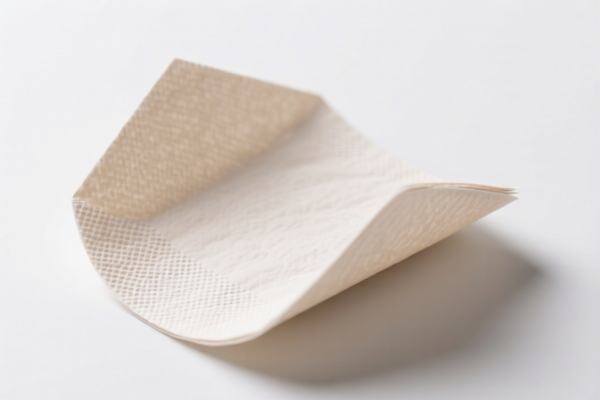
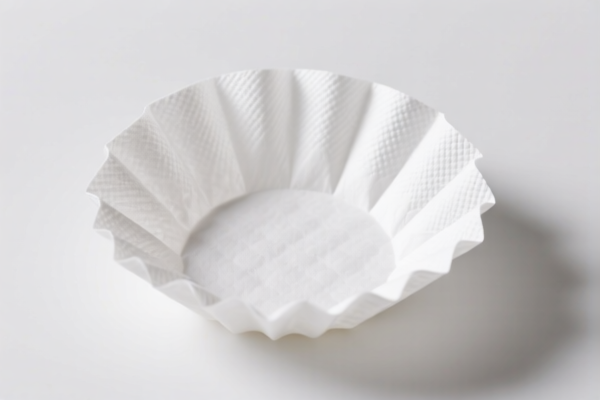
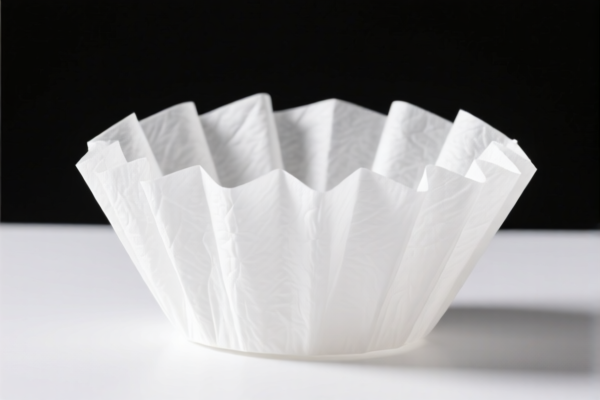
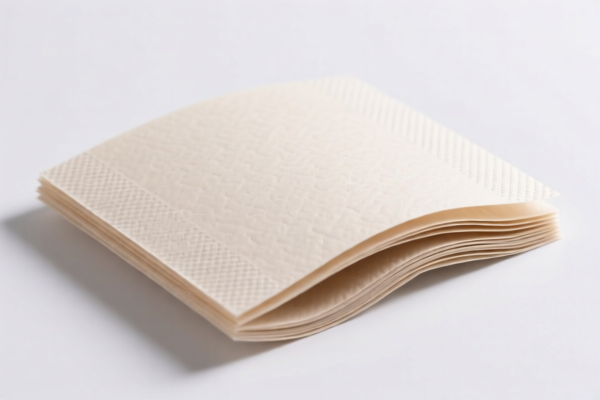
AI Analysis
🍵 Tea Filter Paper: The Unsung Hero of Brewing Precision
🌐 HS Code Reference & Customs Clearance Guide | 2026 Latest Tariff Analysis | Professional Entry Strategy
📌 I. Product Definition: What Exactly is "Tea Filter Paper"?
Tea filter paper is a specialized consumable used in tea brewing systems (drip coffee-style tea makers, French press alternatives, or loose-leaf tea accessories). Its primary function is to separate tea leaves from the liquid infusion while allowing water and flavor compounds to pass through.
Key Characteristics: * Material: Primarily paper (cellulose-based), sometimes food-grade fiber blends. * Form: Sheet, cone, bag, or sheet-like filter media. * Usage: Dedicated to liquid filtration for beverages. * Processing: Typically uncoated or lightly coated with food-safe agents (e.g., polyethylene) to resist wetting too quickly.
⚠️ Critical Distinction:
- If it is a loose sheet/cone used manually → Classified under Chapter 48 (Paper Products).
- If it is part of a machine/apparatus (e.g., integral part of a coffee/tea machine) → Might fall under Chapter 84 (Machinery), but Tea Filter Paper as a standalone consumable is almost always Paper.
- Do NOT confuse with "Tea Bags" which are often classified as packaged food containers or textile bags depending on material. This guide focuses on filter paper media.
📦 II. HS Code Classification Details (2026 Latest Tariff Authority)
Based on the provided data, the most accurate classifications for Tea Filter Paper are:
| HS Code | Product Description | Key Matching Logic | Tax Rate (Total) |
|---|---|---|---|
8421.29.00.65 |
Filters and parts thereof, for liquids | Explicitly for "liquid filtration purposes". Infers paper material, fits within liquid filtration device scope. | 35.0% |
4823.20.10.00 |
Paper products, shaped/filter paper | Form and use match filter paper classification features. No obvious material/form conflict. | 35.0% |
4805.91.90.00 |
Uncoated paper, sheet-like filter paper | Material is paper, form is sheet-like filter paper. Fits uncoated processing category, weight inference reasonable. | 35.0% |
4823.20.90.00 |
Other paper/filter paper | Explicitly in filter paper category. Material is paper, meets requirements for filter paper and paperboard. | 35.0% |
4805.40.00.00 |
Filter paper of paper | Product name "filter paper" matches classification "filter paper" in both use and material. | 35.0% |
🔍 Classification Priority:
- Primary Choice:4823.20.10.00or4823.20.90.00are the most specific for "paper filter paper."
- Alternative:8421.29.00.65if declared as a component of a liquid filtration system.
- Avoid:4805codes if the paper is specifically processed for filtration (as4823is more specific for shaped/formed paper products).
💰 III. 2026 Latest Tariff Rate Breakdown (Including Surcharges & Policy Add-ons)
✅ Applicable Country: United States (US)
✅ Origin: China (CN)
✅ Effective Date: November 10, 2025 (and subsequent imports)
🎯 1. 8421.29.00.65 — Liquid Filters (Paper Material)
| Item | Content |
|---|---|
| Base Duty Rate | 0.0% (ad valorem) |
| USITC Surcharge | +25.0% (Under USITC Footnote 9903.88.01) |
| IEEPA Surcharge | +10.0% (Section 122 Tariff targeting Chinese/Hong Kong products, effective Nov 10, 2025) |
| Total Tariff Rate | 35.0% |
| Tax Calculation | CIF Value × 35% |
| De Minimis Eligibility | ❌ Not Eligible (deny_de_minimis) |
| Legal Authority Path | IEEPA:9903.01.25 → IEEPA:9903.01.24 → USITC:8421.29.00.65 → FOOTNOTE:9903.88.01 |
📌 Explanation:
- The 25% is the standard Section 301 tariff on Chinese industrial/goods;
- The 10% is the additional "Section 122" tariff specifically applied to Chinese-origin products under the International Emergency Economic Powers Act (IEEPA);
- Total 35% is a high cost factor. Must be factored into landed cost calculations.
🎯 2. 4823.20.10.00 / 4823.20.90.00 — Paper Filter Paper
| Item | Content |
|---|---|
| Base Duty Rate | 0.0% |
| USITC Surcharge | +25.0% |
| IEEPA Surcharge | +10.0% |
| Total Tariff Rate | 35.0% |
| Tax Calculation | CIF × 35% |
| De Minimis Eligibility | ❌ Not Eligible |
| Legal Authority Path | IEEPA:9901.25 → IEEPA:9903.01.24 → USITC:4823.20.10.00 → FOOTNOTE:9903.88.01 |
📌 Note:
- Same tariff structure as above;
- Applies regardless of whether it is cone-shaped, sheet, or bag-style, as long as it is paper-based filter media.
🎯 3. 4805.91.90.00 / 4805.40.00.00 — Uncoated/General Filter Paper
| Item | Content |
|---|---|
| Base Duty Rate | 0.0% |
| USITC Surcharge | +25.0% |
| IEEPA Surcharge | +10.0% |
| Total Tariff Rate | 35.0% |
| Tax Calculation | CIF × 35% |
| De Minimis Eligibility | ❌ Not Eligible |
📌 Warning:
- Even if classified under general paper codes, the Section 122 tariff still applies if declared as Chinese origin;
- No tariff advantage unless origin is changed (e.g., Vietnam, Malaysia).
🛠️ IV. Customs Clearance Practical Advice (Real-World Pitfall Avoidance)
✅ 1. Required Documentation Checklist (Non-Negotiable)
| Document | Must Provide | Description |
|---|---|---|
| ✅ Product Specification Sheet | ✔️ | Dimensions, GSM (grams per square meter), filtration micron rating, material composition (100% cellulose?) |
| ✅ Product Photos (with Label) | ✔️ | Clear view of packaging, brand, model, and "Food Grade" or "Tea Filter" labeling |
| ✅ Commercial Invoice | ✔️ | Must specify "Paper Filter Paper for Tea Brewing" — Do NOT use vague terms like "Office Supplies" |
| ✅ Packing List | ✔️ | Detailed quantity, weight, and packaging structure |
| ✅ Certificate of Origin (CO) | ✔️ | Critical for proving non-Chinese origin if seeking tariff exemptions |
| ✅ FDA Compliance Statement | ✔️ | If intended for food/beverage contact, confirm food-grade status |
✅ 2. Declaration Tips (Key Mantra)
🔥 "Be Specific: Material + Use = Right Code!"
| Scenario | Correct Declaration | Wrong Practice |
|---|---|---|
| Standard cone/sheet filter | "Tea Filter Paper, 100% Cellulose, Uncoated" | "Paper Products" → Vague, risks higher scrutiny |
| Coated/Water-resistant filter | "Polyethylene-Coated Tea Filter Paper" | Hide coating → Customs may reclassify to plastics (Chapter 39) |
| Bulk rolls | "Paper Filter Paper in Rolls, for Tea Machines" | "Raw Paper" → Wrong subheading, potential misclassification |
| Pre-filled tea bags | NOT Tea Filter Paper | Declaring as filter paper → Rejection & Penalty (Tea bags are Chapter 21) |
✅ 3. Special Case Handling
| Situation | Handling Advice |
|---|---|
| OEM Custom Sizes | Provide template drawings to prove non-standard, but still paper-based |
| Food-Grade Certification | Submit FDA letter or equivalent to avoid health/safety holds |
| Hybrid Products (Paper + String + Tag) | Still classified under paper if paper is dominant component |
| Imports from China | 35% Total Tariff is unavoidable unless pre-approved exemption applies |
🌍 V. Global Market Customs Comparison (2026 Latest)
| Country/Region | Recommended HS Code | Tariff Rate | Certification | Notes |
|---|---|---|---|---|
| 🇺🇸 USA | 4823.20.10.00 |
35% (China Origin) | FDA (if food contact) | Highest duty; consider supply chain shift |
| 🇨🇳 China | 4823.20.10.00 |
5% | No special | No surcharges |
| 🇪🇺 EU | 4823.20.10.00 |
0% (if compliant) | CE + Food Contact Regulations | Low barrier |
| 🇦🇺 Australia | 4823.20.10.00 |
5% | No specific | Stable trade |
| 🇯🇵 Japan | 4823.20.10.00 |
0% | JAS/Food Safety | No surcharges |
📌 Conclusion:
- USA is the only major market with 35% duty on Chinese-origin tea filter paper;
- EU, Japan, Australia have near-zero tariffs — consider diversifying exports or sourcing from non-China origins if targeting US market.
📌 VI. Common Errors & Pitfall Guide (Lessons Learned)
❌ Error 1: Declaring as "Paper Products" or "Office Supplies"
👉 Consequence: Customs audit → Delayed clearance → Potential retroactive tax + penalties
❌ Error 2: Using "Tea Bags" label for loose filter paper
👉 Consequence: Misclassification → Rejection, return, or destruction
❌ Error 3: Ignoring Section 122 Tariff (10% IEEPA)
👉 Consequence: Unexpected 10% cost increase if origin is China
❌ Error 4: Not specifying material (e.g., "synthetic filter")
👉 Consequence: If it’s plastic, it falls under Chapter 39 → Different tariff & regulations
✅ Correct Declaration Example:
"Paper Tea Filter, Uncoated, 100% Cellulose, Cone Shape, 1000 pcs/box, For Home Tea Brewing, Made in China"
🎯 VII. Conclusion: Precise Classification, Cost Efficiency!
🎯 Remember the Mantra:
🔹 "Paper Filter = Chapter 48, Duty 35% (US/China)"
🔹 "Be Specific: Material + Use + Origin = Clear Path"
🔹 "Hide nothing, declare clearly, avoid delays!"
📌 Pro Tip:
If your tea filter paper is originating from Vietnam, Malaysia, or Thailand, you may qualify for lower or zero tariffs under US trade policies.
Recommendation:
📞 Consult a licensed customs broker
📄 Submit for Advance Ruling from CBP
🚀 Optimize supply chain to reduce landed cost
📣 Immediate Action:
✅ Verify material composition
✅ Confirm country of origin
✅ Prepare food-grade documentation if applicable
🌟 Clear customs smoothly, boost profit margins!
✨ Professional Clearance Starts with Accurate Classification!
💼 Every cent saved counts!
Customer Reviews
About HS Code Classification
The Harmonized System (HS) is an internationally standardized nomenclature developed by the World Customs Organization (WCO) to classify traded products. Over 200 countries use the HS system as the basis for customs tariffs, trade statistics, and import/export regulations.
Each HS code follows a hierarchical structure:
- Chapter (2 digits) — Broad category of goods (e.g., Chapter 84: Machinery and Mechanical Appliances)
- Heading (4 digits) — More specific grouping within the chapter
- Subheading (6 digits) — Internationally standardized breakdown, used by all WCO member countries
- National subdivisions (8-10 digits) — Country-specific extensions for further classification, such as US HTSUS 10-digit codes
Correct HS code classification is essential for smooth customs clearance, accurate duty payment, and compliance with trade regulations. Misclassification can lead to customs delays, overpayment of duties, or penalties.
When importing from CN to US, the applicable tariff rates may include:
- Most-Favored-Nation (MFN) rate — The standard duty rate applied to WTO members
- General rate — Applied to countries without trade agreements
- Trade remedy duties — Additional tariffs such as Section 301 (anti-dumping), Section 232 (national security), or countervailing duties
The information provided on this page is for reference purposes only. For official classification, please consult with your local customs authority or a licensed customs broker.