Teak Craft Square Timber
CN → US| HS Code | Tariff Rate | Origin | Destination | Doc |
|---|---|---|---|---|
| 4407230100 | 35.0% | CN | US | Official Doc |
| 4407290296 | 35.0% | CN | US | Official Doc |
| 4418999195 | 38.2% | CN | US | Official Doc |
| 4421999400 | 35.0% | CN | US | Official Doc |
| 4421999880 | 38.3% | CN | US | Official Doc |
| 4418300100 | 38.2% | CN | US | Official Doc |
Product Images
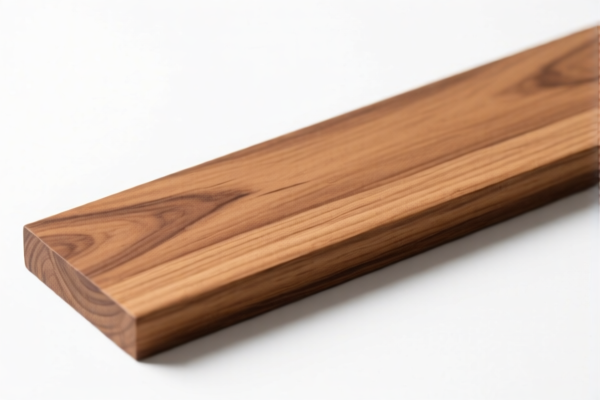
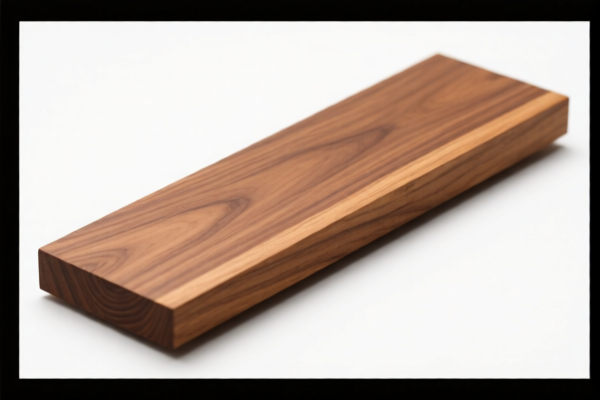
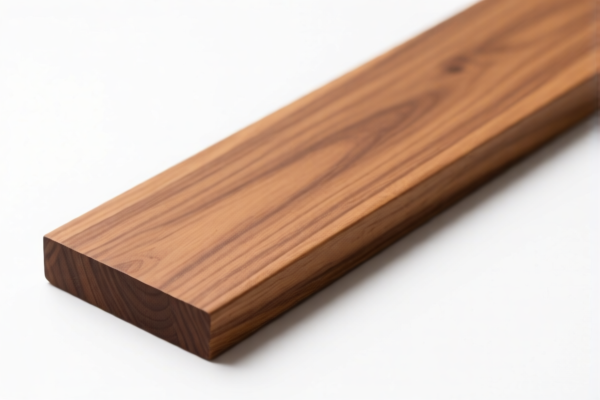
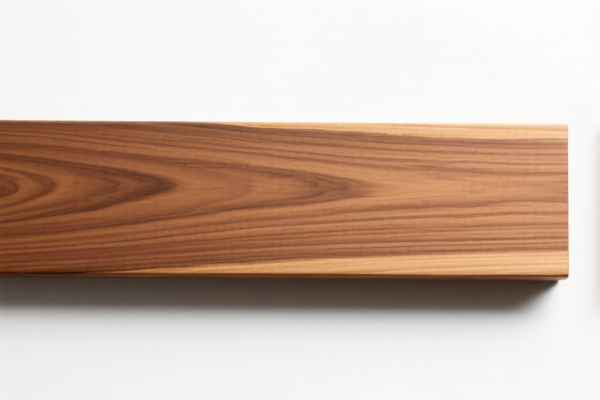
AI Analysis
🪵 Teak Craft Square Timber (柚木户外方木)
🌐 HS Code Reference & Customs Clearance Guide | 2026 Latest Tariff Analysis | Professional Compliance Strategy
📌 I. Product Definition: What is "Teak Craft Square Timber"?
Teak Craft Square Timber refers to processed timber made from Teak (Tectona grandis), shaped into square or rectangular profiles. In international trade, its classification depends heavily on processing method (sawing/planing), dimensions (thickness), and end-use (structural vs. decorative).
⚠️ Key Classification Divergence:
- If it is simply sawed or chipped lengthwise without further fabrication → It falls under Chapter 44 (Wood & Articles of Wood), specifically Heading 4407. - If it is fabricated into specific building components (beams, columns) or miscellaneous wooden articles → It falls under Heading 4418 or 4421.
📦 II. HS Code Classification Details (2026 Tariff Authority Mapping)
| HS Code | Product Description (Summary) | Applicable Scenario | Tax Rate (Total) |
|---|---|---|---|
4407.23.01.00 |
Teak outdoor square timber, classified as longitudinally sawn Teak wood | Raw processed teak beams/planks, primarily sawn lengthwise | 35.0% |
4407.29.02.96 |
Teak outdoor square timber, classified as other tropical timber, thickness > 6mm | Tropical wood products where specific Teak code is not the primary fit, thicker stock | 35.0% |
4418.99.91.95 |
Teak outdoor square timber, classified as Building/Structural wood products | Structural beams, load-bearing components, framing materials | 38.2% |
4421.99.94.00 |
Teak outdoor square timber, classified as other wooden articles, edge-glued or similar | Decorative trims, non-structural joinery, edge-glued panels/timbers | 35.0% |
4421.99.98.80 |
Teak outdoor square timber, classified as other wooden articles, no conflict with exclusions | General miscellaneous wooden items not fitting other specific categories | 38.3% |
4418.30.01.00 |
Teak outdoor square timber, classified as Columns, Beams, or Carpenter's Works | Structural columns, primary beams, or specific carpentry works | 38.2% |
🔍 Critical Distinction:
- Heading 4407 covers sawn wood (semi-finished). If the timber is just cut to size and planed, it usually stays here.
- Heading 4418/4421 covers fabricated articles. If the timber is carved, joined, or specifically intended for construction/structural use as an article, it moves up.
💰 III. 2026 Tariff Rate Detailed Breakdown (Including Surcharges & Policy Add-ons)
✅ Applicable Country: United States (US)
✅ Origin: China (CN)
✅ Effective Date: November 10, 2025 (and subsequent imports)
🎯 1. 4407.23.01.00 & 4407.29.02.96 & 4421.99.94.00 — Semi-Finished/Specific Wood Articles
| Item | Content |
|---|---|
| Base Duty Rate | 0.0% (Ad Valorem) |
| Section 301 Additional Duty | +25.0% (USITC Footnote 9903.88.01) |
| IEEPA Additional Duty | +10.0% (Targeting China/HK products, effective Nov 10, 2025) |
| Total Effective Rate | 35.0% |
| Tax Calculation | CIF Value × 35% |
| De Minimis Eligibility | ❌ Denied (deny_de_minimis) |
| Legal Basis Path | IEEPA:9903.01.25 → IEEPA:9903.01.24 → USITC:4407.23.01.00 → FOOTNOTE:9903.88.01 |
📌 Explanation:
- The 25% is the standard Section 301 tariff on Chinese wood products.
- The 10% is the new IEEPA surcharge effective from Nov 2025.
- Total 35% is high but lower than structural timber due to the 0% base rate.
🎯 2. 4418.99.91.95, 4418.30.01.00, 4421.99.98.80 — Structural/Other Fabricated Wood Articles
| Item | Content |
|---|---|
| Base Duty Rate | 3.2% ~ 3.3% (Ad Valorem) |
| Section 301 Additional Duty | +25.0% |
| IEEPA Additional Duty | +10.0% |
| Total Effective Rate | 38.2% ~ 38.3% |
| Tax Calculation | CIF Value × 38.2% (or 38.3%) |
| De Minimis Eligibility | ❌ Denied (deny_de_minimis) |
| Legal Basis Path | IEEPA:9903.01.25 → IEEPA:9903.01.24 → USITC:4418.30.01.00 → FOOTNOTE:9903.88.01 |
📌 Explanation:
- These codes have a positive base duty (3.2% or 3.3%) because they are considered more processed "articles" rather than raw "sawn wood."
- Total 38.2% - 38.3% is the highest tier for this product.
- Risk: Misclassifying a fabricated beam as simple sawn timber (4407) to save ~3% is a common audit trigger.
🛠️ IV. Customs Clearance Practical Advice (Battle-Tested Pitfall Guide)
✅ 1. Documentation Checklist (Non-negotiable)
| Document | Must Provide? | Description |
|---|---|---|
| ✅ Product Spec Sheet | ✔️ | Must specify: Species (Teak), Processing Method (Sawn/Planed), Dimensions, Moisture Content. |
| ✅ Commercial Invoice | ✔️ | Clearly state: "Teak Wood, Square Profile, for [Construction/Decorative] Use." |
| ✅ Packing List | ✔️ | List net/gross weight per bundle. Ensure consistency with Invoice. |
| ✅ Certificate of Origin | ✔️ | Essential for proving Origin (China) to apply correct IEEPA/301 rates. |
| ✅ Photographs | ✔️ | Show cross-section (grain), length, and any end-use features (e.g., drilled holes, joints). |
✅ 2. Declaration Strategy (Key Mantra)
🔥 "Process Determines Code, Use Determines Chapter, Don't Mix Raw & Finished!"
| Scenario | Correct HS Code | Wrong Code | Consequence |
|---|---|---|---|
| Just Cut/Planed Teak Beams | 4407.23.01.00 |
4418.30.01.00 |
Overpaying ~3.2% base duty. |
| Structural Beams (Pre-cut for building) | 4418.30.01.00 |
4407.23.01.00 |
Under-declaration. Risk of penalty + back taxes. |
| Decorative Trims / Edge-Glued | 4421.99.94.00 |
4407.29.02.96 |
Potential audit if appearance is clearly "finished article." |
| General Misc. Wood Items | 4421.99.98.80 |
4407... |
High base duty (3.3%) vs. low base (0%). Know the difference! |
✅ 3. Special Handling & Mitigation
| Situation | Recommendation |
|---|---|
| OEM Custom Sizes | Provide client orders showing specific dimensions. If cut to fit a specific structure, lean towards 4418. |
| Mixed Shipments | Separate "Raw Sawn" from "Fabricated" in different boxes if possible. Do not mix codes in one line item. |
| Moisture Content < 20% | Ensure documentation states this if claiming for certain wood product exemptions (rare for Teak, but good practice). |
| Teak Species Proof | Customs may request botanical proof. Have supplier confirm "Tectona grandis" on invoice. |
🌍 V. Global Market Comparison (2026 Update)
| Country/Region | Recommended HS Code | Duty Rate | Certification | Notes |
|---|---|---|---|---|
| 🇺🇸 USA | 4407.23.01.00 / 4418.30.01.00 |
35.0% - 38.3% | No specific cert, but CO required | High tariff due to IEEPA + 301. |
| 🇨🇳 China | 4407 / 4418 |
5% - 10% | No special cert | Import duty lower, but export from China faces different dynamics. |
| 🇪🇺 EU | 4407 / 4418 |
5% - 12% | FLEGT / EUTR | Requires FLEGT license to prove legality of Teak. |
| 🇬🇧 UK | 4407 / 4418 |
5% - 12% | FLEGT | Post-Brexit rules apply, similar to EU. |
| 🇯🇵 Japan | 4407 / 4418 |
3% - 8% | Phytosanitary Certificate | Lower base rates, no US-style surcharges. |
📌 Conclusion:
- The US is the most expensive market for Teak square timber due to the 35%-38.3% effective rate.
- EU/UK require strict FLEGT/EUTR compliance for Teak (high-risk species in some contexts), which can be a logistical hurdle despite lower taxes.
- Asia markets (JP/KR) offer better duty rates but require strict phytosanitary documentation.
📌 VI. Common Mistakes & Pitfall Guide (Lessons Learned)
❌ Mistake 1: Declaring "Structural Beams" as "Sawn Wood" (4407) to save the 3.2% base duty.
👉 Result: CBP (US Customs) will classify as 4418, charge 38.2%, and issue a Notice of Seizure or Penalty.
❌ Mistake 2: Ignoring the IEEPA 10% surcharge.
👉 Result: If your broker only adds the 301 (25%), you underpay by 10%. This leads to interest and penalties upon audit.
❌ Mistake 3: Using generic "Wood Product" in the description.
👉 Result: Customs may assign the worst-case HS code (4421.99.98.80 at 38.3%) or hold cargo for classification review.
✅ Correct Practice:
"Sawn Teak Timber, Square Profile, 50mm x 50mm, Moisture Content 15%, For Decking Use, HS Code 4407.23.01.00"
🎯 VII. Conclusion: Professional Classification Saves Money!
🎯 Remember the Mantra:
🔹 "Sawn = 4407 (0% Base), Structural = 4418 (3.2% Base), Misc = 4421 (3.3% Base)."
🔹 "35% vs 38.3%: A 3% Difference Can Make or Break Your Margin!"
🔹 "Don't Let IEEPA Surprise You: 10% Extra is Always Added!"
📌 Pro Tip:
If your Teak timber is sourced from Indonesia, Myanmar, or Africa, ensure you have CITES or FLEGT documentation if exporting to the EU/UK. For the US, focus on accurate physical description to avoid misclassification penalties.
📣 Immediate Action:
📞 Consult with a licensed customs broker before shipping.
📸 Provide clear photos of the end grain and profile.
🚀 Get an Advance Ruling if the shipment volume is high!
✨ Precision Classification, Smoother Clearance!
💼 Every Percent Saved is Profit Earned!
Customer Reviews
About HS Code Classification
The Harmonized System (HS) is an internationally standardized nomenclature developed by the World Customs Organization (WCO) to classify traded products. Over 200 countries use the HS system as the basis for customs tariffs, trade statistics, and import/export regulations.
Each HS code follows a hierarchical structure:
- Chapter (2 digits) — Broad category of goods (e.g., Chapter 84: Machinery and Mechanical Appliances)
- Heading (4 digits) — More specific grouping within the chapter
- Subheading (6 digits) — Internationally standardized breakdown, used by all WCO member countries
- National subdivisions (8-10 digits) — Country-specific extensions for further classification, such as US HTSUS 10-digit codes
Correct HS code classification is essential for smooth customs clearance, accurate duty payment, and compliance with trade regulations. Misclassification can lead to customs delays, overpayment of duties, or penalties.
When importing from CN to US, the applicable tariff rates may include:
- Most-Favored-Nation (MFN) rate — The standard duty rate applied to WTO members
- General rate — Applied to countries without trade agreements
- Trade remedy duties — Additional tariffs such as Section 301 (anti-dumping), Section 232 (national security), or countervailing duties
The information provided on this page is for reference purposes only. For official classification, please consult with your local customs authority or a licensed customs broker.