Teak Furniture Square Timber
CN → US| HS Code | Tariff Rate | Origin | Destination | Doc |
|---|---|---|---|---|
| 4407230100 | 35.0% | CN | US | Official Doc |
| 4407290296 | 35.0% | CN | US | Official Doc |
| 4418999195 | 38.2% | CN | US | Official Doc |
| 4421999400 | 35.0% | CN | US | Official Doc |
| 4421999880 | 38.3% | CN | US | Official Doc |
| 4418300100 | 38.2% | CN | US | Official Doc |
Product Images
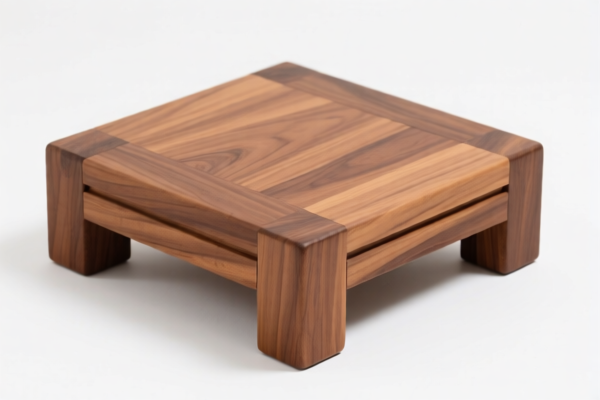
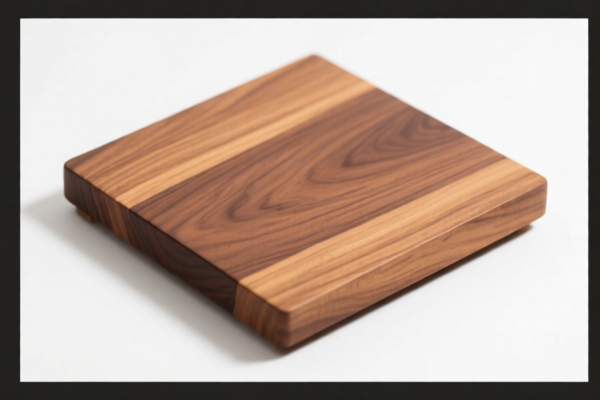
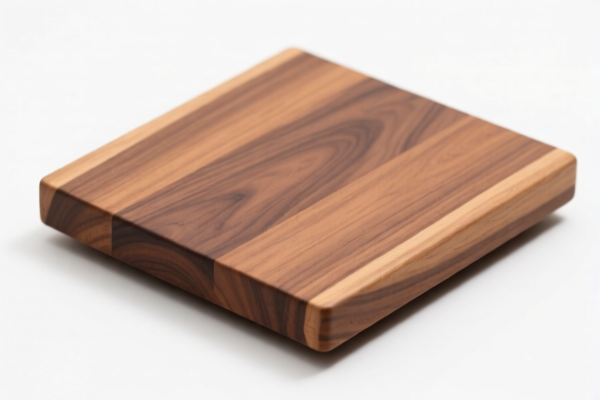

AI Analysis
🌳 Teak Furniture Square Timber (Outdoor Grade)
🌐 HS Code Reference & Customs Clearance Guide | 2026 Latest Tariff Analysis | Professional Compliance Strategy
📌 I. Product Definition & Classification: Decoding "Teak Square Timber"
Teak furniture square timber, specifically for outdoor use, represents a high-value hardwood commodity. In international trade, its classification depends strictly on the processing method (sawing direction), dimensions (thickness), and end-use (structural vs. general wood product). Misclassification can lead to significant tariff discrepancies due to the complex tariff structure applied to Chinese-origin wood products entering the US market.
⚠️ Key Distinction Point:
- Raw/Primary Processing: If the teak is merely sawn longitudinally (square shape) without further transformation into specific structures → Classified under Chapter 44 (Wood and articles of wood).
- Finished/Structural Use: If cut into beams, pillars, or specific construction components → May fall under 4418.
- Dimensional Threshold: Thickness >6mm is a critical factor for certain subheadings.
📦 II. HS Code Classification Matrix (2026 Latest Tariff Data)
| HS Code | Summary Description | Classification Logic | Key Characteristics |
|---|---|---|---|
4407.23.01.00 |
Teak outdoor square timber, longitudinally sawn | Primary Wood Product | Longitudinal sawing, specific teak variety classification |
4407.29.02.96 |
Teak outdoor square timber, other tropical wood, >6mm thick | Other Tropical Wood | Thickness exceeds 6mm, falls under "other" tropical woods |
4418.99.91.95 |
Teak outdoor square timber, building/structural wood product | Structural/Building Component | Used as construction material, part of building structure |
4421.99.94.00 |
Teak outdoor square timber, other wood products, edge-glued category | Other Wood Product (Edge-Glued) | Fits into "other" categories, specifically edge-glued timber |
4421.99.98.80 |
Teak outdoor square timber, other wood products, no conflict with exclusions | Other Wood Product (General) | General "other" category, safe from specific exclusions |
4418.30.01.00 |
Teak outdoor square timber, pillars, beams, or carpentry work | Structural Timber (Beams/Pillars) | Specifically identified as structural elements like beams |
🔍 Critical Analysis:
- 4407 Series: Applies to wood sawn lengthwise, whether or not chipped, planed, or tongued. It is the most common classification for raw or semi-finished teak timber. - 4418 Series: Applies to builders' joinery and carpentry. If the square timber is cut to specific structural dimensions (beams/pillars) for immediate construction use, this chapter applies. - 4421 Series: Catch-all for other wood articles. Used when the item doesn't fit neatly into 4407 (sawn wood) or 4418 (builders' joinery), but is still a manufactured wood product.
💰 III. 2026 Latest Tariff Rate Breakdown (Including Surcharges)
✅ Applicable Country: United States (US)
✅ Origin: China (CN)
✅ Effective Date: Current rates apply (Section 301 & IEEPA measures)
🎯 1. 4407.23.01.00 & 4407.29.02.96 —— Primary/Other Tropical Teak
| Item | Content |
|---|---|
| Base Duty Rate | 0.0% (Ad Valorem) |
| Section 301 Additional Duty | +25.0% |
| IEEPA Section 122 Duty | +10.0% |
| Total Tariff Rate | 35.0% |
| Calculation | CIF Value × 35% |
| De Minimis Exemption | ❌ Not Eligible (Deny de minimis for Section 301/IEEPA goods) |
| Legal Basis | Section 301 → IEEPA 122 → USITC 4407 |
📌 Explanation:
- The 0% base rate reflects standard WTO MFN rates for wood products.
- The 35% total is driven entirely by US trade remedies.
- Section 301 (25%): Targeted tariffs on Chinese imports.
- IEEPA 122 (10%): Additional surcharge on specific Chinese goods under emergency powers.
🎯 2. 4418.99.91.95 & 4418.30.01.00 —— Structural/Building Timber
| Item | Content |
|---|---|
| Base Duty Rate | 3.2% |
| Section 301 Additional Duty | +25.0% |
| IEEPA Section 122 Duty | +10.0% |
| Total Tariff Rate | 38.2% |
| Calculation | CIF Value × 38.2% |
| De Minimis Exemption | ❌ Not Eligible |
| Legal Basis | Section 301 → IEEPA 122 → USITC 4418 |
📌 Explanation:
- Higher Base Rate: Structural wood products (Chapter 4418) often carry a base duty of 3.2% compared to 0% for raw sawn wood.
- Total Impact: The addition of 35% surcharges pushes the total to 38.2%.
- Risk: Misclassifying structural timber as raw timber (4407) to avoid the 3.2% base is a red flag for customs.
🎯 3. 4421.99.94.00 —— Edge-Glued / Other Wood Product
| Item | Content |
|---|---|
| Base Duty Rate | 0.0% |
| Section 301 Additional Duty | +25.0% |
| IEEPA Section 122 Duty | +10.0% |
| Total Tariff Rate | 35.0% |
| Calculation | CIF Value × 35.0% |
| De Minimis Exemption | ❌ Not Eligible |
| Legal Basis | Section 301 → IEEPA 122 → USITC 4421 |
🎯 4. 4421.99.98.80 —— General Other Wood Product
| Item | Content |
|---|---|
| Base Duty Rate | 3.3% |
| Section 301 Additional Duty | +25.0% |
| IEEPA Section 122 Duty | +10.0% |
| Total Tariff Rate | 38.3% |
| Calculation | CIF Value × 38.3% |
| De Minimis Exemption | ❌ Not Eligible |
| Legal Basis | Section 301 → IEEPA 122 → USITC 4421 |
🛠️ IV. Customs Clearance Practical Advice (Avoid Pitfalls)
✅ 1. Documentation Checklist (Mandatory)
| Document | Required | Purpose |
|---|---|---|
| ✅ Commercial Invoice | ✔️ | Must clearly state "Teak Wood," "Square Timber," "Outdoor Grade," and HS Code. |
| ✅ Packing List | ✔️ | Detail dimensions (thickness, width, length) to verify against HS criteria (e.g., >6mm). |
| ✅ Species Declaration | ✔️ | Explicitly state "Tectona grandis" (Teak) to confirm it falls under Chapter 4407/4418/4421. |
| ✅ Fumigation Certificate (ISPM 15) | ✔️ | Critical for Wood Products. Without this, goods will be held or rejected. |
| ✅ Phytosanitary Certificate | ✔️ | Proof of health status, required for all wood imports into the US. |
| ✅ Product Photos | ✔️ | Show end-grain and side-grain to prove it is "square timber" and not pre-fabricated furniture. |
✅ 2. Classification Strategy (Key Mantra)
🔥 "Process Determines Code, Dimensions Matter, Structure Adds 3%!"
| Scenario | Correct HS Code | Why? |
|---|---|---|
| Raw logs cut into square beams, no specific structural use | 4407.23.01.00 or 4407.29.02.96 |
It is still considered "sawn wood." Base duty 0%. |
| Teak beams cut to specific lengths for deck framing | 4418.30.01.00 |
Fits "pillars, beams" definition. Base duty 3.2%. |
| Teak pieces glued together for tables/chairs | 4421.99.94.00 |
Considered "other wood products," edge-glued. Base duty 0%. |
| Generic teak blocks not fitting other categories | 4421.99.98.80 |
Catch-all "other." Base duty 3.3%. |
⚠️ Warning: Do not attempt to classify structural timber (
4418) as raw timber (4407) to save 3.2%. Customs may audit the physical product. If it is cut for immediate construction use,4418is the correct classification.
✅ 3. Special Considerations
| Issue | Advice |
|---|---|
| Fumigation | Ensure ISPM 15 stamp is visible on every pallet. Missing stamps cause delays. |
| Species Verification | Teak is high-value. Customs may require DNA testing or expert appraisal to confirm it is not a substitute species. |
| Valuation | Declare CIF value accurately. The 35-38.3% tax is significant; under-declaration risks severe penalties. |
| Anti-Dumping | Verify if any specific anti-dumping duties apply to Chinese teak products (rare, but possible for processed wood). |
🌍 V. Global Market Comparison (2026)
| Market | Recommended HS Code | Estimated Total Duty | Notes |
|---|---|---|---|
| 🇺🇸 USA | 4407.23.01.00 / 4418.30.01.00 |
35.0% - 38.3% | High tariffs due to Section 301 & IEEPA. |
| 🇨🇳 China | 4407.23.01.00 |
~10-15% (Import) | Low base duties, but watch for environmental taxes. |
| 🇪🇺 EU | 4407.23.00 |
~5-8% | No Section 301 equivalent, but CBAM may apply to future carbon costs. |
| 🇦🇺 Australia | 4407.23.00 |
~5% | No major surcharges, but strict biosecurity laws. |
📌 Conclusion:
The US market is the most expensive for Chinese teak due to layered tariffs.
- Strategy: If possible, consider processing in a third country (e.g., Vietnam, Malaysia) to change origin, but ensure substantial transformation occurs.
- Costing: Factor in 35-38.3% landings costs for US imports.
📌 VI. Common Mistakes & Pitfalls
❌ Mistake 1: Confusing "Teak Wood" with "Teak Furniture"
👉 Consequence: If declared as furniture (9403), it might face different duties. However, raw square timber is not furniture. Declaring as furniture when it is raw wood is misdeclaration.
❌ Mistake 2: Ignoring Thickness Thresholds
👉 Consequence: Failing to specify thickness (>6mm) can lead to incorrect classification under 4407.29 vs 4407.23, causing delays.
❌ Mistake 3: Missing Fumigation Certificate
👉 Consequence: Immediate hold at US port. De-minimis shipment may be rejected entirely.
❌ Mistake 4: Assuming 0% Base Duty = Low Cost
👉 Consequence: Ignoring the 35% surcharge leads to under-budgeting. Always calculate on CIF + 35%.
✅ Correct Practice:
"Tectona grandis (Teak) Square Timber, Outdoor Grade, Sawn, Length: 120cm, Width: 10cm, Thickness: 8cm, Fumigated, ISPM 15 Certified, HS: 4407.29.02.96"
🎯 VII. Conclusion: Professional Declaration, Risk Mitigation
🎯 Remember the Mantra:
🔹 "Sawn Wood 0%, Structural 3.2%, Add 35% Tax!"
🔹 "Fumigation is Key, Classification is King!"
📌 Pro Tip:
If your teak timber is processed further (e.g., milled into decking planks) in a country other than China, you may qualify for preferential origin. However, simple sawing in China does not change origin.
📣 Immediate Action:
📞 Consult a Licensed Customs Broker to verify the exact HS code based on your product's precise dimensions and end-use.
📄 Ensure ISPM 15 Certification is attached to every shipment.
💰 Budget for 35-38.3% Total Duty for US imports.
✨ Precision in Classification Saves Thousands!
💼 Protect Your Supply Chain with Accurate HS Codes!
Customer Reviews
About HS Code Classification
The Harmonized System (HS) is an internationally standardized nomenclature developed by the World Customs Organization (WCO) to classify traded products. Over 200 countries use the HS system as the basis for customs tariffs, trade statistics, and import/export regulations.
Each HS code follows a hierarchical structure:
- Chapter (2 digits) — Broad category of goods (e.g., Chapter 84: Machinery and Mechanical Appliances)
- Heading (4 digits) — More specific grouping within the chapter
- Subheading (6 digits) — Internationally standardized breakdown, used by all WCO member countries
- National subdivisions (8-10 digits) — Country-specific extensions for further classification, such as US HTSUS 10-digit codes
Correct HS code classification is essential for smooth customs clearance, accurate duty payment, and compliance with trade regulations. Misclassification can lead to customs delays, overpayment of duties, or penalties.
When importing from CN to US, the applicable tariff rates may include:
- Most-Favored-Nation (MFN) rate — The standard duty rate applied to WTO members
- General rate — Applied to countries without trade agreements
- Trade remedy duties — Additional tariffs such as Section 301 (anti-dumping), Section 232 (national security), or countervailing duties
The information provided on this page is for reference purposes only. For official classification, please consult with your local customs authority or a licensed customs broker.