Teak Logs
CN → US| HS Code | Tariff Rate | Origin | Destination | Doc |
|---|---|---|---|---|
| 4403950127 | 35.0% | CN | US | Official Doc |
| 4407230100 | 35.0% | CN | US | Official Doc |
| 4407290296 | 35.0% | CN | US | Official Doc |
| 4409222500 | 35.0% | CN | US | Official Doc |
| 4418790100 | 38.2% | CN | US | Official Doc |
Product Images


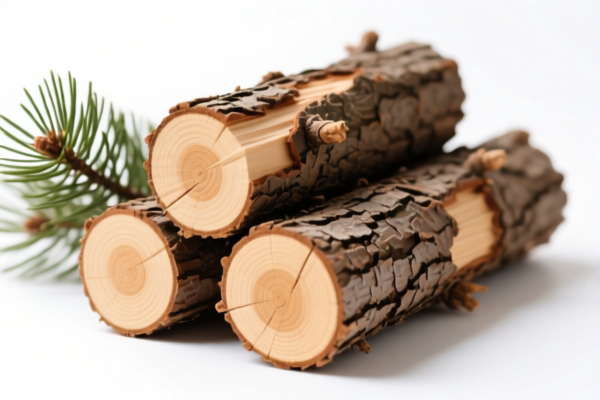

AI Analysis
🌳 Teak Logs: The Gold Standard of Tropical Timber
🌐 HS Code Reference & Customs Clearance Guide | 2026 Latest Tariff Analysis | Professional Clearance Strategy
📌 I. Product Definition & Classification: Do You Really Understand "Teak"?
Teak (Tectona grandis) is one of the world's most valuable tropical timbers, renowned for its durability, oil content, and resistance to rot. In international trade, "Teak Logs" are the raw, unprocessed source material. However, customs classification depends strictly on the degree of processing.
If you import raw logs, they fall under Chapter 44 (Wood and articles of wood). But beware! The distinction between "Logs" and "Sawn Wood" changes your HS Code, your duty rate, and your clearance risk significantly.
⚠️ Key Distinction Point:
- Raw Logs (Unprocessed): Stripped of bark, roughly shaped, but not sawn into specific dimensions → HS 4403
- Sawn Wood/Planks (>6mm thick): Cut into beams, planks, or boards → HS 4407
- Flooring/Finished Wood: Specifically shaped for flooring → HS 4409
📦 II. HS Code Classification Details (2026 Latest Tariff Authority Comparison)
Based on the provided data, here are the specific classifications for Teak and related wood products. Note that Birch is also included in the reference data for comparison, but the primary focus for "Teak Logs" is under HS 4403 and 4407.
| HS Code | Product Description | Application Scenario | Processing Stage |
|---|---|---|---|
| 4403.95.01.27 | Birch Logs (Match Material: Birch; Form: Raw Wood) | Reference Only – Not Teak. Included in data for format comparison. | Raw Logs (Bark removed) |
| 4407.23.01.00 | Teak Sawn Wood | Match Material (Teak) & Form (Sawn wood, >6mm thick) | Sliced/Cut Planks |
| 4407.29.02.96 | Other Tropical Wood Sawn Pieces | Match Material (Teak is tropical) & Form (Sawn pieces) | Generic Tropical Sawn Wood |
| 4409.22.25.00 | Teak Flooring Wood | Match Material (Non-coniferous tropical) & Form (Flooring) | Profiled for Floors |
| 4409.22.05.60 | Teak Flooring Wood (Fallback) | Match Material (Tropical) & Form (Flooring), based on fallback principle | Profiled for Floors |
🔍 Critical Reminder:
- If you are importing raw Teak Logs, the most accurate classification is often grouped under 4403 (Wood treated with preservatives or not, logs or roughly squared). However, the provided data highlights 4407 (Sawn wood) for Teak. Ensure your physical goods match the description. Raw logs must not look like processed planks to avoid misclassification. - Teak is a Tropical Wood. Any classification for Teak in Chapter 44 falls under the "Tropical Wood" subheadings (usually 4403.39 or 4407.23).
💰 III. 2026 Latest Tariff Rate Details (Including Surtaxes & Policy Add-ons)
✅ Applicable Country: USA (US)
✅ Origin: China (CN)
✅ Effective Time: Current rates apply (Post-2024 Trade Measures)
🎯 1. 4407.23.01.00 —— Teak Sawn Wood (Most Common for Teak Imports)
| Item | Content |
|---|---|
| Base Tariff | 0.0% (ad valorem) |
| Section 301 Surtax | +25.0% (Under 1221(a)(1)(B)(i)) |
| IEEPA Surtax | +10.0% (Section 172 of the Consolidated Appropriations Act, targeting China) |
| Total Tariff | 35.0% |
| Tax Calculation | CIF Value × 35% |
| De Minimis Exemption? | ❌ NO (Section 321 exemption does not apply to China-origin wood due to surtaxes) |
| Legal Basis Path | USITC:4407.23.01.00 → USITC:Footnote:301 → IEEPA:9903.01.24 |
📌 Explanation:
- "Base Tariff 0%": Standard MFN rate for many sawn tropical woods is low.
- "301 Surtax 25%": This is the primary penalty for China-origin wood products under the Trump-era trade war measures.
- "IEEPA 10%": Additional penalty under the International Emergency Economic Powers Act for Chinese goods.
- Total 35% is a HIGH tariff barrier. It applies to all processed Teak.
🎯 2. 4407.29.02.96 —— Other Tropical Wood Sawn Pieces (Alternative for Teak)
| Item | Content |
|---|---|
| Base Tariff | 0.0% |
| Section 301 Surtax | +25.0% |
| IEEPA Surtax | +10.0% |
| Total Tariff | 35.0% |
| Tax Calculation | CIF Value × 35% |
| De Minimis Exemption? | ❌ NO |
| Legal Basis Path | USITC:4407.29.02.96 → USITC:Footnote:301 → IEEPA:9903.01.24 |
📌 Note:
- Even if classified as "Other Tropical Wood," Teak attracts the same 35% total tariff.
- This code is a fallback if4407.23is not precise enough for specific dimensions.
🎯 3. 4409.22.25.00 & 4409.22.05.60 —— Teak Flooring Wood
| Item | Content |
|---|---|
| Base Tariff | 0.0% (25) OR 3.2% (05) |
| Section 301 Surtax | +25.0% |
| IEEPA Surtax | +10.0% |
| Total Tariff | 35.0% (25) OR 38.2% (05) |
| Tax Calculation | CIF Value × 35% or 38.2% |
| De Minimis Exemption? | ❌ NO |
| Legal Basis Path | USITC:4409.22... → USITC:Footnote:301 → IEEPA:9903.01.24 |
📌 Warning:
- Flooring wood often triggers stricter scrutiny because it is a "finished" product.
- If classified under4409.22.05.60, the base tariff is higher (3.2%), leading to a 38.2% total rate. Always check if4409.22.25.00applies to avoid the extra 3.2% base.
🎯 4. 4403.95.01.27 —— Birch Logs (Reference Only)
| Item | Content |
|---|---|
| Base Tariff | 0.0% |
| Section 301 Surtax | +25.0% |
| IEEPA Surtax | +10.0% |
| Total Tariff | 35.0% |
| Note: This code is for Birch, not Teak. Included in data for structural reference. |
🛠️ IV. Customs Clearance Practical Advice (Combat Pitfalls Guide)
✅ 1. Mandatory Documentation Checklist (Non-negotiable)
| Document | Must Provide | Explanation |
|---|---|---|
| ✅ Phytosanitary Certificate | ✔️ | CRITICAL. Issued by the country of origin. Proves no pests/diseases. Without this, goods will be rejected or fumigated at your expense. |
| ✅ Lumber Specification Sheet | ✔️ | Includes species (Teak), dimensions, moisture content, grade, and treatment status. |
| ✅ Bill of Lading (B/L) | ✔️ | Must match the invoice exactly. Note "Freight Collect" or "Prepaid." |
| ✅ Commercial Invoice | ✔️ | Must clearly state: "Tectona Grandis (Teak) - [Form: Logs/Sawn Wood]". |
| ✅ Packing List | ✔️ | Detailed weight and volume. Teak is heavy; verify cubic meters (CBM). |
| ✅ Import License (if required) | ✔️ | Check USDA APHIS requirements for tropical hardwoods. |
✅ 2. Declaration Tips (Key Mantras)
🔥 “Species Name, Form Clear, Phytosanitary On Board, Tariff Halved by Clarity!”
| Scenario | Correct Declaration | Error to Avoid |
|---|---|---|
| Raw Teak Logs | "Teak Logs (Tectona Grandis), Unprocessed, Bark Removed" | Misdeclaring as "Sawn Wood" to avoid log restrictions (high risk of audit) |
| Teak Planks | "Teak Sawn Wood, >6mm Thick, Air Dry" | Under-declaring thickness to shift codes |
| Teak Flooring | "Teak Flooring Boards, Tongue & Groove, Finished" | Declaring as "Sawn Wood" to avoid flooring-specific duties (if higher) |
| Mixed Species | Separate declarations for Teak vs. Other Woods | Mixing species in one line item → Customs will classify all as the highest duty |
✅ 3. Special Cases Handling
| Scenario | Handling Advice |
|---|---|
| Green vs. Dry Wood | Specify moisture content. Wet logs may require fumigation; dry wood is easier to clear. |
| FSC Certification | Provide FSC Chain of Custody certificates if required by your end-market or retailer. Avoids legal risks under Lacey Act (US). |
| CITES Status | Teak (Tectona grandis) is NOT currently listed in CITES Appendix I or II. However, always check for recent updates. If listed, import permits would be mandatory. |
| Lacey Act Compliance | Must declare the scientific name (Tectona grandis) and country of harvest. Failure to do so can result in civil or criminal penalties. |
🌍 V. Global Market Clearance Comparison (2026 Latest)
| Country/Region | Recommended HS Code | Tariff (China Origin) | Certification Requirements | Notes |
|---|---|---|---|---|
| 🇺🇸 USA | 4407.23.01.00 |
35% | Phytosanitary, Lacey Act Declaration | High surtaxes. Strict USDA inspection. |
| 🇨🇳 China | 4407.23.01.00 |
0% | Phytosanitary | No surtax. Popular import for manufacturing. |
| 🇪🇺 EU | 4407.23.00.00 |
0% | EUTR (Due Diligence System) | No surtax, but strict legality proof required. |
| 🇦🇺 Australia | 4407.23.00.00 |
5% | Biosecurity Permit | Quarantine risks are high for wood. |
| 🇯🇵 Japan | 4407.23.00.00 |
0% | ISPM 15 (for packaging) | Low tariff, focus on quality inspection. |
📌 Conclusion:
- USA is the most expensive market due to the 35% combined surtax.
- China, EU, and Japan offer better tariff conditions, but compliance with phytosanitary and legality regulations is equally strict.
- Strategy: If exporting to the US, consider pricing in the 35% tariff. If possible, explore third-country processing (e.g., in Vietnam or Thailand) to change origin, but beware of "transshipment" anti-circumvention rules.
📌 VI. Common Errors & Pitfalls (Blood & Tears Lessons)
❌ Error 1: Misdeclaring "Teak Sawn Wood" as "Birch Logs" to find a lower duty
👉 Consequence: Heavy fines for fraud, seizure of goods, and loss of import privileges.
❌ Error 2: Missing Phytosanitary Certificate
👉 Consequence: Goods held at port for fumigation or returned. Cost exceeds the value of the wood.
❌ Error 3: Lacey Act Non-Compliance
👉 Consequence: Civil penalties up to $10,000 per violation. Criminal charges for repeat offenders.
❌ Error 4: Vague Description ("Wood Logs")
👉 Consequence: Customs will classify under the highest possible duty code and hold the shipment for inspection.
✅ Correct Practice:
"Teak Sawn Wood (Tectona Grandis), Grade A, 25mm Thick, Kiln Dried, FSC Certified, HS 4407.23.01.00, Origin: Myanmar"
🎯 VII. Conclusion: Professional Declaration, Save Time, Cut Costs!
🎯 Remember the Mantra:
🔹 "Logs vs. Saw, Check the Thickness, Teak is Hot, Pay the 35% Tax!"
🔹 "Phytosanitary First, Lacey Act Second, Declaration Perfect, Clearance Swifter!"
📌 Pro Tip:
If your Teak is not from China (e.g., from Myanmar, India, or Africa), the Section 301 and IEEPA surtaxes (35%) may not apply. The tariff could drop to 0-5%. Always verify the Country of Harvest vs. Country of Export.
📣 Immediate Action:
📞 Contact a licensed customs broker + Provide Phytosanitary Certificate + Declare Lacey Act Info accurately
🚀 Let your Teak, clear smoothly, avoid penalties, and maximize profit!
✨ Professional clearance starts with accurate classification!
💼 Every percent of duty saved is pure profit!
Customer Reviews
About HS Code Classification
The Harmonized System (HS) is an internationally standardized nomenclature developed by the World Customs Organization (WCO) to classify traded products. Over 200 countries use the HS system as the basis for customs tariffs, trade statistics, and import/export regulations.
Each HS code follows a hierarchical structure:
- Chapter (2 digits) — Broad category of goods (e.g., Chapter 84: Machinery and Mechanical Appliances)
- Heading (4 digits) — More specific grouping within the chapter
- Subheading (6 digits) — Internationally standardized breakdown, used by all WCO member countries
- National subdivisions (8-10 digits) — Country-specific extensions for further classification, such as US HTSUS 10-digit codes
Correct HS code classification is essential for smooth customs clearance, accurate duty payment, and compliance with trade regulations. Misclassification can lead to customs delays, overpayment of duties, or penalties.
When importing from CN to US, the applicable tariff rates may include:
- Most-Favored-Nation (MFN) rate — The standard duty rate applied to WTO members
- General rate — Applied to countries without trade agreements
- Trade remedy duties — Additional tariffs such as Section 301 (anti-dumping), Section 232 (national security), or countervailing duties
The information provided on this page is for reference purposes only. For official classification, please consult with your local customs authority or a licensed customs broker.