Teak Marine Wood
CN → US| HS Code | Tariff Rate | Origin | Destination | Doc |
|---|---|---|---|---|
| 4421999880 | 38.3% | CN | US | Official Doc |
| 4407230100 | 35.0% | CN | US | Official Doc |
| 4421999870 | 38.3% | CN | US | Official Doc |
| 4418999105 | 38.2% | CN | US | Official Doc |
| 4409220560 | 38.2% | CN | US | Official Doc |
Product Images
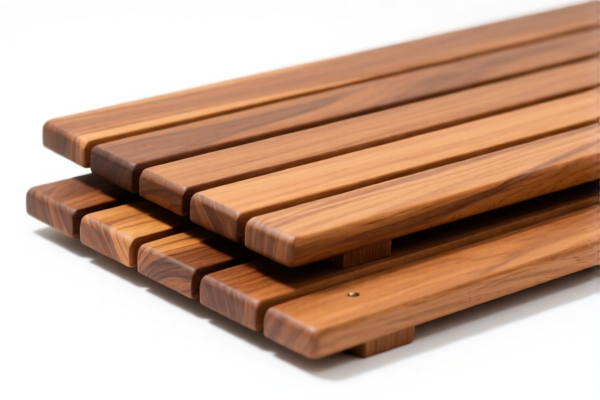
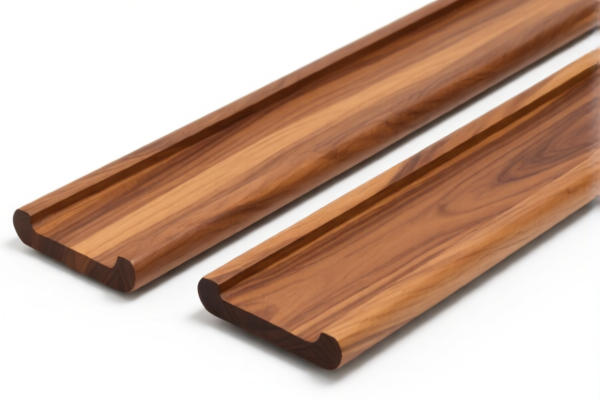
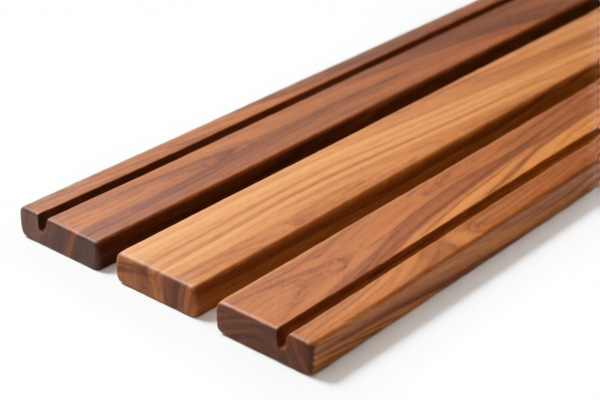
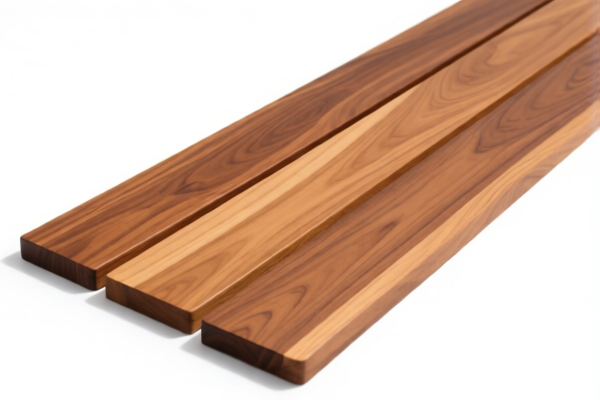
AI Analysis
🌲 Teak Marine Wood: HS Code Classification & Tariff Breakdown | 2026 Import Guide
🌐 HS Code Reference & Customs Clearance Guide | Latest Tariff Analysis | Professional Compliance Strategy
📌 Product Definition: What is "Teak Marine Wood"?
Teak (Tectona grandis) is a premium tropical hardwood renowned for its high oil content, natural resistance to rot, insects, and weathering. In the maritime and luxury construction industries, "Teak Marine Wood" generally refers to teak processed into specific shapes for ship decks, interior paneling, or furniture.
Key Processing States: 1. Semi-finished/Structural: Beams, posts, or squared timber used for structural marine applications (e.g., masts, deck beams). 2. Flooring/Paneling: Profiled planks specifically designed for decking or interior flooring, often featuring grooves or tongue-and-groove joints. 3. General Wood Products: Other fabricated wood items not classified as sawn timber or flooring.
⚠️ Critical Distinction:
- If the wood is sawn longitudinally (along the grain) to specific dimensions → Likely 4407 (Sawn Wood).
- If the wood is profiled (tongue/groove) for flooring/decking → Likely 4409 (Wood Continuously Shaped).
- If the wood is a general manufactured item (e.g., blocks, parts) → Likely 4421 (Other Wood Articles).
📦 HS Code Classification Matrix (2026 Latest Tariff Alignment)
| HS Code | Product Description | Application Scenario | Tax Efficiency |
|---|---|---|---|
4407.23.01.00 |
Teak, Sawn Lengthwise, Chipped, or Split | Structural beams, squared timber, raw marine construction wood | ✅ Lowest Duty (0% Base) |
4409.22.05.60 |
Teak, Continuously Shaped (e.g., Tongue/Groove) | Decking planks, floorboards, wainscoting | ✅ Low Duty (3.2% Base) |
4418.99.91.05 |
Other Wood Builders' Carpentry | Pre-assembled wood components, non-specific marine parts | ⚠️ Medium Duty (3.2% Base) |
4421.99.98.80 |
Other Articles of Wood (Miscellaneous) | Unshaped blocks, decorative wood items, generic marine wood parts | ⚠️ Higher Duty (3.3% Base) |
4421.99.98.70 |
Other Articles of Wood (Alternative Classification) | Similar to above; often used for specific sub-categories of wood goods | ⚠️ Higher Duty (3.3% Base) |
🔍 Key Insight:
-4407.23.01.00offers the lowest base tariff (0%) but applies only to longitudinally sawn timber.
-4409and4418apply to processed wood (profiled or built-up).
-4421is a "catch-all" for wood items that don’t fit elsewhere, typically carrying slightly higher base rates.
💰 2026 Tariff Rate Breakdown (US Import from China)
✅ Country of Origin: China (CN)
✅ Import Destination: United States (US)
✅ Effective Date: Tariffs remain in effect as per current USITC and USTR directives.
🎯 1. 4407.23.01.00 – Teak, Sawn Lengthwise (Structural Marine Wood)
| Item | Detail |
|---|---|
| Base Tariff | 0.0% |
| Section 301 (Trade War) Tariff | +25.0% |
| Section 122 (IEEPA) Tariff | +10.0% |
| Total Effective Tariff | 35.0% |
| Calculation Basis | CIF Value × 35.0% |
| De Minimis Eligibility | ❌ No (Deny De Minimis) |
| Legal Pathway | USITC:4407.23.01.00 → 301:Footnote 9903.88.01 → IEEPA:9903.01.25 |
📌 Explanation:
- The 0% base rate makes this the most tariff-efficient entry for raw structural teak.
- However, the 35% total (25% + 10%) is significant.
- Note: If the wood is not sawn longitudinally (e.g., it’s squared cross-cut), it may not qualify for 4407.
🎯 2. 4409.22.05.60 – Teak Flooring/Decking (Profiled Wood)
| Item | Detail |
|---|---|
| Base Tariff | 3.2% |
| Section 301 (Trade War) Tariff | +25.0% |
| Section 122 (IEEPA) Tariff | +10.0% |
| Total Effective Tariff | 38.2% |
| Calculation Basis | CIF Value × 38.2% |
| De Minimis Eligibility | ❌ No (Deny De Minimis) |
| Legal Pathway | USITC:4409.22.05.60 → 301:Footnote 9903.88.01 → IEEPA:9903.01.25 |
📌 Explanation:
- This classification is for teak planks with continuous shaping (tongue/groove, chamfered edges) suitable for decking or flooring.
- The 3.2% base tariff is slightly higher than 4407, leading to a 38.2% total.
- Crucial: Must demonstrate that the wood is "continuously shaped" (profiled), not just cut to size.
🎯 3. 4418.99.91.05 – Other Wood Builders' Carpentry
| Item | Detail |
|---|---|
| Base Tariff | 3.2% |
| Section 301 (Trade War) Tariff | +25.0% |
| Section 122 (IEEPA) Tariff | +10.0% |
| Total Effective Tariff | 38.2% |
| Calculation Basis | CIF Value × 38.2% |
| De Minimis Eligibility | ❌ No (Deny De Minimis) |
| Legal Pathway | USITC:4418.99.91.05 → 301:Footnote 9903.88.01 → IEEPA:9903.01.25 |
📌 Explanation:
- Used for wood items used in construction (e.g., pre-assembled wood frames, non-flooring components).
- If the "marine wood" is a built-up component (e.g., glued laminated timber for ships), this may apply.
- Same total tariff as 4409.
🎯 4. & 5. 4421.99.98.80 & 4421.99.98.70 – Other Articles of Wood
| Item | Detail |
|---|---|
| Base Tariff | 3.3% |
| Section 301 (Trade War) Tariff | +25.0% |
| Section 122 (IEEPA) Tariff | +10.0% |
| Total Effective Tariff | 38.3% |
| Calculation Basis | CIF Value × 38.3% |
| De Minimis Eligibility | ❌ No (Deny De Minimis) |
| Legal Pathway | USITC:4421.99.98.80/70 → 301:Footnote 9903.88.01 → IEEPA:9903.01.25 |
📌 Explanation:
- These are "miscellaneous" wood products.
- Use this if the teak is not sawn longitudinally (4407), not profiled for flooring (4409), and not builders' carpentry (4418).
- Examples: Teak blocks, decorative wood shapes, non-structural marine wood parts.
- Highest total tariff (38.3%) among the options.
🛠️ Customs Clearance Strategy & Practical Advice
✅ 1. Documentation Checklist (Mandatory for HS Code Validation)
| Document | Requirement | Purpose |
|---|---|---|
| Product Specification Sheet | ✔️ Detail dimensions, grain orientation, cutting method | Prove if wood is "sawn longitudinally" (4407) vs. "profiled" (4409) |
| Technical Drawings/Cross-Section | ✔️ Show end-grain and profile (tongue/groove?) | Critical for distinguishing between 4407 and 4409 |
| Commercial Invoice | ✔️ Clearly state "Teak Marine Wood – [Specific Type]" | Avoid generic "Wood" descriptions |
| Packing List | ✔️ List quantities, weights, and packaging type | Ensure consistency with invoice |
| Bill of Lading/Air Waybill | ✔️ Original transport document | Proof of shipment |
| Certificate of Origin | ✔️ If applicable, to verify Chinese origin | Confirms applicability of 301/122 tariffs |
✅ 2. Classification Decision Tree
🔥 "Cut Direction is King!"
| Scenario | Recommended HS Code | Reason |
|---|---|---|
| Longitudinal Sawn (grain runs along the length) | 4407.23.01.00 |
Lowest base duty (0%). Must prove longitudinal sawing. |
| Flooring/Decking Planks (tongue/groove, chamfered) | 4409.22.05.60 |
"Continuously shaped" definition met. |
| Structural Beams (squared, but not longitudinal) | 4407.23.01.00 or 4421 |
If squared cross-cut, may still qualify for 4407 if dimensions allow; otherwise 4421. |
| Other Wood Items (blocks, decorations, parts) | 4421.99.98.80 |
"Other articles" catch-all. |
⚠️ Warning:
- Do NOT misdeclare profiled decking (4409) as longitudinal sawn timber (4407) to save 3.2%.
- CBP (U.S. Customs and Border Protection) conducts physical inspections and may demand cross-section samples.
- Misclassification can lead to seizure, fines, and retroactive penalties.
✅ 3. Special Cases & Mitigation
| Situation | Strategy |
|---|---|
| Mixed Shipments (e.g., some beams, some planks) | Split the entry. Declare 4407 and 4409 separately to avoid audit flags. |
| OEM/Custom Marine Parts | Provide CAD drawings showing the wood’s integration into a larger marine system. May argue for "part of a vessel" if applicable (though unlikely for raw wood). |
| Small Quantities | No de minimis exemption for China-origin wood products under current tariffs. Plan for full 35-38.3% duty. |
| Origin Non-China | If teak is harvested in Indonesia, Myanmar, or Thailand, check for preferential tariffs (GSP/EBA) if available, though US-China tariffs apply to Chinese processing. |
🌍 Global Market Comparison (2026)
| Destination | HS Code Focus | Estimated Total Duty (China Origin) | Notes |
|---|---|---|---|
| 🇺🇸 USA | 4407 / 4409 / 4421 |
35.0% – 38.3% | Heavy Section 301 + 122 tariffs. No de minimis. |
| 🇨🇳 China | 4407 / 4409 / 4421 |
3.2% – 5.0% | No additional punitive tariffs. Standard MFN rates apply. |
| 🇪🇺 EU | 4407 / 4409 / 4421 |
0% – 6.5% | No Section 301/122 equivalents. Watch for EUDR (EU Deforestation Regulation) compliance. |
| 🇬🇧 UK | 4407 / 4409 / 4421 |
0% – 5.0% | Post-Brexit tariffs generally low. UK EUDR alignment may apply. |
| 🇦🇺 Australia | 4407 / 4409 / 4421 |
5.0% | Standard Australia-FTA rates if applicable. |
📌 Conclusion:
- USA is the most tariff-heavy market for Chinese teak wood.
- EU/UK require strict deforestation compliance (EUDR). Ensure chain-of-custody documentation is ready.
📌 Common Mistakes & Pitfalls (Learn from Others' Failures)
❌ Mistake 1: Declaring profiled decking as longitudinal sawn timber (4407)
👉 Risk: CBP inspection reveals tongue/groove profile → Reclassification to 4409 → Back taxes + penalties for the 3.2% difference.
❌ Mistake 2: Using generic description "Wood for Ship"
👉 Risk: Customs cannot determine HS Code → Hold for 30-60 days → Demurrage fees at port.
❌ Mistake 3: Ignoring Section 122 Tariffs
👉 Risk: Assuming only 25% (301) applies → Underpayment by 10% → Audit and seizure.
✅ Correct Practice:
"Teak Sawn Timber, Longitudinal, for Marine Use – HS 4407.23.01.00"
"Teak Decking Planks, Tongue & Groove – HS 4409.22.05.60"
🎯 Final Recommendation: Optimize Your Classification
🎯 Key Takeaway:
🔹 If your wood is LONGITUDINALLY SAWN → Aim for
4407.23.01.00(35.0% total).
🔹 If it’s DECKING/FLOORING → Use4409.22.05.60(38.2% total).
🔹 If it’s MISCELLANEOUS →4421.99.98.80(38.3% total).🔹 Always provide cross-section images and technical specs.
🔹 Budget for 35-38% total duties. No de minimis exemption.
🔹 Ensure EUDR compliance for EU/UK shipments.
📣 Action Plan:
1. Identify Processing: Is it sawn longitudinally, profiled, or other?
2. Select HS Code: Match to 4407, 4409, 4418, or 4421.
3. Prepare Docs: Specs, drawings, invoice, CO.
4. File Accurately: Avoid "generic" descriptions.
5. Consult a Broker: For large shipments, consider a binding ruling from CBP.
✨ Precision in Classification = Savings in Duty.
💼 Every percentage point matters in high-tariff environments.
Customer Reviews
About HS Code Classification
The Harmonized System (HS) is an internationally standardized nomenclature developed by the World Customs Organization (WCO) to classify traded products. Over 200 countries use the HS system as the basis for customs tariffs, trade statistics, and import/export regulations.
Each HS code follows a hierarchical structure:
- Chapter (2 digits) — Broad category of goods (e.g., Chapter 84: Machinery and Mechanical Appliances)
- Heading (4 digits) — More specific grouping within the chapter
- Subheading (6 digits) — Internationally standardized breakdown, used by all WCO member countries
- National subdivisions (8-10 digits) — Country-specific extensions for further classification, such as US HTSUS 10-digit codes
Correct HS code classification is essential for smooth customs clearance, accurate duty payment, and compliance with trade regulations. Misclassification can lead to customs delays, overpayment of duties, or penalties.
When importing from CN to US, the applicable tariff rates may include:
- Most-Favored-Nation (MFN) rate — The standard duty rate applied to WTO members
- General rate — Applied to countries without trade agreements
- Trade remedy duties — Additional tariffs such as Section 301 (anti-dumping), Section 232 (national security), or countervailing duties
The information provided on this page is for reference purposes only. For official classification, please consult with your local customs authority or a licensed customs broker.