Teak Square Wooden Furniture
CN → US| HS Code | Tariff Rate | Origin | Destination | Doc |
|---|---|---|---|---|
| 4407230100 | 35.0% | CN | US | Official Doc |
| 4407290296 | 35.0% | CN | US | Official Doc |
| 4418999195 | 38.2% | CN | US | Official Doc |
| 4421999400 | 35.0% | CN | US | Official Doc |
| 4421999880 | 38.3% | CN | US | Official Doc |
| 4418300100 | 38.2% | CN | US | Official Doc |
Product Images
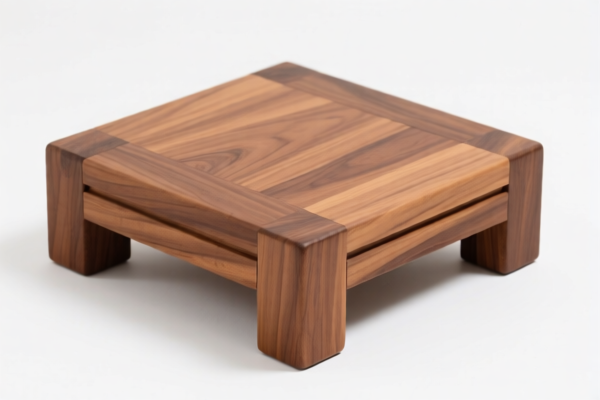
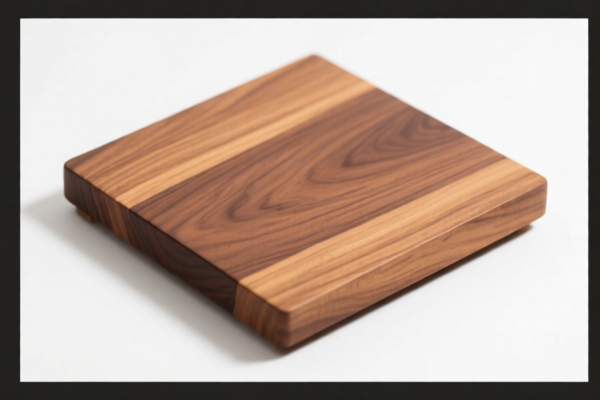
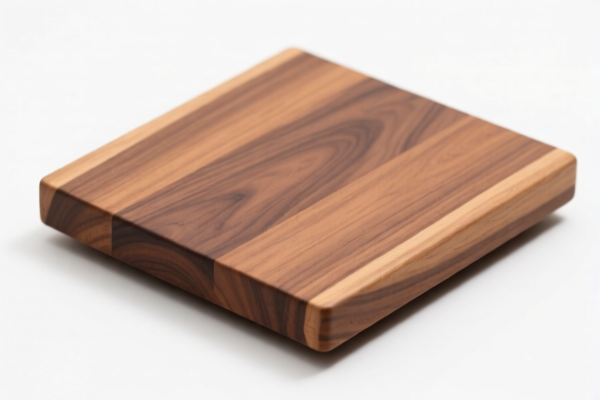

AI Analysis
🌳 Teak Square Wooden Furniture (Outdoor Timber Products)
🌐 HS Code Reference & Customs Clearance Guide | 2026 Latest Tariff Analysis | Professional Entry Strategy
📌 I. Product Definition & Classification: What Exactly is "Teak Square Wood"?
Teak Square Wooden Furniture/Profiles refers to squared, longitudinal-sawn timber derived from Teak (Tectona grandis) or other tropical hardwoods, primarily used for outdoor furniture, decking, and structural applications.
In international trade, the classification depends heavily on the processing state, thickness, and specific use:
1. Raw/Semi-Processed Timber (Logs & Sawn Wood): * Longitudinally Sawn: Teak planks or squares cut along the grain. * Thickness Matters: If the thickness exceeds 6mm, it falls under different subheadings than thin veneers.
2. Constructed Wood Products: * Structural Elements: Columns, beams, or carpentry items used in construction. * Finished/Part-Finished: Furniture components or items classified as "Other Wood Products."
⚠️ Critical Distinction Point: - If the item is raw, longitudinal-sawn teak timber → Classified under Chapter 44 (Wood & Articles of Wood; Wood Charcoal), specifically 4407. - If the item is a constructed structural part (beams/columns) → Classified under 4418. - If it is a finished furniture part or general accessory → Classified under 4421 or 4418.99.
📦 II. HS Code Classification Details (2026 Latest Tariff Authority Mapping)
Based on the specific characteristics of the Teak Square Wood, here are the applicable HS Codes and their corresponding tariff structures.
| HS Code | Product Description | Applicable Scenario | Key Classification Logic |
|---|---|---|---|
4407.23.01.00 |
Teak Outdoor Square Timber (Longitudinally Sawn) | Raw/semi-finished teak squares, strictly teak species | ✅ Specific Teak Species Longitudinal sawing |
4407.29.02.96 |
Other Tropical Timber (Teak Square, >6mm) | Teak or similar tropical woods, thickness >6mm | ✅ Tropical Wood Category Meets thickness threshold |
4418.99.91.95 |
Teak Square Timber (Building/Structural Wood Products) | Used in construction, structural integrity focus | ✅ Wood Construction Products Chapter 44 Part II |
4421.99.94.00 |
Other Wood Products (Teak, Edge-Jointed/Composite) | Furniture components, edge-glued panels, non-structural | ✅ Miscellaneous Wood Articles Excludes construction timber |
4421.99.98.80 |
Other Wood Products (Teak, No Conflict with Exclusions) | General teak wood products not fitting other specific categories | ✅ Catch-All Category Complies with exclusion list |
4418.30.01.00 |
Teak Square Timber (Columns, Beams, Carpentry) | Structural beams, pillars, heavy-duty carpentry | ✅ Structural Timber Specific carpentry category |
🔍 Key Insight: - 4407 codes apply to the timber itself (sawn wood). - 4418/4421 codes apply to articles made of wood (finished parts, structural units). - Misclassification between "Sawn Timber" (4407) and "Wood Articles" (4418/4421) is the #1 cause of customs delays.
💰 III. 2026 Latest Tariff Rate Breakdown (Including Surcharges & Policy Add-ons)
✅ Applicable Country: United States (US)
✅ Country of Origin: China (CN) (Implied by the 122 Clause & Section 301 context)
✅ Effective Date: 2025/2026 Period (Post-2024 Tariff Escalations)
🎯 1. 4407.23.01.00 & 4407.29.02.96 —— Sawn Teak Wood (Raw/Semi-Finished)
These codes represent the primary timber category for teak squares.
| Item | Content |
|---|---|
| Base Tariff (MFN) | 0.0% (Most Favored Nation rate for sawn wood) |
| Section 301 Surcharge | +25.0% (Add-on tariff under US Trade Act Section 301) |
| Section 122 Tariff | +10.0% (Specific statutory surcharge for certain wood products) |
| Total Tax Rate | 35.0% |
| Tax Calculation | CIF Value × 35% |
| De Minimis Exemption | ❌ Denied (deny_de_minimis) |
| Legal Pathway | USITC:4407.23.01.00 → Section301:9903.01.24 → Section122:Tariff |
📌 Explanation:
- The 0% base rate is offset by significant political tariffs. - 25% is the standard Section 301 penalty for Chinese-origin wood products. - 10% is the Section 122 tariff, specifically targeting certain imported timber to protect domestic forestry markets. - Total 35% is a heavy burden; accurate labeling of "Sawn Wood" vs. "Furniture" is crucial to ensure this is the correct (and often lower) code compared to finished goods if applicable.
🎯 2. 4418.99.91.95 & 4418.30.01.00 —— Structural/Construction Wood Products
If the teak squares are used as beams, columns, or structural components.
| Item | Content |
|---|---|
| Base Tariff (MFN) | 3.2% (Standard rate for wood construction products) |
| Section 301 Surcharge | +25.0% |
| Section 122 Tariff | +10.0% |
| Total Tax Rate | 38.2% |
| Tax Calculation | CIF Value × 38.2% |
| De Minimis Exemption | ❌ Denied |
| Legal Pathway | USITC:4418.99.91.95 → Section301 → Section122 |
📌 Note:
- Even though the base tariff is slightly higher (3.2% vs 0%), the surcharges remain identical. - Total 38.2% is higher than the raw timber rate (35%). - Strategy: If the product can be classified as raw sawn timber (4407) rather than a "construction article (4418)", it saves 3.2% in duty.
🎯 3. 4421.99.94.00 & 4421.99.98.80 —— Other Wood Products (Furniture/Accessories)
For general wood products, furniture parts, or non-structural teak items.
| Item | Content |
|---|---|
| Base Tariff (MFN) | 0.0% (for 4421.99.94.00) or 3.3% (for 4421.99.98.80) |
| Section 301 Surcharge | +25.0% |
| Section 122 Tariff | +10.0% |
| Total Tax Rate | 35.0% (for 4421.99.94.00) or 38.3% (for 4421.99.98.80) |
| Tax Calculation | CIF Value × 35.0% / 38.3% |
| De Minimis Exemption | ❌ Denied |
| Legal Pathway | USITC:4421.99.94.00 → Section301 → Section122 |
📌 Note:
- 4421.99.94.00 (Edge-jointed/composite) offers the lowest total rate (35%) among the "Other Wood Products" category. - 4421.99.98.80 (General others) has a higher base (3.3%), leading to 38.3% total. - Recommendation: If the product is a furniture component, aim for 4421.99.94.00 if it fits the "edge-jointed" or specific composite definition to minimize duties.
🛠️ IV. Customs Clearance Practical Advice (Real-World Pitfall Guide)
✅ 1. Documentation Checklist (Non-Negotiable)
| Document | Required? | Explanation |
|---|---|---|
| ✅ Commercial Invoice | ✔️ | Must clearly state "Teak Square Wood" and species (Tectona grandis). |
| ✅ Packing List | ✔️ | Detail dimensions (L×W×H), weight, and package count. |
| ✅ Species Certificate | ✔️ | Proof that the wood is Teak (Tectona grandis) to qualify for specific 4407 codes. Non-teak tropical woods may have different tariffs. |
| ✅ Phytosanitary Certificate | ✔️ | Mandatory for all wood products to prevent pest entry. |
| ✅ Fumigation Certificate | ✔️ | Often required alongside the Phytosanitary cert for solid wood. |
| ✅ Bill of Lading (B/L) | ✔️ | Ensure HS Codes match the invoice exactly. |
| ✅ Section 301 Exclusion Request | ❓ | If applicable, check if the specific HTSUS code had an exclusion period (most have expired, but verify). |
✅ 2. Classification Strategy (The "Golden Rules")
🔥 “Identify the State: Raw vs. Processed. Structure vs. Furniture.”
| Scenario | Correct HS Code | Why? | Risk if Wrong |
|---|---|---|---|
| Raw Teak Squares (Just cut, no assembly) | 4407.23.01.00 |
It is sawn wood, not an article of wood. | Misclassifying as 4418/4421 may increase duty from 35% to 38%. |
| Teak Beams/Columns (Structural use) | 4418.30.01.00 |
It is a construction product. | Declaring as raw timber may lead to rejection if it’s processed for structure. |
| Teak Furniture Parts (Legs, Tabletops) | 4421.99.94.00 |
It is an other wood product. | Declaring as raw timber is incorrect if shaped/surfaced. |
| Mixed Shipments (Timber + Furniture) | Split Lines | Different chapters require different lines. | Consolidating causes delays and potential penalties. |
✅ 3. Special Circumstances Handling
| Situation | Handling Advice |
|---|---|
| "Tropical Wood" Confusion | Ensure the supplier explicitly states the species. If it’s not Teak but another tropical wood, 4407.29.02.96 applies (still 35%, but different code). |
| Composite Wood Products | If the teak is glued into panels, ensure it meets the definition for 4421.99.94.00 (Edge-Jointed). |
| Fumigation Failure | If the Phytosanitary certificate is missing or invalid, the shipment will be rejected or destroyed. |
| Section 301 Impact | There are no current exemptions for standard teak wood products from China. Budget for 35-38.3% fully loaded duty. |
🌍 V. Global Market Comparison (2026 Latest)
| Country/Region | Recommended HS Code | Total Tariff (China Origin) | Key Certification | Notes |
|---|---|---|---|---|
| 🇺🇸 USA | 4407.23.01.00 |
35.0% | Phytosanitary + Fumigation | Highest tariffs due to Section 301 + 122 |
| 🇨🇳 China | 4407.23.01.00 |
0% - 5% | None | Import duty is low; VAT applies |
| 🇪🇺 EU | 4407.23.00 |
0% - 4% | FSC/PEFC (Voluntary) | No Section 301 equivalent; strict EUTR compliance |
| 🇬🇧 UK | 4407.23.00 |
0% - 4% | UKCA + FSC | Post-Brexit rules; similar to EU |
| 🇦🇺 Australia | 4407.23.00 |
5.0% | None | Moderate duty, no political surcharges |
📌 Conclusion: - USA is the most expensive market for Chinese Teak Wood due to 35-38.3% total duties. - EU/UK/Australia are significantly more cost-effective (0-5%), but require strict legal timber sourcing documentation (EUTR/UKTR).
📌 VI. Common Errors & Pitfalls (Lessons Learned)
❌ Error 1: Declaring "Teak Furniture" as "Raw Wood" (4407) when it is shaped/assembled.
👉 Consequence: Customs may reclassify to 4418/4421 with a higher duty (38.3%) or flag for misdeclaration.
❌ Error 2: Failing to provide a Phytosanitary Certificate.
👉 Consequence: Shipment held at port, potential destruction or return at seller’s expense.
❌ Error 3: Using "Teak" generically without species specification.
👉 Consequence: Customs may classify under a different "Other Tropical Wood" code, potentially altering tariff liability or triggering additional scrutiny.
❌ Error 4: Ignoring Section 122 Tariff.
👉 Consequence: Underestimating total landed cost by 10%, impacting profit margins.
✅ Correct Practice:
"Sawn Teak Wood, Tectona grandis, Longitudinally Sqaured, Thickness >6mm, Fumigated, For Outdoor Furniture Making."
🎯 VII. Conclusion: Professional Declaration, Cost Optimization!
🎯 Remember the Key Points:
🔹 "Raw Wood is 35%, Structural is 38.2%, Furniture is 35-38.3%."
🔹 "Phytosanitary is Mandatory – No Paper, No Entry."
🔹 "Section 301 + Section 122 = 35% Minimum Duty for Teak from China."
📌 Pro Tip:
If your teak wood is sourced from Myanmar, Indonesia, or Africa, the HS Code may differ (e.g., 4407.29.xxxx), but the Section 301/122 surcharges for Chinese processing/export or if re-exported may still apply depending on the value-add. Always verify the Country of Origin vs. Country of Export.
📣 Immediate Action:
📞 Consult a licensed customs broker for Pre-Ruling on your specific teak product.
🚀 Ensure your supplier provides Species Certificates and Fumigation Proof before shipment.
💰 Budget for 35-38.3% duty if shipping from China to the USA.
✨ Precision in Classification Saves Money!
💼 Your Supply Chain, Optimized for 2026 Trade Rules.
Customer Reviews
About HS Code Classification
The Harmonized System (HS) is an internationally standardized nomenclature developed by the World Customs Organization (WCO) to classify traded products. Over 200 countries use the HS system as the basis for customs tariffs, trade statistics, and import/export regulations.
Each HS code follows a hierarchical structure:
- Chapter (2 digits) — Broad category of goods (e.g., Chapter 84: Machinery and Mechanical Appliances)
- Heading (4 digits) — More specific grouping within the chapter
- Subheading (6 digits) — Internationally standardized breakdown, used by all WCO member countries
- National subdivisions (8-10 digits) — Country-specific extensions for further classification, such as US HTSUS 10-digit codes
Correct HS code classification is essential for smooth customs clearance, accurate duty payment, and compliance with trade regulations. Misclassification can lead to customs delays, overpayment of duties, or penalties.
When importing from CN to US, the applicable tariff rates may include:
- Most-Favored-Nation (MFN) rate — The standard duty rate applied to WTO members
- General rate — Applied to countries without trade agreements
- Trade remedy duties — Additional tariffs such as Section 301 (anti-dumping), Section 232 (national security), or countervailing duties
The information provided on this page is for reference purposes only. For official classification, please consult with your local customs authority or a licensed customs broker.