Tear resistant Paper Label
CN → US| HS Code | Tariff Rate | Origin | Destination | Doc |
|---|---|---|---|---|
| 4823908000 | 35.0% | CN | US | Official Doc |
| 4823906000 | 35.0% | CN | US | Official Doc |
| 5807902090 | 38.3% | CN | US | Official Doc |
| 5807900520 | 42.9% | CN | US | Official Doc |
Product Images
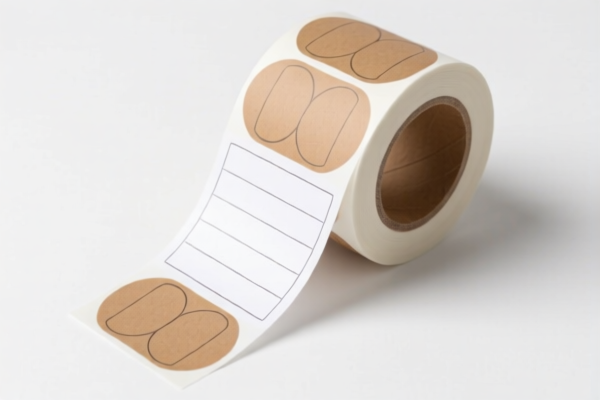
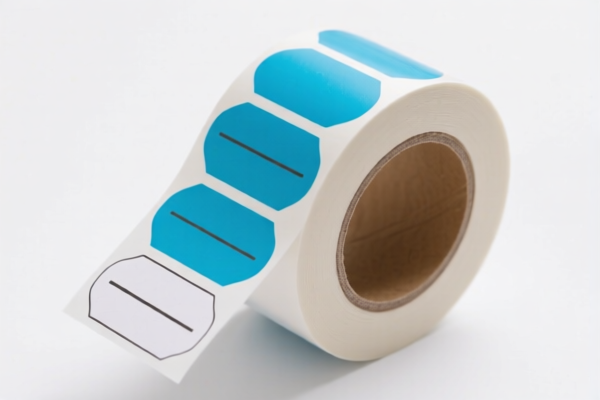
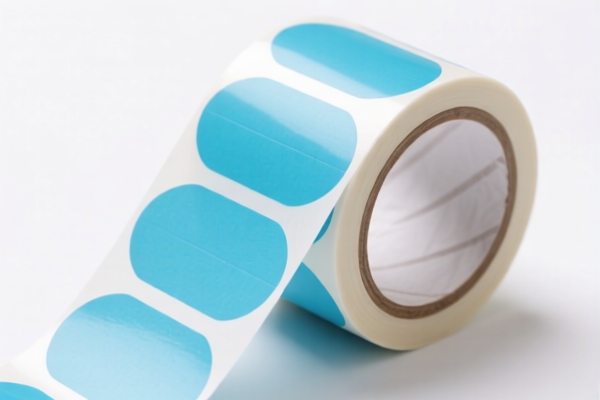
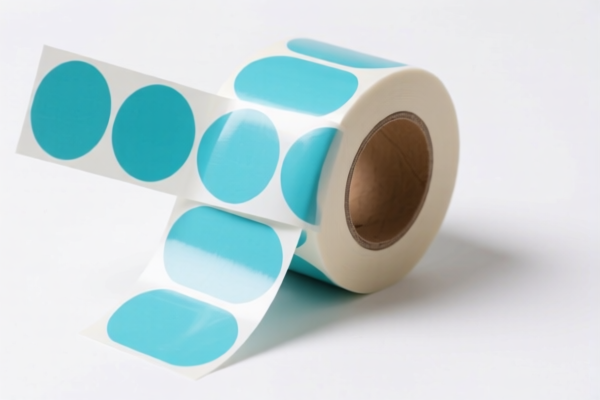
AI Analysis
🏷️ Tear Resistant Paper Label (标签/类似品)
🌐 HS Code Reference & Customs Clearance Guide | 2026 Latest Tariff Analysis | Professional Clearance Strategy 📌 I. Product Definition & Classification: What is a "Tear Resistant Paper Label"?
A Tear Resistant Paper Label is an article of textile or paper material used for identification, decoration, or information purposes. The key characteristic is its resistance to tearing during handling or application, often achieved through specific backing materials, coatings, or fiber blends.
In international trade, the classification depends heavily on the material composition: 1. Textile Labels: Made from cotton, man-made fibers, or other textiles. 2. Paper/Cardboard Labels: Made from paper, paperboard, cellulose wadding, or webs of cellulose fibers.
⚠️ Critical Distinction: - If the label is textile-based (e.g., woven care labels, fabric tags) → It falls under Chapter 58. - If the label is paper-based (e.g., printed product labels, packaging stickers) → It falls under Chapter 48.
📦 II. HS Code Classification Details (2026 Latest Tariff Concordance)
Based on the provided data, here are the specific HS codes and their applications:
| HS Code | Product Description | Applicable Scenario | Material Type |
|---|---|---|---|
5807.90.20.90 |
Labels, badges and similar articles of textile materials, not embroidered: Other | Generic textile labels not specified elsewhere | ✅ Textile (Non-woven/Other) |
5807.90.05.20 |
Labels, badges and similar articles of textile materials, not embroidered: Labels: Of cotton or man-made fibers | Cotton or synthetic fiber labels (669 subheading) | ✅ Textile (Cotton/Man-made) |
4823.90.80.00 |
Other paper, paperboard... cut to size or shape; other articles...: Gaskets, washers and other seals | Paper labels classified as "Seals" or generic paper articles | ❌ Paper/Paperboard |
4823.90.60.00 |
Other paper, paperboard...: Of coated paper or paperboard: Gaskets, washers and other seals | Coated paper labels (e.g., glossy sticker backs) | ❌ Coated Paper |
🔍 Key Insight: - The data provided shows a mix of Textile (Chapter 58) and Paper (Chapter 48) classifications. - "Tear Resistant" is a functional description, not a material one. You must declare the material (Cotton, Polyester, Coated Paper, etc.) to select the correct HS Code. - Note that
4823.90.80.00and4823.90.60.00mention "Gaskets, washers and other seals." If your paper label is strictly for sealing purposes, these codes may apply. If it is for branding/ID, Chapter 48 may require a different subheading not listed in the provided data, but based strictly on the input, these are the paper options.
💰 III. 2026 Latest Tariff Rate Details (Including Additional Duties & Policy Surcharges)
✅ Applicable Country: United States (US) ✅ Origin: China (CN) ✅ Effective Date: 2025-11-10 onwards (includes subsequent imports)
🎯 1. Textile Labels (5807.90.20.90 & 5807.90.05.20)
| Item | Content |
|---|---|
| Base Tariff | 0.0% (ad valorem) |
| Section 301 Surcharge | 0.0% |
| Total Tax Rate | 0.0% |
| Tax Calculation | CIF Value × 0% = $0 |
| De Minimis Eligibility | ✅ Yes (if value < $800) |
| Legal Basis Path | HTSUS:5807.90.20.90 / 5807.90.05.20 |
📌 Explanation: - Textile labels generally enjoy 0% duty under current US trade agreements and tariff schedules. - There is NO additional 25% or 10% surcharge for these specific textile codes in the provided data. - This makes textile labels a low-cost, low-risk category for clearance.
🎯 2. Paper Labels (4823.90.80.00 & 4823.90.60.00)
| Item | Content |
|---|---|
| Base Tariff | 0.0% (ad valorem) |
| Section 301 / IEEPA Surcharge | 25.0% |
| Total Tax Rate | 25.0% |
| Tax Calculation | CIF Value × 25% |
| De Minimis Eligibility | ❌ No (deny_de_minimis for this category if flagged) |
| Legal Basis Path | HTSUS:4823.90.80.00 / 4823.90.60.00 → FOOTNOTE:25% |
📌 Explanation: - Paper labels are subject to a 25% additional tariff. - This is likely due to Section 301 or similar trade measures targeting Chinese-origin paper products. - Cost Impact: If you ship $10,000 worth of paper labels, you will pay $2,500 in duties alone. - Warning: This is a high-duty category. Misclassification as textile (0%) when it is actually paper (25%) will lead to severe penalties.
🛠️ IV. Customs Clearance Practical Advice (Battle-Tested Pitfall Avoidance)
✅ 1. Documentation Checklist (Non-negotiable)
| Document | Required? | Notes |
|---|---|---|
| ✅ Product Specification Sheet | ✔️ | Must state Material Composition (e.g., "100% Cotton Woven," "Coated Paper with Adhesive") |
| ✅ Product Photos | ✔️ | Clear shots showing texture, thickness, and any backing material |
| ✅ Commercial Invoice | ✔️ | Must clearly describe item as "Textile Label" or "Paper Label," NOT just "Label" |
| ✅ HS Code Declaration | ✔️ | Must match the material description |
| ✅ Origin Certificate | ✔️ | To prove origin for tariff calculations |
🔥 Key Tip: - Do NOT just write "Label." Write "Tear Resistant Cotton Woven Label" or "Coated Paper Sticker Label." - Ambiguity leads to customs inspection, delays, and potential reclassification.
✅ 2. Classification Strategy (Critical Decision Tree)
| Scenario | Correct HS Code | Duty Rate | Risk Level |
|---|---|---|---|
| Cotton/Polyester Woven Label | 5807.90.05.20 |
0.0% | 🟢 Low |
| Other Textile Label | 5807.90.20.90 |
0.0% | 🟢 Low |
| Paper Label (Uncoated) | 4823.90.80.00 |
25.0% | 🔴 High |
| Paper Label (Coated/Glossy) | 4823.90.60.00 |
25.0% | 🔴 High |
📌 Note on "Tear Resistant": - If the label is paper but reinforced with fiberglass or plastic threads to make it "tear resistant," it may still be classified as paper (
4823) or possibly textile (5807) if the textile content is dominant. Consult a specialist if the material is mixed.
✅ 3. Special Case Handling
| Scenario | Handling Advice |
|---|---|
| Mixed Materials | If >50% by weight is textile, classify under 5807 (0%). If >50% is paper, classify under 4823 (25%). |
| Adhesive Backing | The presence of adhesive does not change the classification. Focus on the face material. |
| Sample Shipments | Even samples for "tear resistance" testing must be declared accurately. Mislabeling a paper label as textile to avoid 25% duty is fraud. |
🌍 V. Global Market Comparison (2026 Update)
| Country/Region | Recommended HS Code | Tariff | Certification | Notes |
|---|---|---|---|---|
| 🇺🇸 USA | 5807.90.05.20 (Textile) |
0.0% | None | 4823 codes incur 25% duty |
| 🇨🇳 China | 5807.90 or 4823.90 |
0% - 5% | CCC (if applicable) | Low duty, but strict inspection |
| 🇪🇺 EU | 5807.10 or 4823.90 |
0% - 2.7% | CE (if functional) | Generally lower duties than US |
| 🇬🇧 UK | 5807.10 or 4823.90 |
0% - 2.5% | UKCA | Post-Brexit rules apply |
📌 Conclusion: - USA is the most expensive market for paper labels due to the 25% surcharge. - Textile labels are duty-free in the US, making them a preferred choice for cost-sensitive supply chains.
📌 VI. Common Errors & Pitfalls (Lessons Learned)
❌ Error 1: Declaring Paper Labels as Textile Labels to avoid 25% duty. 👉 Consequence: Customs audit, 25% back duty + penalties + potential legal action.
❌ Error 2: Using vague descriptions like "Label" without material specification. 👉 Consequence: Customs holds shipment, requests additional info, delays clearance by 7-14 days.
❌ Error 3: Assuming "Tear Resistant" implies a different HS Code. 👉 Consequence: "Tear Resistant" is a feature, not a material. Misclassification leads to incorrect duty assessment.
✅ Correct Approach:
"Woven Cotton Label, Tear Resistant, for Apparel, Model: TR-001, 100% Cotton" →
5807.90.05.20(0% Duty) "Glossy Coated Paper Label, Self-Adhesive, for Beverage Packaging" →4823.90.60.00(25% Duty)
🎯 VII. Conclusion: Professional Declaration, Cost Efficiency
🎯 Key Takeaways:
🔹 "Material is King": Textile = 0%. Paper = 25%. Know your material. 🔹 "Be Specific": Use full descriptions: "Cotton Woven Label" or "Coated Paper Label." 🔹 "No De Minimis for Paper": Avoid relying on Section 321 (de minimis) for high-value paper label shipments if flagged.
📌 Pro Tip:
If your product is mixed material (e.g., paper face with textile backing), seek a binding ruling from US Customs (CBP) to confirm the correct classification. This protects you from future audits.
📣 Immediate Action:
📞 Contact your customs broker with product photos and material specs. 🚀 Accurate classification saves 25% of your cost.
✨ Professional clearance starts with precise classification! 💼 Every duty paid is profit lost. Know your HS Code.
Customer Reviews
About HS Code Classification
The Harmonized System (HS) is an internationally standardized nomenclature developed by the World Customs Organization (WCO) to classify traded products. Over 200 countries use the HS system as the basis for customs tariffs, trade statistics, and import/export regulations.
Each HS code follows a hierarchical structure:
- Chapter (2 digits) — Broad category of goods (e.g., Chapter 84: Machinery and Mechanical Appliances)
- Heading (4 digits) — More specific grouping within the chapter
- Subheading (6 digits) — Internationally standardized breakdown, used by all WCO member countries
- National subdivisions (8-10 digits) — Country-specific extensions for further classification, such as US HTSUS 10-digit codes
Correct HS code classification is essential for smooth customs clearance, accurate duty payment, and compliance with trade regulations. Misclassification can lead to customs delays, overpayment of duties, or penalties.
When importing from CN to US, the applicable tariff rates may include:
- Most-Favored-Nation (MFN) rate — The standard duty rate applied to WTO members
- General rate — Applied to countries without trade agreements
- Trade remedy duties — Additional tariffs such as Section 301 (anti-dumping), Section 232 (national security), or countervailing duties
The information provided on this page is for reference purposes only. For official classification, please consult with your local customs authority or a licensed customs broker.