Technical Textiles
CN → US| HS Code | Tariff Rate | Origin | Destination | Doc |
|---|---|---|---|---|
| 5906993000 | 38.3% | CN | US | Official Doc |
| 5907001500 | 43.0% | CN | US | Official Doc |
| 5907006000 | 35.0% | CN | US | Official Doc |
| 5906913000 | 37.7% | CN | US | Official Doc |
Product Images
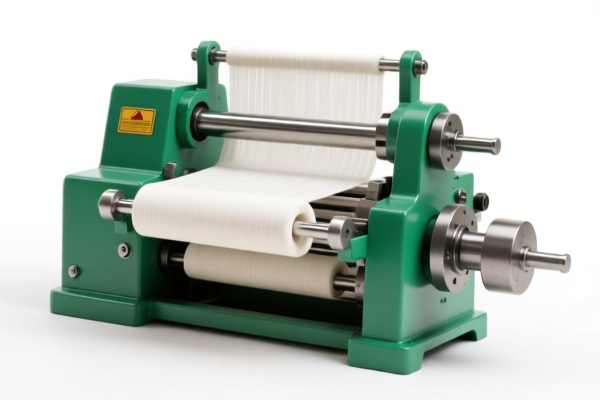
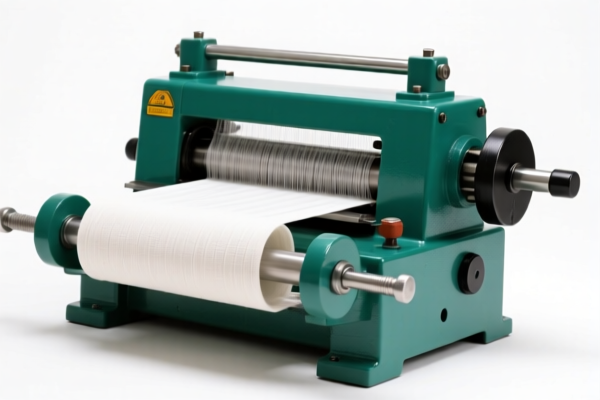
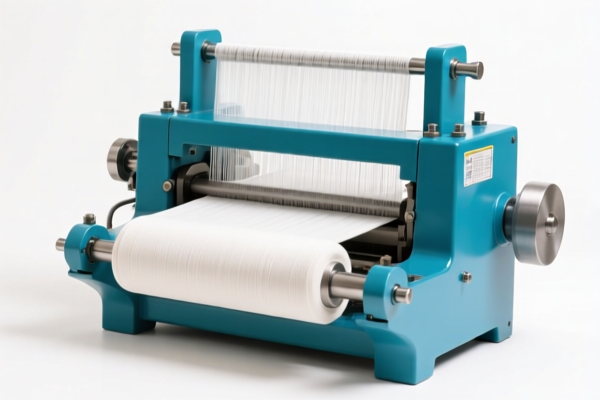
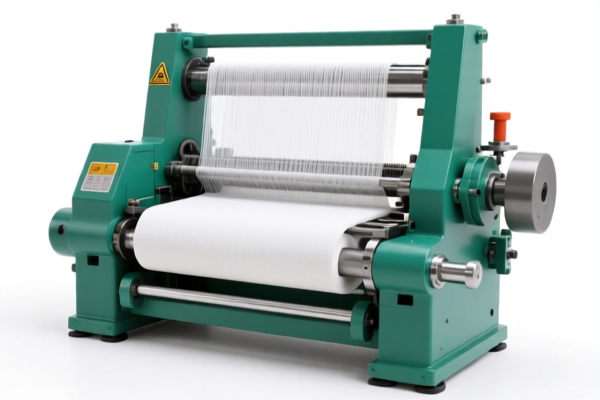
AI Analysis
🧵 Technical Textiles (Industrial Fabrics)
🌐 HS Code Reference & Customs Clearance Guide | 2026 Latest Tariff Analysis | Professional Clearance Strategy
📌 1. Product Definition & Classification: What Are "Technical Textiles"?
Technical Textiles (often referred to in customs data as "Industrial Fabrics") are textiles engineered for specific functional properties rather than aesthetic or comfort purposes. They involve complex processing such as rubberization, coating, impregnation, or lamination to enhance durability, water resistance, fire retardancy, or chemical resistance.
In international trade, these products fall primarily under Chapter 59 ("Textiles impregnated, coated, covered or laminated; textile articles for technical uses"). The specific HS Code depends on the base material (e.g., natural fiber, synthetic fiber) and the treatment process (e.g., rubber vs. plastic coating, saturation vs. surface coating).
⚠️ Key Distinction Point:
- If the fabric is coated with rubber → Typically falls under Heading 5906
- If the fabric is impregnated/coated with plastics, resins, or other substances → Typically falls under Heading 5907
- The exact 10-digit HS Code determines the Base Tariff, which, combined with US Trade Laws (Section 301 & IEEPA), results in significantly different total tax burdens for Chinese-origin goods.
📦 2. HS Code Classification Details (2026 Latest Tariff Authority Match)
Based on the provided data, here is the precise mapping of Technical Textiles to their HS Codes, descriptions, and tax implications.
| HS Code | Product Description & Match Logic | Application Scenario | Material/Process Inference |
|---|---|---|---|
5906.99.30.00 |
Industrial Fabric: Rubberized or coated, matching material & form. | Conveyor belts, rubber-coated canvas, waterproof industrial covers. | Rubber-based coating/lamination. |
5907.00.15.00 |
Industrial Fabric: Matched form & fabric attributes, likely impregnated/coated synthetic/s人造 fiber. | Filter fabrics, reinforced plastics bases, technical membranes. | Plastic/Resin Impregnation (High Base Tariff). |
5907.00.60.00 |
Industrial Fabric: Matched form & material, inferred as Artificial Fiber (Man-made). | Geotextiles, synthetic filter cloths, non-woven tech fabrics. | Artificial/Synthetic Fiber Base (Low Base Tariff). |
5906.91.30.00 |
Industrial Fabric: Textile material, usually coated/laminated for durability enhancement. | Rubber-covered textile hoses, specialized rubberized textiles. | Rubber-based (Specific Sub-category). |
🔍 Critical Note:
- All four codes above trigger the same Additional Duties due to US-China trade policies, but the Base Tariff varies (0% to 8%).
- Do not confuse "Rubber-coated" (5906) with "Plastic-coated" (5907); misclassification leads to customs delays and penalties.
- If the product is not impregnated/coated but merely a strong woven fabric for technical use without further processing, it may fall under Chapter 52-55 (Raw/Yarn/Fabric), but the data provided focuses on processed industrial fabrics.
💰 3. 2026 Latest Tariff Rate Breakdown (Including Surtaxes & Policy Levies)
✅ Applicable Country: United States (US)
✅ Origin: China (CN)
✅ Effective Date: 2025/2026 (Current Trade War Era)
🎯 1. 5906.99.30.00 —— Rubberized Industrial Fabric
| Item | Detail |
|---|---|
| Base Tariff | 3.3% |
| Section 301 Tariff (Additional) | 25.0% |
| IEEPA Section 122 Tariff | 10.0% |
| Total Effective Tax Rate | 38.3% |
| Tax Calculation | CIF Value × 38.3% |
| De Minimis Eligibility | ❌ NO (deny_de_minimis) |
| Legal Basis Path | USITC:5906.99.30.00 → FOOTNOTE:301 → IEEPA:122 |
📌 Interpretation:
- Even with a low base tariff (3.3%), the cumulative effect of Section 301 (25%) and IEEPA (10%) results in a 38.3% total duty.
- This is a high-cost entry for rubberized textiles.
🎯 2. 5907.00.15.00 —— Impregnated/Coated Synthetic Fabric
| Item | Detail |
|---|---|
| Base Tariff | 8.0% |
| Section 301 Tariff (Additional) | 25.0% |
| IEEPA Section 122 Tariff | 10.0% |
| Total Effective Tax Rate | 43.0% |
| Tax Calculation | CIF Value × 43.0% |
| De Minimis Eligibility | ❌ NO (deny_de_minimis) |
| Legal Basis Path | USITC:5907.00.15.00 → FOOTNOTE:301 → IEEPA:122 |
📌 Interpretation:
- This is the highest tax bracket among the provided options due to the higher base tariff (8%).
- Common for high-performance technical fabrics requiring heavy impregnation.
🎯 3. 5907.00.60.00 —— Artificial Fiber Technical Fabric
| Item | Detail |
|---|---|
| Base Tariff | 0.0% |
| Section 301 Tariff (Additional) | 25.0% |
| IEEPA Section 122 Tariff | 10.0% |
| Total Effective Tax Rate | 35.0% |
| Tax Calculation | CIF Value × 35.0% |
| De Minimis Eligibility | ❌ NO (deny_de_minimis) |
| Legal Basis Path | USITC:5907.00.60.00 → FOOTNOTE:301 → IEEPA:122 |
📌 Interpretation:
- Lowest Total Tax Rate in this dataset!
- The base tariff is 0%, but the fixed additional tariffs (25% + 10%) still apply.
- Ideal for cost-sensitive imports of artificial fiber-based technical textiles (e.g., geotextiles, non-wovens).
🎯 4. 5906.91.30.00 —— Specific Rubber-Coated Textile
| Item | Detail |
|---|---|
| Base Tariff | 2.7% |
| Section 301 Tariff (Additional) | 25.0% |
| IEEPA Section 122 Tariff | 10.0% |
| Total Effective Tax Rate | 37.7% |
| Tax Calculation | CIF Value × 37.7% |
| De Minimis Eligibility | ❌ NO (deny_de_minimis) |
| Legal Basis Path | USITC:5906.91.30.00 → FOOTNOTE:301 → IEEPA:122 |
📌 Interpretation:
- Slightly lower than5906.99.30.00due to a lower base tariff (2.7%).
- Applies to specific rubberized textile articles not covered elsewhere in 5906.
🛠️ 4. Customs Clearance Practical Advice (Battle-Tested Pitfall Avoidance)
✅ 1. Preparation Checklist (Non-Negotiable)
| Document | Must Provide? | Explanation |
|---|---|---|
| ✅ Product Specification Sheet | ✔️ | Must detail material composition (e.g., 100% Polyester vs. Cotton), coating type (Rubber vs. PVC), and weight/thickness. |
| ✅ Process Description | ✔️ | Explain if it's "Impregnated" (soaked through) or "Coated" (surface layer). This distinguishes 5906 from 5907. |
| ✅ Product Photos (Clear Label) | ✔️ | Show texture, edge finish, and any markings indicating industrial use. |
| ✅ Commercial Invoice | ✔️ | Use precise terminology: e.g., "Rubber-Coated Industrial Canvas" not just "Fabric". |
| ✅ Declaration Statement | ✔️ | Explicitly state: "Not for apparel, not for home furnishings. For industrial/technical use only." |
✅ 2. Classification Strategy (Key Mantra)
🔥 "Rubber is 5906, Plastic is 5907. Base Rate Matters, Surtax is Fixed!"
| Scenario | Correct HS Code Strategy | Error Consequence |
|---|---|---|
| Fabric coated with Rubber | Aim for 5906 (e.g., 37.7%-38.3%) | Misclassify as 5907 → Overpay base tariff |
| Fabric impregnated with Resin/Plastic | Aim for 5907 (e.g., 35%-43%) | Misclassify as 5906 → Potential fraud penalty |
| Artificial Fiber + Coating | Target 5907.00.60.00 | Lowest total tax (35%) |
| Natural Fiber + Coating | Likely 5906 or 5907.00.15 | Higher base tariff (8%) |
✅ 3. Special Handling Tips
| Situation | Recommendation |
|---|---|
| OEM Custom Coating | Provide lab test results proving the coating material (Rubber vs. PVC/PU). Customs may inspect physical samples. |
| Mixed Bundles | If shipping with non-industrial textiles, separate declarations are required. Mixing can void de minimis or trigger full container inspection. |
| Origin Marking | Clearly mark "Made in China" on packaging. Even with HS Code optimization, IEEPA 10% applies to Chinese origin. |
| Pre-Ruling Request | For large volume imports, file an Advance Ruling with US Customs to confirm if the product fits 5907.00.60.00 (35%) vs 5907.00.15.00 (43%). |
🌍 5. Global Market Comparison (2026 Perspective)
| Market | Recommended HS Code | Est. Total Duty (CN Origin) | Key Certification | Note |
|---|---|---|---|---|
| 🇺🇸 USA | 5907.00.60.00 |
35.0% (Best Case) | No specific tech cert, but must prove industrial use | High Surtax (35% Fixed) |
| 🇺🇸 USA | 5907.00.15.00 |
43.0% (Worst Case) | Same | Avoid if possible due to 8% base |
| 🇪🇺 EU | 5906/5907 | 0% - 6% (Standard MFN) | REACH (Chemicals), CE | No Section 301/IEEPA equivalents |
| 🇨🇳 China | 5906/5907 | 8% - 13% | CCC (if applicable) | Import duties differ significantly |
📌 Conclusion:
- The US market is the most expensive due to the rigid 35% flat surtax structure (25% + 10%) on top of the base rate.
- Minimize Base Tariff: Choosing the correct HS Code within the dataset (e.g.,5907.00.60.00at 35% vs5907.00.15.00at 43%) can save 8% on CIF value.
📌 6. Common Mistakes & Pitfalls (Blood Lessons)
❌ Mistake 1: Using generic terms like "Textile" or "Fabric" on the Invoice
👉 Result: Customs flags for detailed inspection → Delay + Storage Fees.
✅ Fix: Use "Industrial Technical Fabric, Rubber-Coated, for Conveyor Belt".
❌ Mistake 2: Assuming all coated fabrics are the same
👉 Result: Classifying Plastic-Coated (5907) as Rubber-Coated (5906) to save base tax.
✅ Fix: Provide material safety data sheets (MSDS) to prove coating composition.
❌ Mistake 3: Ignoring IEEPA Section 122
👉 Result: Under-declaring duty. IEEPA 10% is always added for CN origin technical textiles.
✅ Fix: Budget for minimum 35% total duty regardless of HS Code choice.
❌ Mistake 4: Assuming De Minimis ($800) applies
👉 Result: Shipment seized because technical textiles are explicitly excluded from de minimis relief.
✅ Fix: Always file formal entry with proper duties paid.
🎯 7. Conclusion: Precision in Classification = Cost Savings
🎯 Remember the Mantra:
🔹 "Rubber is 5906, Plastic is 5907. Base Rate Drives the Difference, Surtax is the Anchor."
🔹 "Aim for 5907.00.60.00 (35%) if possible. Avoid 5907.00.15.00 (43%) if your product qualifies."
🔹 "No De Minimis. Formal Entry Required. Documentation is King."
📌 Pro Tip:
If your technical textiles are made from 100% Synthetic/Artificial Fibers and are impregnated/coated, aggressively pursue classification under 5907.00.60.00. It offers the lowest total tax burden (35%) in the US market. For Rubber-based products, the cost is fixed around 37.7%-38.3%.
📣 Immediate Action:
📞 Consult a Customs Broker to review your product's material composition (Rubber vs. Plastic) and fiber type (Natural vs. Artificial).
📄 Prepare MSDS and Technical Datasheets before shipping.
🚀 Optimize your HS Code to save up to 8% on CIF value. Your profit margin depends on this precision!
✨ Professional Clearance Starts with Accurate Classification!
💼 Every percentage point of tax saved is pure profit!
Customer Reviews
About HS Code Classification
The Harmonized System (HS) is an internationally standardized nomenclature developed by the World Customs Organization (WCO) to classify traded products. Over 200 countries use the HS system as the basis for customs tariffs, trade statistics, and import/export regulations.
Each HS code follows a hierarchical structure:
- Chapter (2 digits) — Broad category of goods (e.g., Chapter 84: Machinery and Mechanical Appliances)
- Heading (4 digits) — More specific grouping within the chapter
- Subheading (6 digits) — Internationally standardized breakdown, used by all WCO member countries
- National subdivisions (8-10 digits) — Country-specific extensions for further classification, such as US HTSUS 10-digit codes
Correct HS code classification is essential for smooth customs clearance, accurate duty payment, and compliance with trade regulations. Misclassification can lead to customs delays, overpayment of duties, or penalties.
When importing from CN to US, the applicable tariff rates may include:
- Most-Favored-Nation (MFN) rate — The standard duty rate applied to WTO members
- General rate — Applied to countries without trade agreements
- Trade remedy duties — Additional tariffs such as Section 301 (anti-dumping), Section 232 (national security), or countervailing duties
The information provided on this page is for reference purposes only. For official classification, please consult with your local customs authority or a licensed customs broker.