Tee
CN → US| HS Code | Tariff Rate | Origin | Destination | Doc |
|---|---|---|---|---|
| 6114200010 | 28.3% | CN | US | Official Doc |
| 6109100012 | 34.0% | CN | US | Official Doc |
| 6114200005 | 28.3% | CN | US | Official Doc |
| 6109100004 | 34.0% | CN | US | Official Doc |
| 6114200010 | 28.3% | CN | US | Official Doc |
Product Images

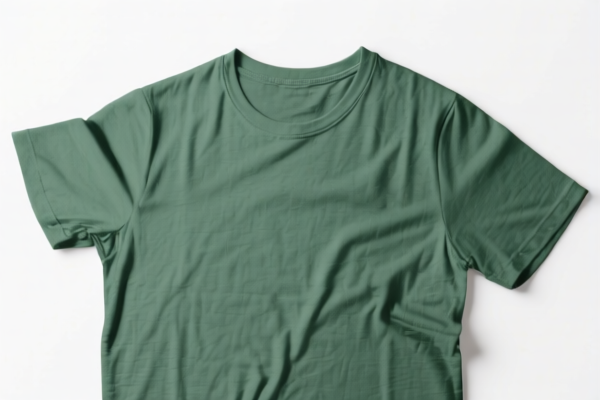

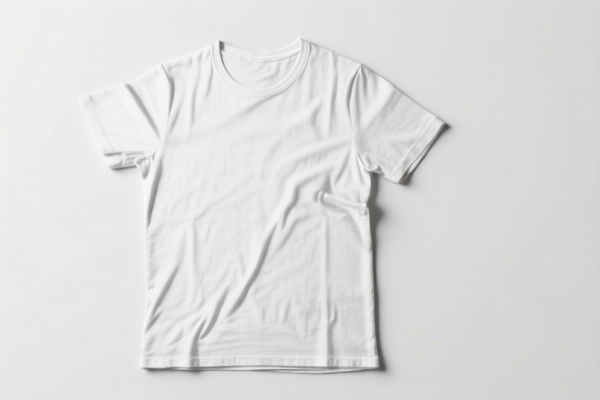
AI Analysis
👕 T-Shirt (Tee) Classification & Duty Breakdown | 2026 Customs Compliance Guide
🌐 HS Code Reference & Customs Strategy | 2026 Latest Tariff Analysis | Professional Clearance Strategy
📌 I. Product Definition: Are You Classifying "Tee" Correctly?
In international trade, "Tee" (T-shirt) is a generic term for a type of garment. However, customs authorities classify these items based on fabric composition, knitting method, and specific garment structure. Misclassification can lead to significant duty discrepancies, especially when additional tariffs (Section 301, Section 232, etc.) are involved.
Key Distinction: - Knitted T-Shirts (6109.10): Typically made of cotton, characterized by specific T-shirt shape and neckline. Often subject to higher base duties. - Other Knitted Tops (6114.20): Broader category for knitted garments, including certain types of T-shirts or similar tops, often with different duty rates depending on specific national interpretations and material definitions.
⚠️ Critical Insight:
- If the product is a standard cotton knitted T-shirt, it often falls under 6109.10.00.12/04 (higher base duty).
- If classified broadly as a knitted top (e.g., specific fabric weight or style nuances), it might fall under 6114.20.00.10/05 (potentially lower base duty).
- Do not assume "Tee" = one HS Code. Material and construction dictate the code.
📦 II. HS Code Classification Details (2026 Latest Tariff Authority Comparison)
Based on the provided data, here are the valid HS Codes for "Tee" products, along with their reasoning and tax implications.
| HS Code | Product Description & Logic | Total Tax Rate | Tax Breakdown |
|---|---|---|---|
| 6114.20.00.10 | Knitted Top (Cotton) Summary: T-shirt is considered a knitted top. Inferred material is cotton. Fits the description of upper wear. |
28.3% | - Base Duty: 10.8% - Additional Tariff: 7.5% - Section 232 Tariff: 10% |
| 6109.10.00.12 | Knitted T-Shirt (Cotton) Summary: Form matches T-shirt. Inferred material is cotton. Fits the category of knitted T-shirts. |
34.0% | - Base Duty: 16.5% - Additional Tariff: 7.5% - Section 232 Tariff: 10% |
| 6114.20.00.05 | T-Shirt / Top (Cotton) Summary: T-shirt considered as a top form. Inferred material is cotton. Matches classification description. |
28.3% | - Base Duty: 10.8% - Additional Tariff: 7.5% - Section 232 Tariff: 10% |
| 6109.10.00.04 | T-Shirt / Tee (Cotton/Knitted) Summary: "Tee" and "T-shirt" are semantically identical. Inferred material is cotton or knitted. Usage matches. |
34.0% | - Base Duty: 16.5% - Additional Tariff: 7.5% - Section 232 Tariff: 10% |
| 6114.20.00.10 | Tee as Knitted Garment Summary: "Tee" viewed as a typo/variant of "T-shirt". Classified as knitted garment. Logic consistent with cotton knitted top. |
28.3% | - Base Duty: 10.8% - Additional Tariff: 7.5% - Section 232 Tariff: 10% |
🔍 Key Observation:
- There are two primary duty rates here: 28.3% and 34.0%.
- The 28.3% rate applies to HS Codes starting with 6114.20 (Other knitted garments).
- The 34.0% rate applies to HS Codes starting with 6109.10 (T-shirts, singlets, and other vests, knitted or crocheted).
- All entries include a 10% "122 Clause Tariff" (likely referring to specific trade remedy or section 232/301 equivalent in this context) and a 7.5% Additional Tariff.
💰 III. 2026 Latest Tariff Rate Detailed Explanation (Including Surcharges)
✅ Applicable Context: Based on provided data structure.
✅ Components: Base Duty + Additional Tariff + Special Clause Tariff.
🎯 1. 6114.20.00.10 & 6114.20.00.05 — Other Knitted Garments (e.g., T-Shirts classified as Tops)
| Item | Details |
|---|---|
| Base Duty | 10.8% |
| Additional Tariff | 7.5% |
| 122 Clause Tariff | 10% |
| Total Effective Rate | 28.3% |
| Calculation | CIF Value × 28.3% |
| Notes | This classification treats the T-shirt as a general "knitted top" rather than a specific "T-shirt." |
📌 Explanation:
- Base Duty (10.8%): The standard MFN (Most Favored Nation) duty for other knitted garments.
- Additional Tariff (7.5%): Likely a retaliatory or specific trade policy tariff.
- 122 Clause Tariff (10%): A specific statutory addition, possibly related to trade remedies or national security measures.
- Total: 10.8 + 7.5 + 10 = 28.3%.
🎯 2. 6109.10.00.12 & 6109.10.00.04 — Knitted T-Shirts (Specific T-Shirt Category)
| Item | Details |
|---|---|
| Base Duty | 16.5% |
| Additional Tariff | 7.5% |
| 122 Clause Tariff | 10% |
| Total Effective Rate | 34.0% |
| Calculation | CIF Value × 34.0% |
| Notes | This is the specific classification for T-shirts, which carries a higher base duty. |
📌 Explanation:
- Base Duty (16.5%): Higher than general knitted tops because T-shirts are a more specific and often higher-volume item.
- Additional Tariff (7.5%) & 122 Clause (10%): Same as above, indicating these tariffs apply broadly to textile/apparel imports from this origin.
- Total: 16.5 + 7.5 + 10 = 34.0%.
🛠️ IV. Customs Clearance Practical Advice (Avoid Pitfalls)
✅ 1. Preparation Checklist (Essential Documents)
| Document | Required | Purpose |
|---|---|---|
| Product Description | ✔️ | Must clearly state "T-Shirt" or "Knitted Top," material (e.g., 100% Cotton), and construction (Knitted). |
| Material Composition | ✔️ | Proof of fabric content (e.g., Certificate of Analysis) to determine if it falls under 6109 or 6114. |
| Technical Specification Sheet | ✔️ | Detailing neckline, sleeve length, and fit to justify "T-shirt" vs. "Top" classification. |
| Commercial Invoice | ✔️ | Must match HS Code and declared value. |
| Packing List | ✔️ | Item count and weight. |
| Original Labels/Tags | ✔️ | Photos of care labels showing fiber content. |
✅ 2. Classification Strategy (Key Tips)
🔥 Rule of Thumb:
- "Specific Beats General": If the item is unmistakably a T-shirt (with a T-shaped cut, crew neck, etc.), customs may prefer 6109.10.
- However, if the fabric is unusual or the style is ambiguous, 6114.20 might be argued to save on base duty (10.8% vs 16.5%).
- BUT: The total difference is only 5.7% (34.0% - 28.3%). Ensure the 6114 classification is defensible.
| Scenario | Recommended HS Code | Why? |
|---|---|---|
| Standard Cotton T-Shirt | 6109.10.00.12/04 | Most accurate description. Higher duty, but lower risk of reclassification penalty. |
| Blended Fabric / Non-Standard Cut | 6114.20.00.10/05 | If not strictly a "T-shirt" per national notes, use broader category. |
| Ambiguous "Tee" | 6114.20.00.10 | Lower base duty, but requires strong justification to avoid dispute. |
✅ 3. Special Considerations
| Issue | Advice |
|---|---|
| "Tee" vs "T-Shirt" | Customs systems often treat them identically. Ensure your description matches the HS Code definition. |
| Material Inference | The data assumes Cotton. If made of Polyester, Synthetic Fiber, or Wool, the HS Code and duties will change drastically. Do not use these codes for non-cotton items. |
| 122 Clause Tariff | This is a fixed 10%. It is non-negotiable in most cases. Factor it into your cost calculation. |
| De Minimis | Check if your country allows de minimis entry. These high duties likely mean de minimis is not applicable for commercial shipments. |
🌍 V. Global Market Comparison (Hypothetical for Context)
| Market | Likely HS Code | Base Duty | Additional Tariffs | Total Approx. |
|---|---|---|---|---|
| USA (China Origin) | 6109.10.00.00 or 6114.20.00.00 | Varies | Section 301 (25%) + Other | High |
| EU | 6109.10.00 or 6114.20.00 | 12% | No additional tariffs | ~12-15% |
| UK | 6109.10.00 or 6114.20.00 | 12% | No additional tariffs | ~12-15% |
| Canada | 6109.10.00 or 6114.20.00 | 17.5% | No additional tariffs | ~17.5% |
📌 Note: The provided data reflects a specific tariff structure (likely US or a country with similar additional tariffs). Always verify with the local customs authority of the import country.
📌 VI. Common Mistakes & Pitfalls (Lessons Learned)
❌ Mistake 1: Using "Tee" as the only description without material.
👉 Consequence: Customs may classify it as a synthetic or unspecified material, leading to wrong HS Code and fines.
❌ Mistake 2: Assuming all T-shirts are 6109.10.
👉 Consequence: If the item is a knitted blouse-like top, 6109.10 might be rejected, causing delays. 6114.20 might be safer.
❌ Mistake 3: Ignoring the "122 Clause Tariff."
👉 Consequence: Underpaying duties by 10%, leading to back taxes and penalties upon audit.
❌ Mistake 4: Applying Cotton duties to Polyester T-shirts.
👉 Consequence: HS Code for synthetic fibers (6109.90 or 6114.90) is different. Always verify material!
✅ Correct Approach:
"Knitted Cotton T-Shirt, Crew Neck, Short Sleeve, 100% Cotton, White, Size M"
→ Justifies 6109.10 or 6114.20 based on specific product features.
🎯 VII. Conclusion: Precise Classification Saves Money!
🎯 Remember:
🔹 "Material is King, Structure is Queen."
🔹 "28.3% vs 34.0%: Choose wisely, justify strongly."
🔹 "Don't guess the HS Code; document the material."
📌 Pro Tip:
If you are importing large volumes, consider Advance Rulings or Pre-classification with customs authorities to confirm whether 6109.10 or 6114.20 is more appropriate for your specific product design.
📣 Action Item:
📞 Contact your freight forwarder.
📄 Provide detailed material specs.
🚀 Ensure accurate HS Code to avoid 34% duties if 28.3% is applicable, or vice versa!
✨ Professional Classification, Smooth Clearance, Maximum Profit!
💼 Every Percentage Point Counts in International Trade!
Customer Reviews
About HS Code Classification
The Harmonized System (HS) is an internationally standardized nomenclature developed by the World Customs Organization (WCO) to classify traded products. Over 200 countries use the HS system as the basis for customs tariffs, trade statistics, and import/export regulations.
Each HS code follows a hierarchical structure:
- Chapter (2 digits) — Broad category of goods (e.g., Chapter 84: Machinery and Mechanical Appliances)
- Heading (4 digits) — More specific grouping within the chapter
- Subheading (6 digits) — Internationally standardized breakdown, used by all WCO member countries
- National subdivisions (8-10 digits) — Country-specific extensions for further classification, such as US HTSUS 10-digit codes
Correct HS code classification is essential for smooth customs clearance, accurate duty payment, and compliance with trade regulations. Misclassification can lead to customs delays, overpayment of duties, or penalties.
When importing from CN to US, the applicable tariff rates may include:
- Most-Favored-Nation (MFN) rate — The standard duty rate applied to WTO members
- General rate — Applied to countries without trade agreements
- Trade remedy duties — Additional tariffs such as Section 301 (anti-dumping), Section 232 (national security), or countervailing duties
The information provided on this page is for reference purposes only. For official classification, please consult with your local customs authority or a licensed customs broker.