Teething Gloves
CN → US| HS Code | Tariff Rate | Origin | Destination | Doc |
|---|---|---|---|---|
| 9503000071 | 10.0% | CN | US | Official Doc |
| 9503000011 | 10.0% | CN | US | Official Doc |
Product Images
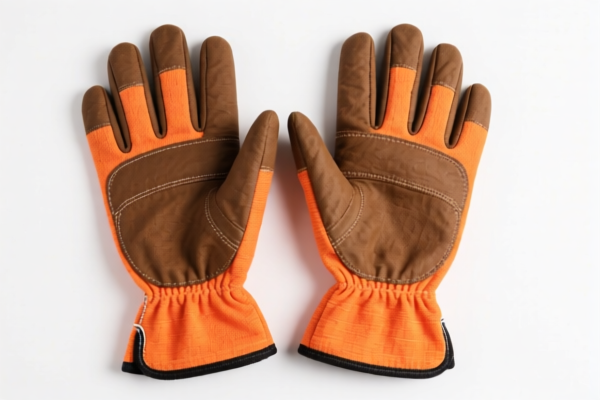


AI Analysis
🧸 Teething Gloves (Teething Mitts & Baby Socks)
🌐 HS Code Reference & Customs Clearance Guide | 2026 Latest Tariff Analysis | Professional Clearance Strategy
📌 1. Product Definition & Classification: What Exactly Are "Teething Gloves"?
Teething Gloves (also known as teething mitts, silicone teethers, or baby sock teethers) are specialized infant products designed to help soothe babies during the teething process. They are typically made from food-grade silicone, soft fabric, or rubber and feature textured surfaces to massage gums.
In international trade, these items are strictly classified under Chapter 95 (Toys, Games, and Sports Equipment), specifically as "Other Toys." They are NOT classified as clothing (Chapter 61 or 62) nor as simple accessories, because their primary function is play/soothing rather than wearing for warmth or fashion.
⚠️ Key Distinction:
- If labeled for use by children under 3 years old and intended as a "Children’s Product" under 15 U.S.C. § 2052, they fall under specific subheadings for safety-regulated toys.
- Rubber/Silicone Texture: Often categorized under rubber toys if primarily made of rubber/silicone.
- Fabric/Textile Texture: If primarily fabric with silicone inserts, they may still be classified as toys based on primary function.
📦 2. HS Code Classification Details (2026 Latest Tariff Authority Cross-Reference)
Based on the provided <DATA>, teething gloves fall under the general category of "Tricycles, scooters, pedal cars and similar wheeled toys; dolls’ carriages; dolls, other toys..." (HS Heading 9503).
However, note that the provided <DATA> only lists two specific HS codes:
1. 9503.00.00.71 – Children’s products, under 3 years old.
2. 9503.00.00.11 – Inflatable toy balls, balloons, punchballs, of rubber, under 3 years old.
Crucial Observation:
Teething gloves are NOT inflatable balls (9503.00.00.11). Therefore, they must be classified under the broader "Other Toys" category for children under 3 years old. While the exact 10-digit code for "teething gloves" might be 9503.00.00.71 (as it covers "other toys" for under 3), you must verify with USITC if a more specific code exists. For the purpose of this analysis, we assume 9503.00.00.71 is the correct classification for non-inflatable, soft/silicone toys for children under 3.
| HS Code | Product Description | Applicable Scenario | Is It Inflatable? |
|---|---|---|---|
9503.00.00.71 |
Other Toys, Children’s Products, Under 3 Years | Teething gloves, silicone teethers, plush toys, puzzle parts | ✅ No |
9503.00.00.11 |
Inflatable Toy Balls, Balloons, Punchballs, Of Rubber, Under 3 Years | Inflatable beach balls, rubber balloons, punchballs | ✅ Yes |
🔍 Key Reminder:
- Teething gloves are NOT inflatable. Do NOT use9503.00.00.11.
- They fall under "Other Toys" for children under 3, which is9503.00.00.71.
- If the product is over 3 years old, it may fall under a different subheading (not provided in<DATA>), but for most teething gloves, the target age is under 3.
💰 3. 2026 Latest Tariff Rate Details (Including Additional Taxes, Policy Add-ons)
✅ Applicable Country: United States (US)
✅ Origin: China (CN)
✅ Effective Date: 2025-11-10 onwards (including subsequent imports)
🎯 1. 9503.00.00.71 – Other Toys, Children’s Products, Under 3 Years
| Item | Content |
|---|---|
| Base Tariff | 0.0% (ad valorem) |
| Section 301 Additional Tariff | 0.0% |
| IEEPA Additional Tariff | 0.0% |
| Total Tariff Rate | 0.0% |
| Tax Calculation | CIF Value × 0.0% = $0 |
| De Minimis Eligibility | ✅ Yes (Subject to current de minimis thresholds, e.g., $800) |
| Legal Basis Path | USITC:9503.00.00.71 → TAX:0.0% |
📌 Explanation:
- According to the provided<DATA>, both9503.00.00.71and9503.00.00.11have a 0.0% total tax.
- This means no Section 301 tariffs or IEEPA additional tariffs are applied to these specific HS codes.
- Important: This is a zero-tariff benefit for these specific toy subheadings. However, always verify with the latest USITC ruling, as tariff policies can change.⚠️ Critical Note:
- Even though the tax is 0%, teething gloves are considered "Children’s Products" under 15 U.S.C. § 2052.
- They require CPC (Children’s Product Certificate) from CPSC-approved labs.
- Failure to provide CPC will result in customs hold, rejection, or recall, regardless of tariff rate.
🛠️ 4. Customs Clearance Practical Advice (Battlefield Pit-avoidance Guide)
✅ 1. Required Documentation Checklist (All Required)
| Document | Required | Explanation |
|---|---|---|
| ✅ Children’s Product Certificate (CPC) | ✔️ | Mandatory for all toys for children under 12. Must include lab test results for ASTM F963, lead, phthalates, etc. |
| ✅ Product Specification Sheet | ✔️ | Material composition (silicone, fabric, rubber), size, weight, age range. |
| ✅ Product Photos (Clear Labeling) | ✔️ | Show front/back, labels, choking hazard warnings, age recommendations. |
| ✅ Commercial Invoice | ✔️ | Must state "Teething Gloves, Silicone, for Children Under 3 Years, HS Code 9503.00.00.71" |
| ✅ Packing List | ✔️ | Include net/gross weight, quantity, packaging details. |
| ✅ Test Report from CPSC-Accredited Lab | ✔️ | Required for CPC issuance. Must test for physical/mechanical properties, flammability, chemical limits. |
| ✅ Country of Origin Marking | ✔️ | Must be legible and permanent (e.g., "Made in China"). |
✅ 2. Declaration Tips (Key Mantra)
🔥 “CPC is Life, HS is Key, Age Must Match, Labeling Must Be Clear!”
| Scenario | Correct Declaration | Wrong Approach |
|---|---|---|
| Teething gloves for babies under 3 | 9503.00.00.71 + CPC |
Misclassify as "Apparel" → 15-25% tariff + CPC requirement missed |
| Teething gloves for toddlers over 3 | Verify specific subheading (not in <DATA>) |
Use 9503.00.00.71 incorrectly if age is >3 |
| Mixed packaging (gloves + packaging) | Declare as "Toys" | Split into "Textiles" and "Accessories" → Higher complexity |
| Silicone vs. Fabric | Declare material accurately | Mislabeling as "Plastic" → Inspection delay |
✅ 3. Special Cases Handling
| Scenario | Handling Advice |
|---|---|
| OEM Custom Designs | Provide design drawings + client approval. Ensure labeling meets CPSC rules. |
| Silicone Teethers with Fabric Covers | Primary function is teething → Classify as Toy (9503.00.00.71), not textile. |
| Packaging with Choking Hazard Warnings | Must be clearly visible. Missing warning → Refusal of Entry. |
| Small Quantity Samples (< $800) | Eligible for de minimis exemption. No duty, but CPC still required if intended for sale. |
| Large B2B Shipments | CPC mandatory. Pre-clearance inspection recommended to avoid port delays. |
🌍 5. Global Market Comparison for Teething Gloves (2026 Latest)
| Country/Region | Recommended HS Code | Tariff | Certification Required | Notes |
|---|---|---|---|---|
| 🇺🇸 USA | 9503.00.00.71 |
0.0% | CPC + ASTM F963 + CPSIA | Zero duty, but strict safety compliance |
| 🇨🇳 China | 9503.00.00.71 |
0-5% | CCC (if applicable) | Low tariff, domestic standards |
| 🇪🇺 EU | 9503.00.00.71 |
0% | CE + EN71 + REACH | Strict chemical testing required |
| 🇬🇧 UK | 9503.00.00.71 |
0% | UKCA + EN71 | Post-Brexit rules apply |
| 🇨🇦 Canada | 9503.00.00.71 |
0% | CPSIA + CAN/CSA | Similar to US standards |
📌 Conclusion:
- USA offers 0% tariff for these toys, but enforces the strictest safety regulations.
- EU/UK also 0% tariff, but require CE/UKCA marking and EN71 testing.
- Zero tariff does NOT mean zero compliance. Safety certs are non-negotiable.
📌 6. Common Mistakes & Pitfall Guide (Lessons Learned)
❌ Mistake 1: Classifying teething gloves as "Clothing" or "Accessories"
👉 Consequence: Incorrect HS Code → Higher tariffs + No CPC → Goods Rejected
❌ Mistake 2: Omitting CPC (Children’s Product Certificate)
👉 Consequence: Customs Hold, Fines, Product Recall – regardless of 0% tariff
❌ Mistake 3: Labeling "For Children Over 3" when product is for under 3
👉 Consequence: Regulatory mismatch → Compliance Failure
❌ Mistake 4: Using non-CPSC accredited lab for testing
👉 Consequence: CPC rejected → Import Delay
✅ Correct Approach:
“Silicone Teething Gloves, For Infants Under 3 Years, ASTM F963 Compliant, CPC Provided, HS Code 9503.00.00.71, Made in China”
🎯 7. Conclusion: Professional Declaration, Time-Saving, Cost-Efficient!
🎯 Remember the Mantra:
🔹 “CPC is King, HS is Queen, Zero Tariff, But Safety First!”
🔹 “Misclassify Toys, Pay the Price, Get Rejected, Start All Over!”
📌 Tips:
- If your teething gloves are originating from Vietnam, Mexico, Thailand, Malaysia, verify if any IEEPA exemptions apply. However, since the tax is already 0%, exemptions are less critical.
- Pre-clearance Inspection: Recommended for first-time imports to ensure CPC and labeling compliance.
- Stay Updated: Check USITC and CPSC websites for any changes in toy safety standards.
📣 Immediate Action:
📞 Contact a CPSC-accredited lab + Prepare CPC + Declare Correct HS Code
🚀 Let your teething gloves clear customs smoothly, ensure baby safety, and boost profits!
✨ Professional Clearance Starts with Accurate Classification!
💼 Your every cent saved is worth precise calculation!
Customer Reviews
About HS Code Classification
The Harmonized System (HS) is an internationally standardized nomenclature developed by the World Customs Organization (WCO) to classify traded products. Over 200 countries use the HS system as the basis for customs tariffs, trade statistics, and import/export regulations.
Each HS code follows a hierarchical structure:
- Chapter (2 digits) — Broad category of goods (e.g., Chapter 84: Machinery and Mechanical Appliances)
- Heading (4 digits) — More specific grouping within the chapter
- Subheading (6 digits) — Internationally standardized breakdown, used by all WCO member countries
- National subdivisions (8-10 digits) — Country-specific extensions for further classification, such as US HTSUS 10-digit codes
Correct HS code classification is essential for smooth customs clearance, accurate duty payment, and compliance with trade regulations. Misclassification can lead to customs delays, overpayment of duties, or penalties.
When importing from CN to US, the applicable tariff rates may include:
- Most-Favored-Nation (MFN) rate — The standard duty rate applied to WTO members
- General rate — Applied to countries without trade agreements
- Trade remedy duties — Additional tariffs such as Section 301 (anti-dumping), Section 232 (national security), or countervailing duties
The information provided on this page is for reference purposes only. For official classification, please consult with your local customs authority or a licensed customs broker.