Teething Toy
CN → US| HS Code | Tariff Rate | Origin | Destination | Doc |
|---|---|---|---|---|
| 9503000071 | 10.0% | CN | US | Official Doc |
| 6307907500 | 14.3% | CN | US | Official Doc |
| 3926909989 | 22.8% | CN | US | Official Doc |
| 9503000011 | 10.0% | CN | US | Official Doc |
| 6307909891 | 24.5% | CN | US | Official Doc |
Product Images
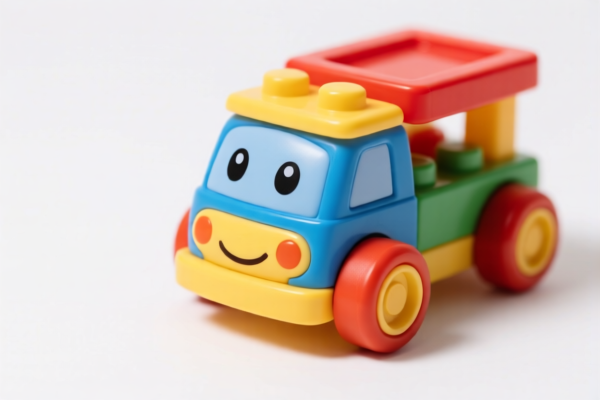
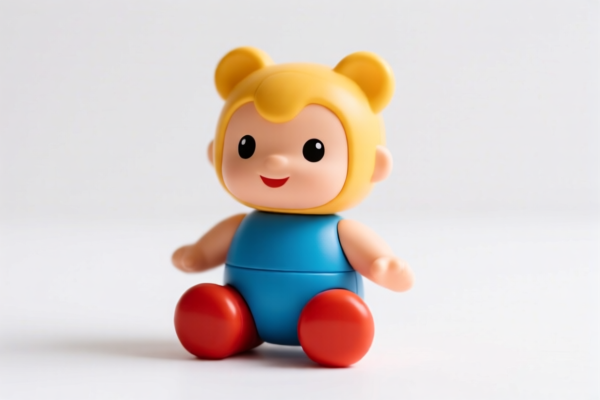
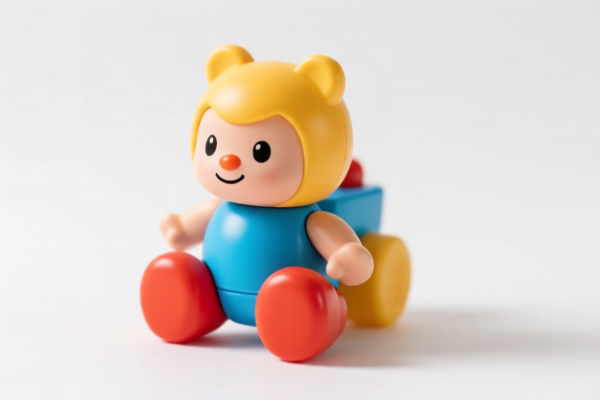
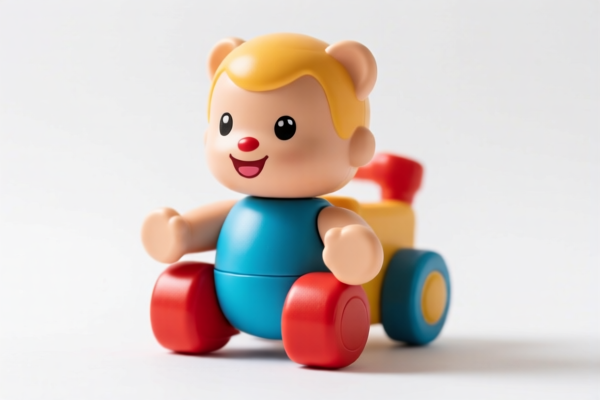
AI Analysis
🦷 Teething Toy (Baby Teething Pillows/Teether Pads)
🌐 HS Code Reference & Customs Clearance Guide | 2026 Latest Tariff Analysis | Professional Clearance Strategy
📌 One: Product Definition & Classification: What Exactly is a "Teething Toy"?
A Teething Toy (specifically Teething Pillows/Pads in this context) is a comfort item designed for infants (typically under 3 years old) to soothe gum pain during the teething process. In international trade, these are often ambiguous goods because they combine toys, textiles, and silicone/rubber components.
The classification depends heavily on the primary material and primary function:
1. Pure Toy/Silicone Teether (9503):
If the item is primarily a molded silicone or rubber teether, or a toy designed specifically for chewing, it falls under Chapter 95.
2. Textile/Soft Toy (6307):
If the item is primarily a fabric pillow or cloth toy with embedded silicone/rubber teething surfaces, it may fall under Chapter 63 as "Other made-up articles."
3. Other Plastic/Rubber Article (3926 / 3924 or 4016):
If the classification logic deems it a "plastic article" or "rubber article" not elsewhere specified, it might fall under miscellaneous plastic/rubber chapters.
⚠️ Key Distinction Point:
- If the silicone/rubber component is the defining feature for its function (chewing) → Chapter 95 (Toys) or Chapter 40/39 (Rubber/Plastic).
- If the textile/fabric component is the defining feature (pillow/cushion) → Chapter 63 (Textile Articles).
- Conflict Note: Customs may view "Teething Pillow" as a textile product, while others view it as a toy. This ambiguity leads to different tax burdens.
📦 二、HS Code Classification Details (2026 Latest Tariff Authority对照)
Based on the provided data, here are the five possible HS Code classifications with their specific logic and tax implications for imports from China to the USA.
| HS Code | Product Description | Matching Logic (Based on Provided Data) | Total Tax Rate | Key Tax Components |
|---|---|---|---|---|
9503.00.00.71 |
Toys (Teething Pillow) | Matches "Toys" category. Used as baby/child comfort toy. Fits "Toys" and "Parts/Accessories" description. Soft material inferred. | 10.0% | Base: 0% Sec 301: 0% 122 Clause: 10% |
9503.00.00.11 |
Toys (Silicone Teether) | Matches "Toys/Baby Supplies". Material inferred as food-grade silicone/rubber based on "Teething" function. For infants <3 years. | 10.0% | Base: 0% Sec 301: 0% 122 Clause: 10% |
6307.90.75.00 |
Textile Teething Toy | Inferred as textile material (fabric/rubber combo). Fits "Textile-made pet/infant toys". No material conflict. | 14.3% | Base: 4.3% Sec 301: 0% 122 Clause: 10% |
3926.90.99.89 |
Plastic/Rubber Article | Inferred as plastic/rubber composition. Fits "Other articles of plastics/rubber" not specifically listed. | 22.8% | Base: 5.3% Sec 301: 7.5% 122 Clause: 10% |
6307.90.98.91 |
Other Textile Article | Classified as "Made-up article". Falls under "Other" (兜底/General) category. No material conflict with textile classification. | 24.5% | Base: 7.0% Sec 301: 7.5% 122 Clause: 10% |
🔍 Critical Insight:
- Lowest Tax: 10.0% if classified as a Toy (9503). This is the most favorable rate but requires proof that the item is primarily a "Toy" or "Infant Care Item" under Chapter 95.
- Highest Tax: 24.5% if classified as a Miscellaneous Textile Article (6307).
- The "122 Clause" Factor: All listed codes include a 10% additional tariff under "Clause 122" (likely referring to a specific Section 301 or retaliatory tariff provision applied to Chinese goods). Note: Ensure you verify if "Clause 122" is the correct current designation in the 2026 tariff book, as Section 301 rates are typically 7.5% - 25%.
💰 三、Detailed Tariff Breakdown (2026 Latest Tariff)
✅ Applicable Country: USA (US)
✅ Origin: China (CN)
✅ Effective Time: 2026 Tariff Book
🎯 1. 9503.00.00.71 & 9503.00.00.11 —— Best Case: Toy Classification
| Item | Content |
|---|---|
| Base Duty | 0.0% |
| Section 301 Duty | 0.0% (Note: Some toy sections may have 0% or 7.5%. Based on data, it is 0%) |
| Additional Clause (122) | +10.0% |
| Total Duty Rate | 10.0% |
| Duty Calculation | CIF Value × 10% |
| De Minimis Eligibility | ❌ No (High risk of rejection or high duty) |
| Legal Basis Path | Chapter 95 → Toys → Parts/Accessories → Clause 122 |
📌 Explanation:
- If Customs accepts your product as a "Toy" or "Infant Teething Toy", you benefit from the 0% base duty.
- However, the 10% additional tariff still applies due to trade restrictions on Chinese goods.
- Why is this best? Even with the 10% add-on, it is 4.3% - 14.5% cheaper than textile/plastic classifications.
🎯 2. 6307.90.75.00 —— Mid-Range: Textile Toy
| Item | Content |
|---|---|
| Base Duty | 4.3% |
| Section 301 Duty | 0.0% |
| Additional Clause (122) | +10.0% |
| Total Duty Rate | 14.3% |
| Duty Calculation | CIF Value × 14.3% |
| De Minimis Eligibility | ❌ No |
📌 Explanation:
- This classification assumes the product is primarily textile (fabric pillow).
- Base duty is higher (4.3%), but still no Section 301 duty in this specific subheading according to the data.
- Risk: Customs may challenge this if the silicone/rubber part is substantial.
🎯 3. 3926.90.99.89 & 6307.90.98.91 —— High Risk: Other Articles
| Item | Content |
|---|---|
| Base Duty | 5.3% (3926) / 7.0% (6307) |
| Section 301 Duty | 7.5% |
| Additional Clause (122) | +10.0% |
| Total Duty Rate | 22.8% (3926) / 24.5% (6307) |
| Duty Calculation | CIF Value × 22.8% / 24.5% |
| De Minimis Eligibility | ❌ No |
📌 Explanation:
- These are "Catch-All" categories for items not specifically listed elsewhere.
- They incur Section 301 duties (7.5%) on top of the base duty.
- Avoid if possible: These rates are significantly higher and leave little room for profit margin erosion.
🛠️ 四、Customs Clearance Practical Advice (Battle-Tested Guide)
✅ 1. Documentation Checklist (Non-Negotiable)
| Document | Required | Purpose |
|---|---|---|
| ✅ Product Photos | ✔️ | Must clearly show silicone/rubber teething parts AND fabric/toy structure. |
| ✅ Material Composition | ✔️ | Critical: List % of Silicone, Fabric, Plastic. If Silicone >50%, argue for Toy/Plastic. If Fabric >50%, argue for Textile. |
| ✅ Usage Description | ✔️ | "Infant Teething Toy for soothing gums." NOT "Cushion" or "Pillow" (avoid home goods terms). |
| ✅ Test Reports | ✔️ | CPC (Children’s Product Certificate), ASTM F963, CPSIA compliance. Proves it’s a Toy, not a generic textile. |
| ✅ Invoice | ✔️ | Must use HS Code 9503.00.00.71 or 11 if possible. Avoid "Pillow" in description; use "Teether Toy" or "Teething Toy". |
| ✅ Packing List | ✔️ | Standard packaging info. |
✅ 2. Declaration Strategy (Key Tactics)
🔥 "Declare as Toy, Prove Function, Avoid Textile Pitfalls!"
| Scenario | Correct Declaration | Wrong Declaration | Consequence |
|---|---|---|---|
| Primary Feature | "Silicone Teething Toy with Fabric Handle" | "Baby Pillow" or "Cushion" | Misclassification: 24.5% tax vs 10%. |
| Material Focus | Highlight Food-Grade Silicone | Highlight Cotton/Polyester | Customs may shift to Chapter 63 (Textile) or Chapter 39 (Plastic). |
| Target User | "For Infants <3 Years" | "For Pets" or "Home Decor" | Pet toys may have different tariffs. Home decor is definitely NOT a toy. |
📌 Pro Tip:
- Avoid the word "Pillow" in the commercial invoice and product description. Use "Teething Pad", "Teething Ring", or "Soothing Toy".
- Emphasize that the product is designed for chewing (Toy Function), not just for resting (Textile Function).
✅ 3. Special Handling Cases
| Situation | Handling Advice |
|---|---|
| Mixed Materials | If the item is 50% fabric, 50% silicone, argue for Chapter 95 (Toys) because the primary function is chewing/soothing via the silicone part. |
| OEM/White Label | Provide OEM contract + Product Design Specs. Show that the design intent is a Toy. |
| Customs Audit | If audited, provide ASTM F963 or CPC certificates. This strongly supports Toy classification (9503). |
| Section 301 Exclusion | Check if your specific HS Code has an exclusion list. Currently, most toys are not excluded from Section 301, but verify the "122 Clause" status. |
🌍 五、Global Market Comparison (2026)
| Country | Recommended HS Code | Duty Rate | Certification | Notes |
|---|---|---|---|---|
| 🇺🇸 USA | 9503.00.00.71 |
10.0% | CPC, CPSIA, ASTM F963 | Best Rate. Must prove Toy status. |
| 🇨🇳 China | 9503.00.00 |
9.0% | CCC | No Section 301. |
| 🇪🇺 EU | 9503.00.00 |
0% - 4% | CE, EN71 | Low duty if classified as Toy. |
| 🇬🇧 UK | 9503.00.00 |
0% - 4% | UKCA, EN71 | Post-Brexit rules apply. |
| 🇦🇺 Australia | 9503.00.00 |
5.0% | WPL | No major trade war tariffs. |
📌 Conclusion:
- The USA is the most complex market due to Section 301/Clause 122 tariffs.
- Classification as a Toy (9503) is critical to minimize the 10% add-on vs the 24.5% worst-case scenario.
- Europe and Asia offer lower and simpler duty structures.
📌 六、Common Mistakes & Pitfalls (Blood-Tested Lessons)
❌ Mistake 1: Calling it a "Baby Pillow"
👉 Consequence: Customs classifies as Textile (6307) → 24.5% Tax.
👉 Fix: Call it "Teething Toy" or "Soothing Toy".
❌ Mistake 2: Ignoring Material Composition
👉 Consequence: If silicone content is high but declared as "Cotton Toy", customs will audit and reclassify to Plastic/Rubber (3926) → 22.8% Tax + fines.
👉 Fix: Accurately declare materials. Highlight Food-Grade Silicone.
❌ Mistake 3: Missing CPC (Children’s Product Certificate)
👉 Consequence: Goods detained or returned at US border.
👉 Fix: Ensure all infant toys <12 years have valid CPC and CPSC-accredited lab testing.
❌ Mistake 4: Assuming "Toy" = 0% Duty
👉 Consequence: Forgetting the 10% Clause 122 tariff.
👉 Fix: Budget for 10% total duty for Toys, not 0%.
✅ Correct Declaration Example:
"Infant Teething Toy, Made of Food-Grade Silicone and Cotton, Designed for Gum Soothing, Age 0-36 Months, Model: TEETH-01"
🎯 七、Conclusion: Professional Declaration, Save Money, Clear Fast!
🎯 Remember the Mantra:
🔹 "Function Over Form: If it’s for Chewing, it’s a Toy!"
🔹 "Avoid 'Pillow' - Use 'Teether'. Avoid 'Textile' - Use 'Toy'."
🔹 "10% is Better than 24.5%. Prove it’s a Toy!"
📌 Tips:
- If your product has significant textile weight, consider if 6307 (14.3%) is safer than risking a 9503 audit.
- Always obtain a Pre-Ruling (Advance Ruling) from US Customs if shipping large volumes.
- Verify the current status of "Clause 122" with your customs broker, as trade policies change frequently.
📣 Immediate Action:
📞 Contact Your Customs Broker + Provide Product Specs + Apply for HS Code Pre-Ruling
🚀 Clear Your Goods Smoothly, Avoid Surprises, Maximize Profits!
✨ Professional Clearance Starts with Accurate Classification!
💼 Every Percent of Duty Saves You Money!
Customer Reviews
About HS Code Classification
The Harmonized System (HS) is an internationally standardized nomenclature developed by the World Customs Organization (WCO) to classify traded products. Over 200 countries use the HS system as the basis for customs tariffs, trade statistics, and import/export regulations.
Each HS code follows a hierarchical structure:
- Chapter (2 digits) — Broad category of goods (e.g., Chapter 84: Machinery and Mechanical Appliances)
- Heading (4 digits) — More specific grouping within the chapter
- Subheading (6 digits) — Internationally standardized breakdown, used by all WCO member countries
- National subdivisions (8-10 digits) — Country-specific extensions for further classification, such as US HTSUS 10-digit codes
Correct HS code classification is essential for smooth customs clearance, accurate duty payment, and compliance with trade regulations. Misclassification can lead to customs delays, overpayment of duties, or penalties.
When importing from CN to US, the applicable tariff rates may include:
- Most-Favored-Nation (MFN) rate — The standard duty rate applied to WTO members
- General rate — Applied to countries without trade agreements
- Trade remedy duties — Additional tariffs such as Section 301 (anti-dumping), Section 232 (national security), or countervailing duties
The information provided on this page is for reference purposes only. For official classification, please consult with your local customs authority or a licensed customs broker.