Telephone, including smartphones
CN → US| HS Code | Tariff Rate | Origin | Destination | Doc |
|---|---|---|---|---|
| 8525601050 | 35.0% | CN | US | Official Doc |
| 8517130000 | 10.0% | CN | US | Official Doc |
| 8517110000 | 17.5% | CN | US | Official Doc |
| 8517110000 | 17.5% | CN | US | Official Doc |
| 8543706000 | 35.0% | CN | US | Official Doc |
Product Images
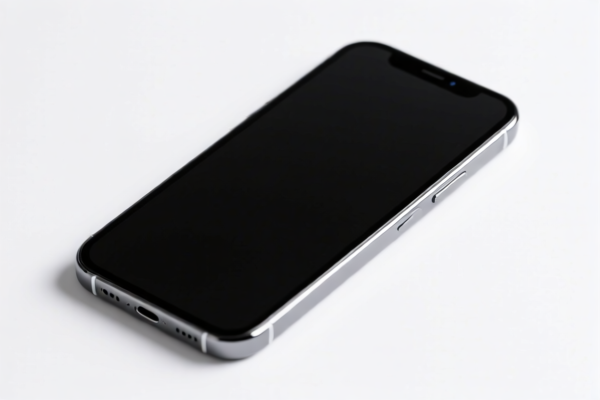
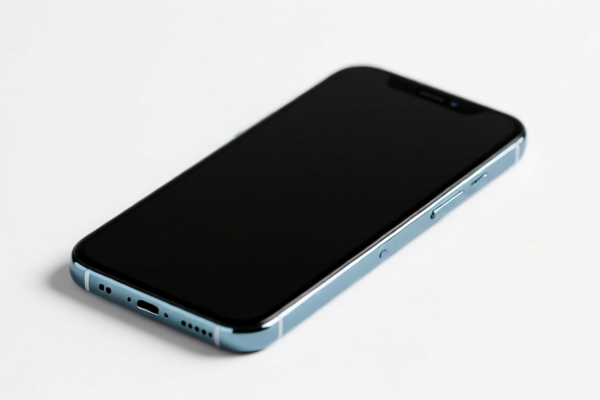
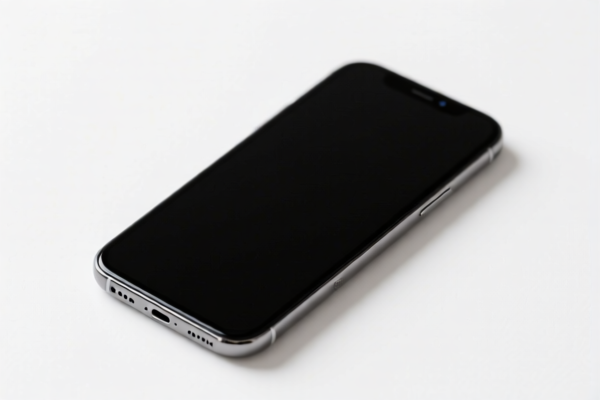
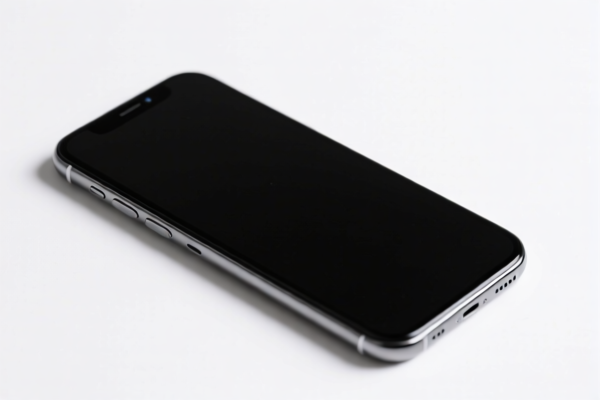
AI Analysis
📞 Telephones & Smartphones (Including Handsets & Smart Devices)
🌐 HS Code Reference & Customs Clearance Guide | 2026 Latest Tariff Analysis | Professional Clearance Strategy
📌 I. Product Definition & Classification: Do You Really Understand "Telephones"?
Telephones and smartphones are the core communication terminals in modern digital life. In international trade, their classification depends heavily on network connectivity, functionality, and material composition. Misclassification can lead to severe tariff penalties due to ongoing trade policies.
⚠️ Key Distinction Points:
- Traditional/Wireless Landline Phones or Voice-only devices: Often fall under broader communication equipment categories if not strictly cellular.
- Smartphones & Cellular Telephones: Specifically designed for cellular networks, generally attracting lower base tariffs but subject to specific trade条款 (Section 301/IEEPA).
- Accessories/Peripherals: Devices that connect to telephones (e.g., headsets, adapters) may be classified differently than the handsets themselves.
📦 II. HS Code Classification Details (2026 Latest Tariff Authority Comparison)
| HS Code | Product Description | Applicability Scenario | Tax Rate (Total) | Legal Basis for Classification |
|---|---|---|---|---|
8525.60.10.50 |
Other Transmission Apparatus (Including Electronic Components) | Devices categorized as general transmission apparatus, containing electronic components and plastic/metal casings. Often used for specialized wireless voice transmission not fitting standard smartphone definitions. | 35.0% | High tariff due to Section 301 + IEEPA; classified as general transmission equipment rather than specific handsets. |
8517.13.00.00 |
Smartphones & Modern Telephones | Highly Matched: Product names explicitly cover telephones and smartphones. Matches core usage and form factor in classification explanations. | 10.0% | Lowest tariff among options; explicitly recognized for smartphones and standard telephones with no conflicting material restrictions. |
8517.11.00.00 |
Radiotelephonic Apparatus (Cellular/Wireless Networks) | Standard Cellular Phones: Telephones for cellular or other wireless networks, including smartphones and traditional phones. No material conflicts. | 17.5% | Mid-range tariff; applies to devices explicitly for cellular networks, subject to additional duties. |
8543.70.60.00 |
Signal Processing/Peripherals | Devices designed specifically to connect to telephone equipment, instruments, or telephone networks. Classified as finished peripheral/equipment devices. | 35.0% | High tariff; applies to accessories or specialized interfaces that connect to phones, not the phones themselves. |
🔍 Key Insight:
-8517.13.00.00is the most favorable code for standard Smartphones, offering only 10% total duty.
-8525.60.10.50and8543.70.60.00attract 35% duties, typically for specialized transmission gear or peripherals, not standard consumer handsets.
-8517.11.00.00is a common fallback for cellular phones but carries a 17.5% rate, higher than8517.13.
💰 III. 2026 Latest Tariff Rate Breakdown (Including Surtaxes & Policy Add-ons)
✅ Applicable Country: United States (US)
✅ Origin: China (CN)
✅ Effective Date: From November 10, 2025 (including subsequent imports)
🎯 1. 8525.60.10.50 —— Transmission Apparatus (General)
| Item | Details |
|---|---|
| Base Tariff | 0% (ad valorem) |
| USITC Surtax (Section 301) | +25.0% |
| IEEPA Surtax (122 Clause) | +10.0% |
| Total Tariff | 35.0% |
| Calculation | CIF Value × 35% |
| De Minimis Exemption | ❌ Not Available |
| Legal Path | IEEPA:9903.01.25 → USITC:8525.60.10.50 → FOOTNOTE:9903.88.01 |
📌 Explanation:
- This code attracts the maximum surtax tier for electronics/transmission equipment.
- The 35% total rate makes importing general transmission apparatus highly costly.
- Warning: Do not use this for standard smartphones unless they are specialized non-cellular transmission devices.
🎯 2. 8517.13.00.00 —— Smartphones & Modern Telephones
| Item | Details |
|---|---|
| Base Tariff | 0% (ad valorem) |
| USITC Surtax (Section 301) | 0.0% |
| IEEPA Surtax (122 Clause) | +10.0% |
| Total Tariff | 10.0% |
| Calculation | CIF Value × 10% |
| De Minimis Exemption | ❌ Not Available |
| Legal Path | IEEPA:9901.25 → USITC:8517.13.00.00 |
📌 Advantage:
- This is the optimal code for Smartphones.
- The USITC Section 301 surtax is 0% for this specific subheading, significantly reducing costs compared to8517.11.
- Only the 10% IEEPA surtax applies.
🎯 3. 8517.11.00.00 —— Radiotelephonic Apparatus (Cellular)
| Item | Details |
|---|---|
| Base Tariff | 0% (ad valorem) |
| USITC Surtax (Section 301) | +7.5% |
| IEEPA Surtax (122 Clause) | +10.0% |
| Total Tariff | 17.5% |
| Calculation | CIF Value × 17.5% |
| De Minimis Exemption | ❌ Not Available |
| Legal Path | IEEPA:9901.25 → USITC:8517.11.00.00 → FOOTNOTE:9903.88.01 |
📌 Note:
- Often applied to traditional cellular phones or devices strictly defined as "radiotelephonic."
- While better than8525(35%), it is 7.5% more expensive than8517.13(10%).
- Ensure your product description matches the "smartphone" definition to qualify for8517.13.
🎯 4. 8543.70.60.00 —— Peripherals/Connectors to Telephones
| Item | Details |
|---|---|
| Base Tariff | 0% (ad valorem) |
| USITC Surtax (Section 301) | +25.0% |
| IEEPA Surtax (122 Clause) | +10.0% |
| Total Tariff | 35.0% |
| Calculation | CIF Value × 35% |
| De Minimis Exemption | ❌ Not Available |
| Legal Path | IEEPA:9903.01.25 → USITC:8543.70.60.00 |
📌 Warning:
- This code is for devices connecting TO telephones (e.g., specialized headsets, network interfaces).
- If you import a handset, misclassifying it here will result in a 35% tariff and potential customs audits for misdeclaration.
🛠️ IV. Customs Clearance Practical Advice (Real-World Pitfall Avoidance)
✅ 1. Essential Documentation Checklist (Non-negotiable)
| Document | Must Provide | Description |
|---|---|---|
| ✅ Product Specifications | ✔️ | Must explicitly state "Smartphone" or "Telephone," including OS, network type (4G/5G), and connectivity features. |
| ✅ Technical Diagrams | ✔️ | Show internal components to prove it is a communication device, not a general electronic toy or peripheral. |
| ✅ Product Photos (with Labels) | ✔️ | Clear images of the front, back, and rating plate (model number, input/output). |
| ✅ Certifications | ✔️ | FCC ID is mandatory for US import. Also provide CE/RoHS if available. |
| ✅ Commercial Invoice | ✔️ | Must clearly describe the item as "Mobile Phone" or "Smartphone," not vague terms like "Electronics." |
| ✅ Packing List | ✔️ | Detail the contents: Phone, charger, cable, manual. Ensure no hidden accessories that might trigger separate classification. |
✅ 2. Declaration Tips (Key Mnemonics)
🔥 “Smartphone is Key, 13 is Best, 11 is Mid, 25/43 is High!”
| Scenario | Correct Declaration | Risk of Error |
|---|---|---|
| Modern Smartphone (iOS/Android) | 8517.13.00.00 |
Using 8517.11 → 7.5% extra cost. Using 8525.60 → 25% extra cost! |
| Traditional Cellular Phone (No Smart OS) | 8517.11.00.00 |
Can sometimes argue for 8517.13, but 8517.11 is safer for non-smart devices. |
| Phone Accessory (Headset/Adapter) | 8543.70.60.00 |
Misdeclaring as a phone → 35% duty instead of potential lower rates for accessories (check specific accessory codes). |
| Vibration Motor/Charging Case only | Check separate HS Codes (e.g., 8517.12, 8543.70) | Bundling as "Phone" → Misclassification. |
✅ 3. Special Handling for Different Markets
| Scenario | Handling Suggestion |
|---|---|
| OEM/ODM Smartphones | Provide the client’s design specs and FCC grant. Ensure the description matches the marketed name (e.g., "Model XYZ Smartphone"). |
| Refurbished Phones | Declare as "Used/Refurbished Smartphone." Ensure clean data and compliance with FCC rules for re-imported electronics. |
| Phones with eSIM/iSIM | Still classified under 8517.13 or 8517.11. No difference in tariff, but ensure technical docs reflect digital SIM capabilities. |
| Cross-Border E-Commerce (De Minimis) | ❌ Warning: Most telephones are NOT eligible for de minimis exemption ($800) under current IEEPA/Section 301 rules. Expect full duty assessment. |
🌍 V. Global Market Comparison (2026 Latest)
| Country/Region | Recommended HS Code | Tariff (China Origin) | Certification Required | Notes |
|---|---|---|---|---|
| 🇺🇸 USA | 8517.13.00.00 |
10% | FCC | Best rate for smartphones. 8517.11 is 17.5%. |
| 🇨🇳 China | 8517.13.00.00 |
~1% - 3% | CCC | Domestic market has low tariffs, but strict certification. |
| 🇪🇺 EU | 8517.13.00.00 |
0% (if under EBA) | CE + RED | No Section 301 equivalent, but strict RED directive compliance needed. |
| 🇬🇧 UK | 8517.13.00.00 |
0% | UKCA | Post-Brexit, UKCA mark required for electronics. |
📌 Conclusion:
- The US market is unique due to Section 301 and IEEPA surtaxes.
- Choosing the correct HS Code (8517.13) can save you 25% in duties compared to misclassification.
- Always verify if the device is considered a "Smartphone" (fits8517.13) or a generic "Radiotelephone" (8517.11).
📌 VI. Common Errors & Pitfall Avoidance (Lessons Learned)
❌ Error 1: Declaring a Smartphone as "General Communication Equipment" (8525.60)
👉 Consequence: 35% tariff instead of 10%. Loss of $25 for every $100 value.
❌ Error 2: Using 8517.11 for a clear Smartphone
👉 Consequence: 17.5% tariff instead of 10%. Unnecessary 7.5% cost increase.
❌ Error 3: Importing Phone Accessories (e.g., cases, screens) mixed with Phones
👉 Consequence: If not bundled correctly, accessories may be taxed separately or lead to inspection delays. Keep accessory HS codes clear.
❌ Error 4: Ignoring FCC ID on the Invoice
👉 Consequence: Customs Hold. CBP will reject entry without a valid FCC ID for telephones.
✅ Correct Practice:
"Smartphone, 5G, Android OS, Model ABC, FCC ID: XYZ, Includes Charger & Cable"
🎯 VII. Conclusion: Precise Classification Saves Money!
🎯 Remember the Mantra:
🔹 "Smartphone = 8517.13 (10%)"
🔹 "Cellular Phone = 8517.11 (17.5%)"
🔹 "Transmission/Peripheral = 8525/8543 (35%)"
🔹 "Choose Wisely, Pay Less!"
📌 Pro Tip:
If your smartphones are manufactured in Vietnam, India, or Mexico, you may qualify for IEEPA Exemptions or lower Section 301 rates due to origin rules.
Recommendation: Apply for a Pre-Ruling (CBP Ruling Letter) to confirm the HS Code before shipping large volumes.
📣 Immediate Action:
📞 Consult a licensed customs broker.
📄 Provide FCC ID and Product Specs.
🚀 Ensure your Smartphones clear US Customs at the lowest possible 10% rate!
✨ Professional Clearance Starts with Accurate Classification!
💼 Every Dollar Saved in Duties is Pure Profit!
Customer Reviews
About HS Code Classification
The Harmonized System (HS) is an internationally standardized nomenclature developed by the World Customs Organization (WCO) to classify traded products. Over 200 countries use the HS system as the basis for customs tariffs, trade statistics, and import/export regulations.
Each HS code follows a hierarchical structure:
- Chapter (2 digits) — Broad category of goods (e.g., Chapter 84: Machinery and Mechanical Appliances)
- Heading (4 digits) — More specific grouping within the chapter
- Subheading (6 digits) — Internationally standardized breakdown, used by all WCO member countries
- National subdivisions (8-10 digits) — Country-specific extensions for further classification, such as US HTSUS 10-digit codes
Correct HS code classification is essential for smooth customs clearance, accurate duty payment, and compliance with trade regulations. Misclassification can lead to customs delays, overpayment of duties, or penalties.
When importing from CN to US, the applicable tariff rates may include:
- Most-Favored-Nation (MFN) rate — The standard duty rate applied to WTO members
- General rate — Applied to countries without trade agreements
- Trade remedy duties — Additional tariffs such as Section 301 (anti-dumping), Section 232 (national security), or countervailing duties
The information provided on this page is for reference purposes only. For official classification, please consult with your local customs authority or a licensed customs broker.