Telephone (including smartphones)
CN → US| HS Code | Tariff Rate | Origin | Destination | Doc |
|---|---|---|---|---|
| 8525601050 | 35.0% | CN | US | Official Doc |
| 8517130000 | 10.0% | CN | US | Official Doc |
| 8517110000 | 17.5% | CN | US | Official Doc |
| 8517110000 | 17.5% | CN | US | Official Doc |
| 8543706000 | 35.0% | CN | US | Official Doc |
Product Images
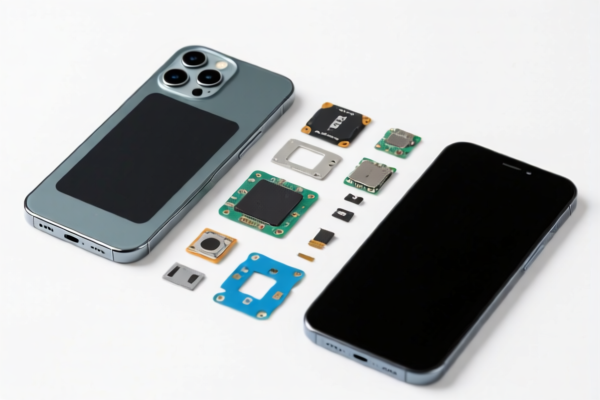
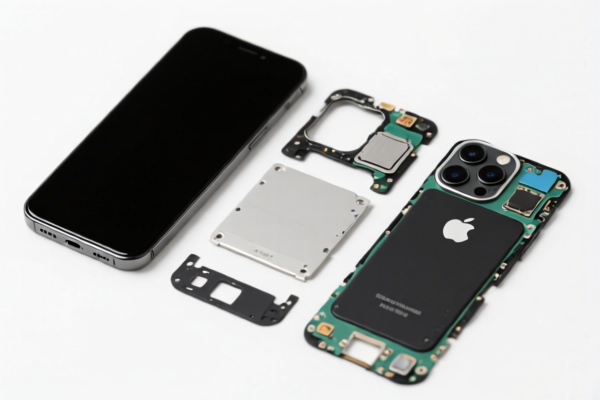
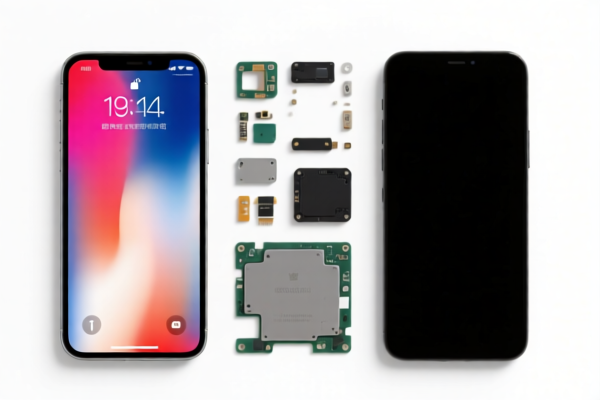
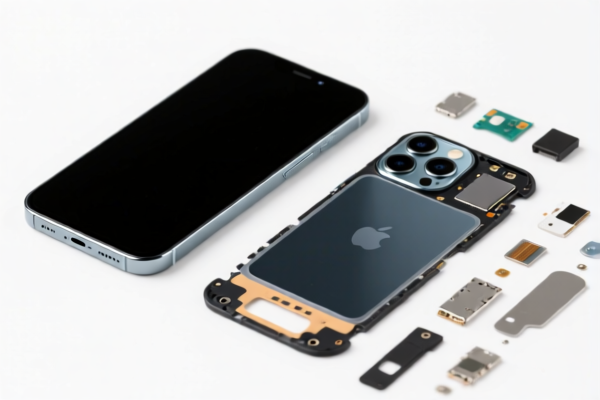
AI Analysis
📱 Telephone & Smartphones (Communication Devices)
🌐 HS Code Reference & Customs Clearance Guide | 2026 Latest Tariff Analysis | Professional Clearance Strategy
📌 I. Product Definition & Classification: Do You Truly Understand "Telephones"?
Telephones, including traditional landlines and modern smartphones, are core communication devices in the global digital economy. In international trade, they are categorized based on their connectivity, internal components, and specific functions. Misclassification can lead to severe tariff discrepancies due to recent trade policies (specifically Section 301 and IEEPA provisions).
Key Distinctions: * Cellular/Wireless Telephones (Smartphones): Devices that connect to cellular networks or wireless Wi-Fi/Bluetooth. These fall under Heading 8517. * Other Telephone Apparatus: Devices that may not be primarily cellular but are designed for voice transmission, often containing complex electronic assemblies. These may fall under Heading 8525 or 8543 depending on specific design and network connection capabilities.
⚠️ Critical Identification Point:
- If the device connects to a cellular network (4G/5G/LTE) or acts as a primary smartphone → HS 8517.11
- If the device is a specialized communication apparatus not strictly a "telephone" in the traditional sense but fits "transmitters/receivers" → HS 8525.60
- If the device is an accessory or specialized terminal designed to connect to a telephone network (not the telephone itself) → HS 8543.70
📦 II. HS Code Classification Details (2026 Latest Tariff Authority Comparison)
Based on the provided data, here are the specific classifications and their rationales:
| HS Code | Product Description | Applicability/Summary from Data |
|---|---|---|
8517.11.00.00 |
Cellular Phones & Smartphones | ✅ Primary Fit: Telephones for cellular networks or other wireless networks. Covers smartphones and telephones. No material conflict. |
8517.13.00.00 |
Other Telephone Apparatus | ✅ Explicit Fit: Product name explicitly covers telephones and smartphones, fully matching classification explanations. |
8525.60.10.50 |
Transmitters/Receivers (Communication Equipment) | ⚠️ Specialized Fit: Telephones belong to communication equipment, fitting the purpose of transmitters/receivers. Includes electronic components and plastic/metal housings. |
8543.70.60.00 |
Other Electric Appliances | ⚠️ Terminal Fit: Finished appliances designed to connect to telephone equipment, instruments, or telephone networks. |
🔍 Key Insight:
-8517.11.00.00and8517.13.00.00are the most common for standard smartphones.
-8525.60.10.50and8543.70.60.00may apply to specialized communication terminals or devices where the primary function is broader than just voice calling, or where customs authorities interpret the "transmitter/receiver" aspect differently.
💰 III. 2026 Latest Tariff Rate Details (Including Surcharges & Policy Add-ons)
✅ Applicable Country: United States (US)
✅ Origin: China (CN)
✅ Effective Date: Ongoing (Based on current trade restrictions)
🎯 1. 8517.11.00.00 —— Cellular Phones / Smartphones
| Item | Detail |
|---|---|
| Base Duty Rate | 0.0% |
| Section 301 Surcharge | +7.5% |
| 122 Clause Tariff | +10% |
| Total Effective Rate | 17.5% |
| Tax Calculation | CIF Value × 17.5% |
| Legal Basis Path | USITC:8517.11.00.00 → Section 301: 7.5% → 122 Clause: 10% |
📌 Explanation:
- This is the standard classification for smartphones connecting to cellular networks.
- The 17.5% total rate is significantly lower than the 35% rate applied to some other communication equipment categories.
- Crucial: Ensure the device is indeed a cellular telephone. If misclassified as a non-cellular device, it might fall into higher brackets.
🎯 2. 8517.13.00.00 —— Other Telephone Apparatus
| Item | Detail |
|---|---|
| Base Duty Rate | 0.0% |
| Section 301 Surcharge | 0.0% |
| 122 Clause Tariff | +10% |
| Total Effective Rate | 10.0% |
| Tax Calculation | CIF Value × 10.0% |
| Legal Basis Path | USITC:8517.13.00.00 → 122 Clause: 10% |
📌 Explanation:
- This code explicitly covers telephones and smartphones in its summary.
- Lowest Risk: With only a 10% total tax (solely from the 122 Clause), this is the most cost-effective classification if the product description perfectly matches the "explicit coverage" noted in the data.
- Requirement: The product name and description must explicitly mention "telephone" and "smartphone" to justify this classification.
🎯 3. 8525.60.10.50 —— Transmitters/Receivers (Communication Equipment)
| Item | Detail |
|---|---|
| Base Duty Rate | 0.0% |
| Section 301 Surcharge | +25.0% |
| 122 Clause Tariff | +10% |
| Total Effective Rate | 35.0% |
| Tax Calculation | CIF Value × 35.0% |
| Legal Basis Path | USITC:8525.60.10.50 → Section 301: 25.0% → 122 Clause: 10% |
📌 Explanation:
- This classification treats the telephone as a generic "transmitter/receiver" with electronic components and housings.
- High Cost: The 35% rate is punitive. This may apply if the device is considered a specialized communication device rather than a standard consumer telephone, or if specific component rules push it here.
- Warning: Avoid this classification for standard smartphones unless absolutely necessary.
🎯 4. 8543.70.60.00 —— Other Electric Appliances (Telecom Terminals)
| Item | Detail |
|---|---|
| Base Duty Rate | 0.0% |
| Section 301 Surcharge | +25.0% |
| 122 Clause Tariff | +10% |
| Total Effective Rate | 35.0% |
| Tax Calculation | CIF Value × 35.0% |
| Legal Basis Path | USITC:8543.70.60.00 → Section 301: 25.0% → 122 Clause: 10% |
📌 Explanation:
- Applies to finished appliances designed to connect to telephone networks/equipment.
- Same High Cost as #3: 35% total tax.
- Use case: Likely for specialized industrial telephony equipment or terminals that are not primary consumer smartphones.
🛠️ IV. Customs Clearance Practical Advice (Battle-Proven Pitfall Avoidance)
✅ 1. Document Checklist (Non-Negotiable)
| Document | Mandatory? | Notes |
|---|---|---|
| ✅ Product Specifications | ✔️ | Must clearly state "Smartphone," "Cellular Network," "Model Number," "IMEI/Serial Number Range." |
| ✅ Technical Diagrams | ✔️ | Show connectivity modules (WiFi, Bluetooth, Cellular Modems) to prove it's a telecommunication device. |
| ✅ Product Photos | ✔️ | Front/back views, ports, and label showing FCC/CE certification. |
| ✅ Commercial Invoice | ✔️ | Must use precise English description: "Smartphone for Cellular Network Use, Model XYZ" |
| ✅ Origin Certificate | ✔️ | To verify country of origin for tariff application. |
| ✅ FCC ID (if US-bound) | ✔️ | Critical for communication devices. Missing FCC ID = Customs Hold. |
✅ 2. Declaration Strategy (Key Mantra)
🔥 "Be Precise: 'Cellular' Wins, 'Transmitter' Costs!"
| Scenario | Correct Declaration | Wrong Declaration | Result |
|---|---|---|---|
| Standard Smartphone | 8517.13.00.00 ("Telephone including Smartphone") |
8525.60.10.50 ("Transmitter") |
Save 25% (35% vs 10%) |
| Cellular Phone | 8517.11.00.00 ("For Cellular Network") |
Generic "Phone" | Clear 17.5% rate |
| Specialized Terminal | 8543.70.60.00 ("Connected to Telephone Network") |
8517.11.00.00 |
Risk of audit if not truly a network terminal |
📌 Critical Tip:
- If you can classify under8517.13.00.00, do so. The summary explicitly states it "covers telephones and smartphones." This yields the lowest tax (10%).
- Avoid8525and8543unless the device is not a standard phone but a specialized communication appliance, as the 35% tax is a major cost driver.
✅ 3. Special Circumstances Handling
| Situation | Recommendation |
|---|---|
| Mixed Shipments (Phones + Accessories) | Declare phones under 8517.13 or 8517.11. Declare accessories (cables, cases) under their respective codes. Do not lump them into "Telephone" to avoid misclassification audits. |
| Refurbished/Second-Hand Phones | Ensure "Refurbished" is clearly stated. Some codes may have different restrictions or require additional declarations. |
| Devices with VoIP-only (No Cellular) | If it does NOT connect to cellular networks, 8517.11 may be incorrect. Consider 8517.13 or even 8517.62 (Machines for reception/conversion/distribution) depending on IP capabilities. Check with a broker. |
| FCC Certification | For any device emitting radio frequencies (Wi-Fi, Bluetooth, Cellular), FCC certification is mandatory. Without it, US Customs will detain and likely destroy the shipment. |
🌍 V. Global Market Clearance Comparison (2026 Latest)
| Country/Region | Recommended HS Code | Tariff (China Origin) | Certification | Notes |
|---|---|---|---|---|
| 🇺🇸 USA | 8517.13.00.00 |
10% (Lowest) | FCC ID + RoHS | Avoid 8525/8543 (35%). |
| 🇺🇸 USA | 8517.11.00.00 |
17.5% | FCC ID + RoHS | Standard for cellular phones. |
| 🇨🇳 China | 8517.13.00.00 |
~3-5% | CCC | Import duties apply, but no US surcharges. |
| 🇪🇺 EU | 8517.13.00.00 |
0% (Most MFN) | CE + RED | No Section 301/IEEPA surcharges. |
| 🇬🇧 UK | 8517.13.00.00 |
0% | UKCA | Post-Brexit rules align with CE in many cases. |
📌 Conclusion:
- The US is the only major market with these specific high surcharges.
- Optimization: Aim for8517.13.00.00to minimize US duties to 10%.
- Compliance: FCC ID is non-negotiable for any wireless communication device entering the US.
📌 VI. Common Mistakes & Pitfall Avoidance (Lessons Learned)
❌ Mistake 1: Classifying Smartphones as 8525.60.10.50 ("Transmitters")
👉 Consequence: Tariff jumps from 10% to 35%. Loss of 25% profit margin.
👉 Fix: Use 8517.13.00.00 if the product description explicitly allows it.
❌ Mistake 2: Failing to Specify "Cellular" or "Smartphone" in Description
👉 Consequence: Customs may assign a default, higher-rate code or request a re-classification, causing delays.
👉 Fix: Be explicit. Use: "Smartphone, Cellular Telephone, Wi-Fi/Bluetooth Enabled, Model ABC."
❌ Mistake 3: Ignoring FCC ID Requirements
👉 Consequence: Shipment detained or destroyed at US port.
👉 Fix: Ensure FCC ID is printed on the device and listed in the invoice/dock receipt.
✅ Correct Practice:
"Smartphone, Model XYZ, Cellular Telephone for Wireless Network Use, with FCC ID: XXXXX-XXXXX, Including Battery and Charger"
🎯 VII. Conclusion: Precision in Classification = Profit Maximization
🎯 Remember the Mantra:
🔹 "13.00 is King (10%), 11.00 is Prince (17.5%), 25/43 are Pitfalls (35%)."
🔹 "Explicit Description Saves 25% Tax!"
🔹 "FCC ID is Mandatory for US Wireless Devices."
✨ Professional Clearance Starts with Accurate Classification!
💼 Your bottom line depends on the first 8 digits of your HS Code.
Customer Reviews
About HS Code Classification
The Harmonized System (HS) is an internationally standardized nomenclature developed by the World Customs Organization (WCO) to classify traded products. Over 200 countries use the HS system as the basis for customs tariffs, trade statistics, and import/export regulations.
Each HS code follows a hierarchical structure:
- Chapter (2 digits) — Broad category of goods (e.g., Chapter 84: Machinery and Mechanical Appliances)
- Heading (4 digits) — More specific grouping within the chapter
- Subheading (6 digits) — Internationally standardized breakdown, used by all WCO member countries
- National subdivisions (8-10 digits) — Country-specific extensions for further classification, such as US HTSUS 10-digit codes
Correct HS code classification is essential for smooth customs clearance, accurate duty payment, and compliance with trade regulations. Misclassification can lead to customs delays, overpayment of duties, or penalties.
When importing from CN to US, the applicable tariff rates may include:
- Most-Favored-Nation (MFN) rate — The standard duty rate applied to WTO members
- General rate — Applied to countries without trade agreements
- Trade remedy duties — Additional tariffs such as Section 301 (anti-dumping), Section 232 (national security), or countervailing duties
The information provided on this page is for reference purposes only. For official classification, please consult with your local customs authority or a licensed customs broker.