Telephone Cord Hair Ties
CN → US| HS Code | Tariff Rate | Origin | Destination | Doc |
|---|---|---|---|---|
| 3926909905 | 22.8% | CN | US | Official Doc |
| 3926903500 | 24.0% | CN | US | Official Doc |
Product Images
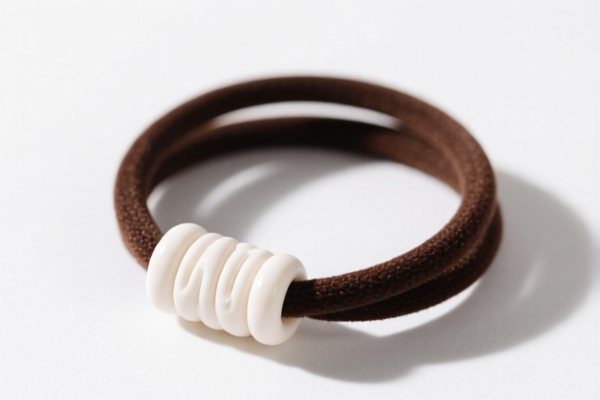
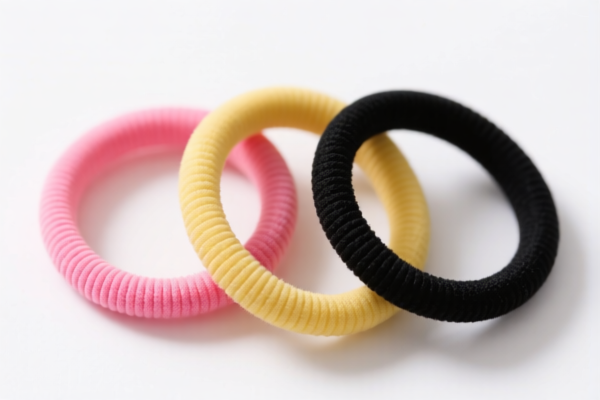


AI Analysis
🎀 Hair Ties / Telephone Cord Hair Ties (Elastic Hair Accessories)
🌐 HS Code Reference & Customs Clearance Guide | 2026 Latest Tariff Analysis | Professional Strategy
📌 I. Product Definition & Classification: What Are "Telephone Cord Hair Ties"?
"Telephone cord hair ties" (also known as spiral hair coils or phone-cord elastic bands) are flexible, spiral-shaped hair accessories made entirely of synthetic plastic polymers (typically PVC or similar thermoplastics). Unlike fabric scrunchies or rubber bands with metal clasps, these items are: 1. 100% Plastic: No metal, fabric, or other base materials. 2. Elastic in Nature: Designed to stretch and retain shape. 3. Not Strung: They are individual, single-unit accessories, not beads on a string.
⚠️ Critical Distinction:
- If the item is purely plastic and functions as an elastic band → 3926.90.99.05
- If the item is a bead/spangle NOT strung (and not an elastic band) → 3926.90.35.00
- Note: While both are plastic articles, customs authorities strictly distinguish between "elastic bands" and "beads/spangles" based on function and form. Spiral hair ties are primarily classified as elastic bands due to their stretching functionality.
📦 II. HS Code Classification Details (2026 Latest Tariff Reference)
| HS Code | Product Description | Key Characteristics | Applicable Scenario |
|---|---|---|---|
3926.90.99.05 |
Other articles of plastics: Other: Elastic bands made wholly of plastics | Spiral, stretchable, 100% plastic, no metal parts | Standard telephone cord hair ties, spiral coils |
3926.90.35.00 |
Other articles of plastics: Other: Beads, bugles and spangles, not strung...: Other | Rigid or semi-rigid, decorative, NOT primarily elastic | Plastic beads, sequins, or decorative hair clips that are NOT elastic bands |
🔍 Key Clarification:
- Most "Telephone Cord" hair ties fall under3926.90.99.05because their primary function is elasticity.
- Do NOT use3926.90.35.00unless the item is a rigid, non-stretchable decorative bead. Misclassification here leads to incorrect tax rates and potential customs delays.
💰 III. 2026 Latest Tariff Rate Breakdown (Including Surtaxes & Policy Add-ons)
✅ Applicable Country: United States (US)
✅ Country of Origin: China (CN)
✅ Effective Date: 2025-11-10 onwards (for imports)
🎯 1. 3926.90.99.05 —— Elastic Bands Made Wholly of Plastics
| Item | Detail |
|---|---|
| Base Tariff | 5.3% (ad valorem) |
| Surtax (Section 301/IEEPA) | +7.5% |
| Total Tariff | 12.8% |
| Tax Calculation | CIF Value × 12.8% |
| De Minimis Eligibility | ❌ No (Generally, plastic articles from China are subject to full taxation if above $800, but this HS code is typically not eligible for de minimis exemptions if classified under specific high-risk plastic categories. Always verify current CBP rulings.) |
| Legal Basis Path | HTSUS:3926.90.99.05 → USITC Surtax: 7.5% → Total: 12.8% |
📌 Explanation:
- The 5.3% base rate is the standard Most Favored Nation (MFN) rate for other plastic articles.
- The 7.5% surtax is applied under the U.S. Trade Representative’s (USTR) Section 301 actions against China for plastic goods.
- Total: 12.8% is the cost you must account for in your landed cost calculation.
🎯 2. 3926.90.35.00 —— Beads, Bugles, and Spangles (Not Elsewhere Specified)
| Item | Detail |
|---|---|
| Base Tariff | 6.5% (ad valorem) |
| Surtax (Section 301/IEEPA) | +7.5% |
| Total Tariff | 14.0% |
| Tax Calculation | CIF Value × 14.0% |
| De Minimis Eligibility | ❌ No |
| Legal Basis Path | HTSUS:3926.90.35.00 → USITC Surtax: 7.5% → Total: 14.0% |
📌 Note:
- If your product is mistakenly classified as "beads" rather than "elastic bands," you pay 1.2% more in total tariffs.
- However, this classification is incorrect for spiral hair ties, as they are not beads.
🛠️ IV. Customs Clearance Practical Advice (Real-World Pitfall Guide)
✅ 1. Documentation Checklist (Non-Negotiable)
| Document | Required? | Explanation |
|---|---|---|
| ✅ Product Specification Sheet | ✔️ | Must state: "100% Plastic," "Elastic," "No Metal Parts." |
| ✅ Material Composition Statement | ✔️ | Explicitly declare material (e.g., PVC, TPE). |
| ✅ Product Photos (Clear) | ✔️ | Show the spiral structure, flexibility, and lack of metal/fabric. |
| ✅ Commercial Invoice | ✔️ | Description must read: "Plastic Elastic Hair Ties, Spiral Type, 100% PVC" |
| ✅ Packing List | ✔️ | Include quantity, weight, and dimensions. |
✅ 2. Declaration Tips (Key Mnemonics)
🔥 “100% Plastic, No Metal, Call it Elastic, Not Beads!”
| Scenario | Correct Declaration | Incorrect Declaration |
|---|---|---|
| Spiral Hair Tie | 3926.90.99.05 |
9615.19 (Hair combs/clips) or 6307.90 (Textiles) |
| Hair Tie with Metal Clasp | Not 100% Plastic → Likely 9615.19 or 8317.00 |
3926.90.99.05 (Incorrect, has metal) |
| Decorative Plastic Bead | 3926.90.35.00 |
3926.90.99.05 (Incorrect, not elastic) |
⚠️ Critical Warning:
- Do NOT classify plastic hair ties under9615.19(Hair combs, brushes) or6307.90(Textiles). These are incorrect for 100% plastic elastic bands.
- Do NOT use3926.90.35.00unless the item is a rigid bead. Using this for elastic bands may lead to disputes over "elasticity."
✅ 3. Special Cases & Handling
| Situation | Handling Advice |
|---|---|
| Mixed Materials | If the hair tie has any metal (e.g., a clasp or clip), it is NO LONGER "wholly of plastics." It may be classified under 9615.19 or 8317.00, which have different tax rates. |
| Textile Core with Plastic Cover | If it’s a rubber/fabric band covered in plastic, it may fall under 6307.90 or 4016.93. Check composition! |
| Bulk vs. Retail | Ensure the description matches the retail form. "Retail-packed" may trigger different labeling requirements. |
🌍 V. Global Market Comparison (2026 Latest)
| Country/Region | Recommended HS Code | Tariff Rate | Certification/Notes |
|---|---|---|---|
| 🇺🇸 USA | 3926.90.99.05 |
12.8% | No special certs, but high tariff. |
| 🇨🇳 China | 3926.90.99.05 |
5.3% | Standard import tax. |
| 🇪🇺 EU | 3926.90.97 |
4.5% | CE marking may apply if for children. |
| 🇬🇧 UK | 3926.90.97 |
4.5% | Post-Brexit rules apply. |
| 🇦🇺 Australia | 3926.90.97 |
5.0% | No additional surtaxes. |
| 🇯🇵 Japan | 3926.90.90 |
6.0% | No additional surtaxes. |
📌 Conclusion:
- The US has the highest effective tariff (12.8%) due to the 7.5% surtax on Chinese plastic goods.
- Other markets typically charge only the base rate (4.5%–6.0%).
- Strategic Tip: If targeting the US, consider supply chain diversification (e.g., manufacture in Vietnam or Thailand) to avoid the 7.5% surtax.
📌 VI. Common Errors & Pitfalls (Lessons Learned)
❌ Error 1: Classifying under 9615.19 (Hair Combs/Brushes)
👉 Consequence: Customs may reject or reclassify, leading to delay + 12.8% tariff instead of potential lower rates for accessories.
👉 Why Wrong: Hair ties are not combs/brushes.
❌ Error 2: Classifying under 6307.90 (Textiles)
👉 Consequence: If the product is 100% plastic, this is fraudulent misclassification. Penalties apply.
👉 Why Wrong: No textile content.
❌ Error 3: Using 3926.90.35.00 for Elastic Bands
👉 Consequence: Higher tariff (14.0% vs. 12.8%) and potential audit for "bead" classification.
👉 Why Wrong: Spiral ties are elastic, not beads.
✅ Correct Declaration Example:
"Hair Ties, Spiral Type, 100% PVC Plastic, Elastic, Not Strung, Retail Packaged"
🎯 VII. Conclusion: Precision in Classification Saves Money
🎯 Remember the Golden Rules:
🔹 “100% Plastic? Call it Elastic. 12.8% in US. Mix Metal? Change Code!”
🔹 “Don’t be a bead. Be an elastic band. Save 1.2% and avoid audits.”
📌 Pro Tip:
If you are importing large volumes to the US, consider applying for a Customs Ruling from CBP to confirm the 3926.90.99.05 classification. This provides legal certainty and prevents future disputes.
📣 Action Step:
📞 Consult a licensed customs broker.
📦 Verify material composition (100% plastic?).
📄 Prepare specs showing elasticity and lack of metal.
🚀 Clear customs smoothly, minimize duties, maximize profit!
✨ Professional Customs Clearance Starts with Accurate Classification!
💼 Every percent in tariff counts. Get it right!
Customer Reviews
About HS Code Classification
The Harmonized System (HS) is an internationally standardized nomenclature developed by the World Customs Organization (WCO) to classify traded products. Over 200 countries use the HS system as the basis for customs tariffs, trade statistics, and import/export regulations.
Each HS code follows a hierarchical structure:
- Chapter (2 digits) — Broad category of goods (e.g., Chapter 84: Machinery and Mechanical Appliances)
- Heading (4 digits) — More specific grouping within the chapter
- Subheading (6 digits) — Internationally standardized breakdown, used by all WCO member countries
- National subdivisions (8-10 digits) — Country-specific extensions for further classification, such as US HTSUS 10-digit codes
Correct HS code classification is essential for smooth customs clearance, accurate duty payment, and compliance with trade regulations. Misclassification can lead to customs delays, overpayment of duties, or penalties.
When importing from CN to US, the applicable tariff rates may include:
- Most-Favored-Nation (MFN) rate — The standard duty rate applied to WTO members
- General rate — Applied to countries without trade agreements
- Trade remedy duties — Additional tariffs such as Section 301 (anti-dumping), Section 232 (national security), or countervailing duties
The information provided on this page is for reference purposes only. For official classification, please consult with your local customs authority or a licensed customs broker.