Telephone Pole
CN → US| HS Code | Tariff Rate | Origin | Destination | Doc |
|---|---|---|---|---|
| 7308200090 | 85.0% | CN | US | Official Doc |
| 4404100080 | 35.0% | CN | US | Official Doc |
| 4404100090 | 35.0% | CN | US | Official Doc |
| 7308903000 | 85.0% | CN | US | Official Doc |
Product Images

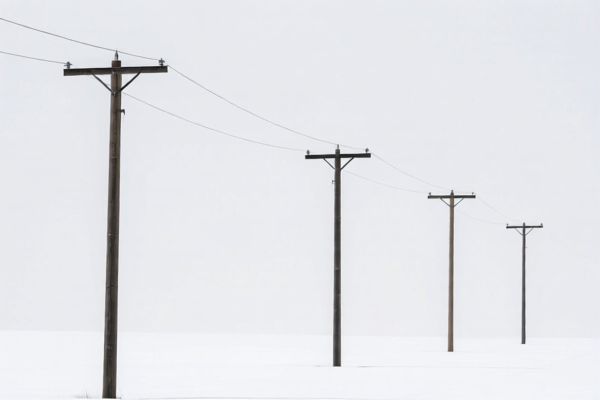
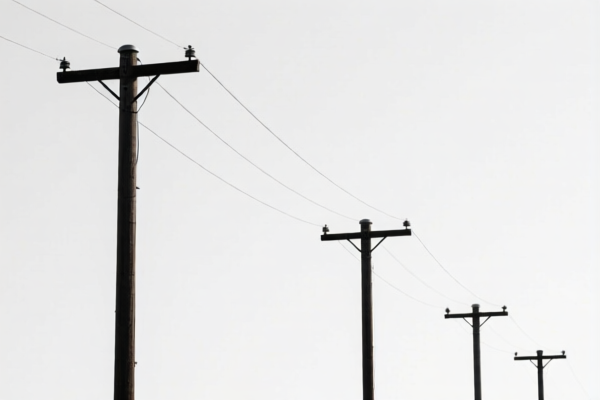
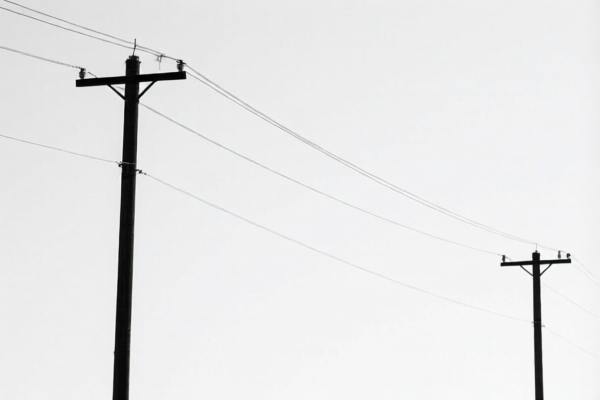
AI Analysis
🌲 Telephone Poles (Transmission Poles)
🌐 HS Code Reference & Customs Clearance Guide | 2026 Latest Tariff Analysis | Professional Clearance Strategy
📌 I. Product Definition & Classification: What Exactly is a "Telephone Pole"?
Telephone poles, also known as utility poles, are vertical structural elements essential for supporting overhead power lines, telecommunications cables, and other urban infrastructure. In international trade, their classification is strictly determined by material composition, not just their function. They generally fall into two main material categories:
Wooden Poles (Wooden Poles/Piles):
Made from treated timber (specifically coniferous/needle-leaved wood for durability). They are classified under Chapter 44 as processed wood products.
Metal Poles (Steel/Steel Alloy Poles):
Made from steel or iron, often in lattice or solid structures. They are classified under Chapter 73 as articles of iron or steel.
⚠️ Key Distinction Point:
- If the material is Wood → Look at 4404.10
- If the material is Steel/Iron → Look at 7308.20 or 7308.90
- Misclassification Risk: Declaring steel poles as "wood" (or vice versa) triggers severe penalties for incorrect origin declaration and tariff evasion.
📦 II. HS Code Classification Details (2026 Latest Tariff Authority Comparison)
| HS Code | Product Description | Applicable Material | Usage/Context |
|---|---|---|---|
4404.10.00.80 |
Charcoal; wood continuously carbonized in a hermetically sealed vessel | Needle-leaved Wood | Wooden Telephone Poles. Specifically matches "poles and piles" made of coniferous wood. |
4404.10.00.90 |
Other charcoal; wood continuously carbonized in a hermetically sealed vessel | Needle-leaved Wood (Other) | Wooden Telephone Poles. Alternative "Other" category for needle-leaved wood poles not fitting specific sub-codes. |
7308.20.00.90 |
Towers and lattice masts; parts of structures (excluding pre-fabricated buildings) | Steel/Iron | Steel Telephone Poles. Commonly inferred as steel structures for power/telecom. Falls under "Other" towers/lattice masts. |
7308.90.30.00 |
Parts of structures made of iron or steel | Steel/Iron | Steel Telephone Poles (Parts/Units). Inferred as structural units/components. No material or use conflict. |
🔍 Critical Reminder:
- Wooden Poles: Must be made of Needle-leaved wood (Coniferous) to fit4404.10. Broadleaf wood poles would fall under different subheadings not listed in the provided data. The "Electric" (电) aspect refers to usage, but the material (Needle-leaved) drives the HS Code. - Steel Poles: Often inferred as Steel based on common sense for structural strength. They fit under Chapter 73 as structures or parts of structures.
💰 III. 2026 Latest Tariff Rate Breakdown (Including Surcharges & Policy Add-ons)
✅ Applicable Country: United States (US)
✅ Origin: China (CN)
✅ Effective Date: From November 10, 2025 (and subsequent imports)
🎯 1. 4404.10.00.80 & 4404.10.00.90 —— Wooden Telephone Poles (Needle-leaved Wood)
| Item | Content |
|---|---|
| Base Tariff | 0% (ad valorem) |
| USITC Surcharge | +25% (Under USITC Footnote / Section 301) |
| 122 Clause Tariff | +10% (Specific to Chinese products) |
| Total Rate | 35% |
| Tax Calculation | CIF Value × 35% |
| De Minimis Exemption | ❌ Not Applicable (deny_de_minimis) |
| Legal Basis Path | 122 Clause: 10% → USITC: 25% → USITC: 4404.10.00.80/90 |
📌 Explanation:
- Base 0%: Standard MFN rate for processed wood is often low or zero.
- USITC +25%: Section 301 tariff on Chinese wood products.
- 122 Clause +10%: Additional surcharge targeting specific Chinese imports.
- Total 35%: A moderate but significant cost for wooden poles.
🎯 2. 7308.20.00.90 & 7308.90.30.00 —— Steel Telephone Poles (Steel Structures)
| Item | Content |
|---|---|
| Base Tariff | 0% (ad valorem) |
| USITC Surcharge | +25% (Under USITC Footnote / Section 301) |
| 122 Clause Tariff | +50% (Specific Surcharge for Steel, Aluminum, Copper Products) |
| Total Rate | 85% |
| Tax Calculation | CIF Value × 85% |
| De Minimis Exemption | ❌ Not Applicable (deny_de_minimis) |
| Legal Basis Path | 122 Clause: 50% (Steel) → USITC: 25% → USITC: 7308.20.00.90 / 7308.90.30.00 |
📌 Explanation:
- Base 0%: Standard MFN rate for steel structures.
- USITC +25%: Section 301 tariff on Chinese steel products.
- 122 Clause +50%: High Surcharge explicitly targeting Steel, Aluminum, and Copper products. This is a critical differentiator.
- Total 85%: A very high tariff, reflecting the aggressive trade policy on Chinese steel imports.
🛠️ IV. Customs Clearance Practical Advice (Combat Pitfall Guide)
✅ 1. Preparation Checklist (缺一不可)
| Document | Required | Note |
|---|---|---|
| ✅ Material Certificate | ✔️ | Crucial. Must explicitly state "Needle-leaved Wood" OR "Steel Alloy Grade". |
| ✅ Product Specification Sheet | ✔️ | Dimensions, height, diameter, treatment type (e.g., creosote for wood, galvanization for steel). |
| ✅ Product Photos | ✔️ | Clear images of the pole cross-section (to prove wood grain vs. metal welds). |
| ✅ Commercial Invoice | ✔️ | Clearly describe as "Telephone Pole, Made of [Material]", avoid vague terms like "Support Pole". |
| ✅ Packing List | ✔️ | Detail weights and volumes; ensure consistency with invoice. |
| ✅ Treatment Certificate (Wood) | ✔️ | If wooden, must show ISPM 15 compliance (heat treatment/fumigation). |
✅ 2. Declaration Tactics (Key Mnemonics)
🔥 “Material First, Not Use; Wood 35, Steel 85!”
| Scenario | Correct Declaration | Wrong Practice |
|---|---|---|
| Wooden Pole | Material: "Treated Needle-leaved Wood" HS: 4404.10.00.80 |
Declare as "Metal Pole" → 85% Tax (Overpaid) |
| Steel Pole | Material: "Galvanized Steel" HS: 7308.20.00.90 |
Declare as "Wooden Pole" → 35% Tax (Undeclared Steel, Penalty!) |
| Composite Pole | Separate parts or main material dominance | Mixed declaration → Inspection Delay |
✅ 3. Special Case Handling
| Situation | Handling Advice |
|---|---|
| Wooden Poles with Metal Brackets | The main body determines classification. If >50% value/volume is wood, classify as Wood (4404.10). Provide separate line items if brackets are significant. |
| Pre-fabricated Steel Towers | If assembled on-site, may be considered "Structures" (7308.20). Ensure it’s not classified as "Pre-fabricated Buildings" (7308.10) which may have different duties. |
| Origin Verification | Provide Certificate of Origin (CO) immediately. If origin is claimed as China, the 50% 122 Clause for steel will automatically apply. |
🌍 V. Global Main Market Clearance Comparison (2026 Latest)
| Country/Region | Recommended HS Code | Tariff (China Origin) | Certification Req. | Note |
|---|---|---|---|---|
| 🇺🇸 USA | 4404.10.00.80 (Wood) 7308.20.00.90 (Steel) |
35% (Wood) 85% (Steel) |
ISPM 15 (Wood) ASTM (Steel) |
Highest tariffs due to 122 Clause on Steel. |
| 🇨🇳 China | 4404.10 7308.20 |
Low/Zero | CCC (if applicable) | No additional US-style surcharges. |
| 🇪🇺 EU | 4404.10 7308.20 |
Variable (0-10%) | CE (if structural) | No 122 Clause surcharge. Generally cheaper. |
| 🇬🇧 UK | 4404.10 7308.20 |
Variable | UKCA | Post-Brexit rules apply. |
📌 Conclusion:
- USA is the most challenging market for Chinese telephone poles due to the 50% steel surcharge.
- Wooden poles face a 35% total rate, which is high but manageable.
- Steel poles face an 85% total rate, which is prohibitive for most commercial imports without duty avoidance strategies (e.g., third-country processing).
📌 VI. Common Errors & Pitfall Guide (Blood & Tears Lessons)
❌ Error 1: Declaring Steel Poles as "Wood" to save tariffs.
👉 Consequence: Customs inspection reveals metal content → Fraud charges, seizure, 3x penalty.
❌ Error 2: Ignoring the 122 Clause 50% for steel products.
👉 Consequence: Underpayment of 50% → Large back-tariff bill + Interest.
❌ Error 3: Misidentifying Wood Type.
👉 Consequence: If wood is Hardwood (Broad-leaved), it may not fit 4404.10 → Residual classification errors + Delays.
❌ Error 4: Failing to provide ISPM 15 Mark for wooden poles.
👉 Consequence: Rejection at border, destruction, or re-exportation.
✅ Correct Practice:
"Telephone Pole, Treated Southern Yellow Pine (Needle-leaved Wood), Length 40ft, Diameter 12inch, ISPM 15 Certified"
OR
"Galvanized Steel Utility Pole, Lattice Structure, Height 30m, ASTM A500 Grade B"
🎯 VII. Conclusion: Professional Declaration, Save Time & Money!
🎯 Remember the Mnemonic:
🔹 "Wood 35, Steel 85, Material is King!"
🔹 "Don't mix Steel with Wood, or Customs will nod (negatively)!"
🔹 "122 Clause 50% on Steel, plan your cost accordingly!"
📌 Tip:
If you are importing Steel Poles from China to the US, consider:
1. Pre-ruling (Advance Ruling): Request a binding opinion from CBP to confirm classification.
2. Supply Chain Diversification: Source from Vietnam/Mexico if possible to avoid 122 Clause and USITC surcharges.
3. Cost-Benefit Analysis: At 85% tariff, steel poles from China may be non-competitive. Re-evaluate sourcing strategy.
📣 Immediate Action:
📞 Consult a licensed Customs Broker.
📦 Provide Material Certificates + Photos.
🚀 Optimize your HS Code declaration to ensure compliance and cost-efficiency.
✨ Professional Clearance Starts with Accurate Classification!
💼 Every percent of tariff counts!
Customer Reviews
About HS Code Classification
The Harmonized System (HS) is an internationally standardized nomenclature developed by the World Customs Organization (WCO) to classify traded products. Over 200 countries use the HS system as the basis for customs tariffs, trade statistics, and import/export regulations.
Each HS code follows a hierarchical structure:
- Chapter (2 digits) — Broad category of goods (e.g., Chapter 84: Machinery and Mechanical Appliances)
- Heading (4 digits) — More specific grouping within the chapter
- Subheading (6 digits) — Internationally standardized breakdown, used by all WCO member countries
- National subdivisions (8-10 digits) — Country-specific extensions for further classification, such as US HTSUS 10-digit codes
Correct HS code classification is essential for smooth customs clearance, accurate duty payment, and compliance with trade regulations. Misclassification can lead to customs delays, overpayment of duties, or penalties.
When importing from CN to US, the applicable tariff rates may include:
- Most-Favored-Nation (MFN) rate — The standard duty rate applied to WTO members
- General rate — Applied to countries without trade agreements
- Trade remedy duties — Additional tariffs such as Section 301 (anti-dumping), Section 232 (national security), or countervailing duties
The information provided on this page is for reference purposes only. For official classification, please consult with your local customs authority or a licensed customs broker.