Telescopic Mobile Phone Bracket for Aerial Photography
CN → US| HS Code | Tariff Rate | Origin | Destination | Doc |
|---|---|---|---|---|
| 3926909989 | 22.8% | CN | US | Official Doc |
| 8529907700 | 35.0% | CN | US | Official Doc |
| 3926902500 | 24.0% | CN | US | Official Doc |
| 8529909800 | 35.0% | CN | US | Official Doc |
| 7326200090 | 88.9% | CN | US | Official Doc |
Product Images
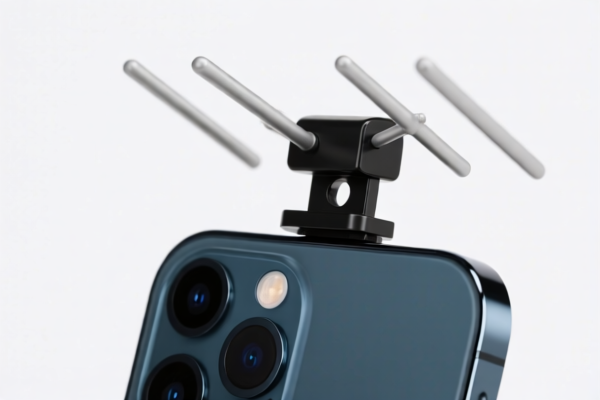
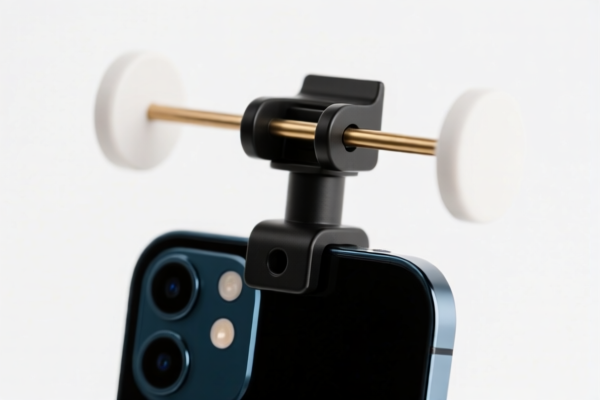
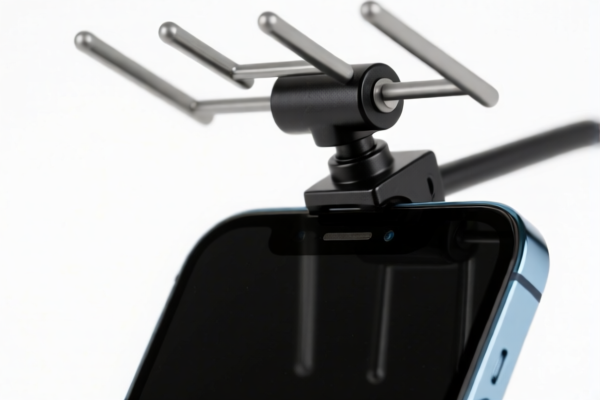
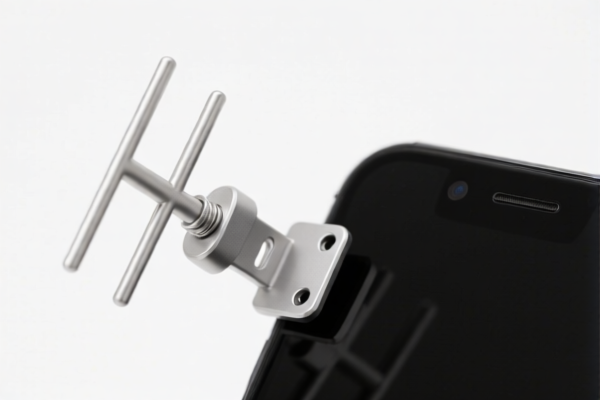
AI Analysis
🚀 Telescopic Mobile Phone Bracket for Aerial Photography
🌐 HS Code Reference & Customs Clearance Guide | 2026 Latest Tariff Analysis | Professional Strategy for Smart Gadgets
📌 I. Product Definition & Classification: What Exactly is a "Telescopic Mobile Phone Bracket"?
A Telescopic Mobile Phone Bracket for Aerial Photography is an accessory designed to hold smartphones securely while extending the camera’s perspective for drone pilots, vloggers, or outdoor enthusiasts. Its classification depends heavily on two factors: 1. Material: Is it made of plastic, metal (aluminum/steel), or mixed materials? 2. Function/Nature: Is it considered a "part/fitting" of a photography apparatus (HS Chapter 90) or an "article of plastic/metal" (HS Chapter 39/73)?
In international trade, this product often falls into a "Fallback/Catch-all" category because it doesn't fit neatly into specialized optical equipment lists. Customs authorities often default to the material it’s made of if it’s deemed a simple holder rather than an integral electronic or optical component.
⚠️ Key Distinction Point:
- If it contains electronic stabilization motors or smart connectivity chips → Might be considered a part of a drone/camera system.
- If it is a passive mechanical holder (plastic/metal) → Usually classified under Plastics (3926) or Metal Articles (7326).
📦 II. HS Code Classification Details (Based on Provided Data)
The following HS Codes are derived from the provided dataset, representing common classifications for mobile phone brackets based on material and functional interpretation.
| HS Code | Product Description | Material Inference | Tax Rate (Total) | Key Reasoning from Data |
|---|---|---|---|---|
3926.90.99.89 |
Other Plastic Articles (Fallback) | Plastic | 22.8% | "Mostly plastic," fits "other plastic products" fallback. Recognized as a part/component. |
8529.90.77.00 |
Parts of Apparatus (Fallback) | Mixed/Undefined | 35.0% | Treated as a "part/fitting" for electronic apparatus. Defaults to other fallback categories. |
3926.90.25.00 |
Other Plastic Articles (Specific Fallback) | Plastic | 24.0% | Inferred as plastic. Fits "accessory" default matching principle for plastic items. |
8529.90.98.00 |
Parts of Apparatus (General Fallback) | Mixed (Metal/Plastic) | 35.0% | Fits "equipment part" definition. No material conflict detected; assumes metal/plastic. |
7326.20.00.90 |
Other Iron/Steel Articles | Iron/Steel | 88.9% | Inferred as iron/steel. Fits "other iron/steel articles" fallback. High Penalty Tax Applies. |
🔍 Critical Insight:
- The lowest tax (22.8%) is achieved if the product is clearly identified as Plastic.
- The highest tax (88.9%) applies if classified as Steel/Iron, due to heavy Section 301/IEEPA surcharges on steel/aluminum/copper products.
- The mid-range (35.0%) applies if classified as a "Part of Apparatus" (HS 8529), which attracts significant punitive tariffs but no specific material surcharge.
💰 III. 2026 Latest Tariff Rate Breakdown (Detailed Policy)
✅ Applicable Country: United States (US)
✅ Origin: China (CN)
✅ Effective Time: 2025/2026 (Current Trade Environment)
🎯 1. 3926.90.99.89 / 3926.90.25.00 —— Plastic Phone Holders
Best for: Lightweight, cost-effective plastic brackets.
| Component | Rate | Source/Rule |
|---|---|---|
| Base Duty | 5.3% - 6.5% | Standard MFN/General Rate |
| Section 301 Surcharge | 7.5% - 25.0% | USITC Trade Remedies (List 3/4) |
| IEEPA Surcharge | 10% | International Emergency Economic Powers Act (China-specific) |
| Total Effective Tax | 22.8% - 24.0% | Sum of all applicable rates |
📌 Explanation:
- Plastic products generally face lower base duties.
- The IEEPA 10% is a mandatory additive tax on Chinese-origin goods.
- Section 301 varies: Some plastic items may have 7.5%, while others (if categorized under broader electronic parts) might hit 25%.
- Strategy: If you can prove the primary material is plastic, this is often the most cost-effective route compared to steel or complex electronic parts.
🎯 2. 8529.90.77.00 / 8529.90.98.00 —— Parts of Electronic Apparatus
Best for: Brackets marketed as integral parts of drones, cameras, or stabilizers.
| Component | Rate | Source/Rule |
|---|---|---|
| Base Duty | 0.0% | Free Trade or Specific Category |
| Section 301 Surcharge | 25.0% | USITC Trade Remedies (List 4) |
| IEEPA Surcharge | 10% | International Emergency Economic Powers Act |
| Total Effective Tax | 35.0% | Sum of all applicable rates |
📌 Explanation:
- HS 8529 is the "catch-all" for parts of electrical machines/apparatus.
- While the base duty is 0%, the Section 301 surcharge is fixed at 25%, making the total 35%.
- Risk: Customs may reject this if the bracket is deemed a simple accessory rather than a functional "part" of the electronic device.
🎯 3. 7326.20.00.90 —— Iron/Steel Articles
Best for: Heavy-duty metal brackets (Avoid if possible!)
| Component | Rate | Source/Rule |
|---|---|---|
| Base Duty | 3.9% | Standard MFN Rate |
| Section 301 Surcharge | 25.0% | USITC Trade Remedies |
| Steel/Aluminum/Copper Surcharge | 50% | Specific Material Penalty (Section 232/301) |
| IEEPA Surcharge | 10% | International Emergency Economic Powers Act |
| Total Effective Tax | 88.9% | Sum of all applicable rates |
📌 Warning:
- This is the wor-case scenario.
- If your bracket is made of steel, aluminum, or copper, you trigger an additional 50% tariff on top of standard duties.
- Strategy: Avoid declaring as "Iron/Steel" unless absolutely necessary. Use "Aluminum Alloy" with plastic components to argue for Plastic/Part classification instead.
🛠️ IV. Customs Clearance Practical Advice (Pro Tips)
✅ 1. Documentation Checklist (Must-Have)
| Document | Required? | Purpose |
|---|---|---|
| Product Specification Sheet | ✔️ | Clearly state material composition (e.g., "60% Plastic, 40% Aluminum"). |
| Product Photos | ✔️ | Show the bracket in use with a phone. Highlight the material texture. |
| Commercial Invoice | ✔️ | Describe as "Plastic Mobile Phone Holder for Photography Accessories" (Avoid "Steel Bracket"). |
| Bill of Lading | ✔️ | Ensure weight and dimensions match the declared HS code. |
| Material Declaration | ✔️ | Explicitly state primary material to avoid "Steel" classification. |
✅ 2. Declaring Strategy (The "Secret Sauce")
🔥 Golden Rule: "Material Matters, Function Follows, Avoid Steel!"
| Scenario | Recommended HS Code | Why? |
|---|---|---|
| Plastic Bracket | 3926.90.99.89 |
Lowest tax (22.8%). Clearly plastic. |
| Mixed Material (Plastic > 50%) | 3926.90.25.00 |
Still plastic-favorable (24.0%). |
| Marketed as "Drone Part" | 8529.90.98.00 |
Higher tax (35%), but defensible if sold with drones. |
| All-Metal (Steel/Aluminum) | 7326.20.00.90 |
AVOID. 88.9% tax is prohibitive. |
✅ 3. Special Considerations
| Issue | Solution |
|---|---|
| Aluminum vs. Steel | Aluminum may avoid the 50% steel penalty, but still faces high Section 301. Declare as "Aluminum Alloy" but check if it falls under 7326 or 7615. |
| Plastic Coated Metal | If the primary function is holding (plastic pads), argue for 3926. If the structure is metal, risk 7326. |
| "Telescopic" Feature | This is a mechanical feature, not a material one. It doesn't change the HS code materially unless it includes motors (then it becomes 8529). |
| Value of Goods | For de minimis (Section 321), ensure the value is under $800 per person per day to avoid tariffs entirely. |
🌍 V. Global Market Comparison (2026)
| Country | Recommended HS Code | Est. Duty | Note |
|---|---|---|---|
| 🇺🇸 USA | 3926.90.99.89 |
22.8% | Best if plastic. Steel is 88.9%. |
| 🇪🇺 EU | 3926.90.99 |
0-4.7% | Generally lower duties for plastics. |
| 🇨🇳 China | 3926.90.99 |
6.5% | Import duty + VAT. |
| 🇬🇧 UK | 3926.90.99 |
0-4.7% | Post-Brexit rates similar to EU. |
| 🇦🇺 Australia | 3926.90.99 |
5% | GST applies on top. |
📌 Conclusion:
- The US is the most challenging market due to IEEPA and Section 301 tariffs.
- Plastic classification is key to minimizing costs.
- Steel/Aluminum brackets are expensive to import into the US.
📌 VI. Common Mistakes & Pitfalls (Learn from Others)
❌ Mistake 1: Declaring a plastic bracket as "Iron/Steel"
👉 Consequence: 88.9% tax → Profit destroyed!
❌ Mistake 2: Not specifying material in the invoice
👉 Consequence: Customs may guess "Steel" (worst case) or "Electronic Part" (35%) → Unpredictable costs.
❌ Mistake 3: Claiming it's a "Part of a Drone" without proof
👉 Consequence: Customs may reject 8529 and force 3926 or 7326 → Delays.
✅ Correct Approach:
"Mobile Phone Holder, Telescopic, Primary Material: ABS Plastic with Aluminum Alloy Accents, For Aerial Photography Accessories"
🎯 VII. Conclusion: Smart Classification Saves Money
🎯 Remember This Rule:
🔹 "Plastic is King (22.8%), Parts are Middle (35%), Steel is Poison (88.9%)."
🔹 Declare Material First, Function Second.
📌 Pro Tip:
If your bracket is aluminum, try to argue it's a "Plastic-Integrated Tool" or use 8529 if sold as a drone accessory. Avoid 7326 at all costs.
📣 Immediate Action:
📞 Confirm your supplier’s material composition.
📝 Draft your commercial invoice as "Plastic Mobile Phone Accessory".
🚀 Clear customs smoothly and maximize your margin!
✨ Professional Clearance Starts with Accurate Classification!
💼 Don't let tariffs eat your profits!
Customer Reviews
About HS Code Classification
The Harmonized System (HS) is an internationally standardized nomenclature developed by the World Customs Organization (WCO) to classify traded products. Over 200 countries use the HS system as the basis for customs tariffs, trade statistics, and import/export regulations.
Each HS code follows a hierarchical structure:
- Chapter (2 digits) — Broad category of goods (e.g., Chapter 84: Machinery and Mechanical Appliances)
- Heading (4 digits) — More specific grouping within the chapter
- Subheading (6 digits) — Internationally standardized breakdown, used by all WCO member countries
- National subdivisions (8-10 digits) — Country-specific extensions for further classification, such as US HTSUS 10-digit codes
Correct HS code classification is essential for smooth customs clearance, accurate duty payment, and compliance with trade regulations. Misclassification can lead to customs delays, overpayment of duties, or penalties.
When importing from CN to US, the applicable tariff rates may include:
- Most-Favored-Nation (MFN) rate — The standard duty rate applied to WTO members
- General rate — Applied to countries without trade agreements
- Trade remedy duties — Additional tariffs such as Section 301 (anti-dumping), Section 232 (national security), or countervailing duties
The information provided on this page is for reference purposes only. For official classification, please consult with your local customs authority or a licensed customs broker.