Tendons articles
CN → USProduct Images
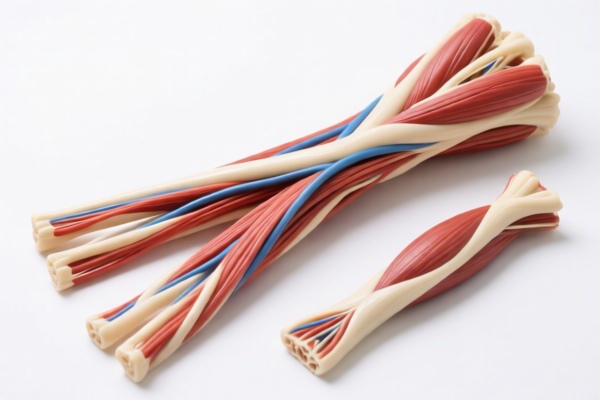
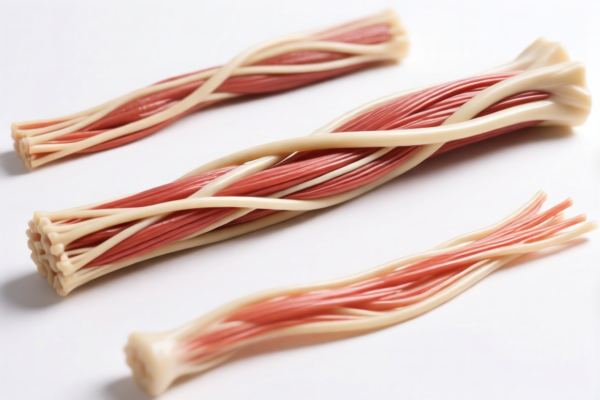
AI Analysis
🦴 Tendons & Tendon-like Articles (Biological vs. Industrial)
🌐 HS Code Reference & Customs Clearance Guide | 2026 Latest Tariff Analysis | Professional Clearance Strategy
📌 I. Product Definition & Classification: What Exactly Are "Tendons Articles"?
In international trade, the term "Tendons articles" is ambiguous and requires precise differentiation based on the state of processing, origin, and intended use. Misclassification here can lead to severe penalties, as biological products are often subject to strict sanitary controls, while processed materials may fall under chemical or mechanical processing categories.
There are three main categories:
- Fresh or Chilled Raw Tendons: Unprocessed animal anatomical parts (e.g., from cattle, horses).
- Preserved/Dried/Treated Tendons: Cleaned, salted, or dried for culinary or industrial use.
- Processed/Tanned Tendon Materials: Processed into sheets, cords, or other forms for non-food use (e.g., crafts, traditional medicine).
⚠️ Key Distinction:
- Raw Biological Material (Edible/Non-Edible) → Chapter 05 or Chapter 02/05 depending on processing.
- Tanned/Prepared Animal Hides (including tendon sheets for industrial use) → Chapter 41.
- Medicinal Herbs/Preparations → Chapter 30 (if prepared) or Chapter 12/05 (if raw).
📦 II. HS Code Classification Details (2026 Latest Tariff Authority)
| HS Code | Product Description | Applicable Scenario | Processing Level |
|---|---|---|---|
0506.90.00 |
Bones and hooves, untaken, only partly degreased or desiccated, whether or not ground, or polished; tendons | Raw or slightly cleaned tendons (industrial raw material) | Minimal processing |
0511.99.98 |
Animal products not elsewhere specified or included | Other prepared animal products (e.g., cleaned, dried tendons for traditional medicine) | Prepared/Preserved |
0206.90 |
Edible offal of bovine animals, swine, sheep, goats, horses | Edible fresh/chilled tendons (culinary use) | Raw/Fresh |
4104.19 |
Bovine hides and skins, tanned or crusted, with the hair on or off (incl. tendon sheets) | Industrial/Leather use, processed into sheet form | Tanned/Leather-grade |
3004.90 |
Medicaments consisting of mixed or unmixed products | Medicinal tendon extracts/powders (prepared for therapeutic use) | Pharmaceutical |
1211.90 |
Plant products used primarily in perfumery, pharmacy | Note: If "tendon" is confused with plant roots, avoid this unless it is botanical. | N/A |
🔍 Critical Reminder:
- "Tendons" for food (e.g., beef tendon soup ingredients) → Chapter 02 (0206.90).
- "Tendons" for raw material (e.g., glue-making, industrial use) → Chapter 05 (0506.90or0511.99).
- "Tendon-like" synthetic articles → Chapter 39 (plastics) or Chapter 59 (textiles), NOT Chapter 05.
- Customs often requires a "Processing Description" to distinguish between raw biologicals and processed goods.
💰 III. 2026 Latest Tariff Rate Breakdown (Including Additional Taxes, Policy Surcharges)
✅ Applicable Country: United States (US)
✅ Origin: China (CN)
✅ Effective Date: From November 10, 2025 (including subsequent imports)
🎯 1. 0506.90.00 —— Bones and Hooves, Including Tendons (Unprepared/Partly Degreased)
| Item | Content |
|---|---|
| Base Tariff Rate | 0% (ad valorem) |
| USITC Surcharge | +25% (under USITC Footnote 9903.88.01, Section 301) |
| IEEPA Surcharge | +10% (Targeted on China/HK products, effective Nov 10, 2025) |
| Total Tariff Rate | 35% |
| Tax Calculation | CIF Value × 35% |
| De Minimis Exemption | ❌ Not Eligible (deny_de_minimis) |
| Legal Path | IEEPA:9903.01.25 → USITC:0506.90.00 → FOOTNOTE:9903.88.01 |
📌 Explanation:
- Raw biological materials like tendons are often classified under 0506 if not prepared for consumption.
- The 35% total rate is significant due to the combination of 301 tariffs and IEEPA surcharges.
- Sanitary Import Permit may be required from USDA/FDA depending on the source.
🎯 2. 0511.99.98 —— Other Prepared Animal Products (e.g., Dried Tendons for Medicine/Crafts)
| Item | Content |
|---|---|
| Base Tariff Rate | 0% |
| USITC Surcharge | +25% (Section 301 applies to "Other Animal Products") |
| IEEPA Surcharge | +10% |
| Total Tariff Rate | 35% |
| Tax Calculation | CIF × 35% |
| De Minimis Exemption | ❌ Not Eligible |
| Legal Path | IEEPA:9901.25 → USITC:0511.99.98 → FOOTNOTE:9903.88.01 |
📌 Note:
- If tendons are cleaned, dried, or treated for non-food use (e.g., traditional medicine, glue), they fall here.
- Ensure the product is not labeled as "Food" to avoid misclassification penalties.
🎯 3. 0206.90 —— Edible Offal of Bovine Animals (Including Fresh Tendons)
| Item | Content |
|---|---|
| Base Tariff Rate | 0% (varies by specific subheading, often 0% for offal) |
| USITC Surcharge | +25% (if applicable under Section 301 list for meat/offal) |
| IEEPA Surcharge | +10% |
| Total Tariff Rate | 35% |
| Tax Calculation | CIF × 35% |
| De Minimis Exemption | ❌ Not Eligible |
| Special Requirement | 🚫 USDA Permit Required |
📌 Critical Warning:
- Edible tendons are subject to strict sanitary controls.
- Must have an established exporter registration with USDA FSIS.
- Failure to provide USDA approval will result in refusal of entry.
🛠️ IV. Customs Clearance Practical Advice (Real-World Pitfall Avoidance Guide)
✅ 1. Document Checklist (Mandatory)
| Document | Mandatory | Description |
|---|---|---|
| ✅ Product Specification Sheet | ✔️ | Must specify: Source animal (bovine/horse), Processing method (raw/dried/tanned), Intended use (food/industrial/medicinal). |
| ✅ Processing Certificate | ✔️ | Proof of degreasing, drying, or tanning process. Crucial for HS Code determination. |
| ✅ Health/Sanitary Certificate | ✔️ | Required by USDA/FDA if intended for human consumption or pharmaceutical use. |
| ✅ Commercial Invoice | ✔️ | Clearly state: "Raw Bovine Tendons" or "Dried Tendon Material," NOT generic "Tendon Articles." |
| ✅ Bill of Lading | ✔️ | Show packaging type (e.g., vacuum-packed, salted in barrels). |
| ✅ Import Permit (USDA) | ✔️ | Critical for Chapter 02/05 food/biological imports. |
✅ 2. Declaration Tips (Key Mantra)
🔥 "Source Clear, Process Defined, Use Specified, Avoid Sanitary Rejection!"
| Scenario | Correct Declaration | Wrong Practice |
|---|---|---|
| Raw tendons for glue | 0506.90.00 "Bovine Tendons, Untaken, Partly Degreased" |
"Animal Parts" → Ambiguous, high risk |
| Dried tendons for medicine | 0511.99.98 "Dried Tendon Material for Traditional Medicine" |
"Herbs" → Misclassification, FDA violation |
| Fresh tendons for food | 0206.90 "Edible Bovine Offal (Tendons)" |
"Meat Products" → Missing USDA permit |
| Synthetic tendon-like cords | 3926.90 or 5607.90 |
0506.90 → Violation of customs laws |
✅ 3. Special Handling for High-Risk Cases
| Scenario | Handling Advice |
|---|---|
| Traditional Chinese Medicine (TCM) Ingredients | Provide a TCM Processing Description. Ensure no endangered species (CITES) are involved. |
| Industrial Glue Raw Material | Provide a Letter of Guarantee stating "Not for Human Consumption" to simplify clearance. |
| Tanned Tendon Sheets | Classify under Chapter 41 if processed like leather. Requires different tariff rate. |
| Small Samples (De Minimis) | ❌ Do Not Use De Minimis for biologicals. Even small shipments require USDA/FDA scrutiny. |
🌍 V. Global Market Clearance Comparison (2026 Latest)
| Country/Region | Recommended HS Code | Tariff | Certification Requirements | Notes |
|---|---|---|---|---|
| 🇺🇸 USA | 0506.90.00 / 0511.99.98 |
35% | USDA Permit + FDA Registration | Strict sanitary controls. |
| 🇨🇳 China | 0506.90.00 |
5-10% | No special permit for raw materials | Domestic consumption is common. |
| 🇪🇺 EU | 0506.90.00 |
6.5% | EU Health Certificate | Requires approved third-country establishment. |
| 🇯🇵 Japan | 0506.90.00 |
6.0% | APIC/Ministry of Health Certificate | High standards for animal origin. |
| 🇦🇺 Australia | 0506.90.00 |
5.0% | DAFF Import Permit | Biosecurity is extremely strict. |
📌 Conclusion:
- USA and EU have the highest compliance barriers due to sanitary and phytosanitary (SPS) measures.
- Tariffs are consistently 35% in the US due to trade tensions.
- Biological imports always require health certificates, regardless of tariff rate.
📌 VI. Common Mistakes & Pitfall Guide (Blood Lessons)
❌ Mistake 1: Declaring "Raw Tendons" as "Animal Feed" to avoid sanitary checks
👉 Consequence: Immediate seizure and fine by USDA/FDA. Feed has different HS codes (2301) and requires different permits.
❌ Mistake 2: Using "Tendon Leather" for raw biological tendons
👉 Consequence: If not tanned, it belongs to Chapter 05, not Chapter 41. Misclassification leads to 35% vs. 0-5% tariff differences and penalties.
❌ Mistake 3: Ignoring the "Source Animal" in documentation
👉 Consequence: Bovine vs. Horse tendons have different import restrictions. Horse tendons may require CITES permits if from protected areas.
❌ Mistake 4: Assuming "De Minimis" applies to small biological samples
👉 Consequence: Entry refused. All animal-origin products require full declaration and health certification.
✅ Correct Practice:
"Bovine Tendons, Raw, Partly Degreased, for Industrial Glue Production, Not for Human Consumption, Source: Brazil, Process: Washed & Dried"
🎯 VII. Conclusion: Professional Declaration, Save Time, Reduce Costs!
🎯 Remember the Mantra:
🔹 "Raw vs. Prepared, Food vs. Industrial, Health Cert is King!"
🔹 "HS Code 0506/0511/0206, Choose Wisely, Avoid 35% Trap!"
📌 Pro Tip:
If your tendons are synthetic or artificial, ensure they are classified under Chapter 39 (Plastics) or Chapter 59 (Textiles) to avoid Chapter 05 biological restrictions and high tariffs.
For medical use, consider Chapter 30 if processed into extract/powder.
📣 Immediate Action:
📞 Contact a Customs Broker + Provide Processing Flowchart + Apply for USDA/FDA Pre-Approval
🚀 Ensure your Tendons clear customs smoothly, avoiding bio-security delays!
✨ Professional Clearance Starts with Accurate Classification!
💼 Your every dollar saved is a dollar earned!
Customer Reviews
About HS Code Classification
The Harmonized System (HS) is an internationally standardized nomenclature developed by the World Customs Organization (WCO) to classify traded products. Over 200 countries use the HS system as the basis for customs tariffs, trade statistics, and import/export regulations.
Each HS code follows a hierarchical structure:
- Chapter (2 digits) — Broad category of goods (e.g., Chapter 84: Machinery and Mechanical Appliances)
- Heading (4 digits) — More specific grouping within the chapter
- Subheading (6 digits) — Internationally standardized breakdown, used by all WCO member countries
- National subdivisions (8-10 digits) — Country-specific extensions for further classification, such as US HTSUS 10-digit codes
Correct HS code classification is essential for smooth customs clearance, accurate duty payment, and compliance with trade regulations. Misclassification can lead to customs delays, overpayment of duties, or penalties.
When importing from CN to US, the applicable tariff rates may include:
- Most-Favored-Nation (MFN) rate — The standard duty rate applied to WTO members
- General rate — Applied to countries without trade agreements
- Trade remedy duties — Additional tariffs such as Section 301 (anti-dumping), Section 232 (national security), or countervailing duties
The information provided on this page is for reference purposes only. For official classification, please consult with your local customs authority or a licensed customs broker.