Tendons granules strip
CN → USProduct Images



AI Analysis
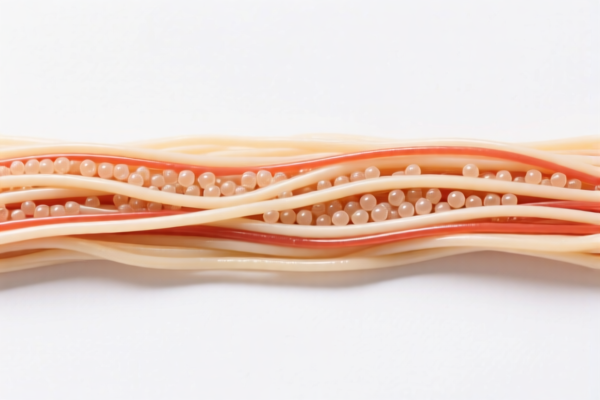
🦴 Tendons Granules Strip
🌐 HS Code Reference & Customs Clearance Guide | 2026 Latest Tariff Analysis | Professional Clearance Strategy
📌 I. Product Definition & Classification: What Exactly Are "Tendon Granules"?
"Tendon Granules" (often referred to as Gelatin Granules derived from bovine or porcine tendons) are processed animal by-products used primarily in the pharmaceutical industry (for capsules), food industry (gelatin for desserts/gummies), or industrial applications.
Crucial Distinction: 1. Industrial/Unprocessed Gelatin: If the gelatin is not purified for human consumption, it falls under different codes. 2. Pharmaceutical Grade Gelatin: Purified gelatin used for capsules, coatings, or granules for medical use.
⚠️ Key Classification Point: * If the product is pure gelatin (derived from collagen in tendons/skin) for pharmaceutical/food use → HS Code 3503.00. * If the product is raw/uncured tendons (not processed into gelatin) → HS Code 0506.90. * Note: The term "Strip" likely refers to the physical shape or packaging. If it is a finished dosage form (e.g., filled capsules), it may shift to 3004, but "Granules" implies the raw material intermediate.
📦 II. HS Code Classification Details (2026 Latest Tariff Alignment)
| HS Code | Product Description | Applicable Scenario | Processing Level |
|---|---|---|---|
| 3503.00.45.00 | Gelatin, including gelatin derived from keratin substances, in squares, sheets, strips, or shapes; ground powder; whether or not surface-treated | Pharmaceutical/Industrial Gelatin Granules/Strips | ✅ Processed (Hydrolyzed Collagen) |
| 3503.00.50.00 | Gelatin and its derivatives; isinglass; other gelatinous substances; glues from bone, excluding bone black | Generic Gelatin derivatives | ✅ Processed |
| 0506.90.00.00 | Bones and horn-cores, unworked, defatted, simply prepared (but not cut to shape), treated with acid or degelatinized | Raw/Treated Tendon Strips (Unprocessed Gelatin) | ❌ Minimally Processed |
| 0511.99.60.00 | Animal products not elsewhere specified or included (e.g., specific organ extracts) | If contains active biological factors beyond pure gelatin | ⚠️ Variable |
🔍 Priority Note: * Most commercial "Tendon Granules" sold as raw material for gelatin production are classified under 3503.00. * If the product is 100% pure gelatin in strip/granule form, 3503.00.45.00 is the most accurate. * Do not classify under Chapter 5 (0506) unless it is simply dried, unhydrolyzed tendon material. Hydrolysis (gelatinization) moves it to Chapter 35.
💰 III. 2026 Latest Tariff Rate Breakdown (USA Import)
✅ Applicable Country: United States (US) ✅ Country of Origin: China (CN) or General Global ✅ Effective Date: 2025/2026
🎯 1. 3503.00.45.00 —— Gelatin (Stips/Granules)
| Item | Content |
|---|---|
| Base Rate | 0% (ad valorem) |
| USITC Add-on | 0% (No Section 301 tariff for this specific subheading in most cases, verify current IEEPA list) |
| IEEPA Add-on | +10% (If originating from China/HK, per Executive Order on critical goods/supply chain risks) |
| Total Duty | 10% (Typical) or 0% (If non-China origin) |
| Tax Calculation | CIF Value × 10% |
| De Minimis | ❌ Not Eligible (Gelatin is not a low-value exempt good) |
| Legal Path | IEEPA:9903.01.24 → USITC:3503.00.45.00 |
📌 Explanation: * Gelatin is generally not subject to the heavy 25% Section 301 tariff that applies to electronics or steel. * However, if originating from China, the 10% IEEPA surcharge may apply depending on the latest Executive Order adjustments for "supply chain critical materials." * Non-China Origins (e.g., EU, Brazil, India) often enjoy 0% duty.
🎯 2. 0506.90.00.00 —— Raw Bones/Tendons (If misclassified)
| Item | Content |
|---|---|
| Base Rate | 0% |
| USITC Add-on | 0% |
| IEEPA Add-on | +10% (If China origin) |
| Total Duty | 10% |
| De Minimis | ❌ Not Eligible |
⚠️ Warning: If you declare "Tendon Granules" as "Raw Bones" (
0506) but they are actually processed gelatin (3503), customs may flag this as misclassification, leading to penalties or audits. Always declare the processing state accurately.
🛠️ IV. Customs Clearance Practical Advice (Pitfall Avoidance)
✅ 1. Required Documentation Checklist
| Document | Required | Description |
|---|---|---|
| ✅ Product Specification Sheet | ✔️ | Must state: "Gelatin derived from Bovine/Porcine Tendons," Molecular Weight, Bloom Strength, pH |
| ✅ Letter of Guarantee (No BSE/TSE) | ✔️ | Critical for animal by-products. Must confirm no risk of Mad Cow Disease. |
| ✅ Certificate of Analysis (COA) | ✔️ | Issued by manufacturer, showing purity, heavy metals, microbial limits. |
| ✅ Commercial Invoice | ✔️ | Clearly state "Gelatin Granules/Strips, HS 3503.00.45.00" |
| ✅ Origin Certificate | ✔️ | To prove non-China origin if seeking 0% duty |
✅ 2. Declaration Strategy
🔥 Golden Rule:
"Process Determines Code: Hydrolyzed = 3503, Raw = 0506."
| Scenario | Correct Declaration | Risk if Wrong |
|---|---|---|
| Gelatin Granules (Hydrolyzed) | HS 3503.00.45.00 | Misclassification → Audits/Back Taxes |
| Raw Dried Tendon Strips | HS 0506.90.00.00 | If processed → Misclassification |
| Filled Capsules (Finished Drug) | HS 3004.90 (Pharma) | If sold as raw material → Wrong Chapter |
✅ 3. Special Handling for Animal By-Products
- FDA Registration: If used for food or pharma, the facility must be FDA registered.
- FSVP (Foreign Supplier Verification Program): Importers must verify the supplier’s safety protocols.
- Labeling: Must indicate "For Industrial/Pharmaceutical Use Only" if not food-grade.
🌍 V. Global Market Comparison (2026)
| Country | Recommended HS Code | Duty Rate | Certification |
|---|---|---|---|
| 🇺🇸 USA | 3503.00.45.00 |
0-10% | FDA Registration, BSE-Free Certificate |
| 🇪🇺 EU | 3503.00 |
0% | REACH Compliance, ECHA Notification |
| 🇨🇳 China | 3503.00 |
0-5% | CIQ Inspection (Animal By-Product) |
| 🇦🇺 Australia | 3503.00 |
5% | Biosecurity Import Permit (Critical) |
📌 Conclusion: * The USA and EU are lenient on duty but strict on BSE/TSE (Mad Cow Disease) documentation. * Australia and Japan have extremely strict biosecurity rules; ensure health certificates are flawless.
📌 VI. Common Errors & Pitfalls (Blood Lessons)
❌ Error 1: Declaring "Gelatin" as "Food Ingredient" when it's Industrial Grade 👉 Consequence: FDA rejection, shipment destroyed.
❌ Error 2: Missing BSE/TSE Certificate for Bovine Origin 👉 Consequence: Immediate quarantine or return to origin.
❌ Error 3: Using "Tendons" (Chapter 5) for Hydrolyzed Gelatin (Chapter 35) 👉 Consequence: Customs audit, potential fines for misclassification.
✅ Correct Practice:
"Hydrolyzed Bovine Gelatin Granules, Pharmaceutical Grade, Bloom Strength 200, BSE-Free, HS 3503.00.45.00"
🎯 VII. Conclusion: Precision Classification for Safe Passage
🎯 Remember:
🔹 "Hydrolyzed = 3503, Raw = 0506. No BSE Cert, No Entry." 🔹 "Check Origin: China 10%, Non-China 0%."
📌 Pro Tip: If you are importing large volumes, consider applying for an Advance Ruling from CBP (US Customs) to lock in the HS code and duty rate, avoiding future disputes.
📣 Immediate Action:
📞 Verify BSE Status with Supplier + Prepare COA + Confirm FDA Facility Registration
🚀 Ensure smooth clearance of your Tendon Granules!
✨ Professional Clearance Starts with Accurate Classification!
💼 Every Gram of Gelatin is Valuable – Protect Your Shipment!
Customer Reviews
About HS Code Classification
The Harmonized System (HS) is an internationally standardized nomenclature developed by the World Customs Organization (WCO) to classify traded products. Over 200 countries use the HS system as the basis for customs tariffs, trade statistics, and import/export regulations.
Each HS code follows a hierarchical structure:
- Chapter (2 digits) — Broad category of goods (e.g., Chapter 84: Machinery and Mechanical Appliances)
- Heading (4 digits) — More specific grouping within the chapter
- Subheading (6 digits) — Internationally standardized breakdown, used by all WCO member countries
- National subdivisions (8-10 digits) — Country-specific extensions for further classification, such as US HTSUS 10-digit codes
Correct HS code classification is essential for smooth customs clearance, accurate duty payment, and compliance with trade regulations. Misclassification can lead to customs delays, overpayment of duties, or penalties.
When importing from CN to US, the applicable tariff rates may include:
- Most-Favored-Nation (MFN) rate — The standard duty rate applied to WTO members
- General rate — Applied to countries without trade agreements
- Trade remedy duties — Additional tariffs such as Section 301 (anti-dumping), Section 232 (national security), or countervailing duties
The information provided on this page is for reference purposes only. For official classification, please consult with your local customs authority or a licensed customs broker.