Tensile Testing Machine
CN → US| HS Code | Tariff Rate | Origin | Destination | Doc |
|---|---|---|---|---|
| 9024100000 | 35.0% | CN | US | Official Doc |
| 9024900040 | 35.0% | CN | US | Official Doc |
| 8479909565 | 35.0% | CN | US | Official Doc |
| 8479909595 | 0.0% | CN | US | Official Doc |
| 9031808085 | 35.0% | CN | US | Official Doc |
| 9031909195 | 85.0% | CN | US | Official Doc |
Product Images
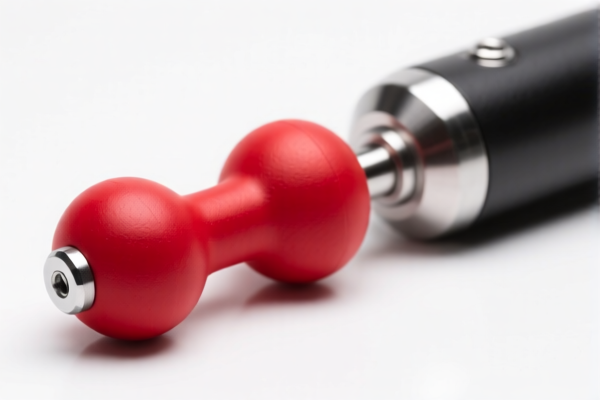
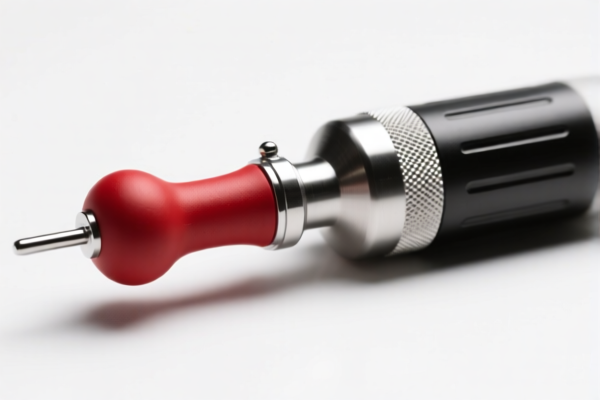
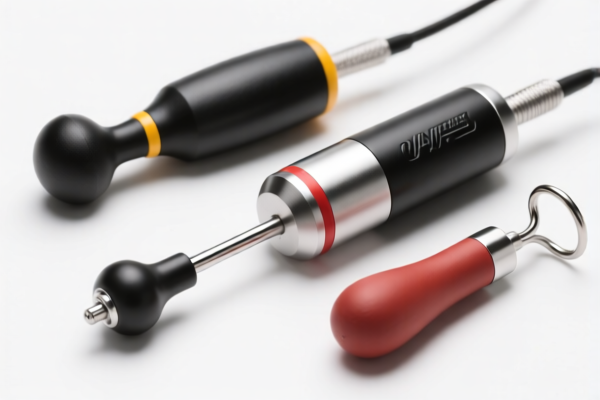
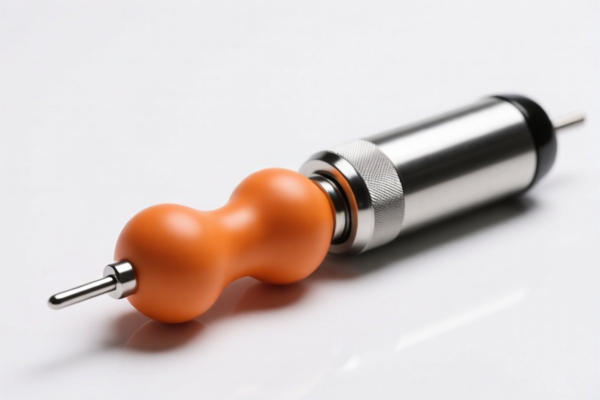
AI Analysis
🏗️ Tensile Testing Machine (Universal Testing Machine)
🌐 HS Code Reference & Customs Clearance Guide | 2026 Latest Tariff Analysis | Professional Entry Strategy
📌 I. Product Definition & Classification: Do You Really Know What a "Tensile Tester" Is?
A Tensile Testing Machine (often referred to as a Universal Testing Machine or UTM) is a critical instrument used to determine the mechanical properties of materials under tensile, compressive, or flexural loads. In international trade, it is strictly categorized based on its primary function: testing mechanical properties.
It is NOT classified as general laboratory equipment (Chapter 9031) if its specific purpose is testing hardness, strength, or elasticity of materials. Instead, it falls under Chapter 9024.
⚠️ Critical Distinction:
- Machines for Testing Metals: If the machine is specifically designed or primarily used for testing metal properties (hardness, strength, elasticity), it falls under 9024.10.00.00.
- Parts for Testing Machines: Specific components (load cells, grips, frames) for these machines are classified under 9024.90.00.40.
- General Measuring Instruments: If the device is a generic "checking instrument" not specific to mechanical property testing (e.g., general profilometry or non-mechanical checks), it might fall under 9031.80.80.85.
- General Industrial Machine Parts: Parts for machines not primarily for material testing (e.g., parts for metal treatment machines like heat treaters) fall under 8479.90.95.65.
📦 II. HS Code Classification Details (2026 Latest Tariff Authority Comparison)
| HS Code | Product Description | Applicable Scenario | Primary Function |
|---|---|---|---|
9024.10.00.00 |
Machines for testing the hardness, strength, compressibility, elasticity, or other mechanical properties of materials (specifically metals) | Universal Tensile Testers, Compression Testers, Hardness Testers for Metals | ✅ Primary Function |
9024.90.00.40 |
Parts and accessories of machines for testing metals | Load cells, extensometers, grips, and fixtures for HS 9024.10 machines | ✅ Component |
9031.80.80.85 |
Other measuring or checking instruments and appliances, not specified elsewhere | General mechanical testing devices not for metals, or non-specific profile projectors | ⚠️ Fallback Category |
9031.90.91.95 |
Parts and accessories of measuring/checking instruments (General) | Generic parts for instruments classified under 9031 | ❌ High Risk |
8479.90.95.65 |
Parts of machines for treating metal (e.g., heat treatment, surface hardening) | Parts for industrial metal processing machines, NOT testing machines | ❌ Incorrect |
8479.90.95.95 |
Parts of machinery for public works, building, or the like | Parts for construction machinery (excavators, cranes) | ❌ Incorrect |
🔍 Key Reminder:
- Tensile Testers for Metals must be classified under 9024.10.00.00. Do not misclassify as general "measuring instruments" (9031) to avoid penalties.
- Parts for these testers must follow the machine’s classification (i.e., 9024.90.00.40).
- Error Prone: Do not classify testing machine parts as "industrial machinery parts" (8479). This leads to massive discrepancies.
💰 III. 2026 Latest Tariff Rate Details (Including Surtaxes & Policy Add-ons)
✅ Applicable Country: United States (US)
✅ Country of Origin: China (CN)
✅ Effective Date: 2025 onwards (Subject to Section 301 & IEEPA)
🎯 1. 9024.10.00.00 —— Machines for Testing Metals (Tensile/Compression/Hardness)
| Item | Content |
|---|---|
| Base Rate | 0% (ad valorem) |
| USITC Surtax (Section 301) | +25% |
| IEEPA Surtax | +10% (Against Chinese/HK products, effective Nov 10, 2025) |
| Total Rate | 35% |
| Tax Calculation | CIF Value × 35% |
| De Minimis Eligibility | ❌ No (deny_de_minimis) |
| Legal Basis Path | IEEPA:9903.01.25 → USITC:9024.10.00.00 → FOOTNOTE:9903.88.01 |
📌 Explanation:
- Machines for testing mechanical properties of materials are considered high-tech industrial equipment.
- The 25% Section 301 tariff applies because these are key industrial testing tools.
- The 10% IEEPA tariff adds further cost.
- Total 35% is a significant cost driver. Pre-valuation is essential.
🎯 2. 9024.90.00.40 —— Parts for Machines Testing Metals
| Item | Content |
|---|---|
| Base Rate | 0% |
| USITC Surtax (Section 301) | +25% |
| IEEPA Surtax | +10% |
| Total Rate | 35% |
| Tax Calculation | CIF Value × 35% |
| De Minimis Eligibility | ❌ No |
| Legal Basis Path | IEEPA:9903.01.24 → USITC:9024.90.00.40 |
📌 Note:
- Parts follow the parent machine’s tariff rate.
- Ensure parts are clearly identified as accessories for HS 9024.10.00.00 machines (e.g., "Grips for Tensile Tester").
🎯 3. 9031.80.80.85 —— Other Measuring/Checking Instruments
| Item | Content |
|---|---|
| Base Rate | 0% |
| USITC Surtax (Section 301) | +25% |
| IEEPA Surtax | +10% |
| Total Rate | 35% |
| Tax Calculation | CIF Value × 35% |
| De Minimis Eligibility | ❌ No |
| Legal Basis Path | IEEPA:9903.01.25 → USITC:9031.80.80.85 |
⚠️ Risk Alert:
- If a Tensile Tester is misclassified as a general "measuring instrument" (9031) instead of a "mechanical property tester" (9024), the tariff may still be 35% in many cases, but the customs risk increases significantly due to classification error.
- Do not rely on this category unless the device is explicitly NOT for mechanical property testing.
🎯 4. 9031.90.91.95 —— Parts for General Measuring Instruments (High Risk)
| Item | Content |
|---|---|
| Base Rate | 0% |
| USITC Surtax (Section 301) | +25% |
| IEEPA Surtax | +10% |
| Steel/Aluminum/Copper Surtax | +50% (If made of steel/aluminum/copper) |
| Total Rate | 85% (If metallurgical components) or 35% (If non-metallurgical) |
| Tax Calculation | CIF Value × (35% to 85%) |
| De Minimis Eligibility | ❌ No |
| Legal Basis Path | IEEPA:9903.01.24 → USITC:9031.90.91.95 |
📌 Critical Warning:
- This HS Code attracts a 50% additional surtax if the parts contain steel, aluminum, or copper.
- Many tensile tester parts (frames, grips, crossheads) are metal.
- Misclassification to 9031.90.91.95 can result in an 85% tariff!
- Avoid this category for tensile tester parts. Use 9024.90.00.40 instead.
🎯 5. 8479.90.95.65 & 8479.90.95.95 —— Industrial Machine Parts (Incorrect)
| Item | Content |
|---|---|
| Base Rate | 0% |
| USITC Surtax (Section 301) | +25% |
| IEEPA Surtax | +10% |
| Total Rate | 35% |
| Status | ❌ ERROR |
| Legal Basis Path | IEEPA:9903.01.24 → USITC:8479.90.95.65 |
📌 Note:
- These codes are for parts of metal treating (8479.90.95.65) or public works/building machinery (8479.90.95.95).
- Data Error: The provided data shows "Failed to retrieve tax information" for 8479.90.95.95, but generally, it is not applicable to testing machines.
- Do not use these codes for Tensile Testers.
🛠️ IV. Customs Clearance Practical Advice (Battle-Tested Pitfall Guide)
✅ 1. Documentation Checklist (Must-Haves)
| Document | Required | Description |
|---|---|---|
| ✅ Product Specification Sheet | ✔️ | Must state "Mechanical Property Testing" and list materials tested (e.g., "For Steel, Aluminum, Plastics"). |
| ✅ Technical Drawing | ✔️ | Highlight the testing frame, load cell, and crossheads. |
| ✅ Product Photos | ✔️ | Show label, model number, and manufacturer. |
| ✅ Commercial Invoice | ✔️ | Describe as "Tensile Testing Machine for Mechanical Property Testing of Materials". |
| ✅ Origin Certificate | ✔️ | If not CN, may avoid IEEPA tariffs. |
| ✅ Packing List | ✔️ | Clearly separate Machine (9024.10) and Parts (9024.90) if shipped together. |
✅ 2. Declaration Tips (Key Mnemonics)
🔥 "Test Metals = 9024, Parts Follow, Avoid 9031 Pitfalls!"
| Scenario | Correct Declaration | Wrong Action |
|---|---|---|
| Full Tensile Tester | 9024.10.00.00 |
Misclassify as 9031.80.80.85 → Risk of 85% if parts are misidentified |
| Grips/Load Cells | 9024.90.00.40 |
Misclassify as 9031.90.91.95 → 85% Tariff if metal! |
| General Profile Projector | 9031.80.80.85 |
Use for Tensile Tester → Classification Error |
| Machine for Metal Treatment | 8479.90.95.65 |
Use for Tensile Tester → Incorrect Function |
✅ 3. Special Cases
| Scenario | Handling Advice |
|---|---|
| Hydraulic vs. Electro-Mechanical | Both fall under 9024.10.00.00 if for mechanical property testing. |
| Combined Testers (Tensile + Compression) | Still 9024.10.00.00 as primary function is mechanical testing. |
| Portable Tensile Devices | If for field testing of metals, still 9024.10.00.00. |
| Software for Testing | If sold separately and critical for function, declare with main machine. |
🌍 V. Global Market Comparison (2026 Latest)
| Country/Region | Recommended HS Code | Tariff (China Origin) | Certification | Notes |
|---|---|---|---|---|
| 🇺🇸 USA | 9024.10.00.00 |
35% (25% Sec 301 + 10% IEEPA) | None (General) | High tariff, strict classification. |
| 🇨🇳 China | 9024.10.00.00 |
0% | CCC (if applicable) | Domestic production is competitive. |
| 🇪🇺 EU | 9024.10.00 |
0% | CE | No additional surtaxes. |
| 🇬🇧 UK | 9024.10.00 |
0% | UKCA | Post-Brexit alignment with EU. |
| 🇯🇵 Japan | 9024.10.00 |
0% | PSE | No surtaxes. |
📌 Conclusion:
- USA is the most expensive market due to combined Section 301 and IEEPA tariffs.
- EU/UK/JP are tariff-friendly.
- Supply Chain Strategy: Consider sourcing from Vietnam/Mexico to avoid 10% IEEPA tariff in the US.
📌 VI. Common Errors & Pitfalls (Lessons Learned)
❌ Error 1: Classifying Metal Grips as 9031.90.91.95
👉 Consequence: 85% Tariff (25% + 10% + 50% Steel Surtax) → Massive Cost Increase!
❌ Error 2: Declaring Tensile Tester as "Lab Equipment" under 9031.80.80.85
👉 Consequence: Customs may reclassify to 9024 or demand proof of non-mechanical use. If reclassified, same tariff, but delays and penalties.
❌ Error 3: Splitting Machine and Parts into Separate Shipments without Linking
👉 Consequence: Parts may be assessed at general tariff rates if origin/destination is unclear.
❌ Error 4: Using "General Checking Instrument" for Tensile Testers
👉 Consequence: Classification Error. Tensile Testers have a specific function (mechanical property testing), so Chapter 9024 takes precedence over 9031.
✅ Correct Practice:
"Universal Tensile Testing Machine, Model XYZ, For Testing Tensile Strength of Metals and Plastics, 100kN Capacity, Including Software."
🎯 VII. Conclusion: Precise Classification Saves Money!
🎯 Remember the Mantra:
🔹 "Test Mechanics = 9024, Parts Follow 9024, Avoid 9031 Steel Trap!"
🔹 "35% is Standard, 85% is Disaster, 0% is Dream!"
📌 Pro Tip:
If your Tensile Tester is originally from Vietnam, Mexico, or Thailand, you can avoid the 10% IEEPA tariff, reducing the total US duty to 25%.
Recommend Advance Ruling (ACE Portal) for high-value shipments to ensure classification accuracy.
📣 Immediate Action:
📞 Contact your Customs Broker + Provide Tech Specs + Apply for HS Code Advance Ruling
🚀 Ensure your Tensile Testers pass US Customs smoothly, minimize duty, and maximize profit!
✨ Professional Clearance Starts with Accurate Classification!
💼 Every Dollar Saved is a Dollar Earned!
Customer Reviews
About HS Code Classification
The Harmonized System (HS) is an internationally standardized nomenclature developed by the World Customs Organization (WCO) to classify traded products. Over 200 countries use the HS system as the basis for customs tariffs, trade statistics, and import/export regulations.
Each HS code follows a hierarchical structure:
- Chapter (2 digits) — Broad category of goods (e.g., Chapter 84: Machinery and Mechanical Appliances)
- Heading (4 digits) — More specific grouping within the chapter
- Subheading (6 digits) — Internationally standardized breakdown, used by all WCO member countries
- National subdivisions (8-10 digits) — Country-specific extensions for further classification, such as US HTSUS 10-digit codes
Correct HS code classification is essential for smooth customs clearance, accurate duty payment, and compliance with trade regulations. Misclassification can lead to customs delays, overpayment of duties, or penalties.
When importing from CN to US, the applicable tariff rates may include:
- Most-Favored-Nation (MFN) rate — The standard duty rate applied to WTO members
- General rate — Applied to countries without trade agreements
- Trade remedy duties — Additional tariffs such as Section 301 (anti-dumping), Section 232 (national security), or countervailing duties
The information provided on this page is for reference purposes only. For official classification, please consult with your local customs authority or a licensed customs broker.