Terminal Block
CN → US| HS Code | Tariff Rate | Origin | Destination | Doc |
|---|---|---|---|---|
| 8538908160 | 38.5% | CN | US | Official Doc |
| 8536904000 | 35.0% | CN | US | Official Doc |
| 8538908180 | 38.5% | CN | US | Official Doc |
| 8544493080 | 40.3% | CN | US | Official Doc |
| 8544499000 | 38.9% | CN | US | Official Doc |
| 8536908530 | 35.0% | CN | US | Official Doc |
Product Images
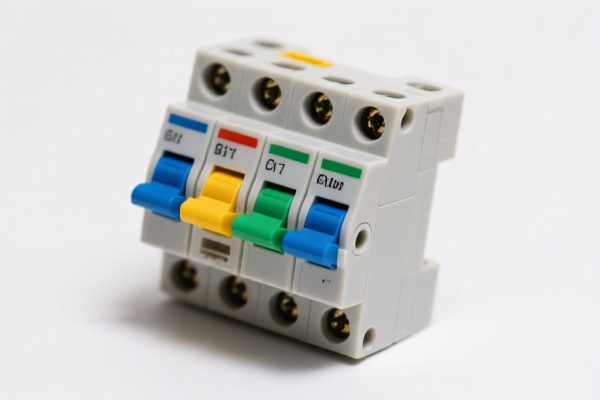
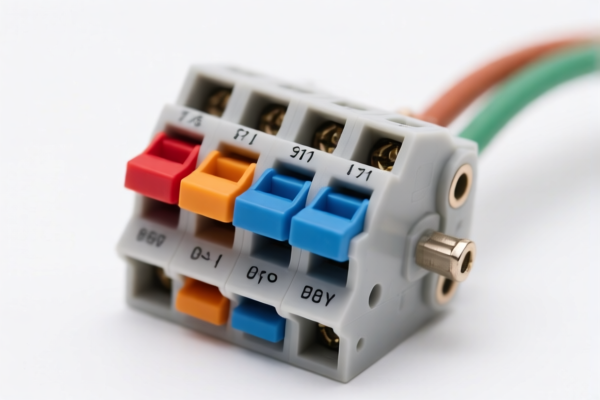
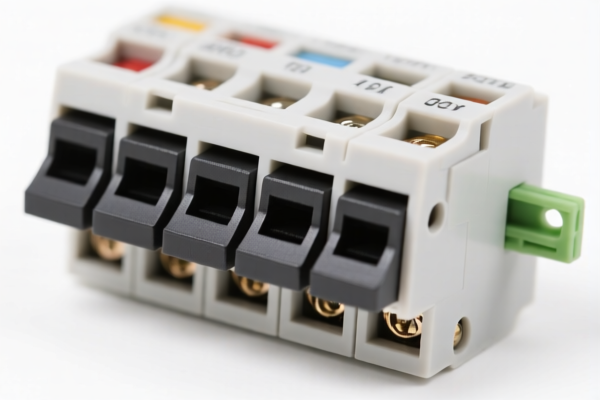
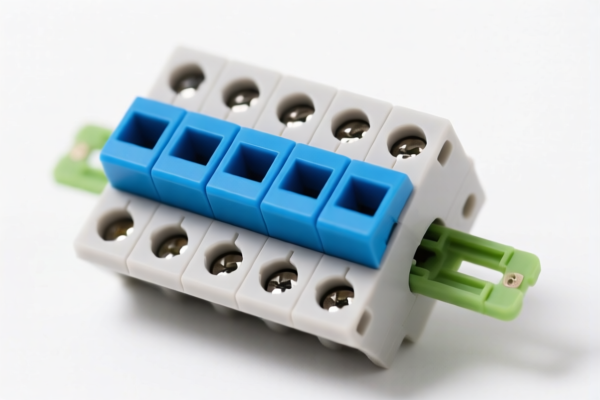
AI Analysis
⚡ Terminal Blocks (控制柜接线端子)
🌐 HS Code Reference & Customs Clearance Guide | 2026 Latest Tariff Analysis | Professional Entry Strategy
📌 1. Product Definition & Classification: Do You Really Understand "Terminal Blocks"?
Terminal blocks, commonly referred to as "terminal blocks" or "connectors," are essential components in electrical engineering used to connect, terminate, and distribute electrical wires in control cabinets, distribution panels, and switchgear. In international trade, their classification depends heavily on function, voltage rating, and physical form.
There are two main classification paths: * As Parts of Switching Devices/Panels (HS 8538): If the terminal block is specifically designed as a spare part for control panels, distribution boards, or switching devices. * As Electrical Connection Devices/Conductors (HS 8536/8544): If the terminal block is viewed as a standalone electrical connector or a component of insulated conductors for circuits up to 1,000V.
⚠️ Key Distinction Point:
- If classified as a part/assembly for a panel/distribution board →归入 8538.90.81.60 / 8538.90.81.80
- If classified as a standalone electrical connector (up to 1,000V) → 归入 8536.90.40.00 / 8536.90.85.30
- If classified as part of insulated conductors/cables → 归入 8544.49.30.80 / 8544.49.90.00
📦 2. HS Code Classification Details (2026 Latest Tariff Authority Comparison)
| HS Code | Product Description | Application Scenario | Voltage/Function |
|---|---|---|---|
8538.90.81.60 |
Parts of control panels/distribution boards | Control cabinet wiring terminals, specifically as parts of the panel assembly | Part of Panel/Switchgear |
8536.90.40.00 |
Other connectors for circuits ≤ 1,000V | Standalone terminal blocks for electrical回路, implying voltage ≤1,000V | Electrical Connector |
8538.90.81.80 |
Other parts of switching devices/panels | Connection assemblies for control panels, distribution boards, switching devices | Part of Panel/Switchgear |
8544.49.30.80 |
Insulated conductors accessories (Copper/Copper-core) | Connection components for insulated conductors, often copper-based, <1,000V | Insulated Conductor Accessory |
8544.49.90.00 |
Other insulated conductors/electrical connectors | Electrical connectors falling under the category of insulated conductors | Insulated Conductor/Connector |
8536.90.85.30 |
Other electrical connection devices (≤1,000V) | Electrical connection devices for low-voltage equipment, voltage ≤1,000V | Electrical Connection Device |
🔍 Key Reminder:
- Control Cabinet Context: If the terminal block is sold specifically as a "part for a control cabinet/panel", it strongly points to 8538.
- Electrical Function Context: If the terminal block is sold as a generic electrical connector or for wiring (conductor-related), it points to 8536 or 8544.
- Voltage Threshold: Most of these codes imply a voltage of ≤ 1,000V. High-voltage terminals (>1,000V) would fall under different subheadings not listed in the provided data.
💰 3. 2026 Latest Tariff Rate Breakdown (Including Surcharges & Policy Add-ons)
✅ Applicable Country: United States (US)
✅ Origin: China (CN)
✅ Effective Time: Includes subsequent imports (based on provided data structure)
🎯 1. 8538.90.81.60 & 8538.90.81.80 —— Parts of Control Panels/Switching Devices
These codes classify the terminal block as a component/parts of the switching device or control panel.
| Item | Content |
|---|---|
| Base Tariff | 3.5% (ad valorem) |
| Section 301 Surcharge (USITC) | +25.0% (Added tariff for Chinese goods) |
| Section 122 Tariff (IEEPA) | +10.0% (Additional tariff for China/HK products) |
| Total Tariff Rate | 38.5% |
| Tax Calculation | CIF Value × 38.5% |
| De Minimis Exemption | ❌ Not Available (High tariff items usually excluded) |
| Legal Basis Path | Base Tariff 3.5% + Section 301 25% + Section 122 10% |
📌 Explanation:
- "Base Tariff 3.5%": The standard Most-Favored-Nation (MFN) rate for these parts.
- "Section 301 Surcharge 25%": The widely known trade war tariff on Chinese electrical parts.
- "Section 122 Tariff 10%": A specific additional levy applicable to Chinese-origin electrical components.
- Total: 38.5%. This is a high-cost classification. It assumes the item is a "part" rather than a general consumer good.
🎯 2. 8536.90.40.00 & 8536.90.85.30 —— Other Electrical Connectors (≤1,000V)
These codes classify the terminal block as a standalone electrical connector or connection device for low-voltage circuits.
| Item | Content |
|---|---|
| Base Tariff | 0.0% (ad valorem) |
| Section 301 Surcharge (USITC) | +25.0% (Added tariff for Chinese goods) |
| Section 122 Tariff (IEEPA) | +10.0% (Additional tariff for China/HK products) |
| Total Tariff Rate | 35.0% |
| Tax Calculation | CIF Value × 35.0% |
| De Minimis Exemption | ❌ Not Available |
| Legal Basis Path | Base Tariff 0% + Section 301 25% + Section 122 10% |
📌 Note:
- Cost Advantage: Compared to8538codes, this classification saves 3.5% because the base tariff is 0%.
- Total: 35.0%. This is still a significant tariff but slightly lower than the "panel part" classification.
- Applicability: This is often used when the terminal block is described as an "electrical connector" rather than a "panel part."
🎯 3. 8544.49.30.80 —— Insulated Conductor Accessories (Copper/Copper-core)
This code views the terminal block as an accessory to insulated conductors (wires/cables), often made of copper.
| Item | Content |
|---|---|
| Base Tariff | 5.3% (ad valorem) |
| Section 301 Surcharge (USITC) | +25.0% (Added tariff for Chinese goods) |
| Section 122 Tariff (IEEPA) | +10.0% (Additional tariff for China/HK products) |
| Total Tariff Rate | 40.3% |
| Tax Calculation | CIF Value × 40.3% |
| De Minimis Exemption | ❌ Not Available |
| Legal Basis Path | Base Tariff 5.3% + Section 301 25% + Section 122 10% |
📌 Warning:
- This is the highest tariff among the options.
- It applies if the terminal block is tightly linked to the conductor/cable aspect (e.g., pre-attached to insulated wires).
- Avoid this classification unless the product is explicitly part of a cable assembly.
🎯 4. 8544.49.90.00 —— Other Insulated Conductors/Connectors
Similar to above, but a catch-all for insulated conductors/connectors not specified elsewhere.
| Item | Content |
|---|---|
| Base Tariff | 3.9% (ad valorem) |
| Section 301 Surcharge (USITC) | +25.0% (Added tariff for Chinese goods) |
| Section 122 Tariff (IEEPA) | +10.0% (Additional tariff for China/HK products) |
| Total Tariff Rate | 38.9% |
| Tax Calculation | CIF Value × 38.9% |
| De Minimis Exemption | ❌ Not Available |
| Legal Basis Path | Base Tariff 3.9% + Section 301 25% + Section 122 10% |
📌 Comparison:
- Slightly cheaper than8544.49.30.80but more expensive than8536codes.
- Use only if the product fits the "insulated conductor" definition but not the specific copper accessory code.
🛠️ 4. Customs Clearance Practical Advice (Battle-Tested Pitfall Guide)
✅ 1. Preparation Checklist (Missing items will cause delays)
| Material | Required | Explanation |
|---|---|---|
| ✅ Product Specifications | ✔️ | Must include voltage rating (≤1,000V?), material (Copper/Brass), dimensions, and current rating. |
| ✅ Circuit Diagram / Structure | ✔️ | Critical to prove if it's a standalone connector (8536) or a panel part (8538). |
| ✅ Product Photos (Label/Nameplate) | ✔️ | Clear image of model number, brand, and electrical ratings. |
| ✅ Third-Party Test Reports | ✔️ | UL, CE, RoHS, or other safety certifications. Essential for electrical components. |
| ✅ Commercial Invoice | ✔️ | Description must match the HS Code logic (e.g., "Terminal Block for Electrical Connection" vs. "Part for Control Panel"). |
| ✅ Packing List | ✔️ | Ensure no mix-up with other hardware parts. |
✅ 2. Declaration Tips (Key Mnemonics)
🔥 "Connector vs. Part: The 3.5% Difference!"
| Scenario | Correct Declaration | Risk of Error |
|---|---|---|
| Sold as a standalone connector | 8536.90.40.00 or 8536.90.85.30 |
Misclassifying as 8538 adds 3.5% unnecessarily. |
| Sold as a part for a Control Panel | 8538.90.81.60 or 8538.90.81.80 |
Misclassifying as 8536 might be challenged if it's clearly a panel assembly part. |
| Attached to Insulated Wires | 8544.49.30.80 |
Misclassifying as 8536 when it's a cable assembly leads to higher tariffs (40.3% vs 35%). |
| Generic Electrical Connector | 8536.90.85.30 |
Avoid 8544 codes unless it's strictly conductor-related. |
✅ 3. Special Case Handling
| Situation | Handling Advice |
|---|---|
| OEM Custom Terminal Blocks | Provide customer order + design drawings. Clarify if they are for a specific panel or general use. |
| High Voltage (>1,000V) | The provided data assumes ≤1,000V. For higher voltages, consult a customs broker for different HS Codes (not in this data set). |
| Combined Shipment (Panel + Parts) | If shipping a complete panel with terminals, the panel itself may have a different HS Code. Terminals may be declared separately as parts. |
| Material Specifics (Copper vs. Plastic) | Copper components might lean towards 8544 (conductor accessories). Plastic/Housings might lean towards 8538 (panel parts). Check composition. |
🌍 5. Global Market Comparison (2026 Latest)
| Country/Region | Recommended HS Code (from data) | Total Tariff (China Origin) | Certification Requirements | Notes |
|---|---|---|---|---|
| 🇺🇸 USA | 8536.90.85.30 or 8538.90.81.60 |
35.0% - 38.5% | UL, FCC (if part of system), RoHS | High tariffs due to Section 301 & 122. |
| 🇨🇳 China | 8536.90.85.30 or 8538.90.81.60 |
Low/Moderate (Domestic Trade) | CCC (if applicable) | No Section 301/122 surcharges for domestic. |
| 🇪🇺 EU | 8536.90.85.30 |
Low (Usually 0-4.5%) | CE, RoHS, REACH | No Section 301/122 surcharges. |
| 🇬🇧 UK | 8536.90.85.30 |
Low/Moderate | UKCA, RoHS | Post-Brexit tariffs vary, generally favorable. |
📌 Conclusion:
- USA is the critical market for tariff optimization.
-8536codes (35.0%) are generally more favorable than8538(38.5%) or8544(38.9%-40.3%) codes for China-origin goods.
- Ensure your product description aligns with the electrical connector definition (8536) to save 3.5% if applicable.
📌 6. Common Mistakes & Pitfalls (Lessons Learned)
❌ Mistake 1: Declaring a standalone terminal block as 8538 (Panel Part) when it can be 8536 (Connector).
👉 Consequence: Overpaying 3.5% on CIF value.
❌ Mistake 2: Declaring a terminal block attached to wires as 8536.
👉 Consequence: Risk of reclassification to 8544 (40.3% tariff) + penalties.
❌ Mistake 3: Ignoring the 10% Section 122 Tariff.
👉 Consequence: Underestimating total landed cost. All codes in the data include this +10%.
❌ Mistake 4: Using vague descriptions like "Electrical Parts."
👉 Consequence: Customs delays, potential audit, and highest possible duty rate applied as a default.
✅ Correct Approach:
"Terminal Block, Electrical Connector, for Circuits ≤1,000V, Copper Contacts, Model XYZ, UL Listed"
→ Supports8536.90.85.30or8536.90.40.00→ 35.0% Total Tariff.
🎯 7. Conclusion: Professional Declaration Saves Money!
🎯 Remember the Mnemonic:
🔹 "Connector is 35%, Panel Part is 38.5%, Conductor Accessory is 40%!"
🔹 "Describe as Connector, not Part, to Save 3.5%!"
🔹 "Section 301 + 122 = 35% + Base. Know Your Base!"
📌 Pro Tip:
If your terminal blocks are originating from Vietnam, Mexico, Thailand, or Malaysia, you may qualify for IEEPA/Section 301 exemptions.
👉 Action:
📞 Contact a Customs Broker + Provide Product Specs + Apply for Advance Ruling
🚀 Ensure smooth clearance, optimize costs, and maximize profit!
✨ Professional Clearance Starts with Accurate Classification!
💼 Every percent counts in your supply chain!
Customer Reviews
About HS Code Classification
The Harmonized System (HS) is an internationally standardized nomenclature developed by the World Customs Organization (WCO) to classify traded products. Over 200 countries use the HS system as the basis for customs tariffs, trade statistics, and import/export regulations.
Each HS code follows a hierarchical structure:
- Chapter (2 digits) — Broad category of goods (e.g., Chapter 84: Machinery and Mechanical Appliances)
- Heading (4 digits) — More specific grouping within the chapter
- Subheading (6 digits) — Internationally standardized breakdown, used by all WCO member countries
- National subdivisions (8-10 digits) — Country-specific extensions for further classification, such as US HTSUS 10-digit codes
Correct HS code classification is essential for smooth customs clearance, accurate duty payment, and compliance with trade regulations. Misclassification can lead to customs delays, overpayment of duties, or penalties.
When importing from CN to US, the applicable tariff rates may include:
- Most-Favored-Nation (MFN) rate — The standard duty rate applied to WTO members
- General rate — Applied to countries without trade agreements
- Trade remedy duties — Additional tariffs such as Section 301 (anti-dumping), Section 232 (national security), or countervailing duties
The information provided on this page is for reference purposes only. For official classification, please consult with your local customs authority or a licensed customs broker.