Terpene Alcohol Mixture
CN → US| HS Code | Tariff Rate | Origin | Destination | Doc |
|---|---|---|---|---|
| 3824999330 | 40.0% | CN | US | Official Doc |
| 3824999310 | 40.0% | CN | US | Official Doc |
| 2905225050 | 39.8% | CN | US | Official Doc |
| 2905225010 | 39.8% | CN | US | Official Doc |
Product Images



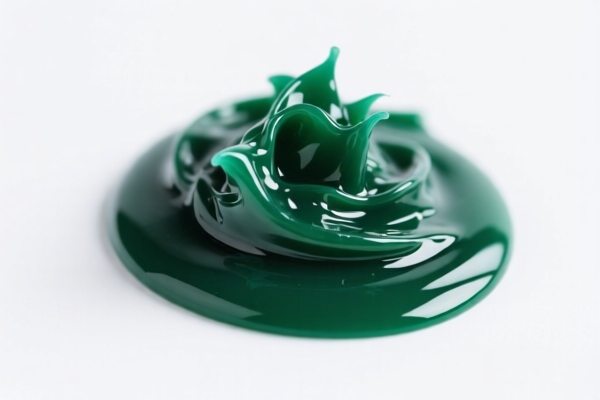
AI Analysis
🌿 Terpene Alcohol Mixture (Terpenyl Alcohol Blends)
🌐 HS Code Reference & Customs Clearance Guide | 2026 Latest Tariff Analysis | Professional Strategy for Chemical Imports
📌 I. Product Definition & Classification: Do You Really Understand "Terpene Alcohols"?
Terpene alcohols are a class of organic compounds derived from terpenes, widely used in fragrances, flavorings, cosmetics, and pharmaceutical intermediates. In international trade, they are often imported as mixtures rather than pure single monomers. The classification depends heavily on the chemical structure (acyclic vs. cyclic) and whether they are unsubstituted.
⚠️ Key Classification Logic:
- If the mixture consists of acyclic, monohydric, unsubstituted alcohols (carbon chain C11 or lower) →归入 2905.22.50.10 / 2905.22.50.50
- If the mixture is defined as monohydric, non-cyclic or cyclic alcohols not specified elsewhere →归入 3824.99.93.10 / 3824.99.93.30
- Crucial Distinction: Pure chemical substances (Chapter 29) take precedence over prepared mixtures (Chapter 38) unless the specific chemical description fits Chapter 38 better or the mixture is considered a "prepared substance" for industrial use. However, based on the provided data, both chapters are applicable options depending on the specific chemical profile and regulatory interpretation.
📦 II. HS Code Classification Details (2026 Latest Tariff Authority Comparison)
| HS Code | Product Description | Application Scenario | Chemical Nature |
|---|---|---|---|
2905.22.50.10 |
Acyclic monohydric alcohols, unsubstituted, carbon ≤11 | Pure acyclic terpene alcohols, chemical intermediates | ✅ Pure Substance (Chapter 29) |
2905.22.50.50 |
Other acyclic monohydric alcohols, unsubstituted | Mixtures of acyclic terpene alcohols not named specifically | ✅ Mixture (Chemical Category) |
3824.99.93.10 |
Monohydric, non-cyclic or cyclic alcohols (other than fatty) | Broad category for terpene alcohol mixes falling outside 2905 | ✅ Prepared Mixture (Chapter 38) |
3824.99.93.30 |
Other mixtures of monohydric alcohols | General catch-all for terpene alcohol blends | ✅ Mixture (Industrial Category) |
🔍 Key Reminder:
- Chapter 29 (2905) is generally preferred for pure chemical substances or mixtures of defined chemical classes.
- Chapter 38 (3824) is used for prepared chemical products or mixtures that do not fit the precise definitions in Chapter 29, or are considered "other" mixtures.
- Tax Rate Difference: Chapter 29 codes have a slightly lower base tariff (4.8%) compared to Chapter 38 codes (5.0%), leading to a 0.2% difference in total tax burden.
💰 III. 2026 Latest Tariff Rate Details (Including Additional Taxes & Policy Add-ons)
✅ Applicable Country: United States (US)
✅ Origin: China (CN)
✅ Effective Date: November 10, 2025 onwards (for all subsequent imports)
🎯 1. 2905.22.50.10 & 2905.22.50.50 — Acyclic Monohydric Alcohols (Chemical Substances)
| Item | Content |
|---|---|
| Base Tariff | 4.8% (ad valorem) |
| Section 301 Surcharge | +25.0% (USITC Footnote under 301 Tariff List) |
| Section 122 Tariff | +10.0% (Bipartisan Trade Commission determination) |
| Total Tax Rate | 39.8% |
| Tax Calculation | CIF Value × 39.8% |
| De Minimis Eligibility | ❌ No (Denied) |
| Legal Basis Path | USITC:2905.22.50.10 → USITC:2905.22.50.50 → 301_TARFF:25% → 122_TARIFF:10% |
📌 Explanation:
- The 25% Section 301 tariff is the primary additional duty for most Chinese-origin chemical goods.
- The 10% Section 122 tariff is a specific duty under the Bipartisan Trade Commission.
- Total 39.8% is a high burden, significantly impacting profit margins.
🎯 2. 3824.99.93.10 & 3824.99.93.30 — Other Prepared Mixtures of Alcohols
| Item | Content |
|---|---|
| Base Tariff | 5.0% (ad valorem) |
| Section 301 Surcharge | +25.0% (USITC Footnote under 301 Tariff List) |
| Section 122 Tariff | +10.0% (Bipartisan Trade Commission determination) |
| Total Tax Rate | 40.0% |
| Tax Calculation | CIF Value × 40.0% |
| De Minimis Eligibility | ❌ No (Denied) |
| Legal Basis Path | USITC:3824.99.93.10 → USITC:3824.99.93.30 → 301_TARIFF:25% → 122_TARIFF:10% |
📌 Explanation:
- The base rate is 0.2% higher than Chapter 29 codes.
- The additional tariffs (25% + 10%) remain the same.
- Total 40.0% is the highest applicable rate among the options.
🛠️ IV. Customs Clearance Practical Advice (Expert Pitfall Avoidance Guide)
✅ 1. Documentation Checklist (All Required)
| Document | Mandatory? | Description |
|---|---|---|
| ✅ Product Specification Sheet | ✔️ | Must detail: CAS numbers (if pure), composition percentages, purity, physical state, and intended use (fragrance, industrial, etc.). |
| ✅ Certificate of Analysis (COA) | ✔️ | Third-party lab report confirming chemical composition and confirming it is a "mixture" or "pure substance." |
| ✅ Commercial Invoice | ✔️ | Must clearly state: "Terpene Alcohol Mixture," HS Code, CIF value, and country of origin. |
| ✅ Material Safety Data Sheet (MSDS/SDS) | ✔️ | Required for customs and safety compliance. Must classify under GHS standards. |
| ✅ Declaration of Non-Hazardous | ✔️ | If applicable, to expedite clearance (though flammability may still be an issue). |
✅ 2. Declaration Tips (Key Mantra)
🔥 "Be Precise: Chemical Name + Mixture vs. Pure + Correct Chapter!"
| Scenario | Correct Declaration | Wrong Practice |
|---|---|---|
| Mixture of Acyclic Terpenes | 2905.22.50.50 (Mixture) |
Declare as 3824... (Higher Base Tariff) |
| Pure Linalool/Geraniol Mix | 2905.22.50.10 (Pure Class) |
Declare as 3824... |
| Industrial Blend with Solvents | 3824.99.93.10 (Prepared Mixture) |
Declare as pure alcohol → Severe Misclassification |
| Unknown Composition | DO NOT IMPORT | Risk of detention, reclassification, and penalties |
⚠️ Critical Warning:
- If you declare a mixture as a pure chemical (Chapter 29) when it is actually a prepared blend, Customs may reclassify it to Chapter 38 and impose penalties.
- Conversely, if you declare a pure substance as a mixture (Chapter 38), you pay an extra 0.2% base tariff unnecessarily.
- Always provide a COA to prove the chemical nature.
✅ 3. Special Cases Handling
| Situation | Handling Advice |
|---|---|
| Fragrance Use | Still classified as chemical; ensure SDS states "Not for Food/Drug" unless FDA approved. |
| High Purity (>99%) | Strongly lean toward 2905.22.50.10 to save 0.2% base tax. |
| Blended with Fragrance Bases | Likely 3824.99.93.30 as a "preparation." |
| Small Samples (<$800) | Not Eligible for De Minimis due to Section 301/122 exclusions. |
🌍 V. Global Market Clearance Comparison (2026 Latest)
| Country/Region | Recommended HS Code | Total Tariff (China Origin) | Certification Requirements | Notes |
|---|---|---|---|---|
| 🇺🇸 USA | 2905.22.50.50 or 3824.99.93.10 |
39.8% - 40.0% | SDS, FDA (if cosmetic/food) | Highest Tariff due to 301+122 |
| 🇨🇳 China | 2905.22 or 3824.99 |
~4-7% | GB Standards | No 301/122 |
| 🇪🇺 EU | 2905.22 or 3824.99 |
~5-6.5% | REACH Registration | High regulatory barrier |
| 🇯🇵 Japan | 2905.22 |
~3-5% | FSC (Food Standard) | Moderate regulation |
📌 Conclusion:
- USA is the most expensive market for Terpene Alcohol Mixtures due to the 35% combined surcharge (25% + 10%).
- EU and Japan have lower tariffs but stricter chemical registration (REACH, FSC).
- Strategy: For US imports, minimize volume or source from non-China countries to avoid surcharges.
📌 VI. Common Errors & Pitfalls (Lessons Learned)
❌ Error 1: Declaring "Terpene Alcohol" as "Essential Oil"
👉 Consequence: Misclassification. Essential oils (3301) have different rules. If it's a pure alcohol mixture, it's 2905. If it's a crude extract, it might be 3301. Wrong code → Delay/Seizure.
❌ Error 2: Ignoring the "Mixture" Aspect
👉 Consequence: If COA shows multiple compounds, declaring a single CAS code is fraud. Customs will audit and impose penalties.
❌ Error 3: Assuming De Minimis Applies
👉 Consequence: Section 301 and 122 tariffs exclude de minimis relief. Small shipments ($800) will still be taxed 39.8-40%.
❌ Error 4: Vague Description on Invoice
👉 Consequence: "Chemical Mixture" is too vague. Must specify "Terpene Alcohol Mixture, Acyclic, Unsubstituted".
✅ Correct Practice:
"Terpene Alcohol Mixture, Acyclic Monohydric, Unsubstituted, Purity 95%, CAS 126-89-8/106-22-5, HS 2905.22.50.50, CIF Value $X"
🎯 VII. Conclusion: Professional Declaration Saves Money!
🎯 Remember the Mantra:
🔹 "Pure = Chapter 29 (Lower Base Tax)
🔹 "Mixture = Chapter 38 (Higher Base Tax)
🔹 "Total Tax = 39.8% - 40% (Due to 301+122)
🔹 "No De Minimis for Chemicals from China!"
📌 Pro Tip:
- If your Terpene Alcohol Mixture is not from China, you may avoid the 35% surcharge.
- Apply for an Advance Ruling with US CBP if the chemical structure is ambiguous (e.g., cyclic vs. acyclic mix).
- Audit your COA: Ensure the composition matches the HS code description exactly.
📣 Immediate Action:
📞 Consult a Customs Broker + Provide COA + Verify HS Code Pre-Ruling
🚀 Ensure Smooth Clearance, Avoid Delays, and Protect Margins!
✨ Professional Customs Clearance Starts with Accurate Classification!
💼 Every Percent Counts in the Age of High Tariffs!
Customer Reviews
About HS Code Classification
The Harmonized System (HS) is an internationally standardized nomenclature developed by the World Customs Organization (WCO) to classify traded products. Over 200 countries use the HS system as the basis for customs tariffs, trade statistics, and import/export regulations.
Each HS code follows a hierarchical structure:
- Chapter (2 digits) — Broad category of goods (e.g., Chapter 84: Machinery and Mechanical Appliances)
- Heading (4 digits) — More specific grouping within the chapter
- Subheading (6 digits) — Internationally standardized breakdown, used by all WCO member countries
- National subdivisions (8-10 digits) — Country-specific extensions for further classification, such as US HTSUS 10-digit codes
Correct HS code classification is essential for smooth customs clearance, accurate duty payment, and compliance with trade regulations. Misclassification can lead to customs delays, overpayment of duties, or penalties.
When importing from CN to US, the applicable tariff rates may include:
- Most-Favored-Nation (MFN) rate — The standard duty rate applied to WTO members
- General rate — Applied to countries without trade agreements
- Trade remedy duties — Additional tariffs such as Section 301 (anti-dumping), Section 232 (national security), or countervailing duties
The information provided on this page is for reference purposes only. For official classification, please consult with your local customs authority or a licensed customs broker.